Quick Answer:
Your dog may lick you when you pet her because she enjoys social contact, wants attention, recognizes your familiar scent, or finds licking comforting. It can also happen when she feels excited or slightly uncomfortable. Pay attention to her ears, tail, facial expressions, and overall body posture to understand whether she is enjoying the interaction.
Dogs communicate with people through body language, facial expressions, and behaviors such as licking. If your dog licks you whenever you pet her, you may wonder whether she is showing affection, enjoying your attention, or trying to communicate something else.
In many situations, licking during petting is a friendly behavior associated with social bonding, attention, or familiar scents and tastes. However, the meaning can change depending on your dog’s personality, body language, and the situation.
Some dogs lick because they feel relaxed, while others may lick when they are excited, seeking attention, or feeling uncomfortable.Understanding why your dog licks you when you pet her can help you recognize what she is communicating.
By looking at seven common reasons and the body language that accompanies them, you can better understand when licking is normal and when your dog may need a break.
She May Be Showing Affection and Bonding With You
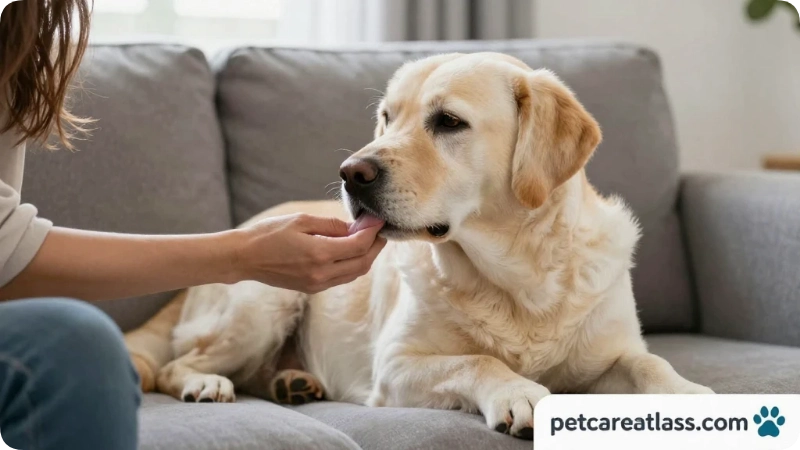
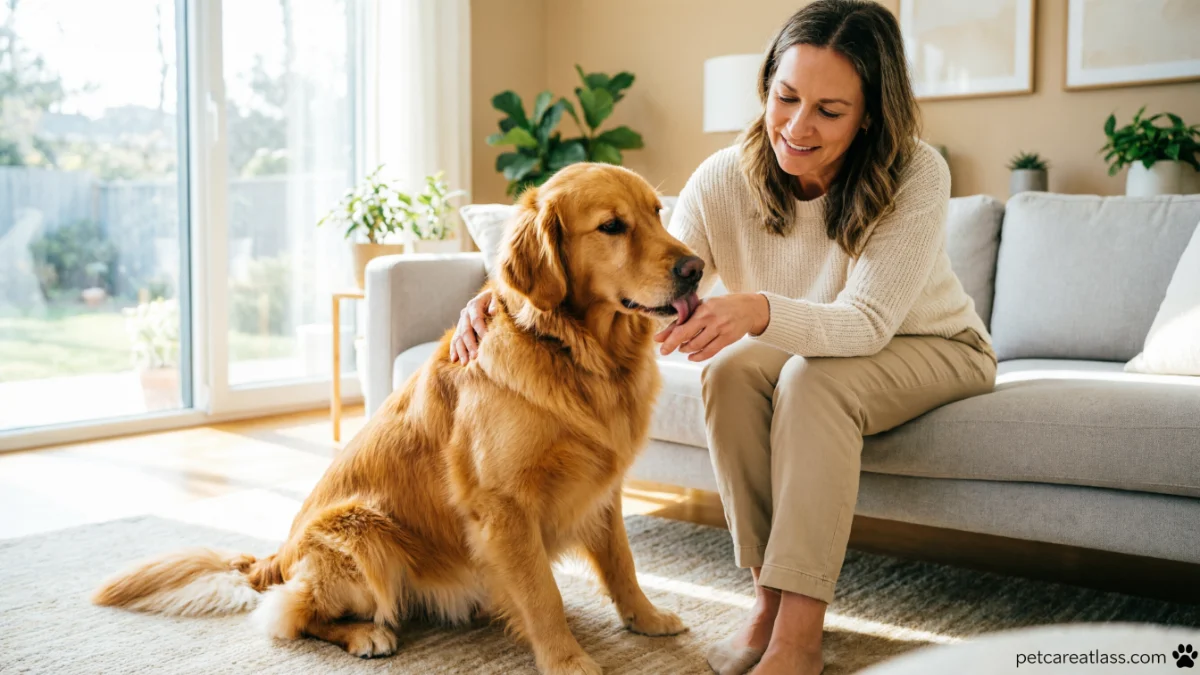
One common reason dogs lick their owners during petting is social bonding. Your dog may associate your touch with comfort, companionship, and positive experiences, making licking one way she interacts with you.
Licking is a natural canine behavior that begins early in life. Mother dogs lick their puppies as part of their care, and dogs may continue using licking during social interactions as they grow. When your dog gently licks your hand while you stroke her head, chest, or shoulders, she may be engaging in a familiar social behavior.
However, licking does not automatically mean your dog is expressing love. Dogs lick for different reasons, and the same behavior can have different meanings depending on the situation.
How to Tell Whether Your Dog Enjoys Being Petted
Look for several relaxed signals rather than relying on licking alone:
- Loose body posture: Her muscles appear relaxed rather than stiff.
- Soft facial expression: Her eyes and mouth look relaxed.
- Voluntary contact: She stays close or moves toward you when you pause.
- Comfortable movement: She leans into gentle strokes without appearing tense.
- Willing participation: She returns to you after moving away briefly.
A wagging tail alone does not guarantee happiness, and a dog that remains still is not necessarily enjoying the interaction. Consider her entire body and whether she freely chooses to continue.
If she seems comfortable, you can continue petting her gently. Always let her move away when she wants to stop.
She Likes the Taste or Smell of Your Skin
Your dog may lick you simply because your skin smells or tastes interesting. Dogs explore their surroundings through their noses and mouths, so familiar scents and unusual tastes can attract their attention.
Sweat can leave a salty taste on your hands, arms, or face. Your dog may also notice traces of food, cooking smells, or scents left behind after you handle different objects.
For example, if your dog starts licking your hand after you return from a walk or finish exercising, she may be interested in the scent or taste of your skin rather than deliberately expressing affection.
This explanation is particularly plausible when she focuses on your hands or arms after you have been sweating or preparing food. However, you cannot determine the exact motivation from licking alone.
Safety tip: Avoid letting your dog lick freshly applied lotions, medicated creams, sunscreen, or other skincare products unless you know they are safe for dogs. Some ingredients can be harmful if swallowed. If she licks a potentially toxic product, contact your veterinarian for advice.
She Wants Your Attention to Continue
Dogs can learn that certain behaviors lead to attention. If your dog licks your hand and you respond by talking to her, scratching her ears, laughing, or continuing to pet her, she may learn that licking helps keep the interaction going.
Over time, licking can become part of your dog’s routine whenever you give her attention.
You may notice other behaviors alongside licking, including:
- Nudging your hand with her nose.
- Pawing gently at your arm.
- Moving closer when you stop petting.
- Bringing you a toy.
- Looking at you and then at the hand that was petting her.
These actions may be ways of inviting interaction rather than signs of a behavioral problem.
If you enjoy the licking and it remains gentle, there may be no need to stop it. If you prefer not to be licked, calmly pause the interaction and encourage a suitable alternative, such as sitting beside you or settling on a mat.
Reward the behavior you want to encourage. Avoid shouting or scolding, as this may increase excitement or make the interaction confusing.
She May Be Communicating That She Feels Uncomfortable
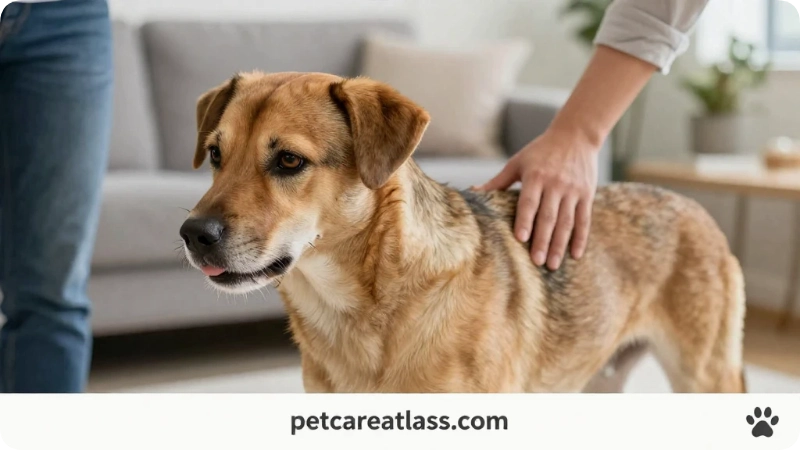
Not every lick during petting is a sign of affection. Some dogs lick their owners when they feel uncertain, overwhelmed, or uncomfortable with the interaction.
For example, your dog might enjoy gentle strokes along her back but dislike having a hand reach over her head. She may initially tolerate the contact, then start licking her lips, turning her head away, or shifting her body when she wants the interaction to stop.
Certain licking behaviors can occur during stressful or uncertain situations. However, licking alone does not prove that your dog is anxious or uncomfortable.
Signs Your Dog May Want You to Stop Petting Her
Watch for a combination of signals, including:
- Turning her head away from your hand.
- Repeatedly licking her lips when no food is present.
- Yawning in a situation that appears stressful.
- Flattening her ears or lowering her body.
- Becoming stiff or freezing in place.
- Trying to move away from your hand.
- Growling, showing teeth, or snapping when contact continues.
These signals are especially important when they appear together or become more pronounced as you continue petting.
What Should You Do?
Stop touching her briefly and give her the opportunity to choose what happens next. Avoid leaning over her, holding her in place, or forcing physical contact.
If she moves away, let her leave. If she voluntarily returns, you can offer a gentle stroke in an area she usually enjoys and then pause again.
Never punish growling or other warning signals. They provide important information that your dog is uncomfortable. Respecting these warnings can help reduce the risk of a bite.
Petting Feels Good, and Licking Has Become Part of Her Routine
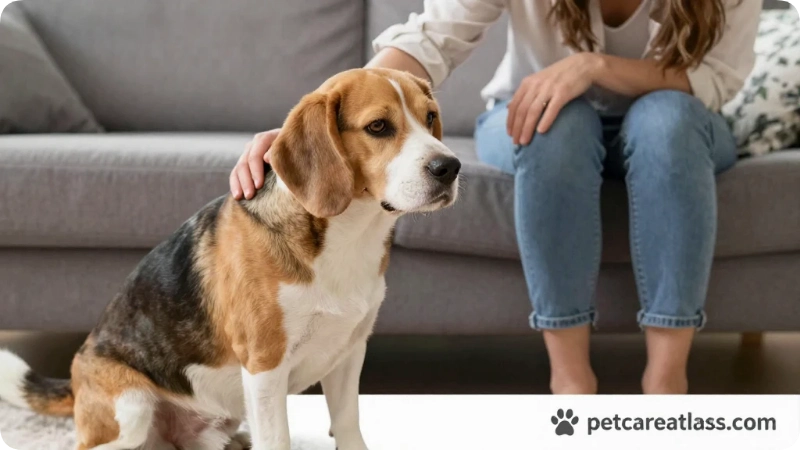
Some dogs lick because being close to their owners is rewarding. Gentle petting, familiar smells, attention, and social contact may all contribute to an enjoyable interaction.
Your dog might start licking whenever you scratch her chest, rub her shoulders, or sit beside her on the sofa. If she remains relaxed and willingly stays close, the behavior may simply be part of how she interacts with you.
Dogs also develop individual preferences. One dog may enjoy gentle strokes along her back, while another prefers brief scratches around the chest or shoulders. Personality, age, previous experiences, and the type of touch can influence how a dog responds.
There is no universal petting pattern that every dog enjoys.
Try a Simple Petting-and-Pause Check
Step 1: Pet gently. Stroke an area your dog usually enjoys for a few seconds, using light, comfortable pressure.
Step 2: Pause. Remove your hand and give her a moment without demanding a response.
Step 3: Observe her choice. If she moves closer or nudges your hand while remaining relaxed, she may want more contact. If she turns away or leaves, let her stop.
This simple approach helps you observe your dog’s preferences, but it is not a diagnostic test. A dog can remain still without necessarily enjoying the contact, so look for voluntary participation and overall body language.
She May Be Excited or Overstimulated
Some dogs become enthusiastic when their owners pet them. They may lick rapidly, wiggle, nudge their owners, or struggle to settle down. Other dogs become uncomfortable when petting continues longer than they can tolerate.
Overstimulation occurs when an animal becomes overwhelmed by the amount or intensity of stimulation. In dogs, it can happen during prolonged petting, energetic play, busy gatherings, or other exciting situations.
A dog who is excited may have a loose, wiggly body and willingly return for interaction. A dog who is becoming uncomfortable may instead stiffen, turn away, repeatedly lick her lips, or attempt to leave.
The difference matters because increasing excitement does not always mean your dog wants more physical contact.
How to Respond to an Overstimulated Dog
- Use shorter, gentler petting sessions.
- Avoid repeatedly touching areas she finds sensitive.
- Take breaks before she becomes restless.
- Give her an opportunity to move away.
- Offer a quiet place to rest when the environment is busy.
- Avoid rough hand play if it encourages mouthing or persistent licking.
If licking is accompanied by hard mouthing, grabbing your hand, or increasingly tense body language, stop the interaction calmly. Give her room to settle instead of trying to hold her still.
Stress, Discomfort, or a Health Problem May Be Contributing
Occasional licking during a pleasant interaction is generally normal. However, a sudden change in behavior, persistent licking, or licking accompanied by other symptoms deserves closer attention.
Your dog may lick more when she feels anxious or uncertain. In other cases, an underlying health problem may affect her behavior or make certain types of touch uncomfortable.
Potential concerns include pain, skin irritation, or another medical condition. If she repeatedly reacts when you touch one particular area, do not assume she is simply being affectionate.
When Should You Contact Your Veterinarian?
Consider arranging a veterinary assessment if:
- The licking starts suddenly or becomes much more frequent.
- She reacts painfully when you touch a particular area.
- She repeatedly licks herself, furniture, floors, or other objects.
- She develops skin redness, sores, hair loss, or persistent itching.
- The behavior occurs alongside appetite changes, vomiting, or unusual tiredness.
- She appears unable to stop licking even when the interaction has ended.
Persistent or compulsive licking can have medical and behavioral causes. A veterinarian can assess possible health problems and advise whether a qualified behavior professional would be helpful.
Seek urgent veterinary care if the behavior occurs alongside serious symptoms such as difficulty breathing, collapse, or suspected ingestion of a dangerous substance.
Do not attempt to diagnose a medical problem based on licking alone. The goal is to recognize changes and obtain appropriate advice when necessary.
What Does Your Dog’s Licking Mean? A Quick Comparison
The context and accompanying body language are more informative than the licking itself.
| What You Notice | Possible Explanation | What to Do |
| Gentle licking with a relaxed body | Social bonding or comfortable interaction | Continue gently if she chooses to stay |
| Licking your hands after exercise | Interest in salty skin or familiar scents | Allow brief contact if appropriate |
| Licking followed by nudging | Seeking attention or continued petting | Offer attention or a suitable alternative |
| Licking while turning her head away | Possible uncertainty or discomfort | Pause and give her space |
| Rapid licking with restless behavior | Excitement or overstimulation | Reduce stimulation and take a break |
| New, persistent licking with other symptoms | Possible health or behavioral concern | Contact your veterinarian |
These are possible interpretations, not fixed meanings. The same dog may lick for different reasons at different times.
Where You Pet Her Can Change Her Response
Dogs vary in their preferences for touch. If your dog regularly licks you when you pet a particular area, observe whether she seems relaxed there or whether the licking increases alongside signs of discomfort.
| Petting Area | How Some Dogs Respond | A Sensible Approach |
| Chest | May enjoy gentle strokes | Use light pressure and watch her response |
| Shoulders | May find slow strokes comfortable | Keep movements calm and predictable |
| Side of the neck | May tolerate brief contact | Avoid restraining her head |
| Top of the head | Some dogs accept it; others dislike reaching hands | Approach gently and see whether she opts in |
| Belly | Some dogs enjoy it; others feel vulnerable | Do not assume rolling over means she wants a belly rub |
| Back or hips | Preferences vary | Stop if she stiffens, flinches, or moves away |
If licking consistently occurs when you touch one particular area, pay attention to her other signals. A new reaction to touch may warrant a veterinary check, especially if she seems painful or reluctant to move.
How to Stop Your Dog From Licking You While You Pet Her
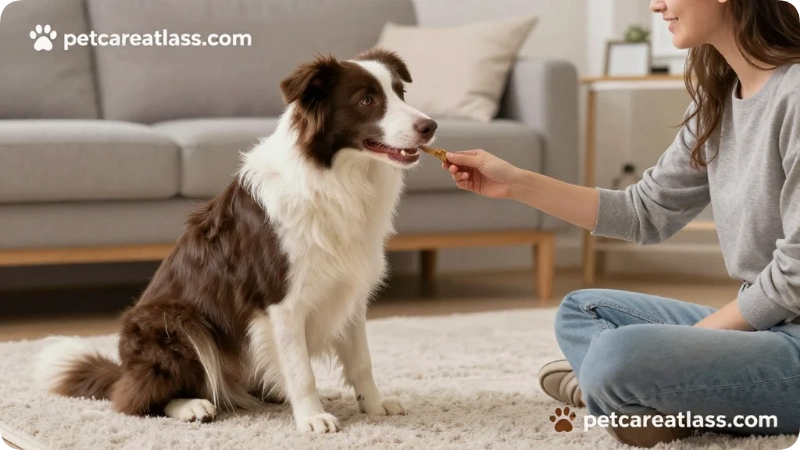
If your dog’s licking is gentle and you do not mind it, there may be no need to stop the behavior. But if it bothers you, affects guests, or makes petting uncomfortable, you can teach her a different way to interact.
The aim is not to punish a normal canine behavior. Instead, make your preferred behavior easy to understand and reward it consistently.
1. Keep Your Response Calm
Avoid shouting, pushing her face away, or turning the interaction into an exciting game. These reactions may increase excitement or accidentally reward the licking with attention.
Instead, pause petting briefly when licking begins.
2. Reward an Alternative Behavior
When your dog stops licking and settles beside you, reward her with calm attention if she is comfortable with it. You can also teach a simple cue such as “settle” or encourage her to rest on a mat nearby.
Reward the behavior you want to see rather than repeatedly reacting to the behavior you want to reduce.
3. Keep Petting Sessions Short
If licking increases after several seconds of petting, try shorter sessions with breaks. This can help you identify whether the behavior is associated with excitement, attention-seeking, or discomfort.
4. Respect Her Boundaries
If your dog licks while turning away, stiffening, or trying to leave, stop petting rather than trying to train her out of the response. She may be communicating that she needs space.
5. Check for Changes in Behavior
If the licking is new, unusually intense, difficult to interrupt, or accompanied by other symptoms, consult your veterinarian before treating it as a training problem.
Which Approach Fits Your Dog’s Behavior?
| Your Dog’s Behavior | Recommended Response |
| Brief, gentle licking while relaxed | Allow it if you are comfortable |
| Licking whenever you stop petting | Reward a calm alternative, such as settling beside you |
| Licking that increases with excitement | Shorten sessions and introduce quiet breaks |
| Licking with avoidance or a stiff body | Stop petting and give her space |
| Sudden or compulsive licking | Seek veterinary advice |
Consistency matters. Everyone in the household should use a similar approach so your dog receives clear, predictable feedback.
Is It Safe to Let Your Dog Lick Your Face or Hands?
For many households, occasional licking is a normal part of interacting with a dog. However, licking is not risk-free, particularly around the mouth, eyes, and broken skin.
Dogs’ mouths contain bacteria, and germs can sometimes spread through saliva. It is sensible to wash your hands after contact with dog saliva, especially before eating or preparing food.
For a safer routine:
- Avoid letting your dog lick open wounds, cuts, or irritated skin.
- Discourage licking around your eyes and mouth.
- Wash your hands after handling saliva, especially if you have a weakened immune system.
- Keep children from putting their faces close to a dog who is licking, excited, or showing uncertain body language.
- Keep skincare products, topical medicines, and potentially toxic substances away from licking.
If your dog licks your hand while you pet her, you can simply move your hand away and wash it afterward. There is no need to frighten or punish her.
The goal is to maintain a healthy interaction while respecting both your dog’s comfort and your own boundaries.
How to Read Your Dog’s Body Language During Petting
Use these signs to help interpret what happens when your dog starts licking.
| Body Language | What It May Suggest | Your Response |
| Loose posture and soft eyes | She may feel comfortable | Continue gently if she chooses |
| Moving closer after you pause | She may want more interaction | Offer another brief petting session |
| Turning her head or leaning away | She may feel uncertain or uncomfortable | Pause and give her space |
| Repeated lip licking with tense posture | Possible stress or discomfort | Stop touching and reassess |
| Freezing, growling, or snapping | A warning that she needs distance | Stop the interaction and avoid forcing contact |
These categories are guides, not a substitute for observing your individual dog. A dog may display a single signal for several reasons, so consider what happened immediately before the behavior and whether it changes when you pause.
The most useful question is not simply, “Why is she licking me?” It is also, “What is the rest of her body telling me, and does she want this interaction to continue?”
Frequently Asked Questions
1. Does My Dog Lick Me When I Pet Her Because She Loves Me?
She may be expressing social affection, but licking can also reflect curiosity, attention-seeking, or uncertainty. Look at her overall body language and whether she voluntarily stays close to you.
2. Why Does My Dog Lick My Hand When I Stop Petting Her?
She may be asking you to continue, particularly if she nudges your hand or moves closer. If she appears relaxed, you can offer another brief petting session or reward a calm alternative.
3. Why Does My Dog Lick Me and Then Bite Me When I Pet Her?
She may be excited, overstimulated, uncomfortable, or trying to stop the interaction. Stop petting when you notice tension, freezing, or hard mouthing. If biting is new, escalating, or associated with pain, seek veterinary and qualified behavioral guidance.
4. Why Does My Dog Lick Me More When I Pet Her Belly?
Some dogs lick during belly rubs because they enjoy the attention, while others may feel vulnerable or uncomfortable. Rolling over does not automatically mean a dog wants her belly touched. Pause and let her choose whether to continue.
5. Why Does My Dog Lick Me When I Pet Her Before Bed?
She may be following a familiar routine, seeking contact, or responding to the calm environment. If the behavior is relaxed and brief, it is usually reasonable to allow it. New or persistent licking accompanied by distress deserves closer attention.
6. Should I Let My Dog Lick My Face?
It is safer to avoid licking around your eyes, mouth, and broken skin because saliva can transmit germs. You can redirect face licking toward a hand or another appropriate interaction without punishing your dog.
7. When Should I Worry About My Dog’s Licking?
Seek veterinary advice if licking becomes sudden, persistent, compulsive, or difficult to interrupt, or if it occurs with pain, itching, skin changes, appetite changes, or other unusual symptoms.
Conclusion
If your dog licks you when you pet her, she may be expressing affection, enjoying your attention, exploring your scent, or communicating her comfort level. Sometimes the behavior is simply a learned habit; in other situations, it can be a sign that she needs a break.
Pay attention to her entire body rather than interpreting licking on its own. Keep petting gentle, pause regularly, and let her choose whether to continue. If the behavior changes suddenly or appears alongside signs of pain, distress, or illness, consult your veterinarian.
Understanding these small signals can help you build a more trusting relationship with your dog while making petting enjoyable for both of you.

Daniel Brooks is a pet care and animal behavior writer at petcareatlass.com focused on helping owners better understand their pets’ behavior and everyday needs. He creates practical, easy-to-follow content on pet communication, training, welfare, and responsible care.