Quick Answer:
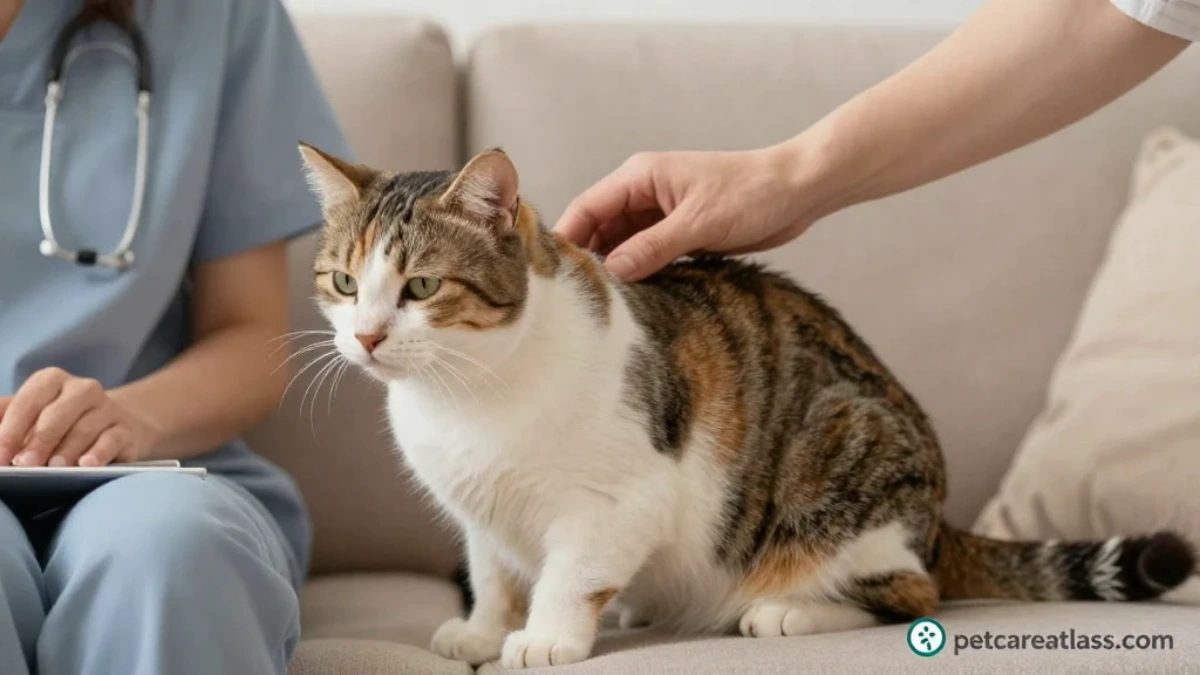
Cats may bite you when you pet them because they feel overstimulated, uncomfortable, irritated, or want you to stop. Some cats also give gentle love bites during affectionate moments. Watch for clues such as flattened ears, tail flicking, tense muscles, or turning toward your hand. Understanding these signals can help you recognize when your cat has had enough and prevent unwanted bites.
Cats often enjoy being petted, but their reactions can change surprisingly quickly. One moment, your cat may be purring and leaning into your hand; the next, she may turn around and bite you. If your cat bites you when you pet her, it can be confusing to know whether she is showing affection, feeling irritated, or asking you to stop.
This behavior is often linked to petting overstimulation, sensitivity, discomfort, or a cat’s personal boundaries. Some cats also use gentle bites as part of social interaction. The key is to understand what happens before the bite and recognize the body language your cat displays.
In this guide, you’ll discover the common reasons cats bite during petting, how to distinguish affectionate nipping from warning bites, which body language signals to watch for, and what you can do to make petting more comfortable and enjoyable for your cat.
Why Does My Cat Bite Me When I Pet Her?
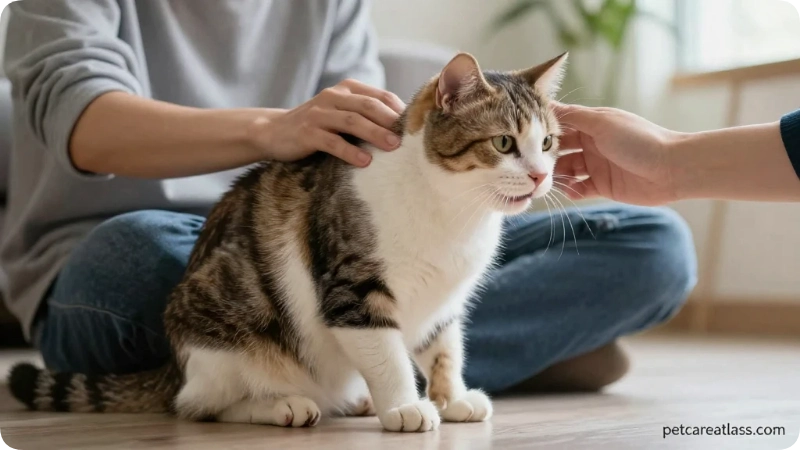
Cats do not always communicate discomfort by immediately walking away. Some cats tolerate petting for a certain amount of time and then use a quick nip to end the interaction.
This can be confusing because your cat may have been purring, rubbing against you, or appearing comfortable just seconds earlier.
The most common reasons include:
- She has become overstimulated.
- She is telling you that she wants the petting to stop.
- You are touching an area she does not enjoy.
- She is excited by the interaction and becomes too stimulated.
- She has learned that biting gets a response.
- She may be reacting to fear, frustration, or another environmental trigger.
- Pain or illness may be making touch uncomfortable.
The key is not to assume that every bite means the same thing.
1. Your Cat May Be Overstimulated
One of the most common explanations is petting-induced overstimulation.
Petting activates sensory receptors in your cat’s skin. Although gentle contact can feel pleasant, some cats have a relatively short tolerance for repeated strokes.
A cat may initially enjoy being petted but gradually become uncomfortable as the interaction continues.
For example, your cat might:
- Rub against your hand
- Purr
- Relax beside you
- Enjoy several strokes
- Start flicking her tail
- Turn her head toward your hand
- Suddenly nip your fingers
The bite can be her final signal that she wants the interaction to end.
This does not necessarily mean she has suddenly become aggressive. You may simply have missed her earlier warning signals.
2. She May Be Saying “I’ve Had Enough”
Cats often communicate through subtle body language before using their teeth.
A cat cannot verbally say, “Please stop petting me,” so she may move away, turn her head, change her body position, or eventually give a warning nip.
Some cats have a much lower tolerance for prolonged handling than others.
A useful approach is to stop petting before your cat reaches the point of biting.
Try giving her a few gentle strokes and then pause.
If she moves closer or nudges your hand, she may be asking for more. If she stays still, turns away, or moves away, give her space.
This creates a simple consent-based interaction: pet when she invites it, pause when she asks for space.
3. She May Not Like Being Touched in That Spot
Cats have individual preferences.
One cat may love having her cheeks rubbed while another may prefer brief strokes around the forehead. Some cats enjoy back scratches but dislike having their belly touched.
Commonly tolerated areas can include:
- Cheeks
- Chin
- Forehead
- Around the ears
- Head and neck
- Upper back
But these are not universal rules.
Your cat may have her own favorite and least-favorite areas.
The belly is particularly important to understand. A cat exposing her belly does not necessarily mean she wants a belly rub. She may simply be showing trust, stretching, relaxing, or changing position.
If she grabs your hand and bites when you touch her stomach, take that as useful feedback and leave the area alone.
4. She May Be Excited Rather Than Angry
Some cats become highly stimulated during interactive contact.
A playful or excited cat may grab your hand, kick with her back feet, mouth your fingers, or give a quick bite.
This can happen when petting becomes mixed with play.
For example, if you repeatedly move your fingers around a cat’s face or wiggle your hand near her paws, she may start treating your hand like a toy.
That can encourage biting behavior.
Instead, keep hands associated with calm interaction and use appropriate toys for chasing, grabbing, and kicking.
5. Your Cat May Be Communicating With You
A bite is not always an attempt to hurt you.
Cats communicate through a combination of body posture, facial expression, movement, vocalization, scent, and touch.
A gentle nip can sometimes function as a communication signal. However, you should still respect it rather than trying to determine whether the cat “meant it nicely.”
The safest question is:
What was my cat trying to communicate immediately before she bit?
Look at the entire interaction rather than the bite alone.
6. Fear, Frustration, or the Environment May Be Involved
Your cat’s reaction can also be affected by what is happening around her.
A cat may become more reactive if:
- Another animal is nearby
- There is a sudden noise
- Someone approaches unexpectedly
- She is trapped in a position she cannot easily leave
- She is already anxious
- Children are handling her
- She is tired or trying to rest
A cat that appears calm may react differently when her environment changes.
This is why it is useful to consider context, not just the physical act of petting.
7. Pain Can Make Petting Uncomfortable
A cat that suddenly starts biting when touched deserves extra attention.
If your cat previously enjoyed petting but now reacts strongly when you touch a particular area, discomfort could be one possible explanation.
Potential sources of discomfort can involve areas such as the:
- Mouth
- Ears
- Skin
- Joints
- Back
- Abdomen
- Muscles
You cannot determine the cause from biting alone.
Contact a veterinarian if the behavior is new, persistent, unusually intense, or accompanied by other changes such as reduced appetite, hiding, reduced activity, limping, changes in grooming, vocalization, or difficulty moving.
The goal is not to assume something is medically wrong, but to avoid overlooking a health problem when a significant behavior change occurs.
How Can I Tell If My Cat Wants Me to Stop Petting Her?
Your cat may give several signals before biting.
No single signal should be interpreted in isolation. For example, a tail movement can have different meanings depending on the situation.
Watch for a pattern of several changes.
| Cat’s behavior | What it may indicate | What you should do |
| Leaning into your hand | Enjoying the interaction | Continue gently if relaxed |
| Nudging your hand | May want more attention | Offer a few more gentle strokes |
| Turning head toward your hand | Monitoring the interaction | Pause and observe |
| Tail flicking or swishing | Increasing stimulation or irritation | Slow down or stop |
| Skin twitching | Possible discomfort or heightened stimulation | Stop petting briefly |
| Ears rotating sideways/back | Increasing discomfort or arousal | Give her space |
| Moving away | Wants distance | Stop following or petting |
| Swatting or biting | Clear boundary or defensive response | Stop interaction immediately |
These signals are clues rather than a strict checklist.
Your cat’s normal personality also matters.
What Are the Warning Signs Before a Cat Bites?
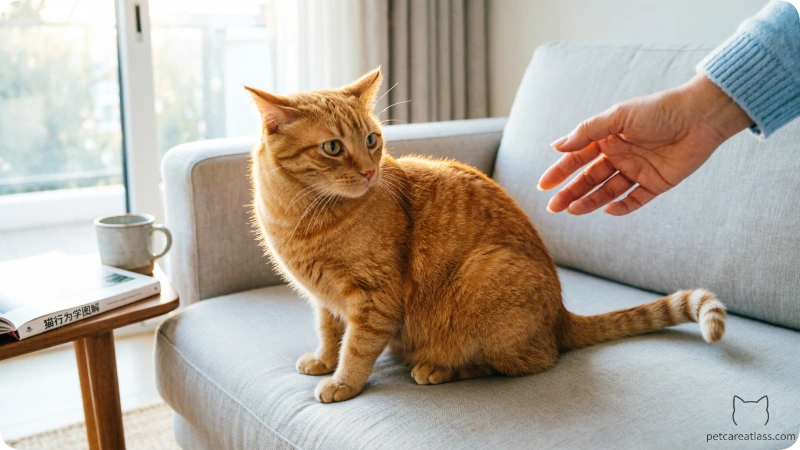
Many owners notice the bite but miss the signals that happened seconds earlier.
Learning those signals can make petting safer and more enjoyable.
Tail Changes
A relaxed cat may hold her tail comfortably, while a cat becoming irritated or highly stimulated may begin moving it more sharply.
Pay attention to changes from your cat’s normal relaxed behavior.
Ear Position
Ears that suddenly rotate sideways or backward can indicate that your cat’s emotional state is changing.
If this happens together with tail movement, body tension, or turning toward your hand, it is a good time to pause.
Skin Twitching
You may notice small movements or rippling of the skin, particularly along the back.
This can be a sign that your cat is becoming uncomfortable or highly stimulated.
Body Tension
A relaxed cat generally has a different posture from a cat preparing to move away or defend herself.
If her body becomes stiff, she stops relaxing, or she begins watching your hand closely, reduce the interaction.
Turning Toward Your Hand
If your cat repeatedly turns her head toward your hand, do not automatically assume she wants another stroke.
She may be monitoring your hand or signaling that she has had enough.
Where Should I Pet a Cat to Reduce the Chance of Biting?
There is no single body area that every cat prefers.
However, many cats tolerate or enjoy gentle contact around the head and face more readily than areas such as the belly or paws.
Start with areas your cat already appears comfortable with.
Try a “Pause Test”
Pet your cat gently for a few seconds.
Then stop.
Watch what she does.
If she moves toward your hand: she may be inviting more contact.
If she stays relaxed: you can wait and observe rather than automatically continuing.
If she moves away or shows discomfort: stop.
This simple technique helps you learn your individual cat’s preferences instead of assuming that all cats enjoy the same type of petting.
How to Pet a Cat Without Encouraging Biting
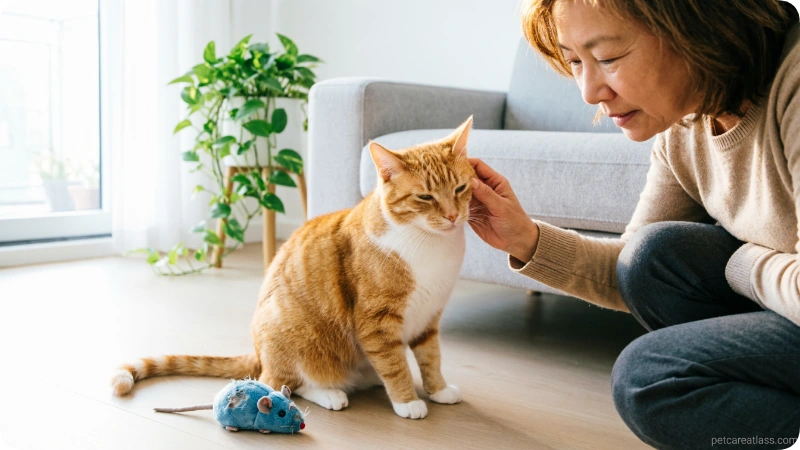
The goal is not to force your cat to accept more touching.
Instead, make the interaction predictable and give her control over whether it continues.
Start Slowly
Approach calmly and allow your cat to see or smell your hand.
Avoid suddenly reaching over her head, particularly if she is resting or nervous.
Use Gentle Strokes
Keep your movements slow and light.
Avoid repeatedly rubbing the same area when your cat begins showing signs of stimulation.
Keep Sessions Short
Short interactions can work better than prolonged petting for cats that become overstimulated easily.
You can always stop while the interaction is still positive.
Let Her Leave
Never hold your cat in place simply because you want to continue petting her.
If she walks away, allow her to leave.
Respecting that choice can help prevent future defensive reactions.
Use Toys for Play
If your cat likes grabbing, chasing, kicking, or biting during excitement, use toys rather than hands.
This helps keep the distinction clear:
Hands = gentle interaction.
Toys = chasing, grabbing, and biting.
What Should I Do If My Cat Bites Me While I Am Petting Her?
The safest response is usually simple.
Stop petting and calmly remove your hand.
Do not hit, yell at, chase, or physically punish your cat.
Punishment can increase fear and may make future handling more difficult.
Instead, think about what happened immediately before the bite.
Ask yourself:
- How long had I been petting her?
- Where was I touching her?
- Did her tail change?
- Did her ears move?
- Did her skin twitch?
- Did she try to move away?
- Was there noise or another animal nearby?
- Has this behavior happened before?
- Is this behavior new?
The answers can help you identify a pattern.
What If My Cat Bites Me and Then Wants to Be Petted Again?
This can happen.
A cat may want interaction but have a limited tolerance for continuous petting.
For example, she may approach you, enjoy a few strokes, walk away, and return later.
That does not necessarily mean she is confused.
It may simply mean that she wants short periods of interaction with breaks in between.
Instead of trying to keep the petting session going, follow her rhythm.
This can be especially helpful for cats that become overstimulated quickly.
Should I Punish My Cat for Biting?
No.
Punishment is not a good way to teach a cat to communicate differently.
If your cat bites during petting, the first priority should be to understand why the interaction reached that point.
A calmer approach is:
- Stop touching her.
- Give her space.
- Identify the warning signs.
- Shorten future petting sessions.
- Avoid areas she dislikes.
- Use toys instead of hands for rough play.
- Seek veterinary advice if the behavior is sudden or concerning.
This approach addresses the situation without turning handling into a frightening experience.
Cat Biting During Petting vs. Play Biting
It is useful to distinguish between different situations.
| Situation | Common clues | Best response |
| Overstimulation | Tail movement, skin twitching, turning toward hand | Stop petting and give space |
| Boundary-setting | Moving away, warning signals, quick nip | Respect the request to stop |
| Play biting | Chasing hands, grabbing, kicking, excited movement | Redirect to an appropriate toy |
| Fear-related reaction | Tense posture, hiding, defensive behavior | Reduce pressure and provide space |
| Possible pain | Sudden reaction to touch, behavior change | Arrange a veterinary check |
| Environmental frustration | Trigger nearby, sudden arousal | Remove or reduce the trigger |
The same physical action a bite can have different causes.
That is why the surrounding behavior matters.
When Should I Call a Veterinarian?
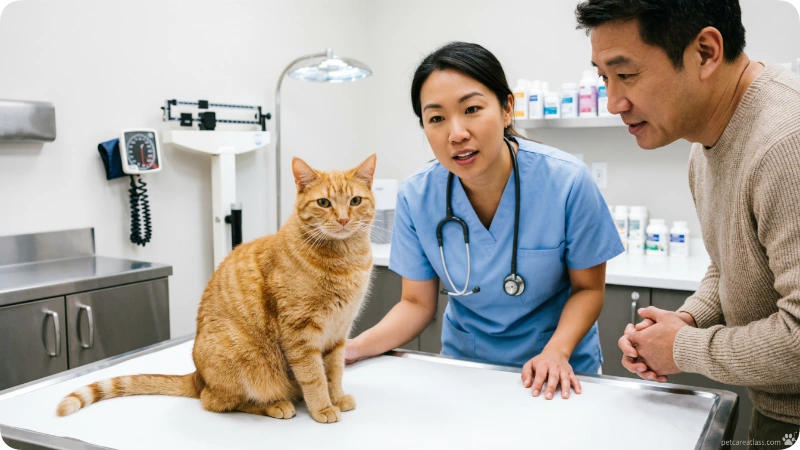
Not every petting-related bite means your cat is sick.
However, veterinary advice is appropriate when biting represents a significant change from your cat’s normal behavior or appears connected to discomfort.
Consider contacting your veterinarian if:
- Your cat suddenly becomes aggressive when touched.
- She reacts strongly when one particular area is handled.
- She appears painful or unusually sensitive.
- She stops eating normally.
- She hides much more than usual.
- Her grooming habits change.
- She becomes unusually withdrawn or restless.
- She has difficulty moving.
- She shows other unusual physical or behavioral changes.
A veterinarian can help determine whether an underlying medical issue could be contributing to the behavior.
Common Mistakes Cat Owners Make
Even well-meaning owners can accidentally encourage unwanted biting.
Continuing After the Warning Signs
If your cat has already shown several signs that she wants the interaction to stop, continuing to pet her can push her toward a bite.
Better approach: stop when you notice the early signals.
Assuming Purring Always Means “Keep Going”
Purring can occur in different emotional contexts and should not be treated as a guaranteed invitation for continued petting.
Look at the whole body.
Touching Sensitive Areas Without Checking Her Response
Do not assume that because another cat enjoys belly, paw, or tail handling, your cat will too.
Using Hands as Toys
Repeatedly encouraging your cat to chase or bite your hands can make it harder for her to distinguish play from normal handling.
Punishing the Bite
Punishment does not explain to your cat what you wanted instead.
It may also make her more wary of human interaction.
How to Build Better Petting Habits
You do not need to eliminate petting just because your cat sometimes bites.
Instead, make the interaction more responsive.
Start with a comfortable area and use slow, gentle strokes. Pause regularly and allow your cat to decide whether she wants more.
Over time, you may learn that your cat consistently enjoys certain areas, certain amounts of pressure, and shorter or longer interactions.
Think of petting as a two-way conversation rather than something you do to your cat.
Your cat communicates through her body, and your job is to notice those signals.
Frequently Asked Questions
Why does my cat bite me when I pet her but not other people?
Your cat may respond differently depending on how each person pets her, where they touch her, how long they continue, or how she feels around that person. Individual interactions matter more than assuming she simply prefers one person.
Why does my cat purr and then bite me?
Purring does not always mean a cat wants unlimited physical contact. She may enjoy the interaction initially and then become overstimulated. Watch for other signals such as tail movement, ear changes, body tension, or attempts to move away.
Why does my cat bite me when I pet her back?
Some cats become overstimulated when repeatedly stroked along the back. Skin twitching, tail movement, turning toward your hand, or sudden tension can indicate that your cat wants the interaction to stop.
Why does my cat bite me when I pet her belly?
A cat showing her belly does not necessarily mean she wants it touched. The belly can be a sensitive area, and some cats respond to contact there by grabbing or biting. If she reacts negatively, avoid touching it.
How can I stop my cat from biting during petting?
Learn her early warning signals, keep petting sessions shorter, avoid areas she dislikes, pause regularly, and allow her to walk away. Redirect biting or rough play toward appropriate toys rather than hands.
Is my cat being aggressive when she bites me while being petted?
Not necessarily. A bite during petting can be a response to overstimulation, discomfort, fear, frustration, or a desire to end the interaction. The context and body language surrounding the bite are important.
Should I worry if my cat suddenly starts biting when I pet her?
A sudden change deserves attention. While behavior can change for many reasons, pain or illness can sometimes contribute to increased sensitivity. If the change persists or occurs with other unusual symptoms, contact your veterinarian.
Conclusion
If you are asking why does my cat bite me when I pet her, the answer is often found in what happens immediately before the bite. Your cat may be overstimulated, communicating that she has had enough, reacting to a disliked area, or responding to excitement or environmental stress.
The best response is to respect the warning, stop the interaction calmly, and learn your cat’s individual signals. Shorter petting sessions, gentle handling, appropriate toys, and allowing your cat to walk away can make interactions more comfortable for both of you.
If biting is sudden, unusually intense, focused on a painful area, or accompanied by other changes in behavior or health, a veterinary evaluation is the safest next step.

Daniel Brooks is a pet care and animal behavior writer at petcareatlass.com focused on helping owners better understand their pets’ behavior and everyday needs. He creates practical, easy-to-follow content on pet communication, training, welfare, and responsible care.