Quick Answer:
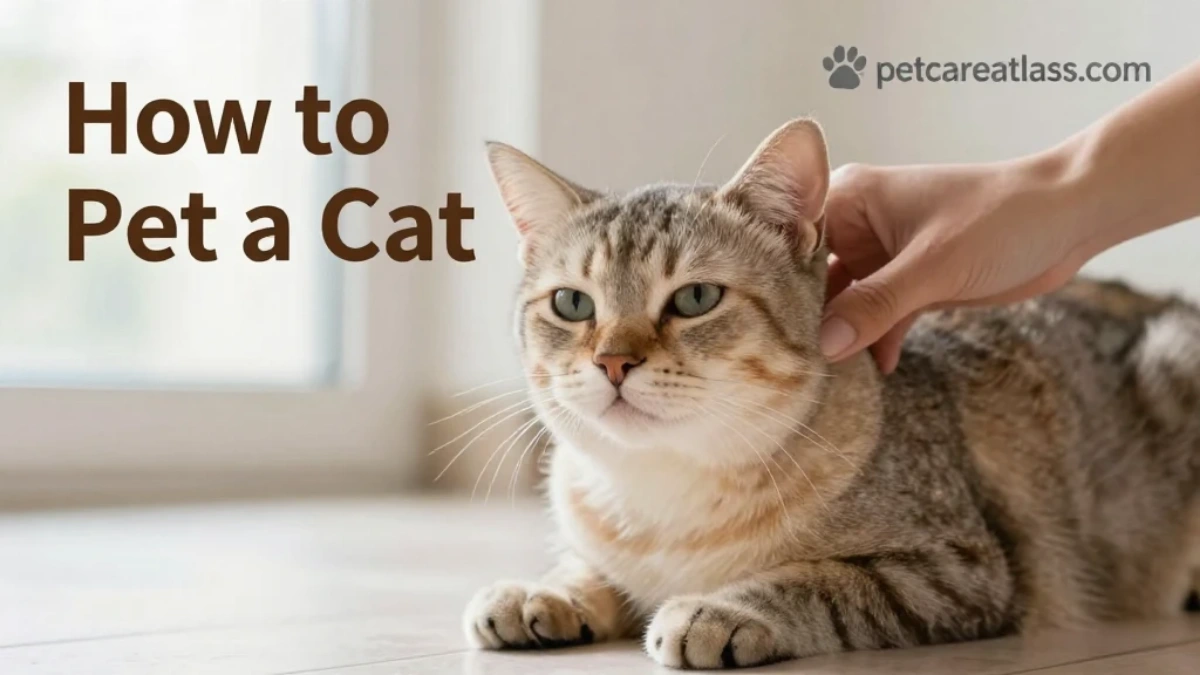
To pet a cat, let it approach you first, offer your hand for sniffing, and gently stroke areas it enjoys, such as the cheeks, chin, forehead, and behind the ears. Watch its body language and stop if it moves away, flicks its tail, or shows signs of discomfort. Always let the cat decide when it wants attention.
Petting a cat may seem simple, but knowing where to touch, how much pressure to use, and when to stop can make a big difference in how comfortable your cat feels. Some cats enjoy gentle strokes around their cheeks, chin, and forehead, while others prefer limited contact or need time to trust you.
Even a friendly cat may become uncomfortable if you pet sensitive areas or ignore its body language.Learning how to pet a cat the right way helps you build trust, avoid unwanted reactions, and make everyday interactions more enjoyable.
Whether you’re meeting a new kitten, bonding with an adult cat, or trying to understand your own pet’s preferences, this guide explains where cats usually enjoy being touched, how to approach them gently, and which warning signs mean it’s time to stop.
How Do You Pet a Cat for the First Time?
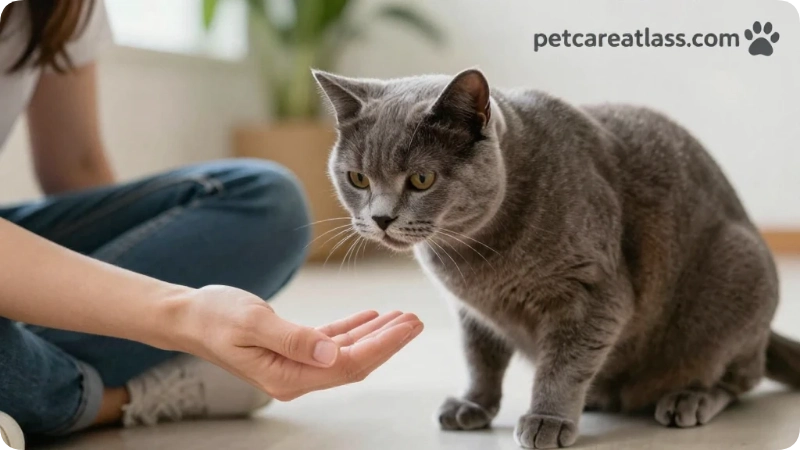
If you are meeting a cat for the first time, resist the temptation to immediately reach over its head or pick it up.
Instead, allow the cat to decide whether it wants to interact.
A simple approach is:
- Stay calm and move slowly.
- Allow the cat to approach you.
- Offer your hand without forcing contact.
- Let the cat sniff your hand.
- Start with one or two gentle strokes.
- Watch the cat’s reaction.
- Stop if the cat shows signs of discomfort.
Cats can be sensitive to sudden or unpredictable movements. Giving a cat some control over the interaction can make handling less stressful.
You do not need to make a cat like you by petting it immediately. Sometimes sitting quietly nearby is the better first interaction.
What Should You Do When a Cat Approaches You?
A cat approaching you does not automatically mean, “Please pet me for five minutes.”
The cat may want attention, play, food, warmth, or simply to investigate you.
Look for additional signals. A relaxed cat that approaches with its body loose, ears forward, and tail held comfortably may be more receptive to petting. A cat that rubs its cheek or chin against your hand is also giving you useful information about its willingness to interact.
If the cat walks away, do not follow it and continue trying to pet it.
Where Do Cats Like to Be Petted?
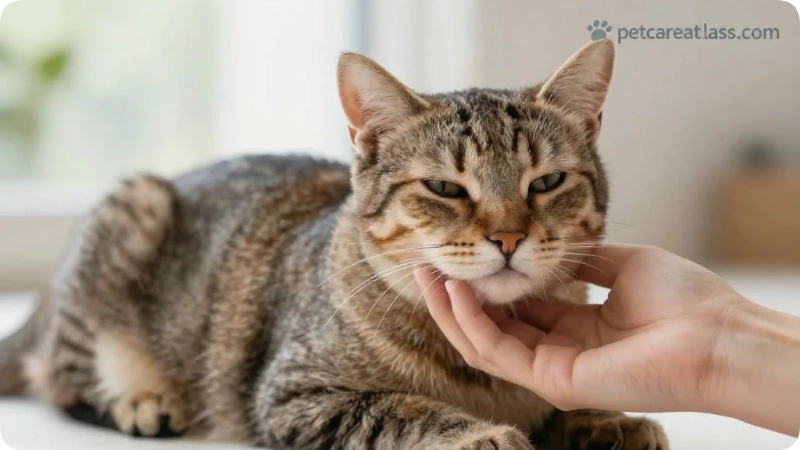
Many cats prefer being touched around the head and neck, particularly areas around the cheeks and chin. These areas are involved in normal feline scent communication and social rubbing.
However, there is no single petting spot that every cat loves. Individual preferences matter.
Common Cat Petting Areas
| Area | How Cats May Respond | Beginner Approach |
| Cheeks | Often comfortable | Use gentle strokes with your fingertips |
| Chin | Often comfortable | Lightly scratch or stroke underneath |
| Head | Often comfortable | Stroke gently from the top or side |
| Neck | Often comfortable | Use slow, light strokes |
| Back | Depends on the individual | Follow the direction of the fur |
| Belly | Often less tolerated | Do not assume an exposed belly is an invitation |
| Paws | Often sensitive | Avoid unless the cat is comfortable with handling |
| Tail/base of tail | Individual preference varies | Do not assume every cat enjoys it |
The cheeks and chin can be particularly appealing because cats naturally use these areas during scent marking and social interactions.
But a preferred area is not a guaranteed favorite.
One cat may happily accept chin scratches while another may prefer a brief stroke over the head. Your cat’s response matters more than any universal list of favorite spots.
How Should You Stroke a Cat?
Once a cat has accepted your initial touch, keep your movements gentle and predictable.
For most cats, begin with short strokes rather than repeatedly rubbing the same area.
A useful beginner technique is:
Approach → sniff → gentle touch → short stroke → pause → observe.
When stroking the body, moving in the direction of the fur is generally more comfortable than repeatedly rubbing against it.
A Simple Petting Technique
Imagine a cat has approached you and appears relaxed.
You could:
- Offer your hand.
- Allow the cat to sniff.
- Gently touch the cheek or chin.
- Give one or two slow strokes.
- Pause.
- Watch what the cat does next.
If the cat leans toward your hand or moves closer, you can continue briefly.
If it turns away or becomes tense, stop.
This pause-and-observe approach prevents you from assuming that a cat wants continuous physical contact.
How Can You Tell If a Cat Wants to Be Petted?
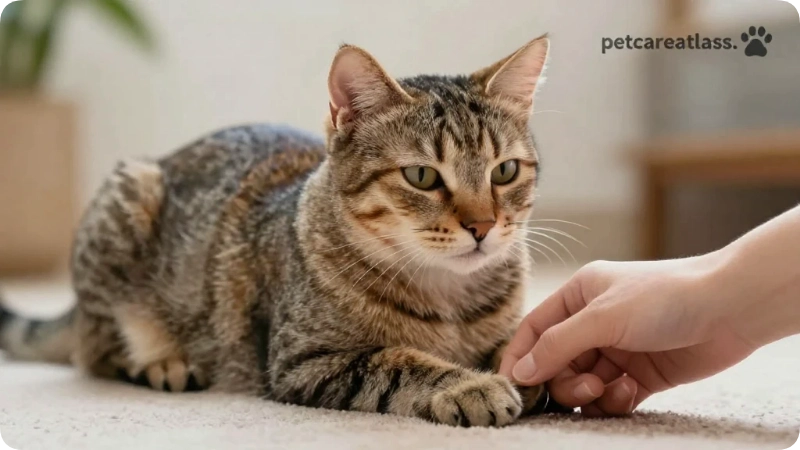
Cats communicate their preferences through subtle body language.
A cat that wants interaction may approach voluntarily, remain relaxed, rub against you, or position its head near your hand.
A cat that does not want to be touched may move away, freeze, become tense, flatten its ears, or show other signs of irritation or fear.
Cat Body Language During Petting
| Body Language | What It May Indicate | What You Should Do |
| Loose, relaxed body | Comfortable | Continue gently if other signals remain positive |
| Approaches your hand | Interested in interaction | Allow the cat to initiate contact |
| Cheek/chin rubbing | Social contact or scent marking | Gentle petting may be welcome |
| Ears rotating backward | Possible irritation or discomfort | Slow down or stop |
| Tail flicking or lashing | Increasing arousal or irritation | Stop petting and give space |
| Body suddenly becomes stiff | Discomfort or tension | Stop |
| Moves away | Does not want continued contact | Let the cat leave |
| Hisses or swats | Strong warning | Stop immediately and give space |
Do not rely on only one body-language signal. Look at the cat’s overall posture and behavior.
For example, a single tail movement does not always mean the same thing in every situation. But several changes happening together—such as a tense body, backward ears, and tail lashing—should be taken seriously.
Why Does a Cat Purr While You Pet It?
Purring often occurs during positive interactions, including relaxation and social contact, but purring by itself does not prove that a cat wants more petting.
Look at the rest of the cat’s body.
A cat that is relaxed, has a loose posture, and voluntarily remains close to you is giving a different message from a cat that is purring while becoming tense or trying to move away.
This is why reading several body-language signals together is more useful than treating purring as a simple “yes.”
Should You Pet a Cat’s Belly?
Usually, do not assume that an exposed belly means a cat wants its stomach rubbed.
Cats may expose their belly when they are relaxed, stretching, rolling, or changing position. That is not necessarily an invitation to touch the area.
The belly can be a sensitive area, and some cats respond negatively when it is touched.
If your cat clearly enjoys gentle belly contact, that may simply be an individual preference. But if you are unfamiliar with the cat, the head and neck are generally a better starting point.
Why Does My Cat Show Me Its Belly?
A cat may roll onto its back because it feels relaxed, wants to stretch, is playing, or is responding to its environment.
An exposed belly can indicate trust, but trust does not automatically equal permission to touch.
Think of it as the cat showing you a vulnerable area rather than necessarily asking for a belly rub.
Should You Pet a Cat’s Paws or Tail?
Paws and tails can be sensitive, so they are not ideal starting points for casual petting.
A cat may tolerate brief handling of its paws when it has gradually become accustomed to it, particularly when necessary for grooming or veterinary care. But ordinary affection does not require touching these areas.
The same principle applies to the tail.
Never grab, pull, squeeze, or restrain a cat by its tail.
Instead, focus on areas where the cat is clearly comfortable and allow the animal to move freely.
How Long Should You Pet a Cat?
There is no universal number of minutes that works for every cat.
Some cats enjoy a long period of gentle interaction. Others prefer a few strokes before walking away.
Your goal should not be to reach a particular duration. Instead, learn your individual cat’s tolerance threshold—the point beyond which continued petting becomes uncomfortable.
For cats that become irritated during petting, keeping interactions short and stopping before warning signs appear can help prevent unwanted reactions.
A Better Rule Than Counting Minutes
Instead of thinking:
“I should pet my cat for 10 minutes.”
Think:
“I will continue only while my cat remains comfortable.”
This approach respects the cat’s individual preference and can help prevent an enjoyable interaction from turning into an unwanted one.
Why Does My Cat Suddenly Bite Me While I’m Petting It?
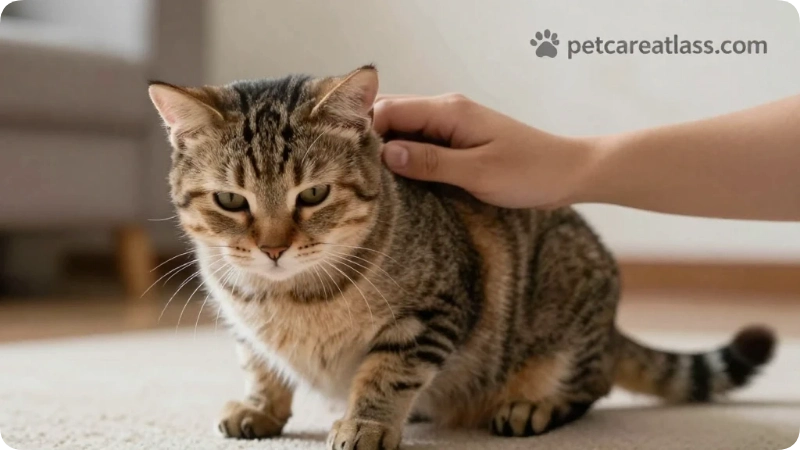
A cat that suddenly bites during petting may be experiencing petting-induced aggression or overstimulation.
The interaction can begin positively, but repeated physical contact may eventually become irritating or overwhelming for some cats.
It may not actually be “sudden” from the cat’s perspective.
You may simply have missed the earlier warning signs.
Potential signals include:
- Tail flicking
- Tail lashing
- Ears moving backward
- Increased body tension
- Dilated pupils
- Turning toward your hand
- Trying to move away
- Suddenly becoming very still
If you notice these changes, stop petting rather than testing whether the cat will tolerate another stroke.
What If My Cat Bites During Petting?
Do not punish, hit, yell at, or forcibly restrain the cat.
Instead, calmly stop the interaction and give the cat space.
If the behavior happens repeatedly, especially if it is new or seems related to touching a particular part of the body, consider whether pain could be involved.
Medical problems such as dental disease, arthritis, skin problems, injuries, or other painful conditions can sometimes make physical contact uncomfortable.
If your cat suddenly becomes aggressive when touched, has a major change in behavior, or appears painful, a veterinarian should assess the situation.
How to Pet a Shy or Nervous Cat
A shy cat may need much more time before accepting physical contact.
Do not measure success by how quickly you can touch the cat.
Instead, start by making yourself predictable.
You can:
- Sit quietly nearby.
- Avoid staring directly at the cat.
- Speak softly.
- Allow the cat to approach voluntarily.
- Offer a hand for investigation.
- Reward calm interaction appropriately.
- Keep initial physical contact very brief.
If the cat retreats, let it retreat.
The goal is to create positive experiences rather than forcing the cat to tolerate handling.
This is particularly important with cats that are fearful or have had negative experiences with people.
Signs That a Shy Cat May Be Becoming More Comfortable
Look for gradual changes rather than expecting immediate affection.
A shy cat may begin to:
- Stay in the room instead of hiding.
- Approach you voluntarily.
- Sniff your hand.
- Sit closer to you.
- Rub against furniture near you.
- Accept a brief touch.
- Return after walking away.
These small steps can be meaningful.
Do not rush the process simply because the cat tolerated one interaction.
How to Pet a Kitten
Kittens can benefit from gentle, positive experiences with human handling, but they should still be treated as individual animals rather than objects to be handled continuously.
Keep interactions short and gentle.
A kitten may be energetic one moment and sleepy the next. It may also be more interested in playing than being stroked.
Use appropriate toys rather than encouraging the kitten to bite or scratch your hands.
As the kitten grows, continue paying attention to its body language and preferences. The goal is to help the kitten learn that human contact can be predictable and positive without forcing interaction.
What Is Different About Petting a Kitten?
Kittens are still learning how to interact with people and their environment.
They may:
- Become distracted easily.
- Switch quickly between play and rest.
- Grab hands with their paws.
- Bite during play.
- Become overstimulated quickly.
If a kitten starts biting or grabbing your hand during play, redirect it toward an appropriate toy instead of turning your hands into a play object.
This can help establish better habits as the kitten matures.
How to Pet a Cat That You Don’t Know
When meeting someone else’s cat, the safest approach is to let the cat decide whether contact happens.
Ask the owner whether the cat normally enjoys being petted, especially if the cat is unfamiliar or appears nervous.
Then:
- Stand or sit calmly.
- Avoid chasing the cat.
- Let it approach.
- Offer your hand.
- Wait for a positive response.
- Try one or two gentle strokes.
- Stop if the cat shows discomfort.
Do not pick up an unfamiliar cat simply because it appears friendly.
A cat can enjoy being petted while still disliking being carried or restrained.
How Can You Make Petting More Comfortable for Your Cat?
The best petting experience is not necessarily the longest one. It is the one in which the cat remains comfortable and has control over whether the interaction continues.
Try these habits:
- Let your cat initiate contact.
- Start with preferred areas such as the cheeks, chin, head, or neck.
- Use gentle strokes.
- Follow the direction of the fur.
- Pause regularly.
- Watch the ears, tail, eyes, and body posture.
- Stop before the cat becomes irritated.
- Never force a cat to remain in place.
- Give nervous cats additional space.
- Avoid touching areas the cat consistently dislikes.
Petting Dos and Don’ts
| Do | Don’t |
| Let the cat approach | Chase a cat to pet it |
| Start gently | Rub aggressively |
| Watch body language | Ignore warning signals |
| Pause during petting | Assume the cat wants unlimited contact |
| Respect the cat’s choice | Force or restrain the cat |
| Start with comfortable areas | Assume the belly is always safe to touch |
| Stop when the cat becomes uncomfortable | Punish a cat for biting |
Giving cats more choice during interaction can make physical contact more comfortable and reduce unnecessary stress.
What Are the Biggest Mistakes People Make When Petting Cats?
Many problems happen because people assume that what feels affectionate to a human must feel affectionate to a cat.
Here are some common mistakes to avoid.
1. Petting a Cat Without Letting It Approach
Reaching toward an unfamiliar cat can feel threatening.
Better approach: Allow the cat to come closer and investigate you.
2. Petting Too Hard
Cats generally do not need firm rubbing to enjoy physical contact.
Better approach: Start with light, slow strokes.
3. Ignoring the Cat’s Warning Signals
Continuing after the cat becomes uncomfortable can turn a positive interaction into a negative one.
Better approach: Stop when the cat communicates that it has had enough.
4. Assuming a Belly Rub Is Always Welcome
A cat showing its belly is not necessarily requesting a belly rub.
Better approach: Start with the head and neck.
5. Holding a Cat in Place
Restraining a cat so that it cannot leave removes its ability to control the interaction.
Better approach: Give the cat an easy opportunity to walk away.
6. Punishing a Cat for Biting
Physical punishment can increase fear and may worsen aggressive behavior rather than teach the cat how you want it to respond.
Better approach: End the interaction and work on recognizing earlier warning signals.
7. Petting for Too Long
Even a cat that enjoys petting may eventually become overstimulated.
Better approach: Take short pauses and stop while the interaction is still positive.
When Should You Avoid Petting a Cat?
There are situations where leaving a cat alone is the better choice.
Avoid initiating physical contact when a cat is:
- Hiding and clearly trying to avoid interaction
- Hissing or growling
- Showing defensive body language
- Highly aroused after seeing another animal
- Fighting with another cat
- Eating or strongly guarding something
- Sleeping and showing signs that it does not want to be disturbed
- Showing signs of pain when touched
If a normally friendly cat suddenly becomes sensitive to touch or aggressive when handled, do not assume it is simply “being difficult.”
Pain or illness can sometimes affect a cat’s tolerance for physical contact.
A sudden behavioral change, repeated aggression, or obvious sensitivity to touch deserves veterinary attention.
Can Petting Help Build a Bond With Your Cat?
Yes, positive physical interaction can become one part of a healthy relationship with your cat.
However, bonding does not depend on petting alone.
Cats can also build positive relationships through:
- Interactive play
- Predictable routines
- Gentle communication
- Food and positive reinforcement
- Comfortable resting spaces
- Respect for personal space
- Grooming when the cat enjoys or needs it
- Quiet companionship
Some cats show affection by sitting beside you rather than sitting on your lap.
Others may follow you around the house, rub against your legs, greet you at the door, or sleep nearby.
Affection does not look exactly the same in every cat.
How Can You Teach a Cat to Enjoy Handling?
You cannot force a cat to enjoy handling, but you can make physical contact more predictable and positive.
Start with very short interactions.
For example, touch the cat briefly around an area it already likes, then stop before it becomes uncomfortable.
Over time, you can gradually introduce other forms of handling if necessary.
This is especially useful for cats that may eventually need routine grooming, nail care, medication, transportation, or veterinary examination.
The key is to avoid turning necessary handling into a struggle whenever possible.
If the cat becomes highly fearful or aggressive during handling, professional veterinary or behavior guidance may be helpful.
What Is the Best Way to Pet a Cat?
The best way to pet a cat is to follow the cat’s preferences rather than forcing a fixed petting routine.
Start with the head, cheeks, chin, or neck, use gentle strokes, and pause frequently. Watch how the cat responds.
If the cat leans into you, stays relaxed, or seeks more contact, you can continue for a little longer.
If the cat becomes tense, moves away, flicks its tail, or changes its ear position, stop.
Think of petting as a conversation.
Your hand sends the first message, and your cat’s body language tells you whether to continue.
Frequently Asked Questions
1. Where Is the Best Place to Pet a Cat?
The cheeks, chin, head, and neck are common preferred areas for cats, although individual preferences vary. Start gently and let the cat’s response guide you.
2. Do Cats Like Being Petted?
Many cats enjoy petting, but not every cat likes the same type or amount of physical contact. Some prefer brief strokes, while others may prefer sitting near their person instead.
3. Why Does My Cat Bite Me When I Pet Her?
A cat may bite because the petting has become overstimulating, the cat wants the interaction to stop, or physical contact is uncomfortable. Watch for earlier warning signs and stop when they appear.
4. Should I Pet a Cat’s Belly?
Usually, do not assume that a cat showing its belly wants it touched. Many cats prefer contact around the head and neck instead.
5. How Do I Know When a Cat Wants Me to Stop Petting?
Watch for signs such as moving away, becoming tense, flicking the tail, rotating the ears backward, or turning toward your hand. These signals mean it is better to stop.
6. Is It Okay to Pet a Cat While It Is Sleeping?
It is usually better to let a sleeping cat rest unless you already know that the individual cat enjoys gentle contact while resting. If the cat wakes and appears uncomfortable, stop and give it space.
7. How Should I Pet a Scared Cat?
Do not force contact. Give the cat space, move slowly, and allow it to approach voluntarily. Build trust through calm, predictable interactions before attempting longer physical contact.
Conclusion
Learning how to pet a cat is less about memorizing a perfect technique and more about learning to understand your cat’s body language.
Start slowly, allow the cat to approach, and begin with gentle contact around commonly preferred areas such as the cheeks, chin, head, and neck. Keep the interaction short enough that the cat remains comfortable, and pay attention to changes in posture, ears, tail, and movement.
Most importantly, respect your cat’s decision to stop. A cat that can walk away without being chased or restrained is more likely to experience human contact as predictable and comfortable.
Remember that every cat is different. One cat may happily sit beside you for a long petting session, while another may prefer two or three strokes before moving away. Neither response is wrong.
If your cat suddenly becomes sensitive to touch, repeatedly reacts aggressively when a particular area is touched, or shows other unusual behavioral changes, speak with a veterinarian rather than assuming the behavior is simply a personality issue.
The best petting relationship is one based on trust, choice, patience, and understanding.

Daniel Brooks is a pet care and animal behavior writer at petcareatlass.com focused on helping owners better understand their pets’ behavior and everyday needs. He creates practical, easy-to-follow content on pet communication, training, welfare, and responsible care.