Quick Answer:
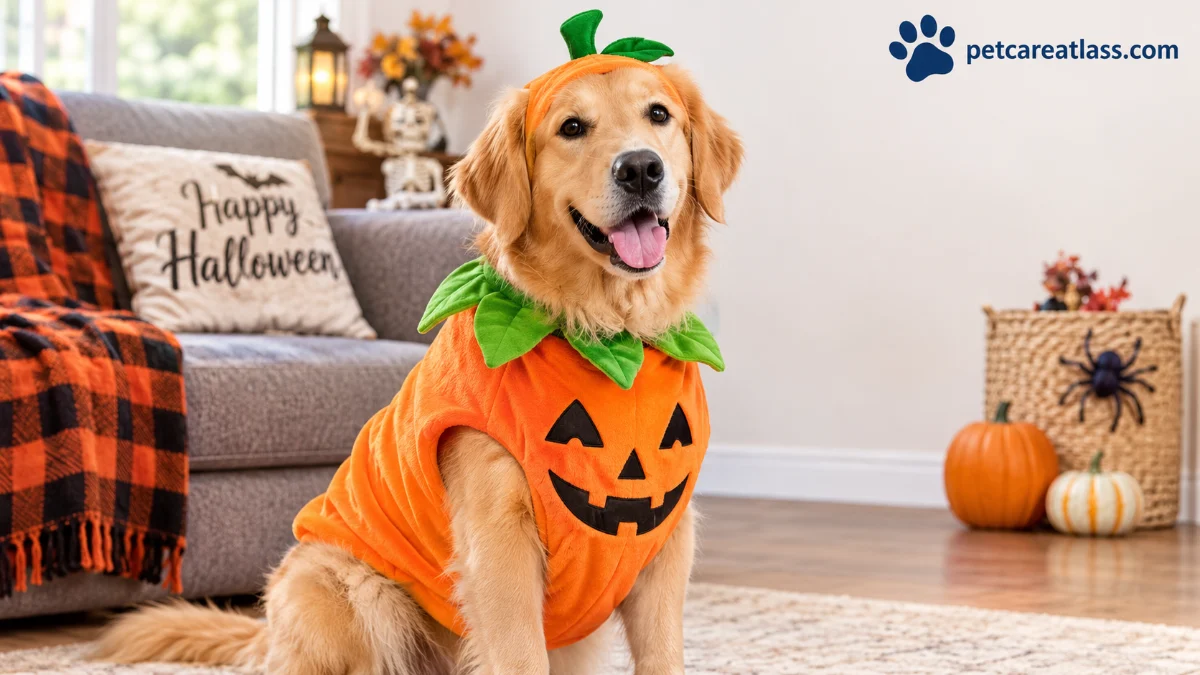
Pet costumes for dogs should be lightweight, properly fitted, breathable, and designed to allow natural movement. Choose an outfit that does not cover your dog’s eyes, restrict breathing, or create a choking risk. Introduce it gradually, supervise your dog while wearing it, and remove it immediately if your pet shows signs of discomfort or stress.
Dressing up a dog for Halloween, a holiday celebration, a birthday, or a family photo can be a fun way to include a beloved pet in special occasions. However, an outfit that looks adorable may not feel comfortable to the animal wearing it.
Some dogs tolerate clothing easily, while others become anxious when fabric touches their bodies or restricts their movement.Choosing pet costumes for dogs involves more than finding an attractive design.
The right outfit should fit properly, suit your dog’s personality and physical needs, and remain safe throughout wear. Understanding materials, sizing, warning signs, and supervision can help you make a better choice.
Key Takeaways
- Choose costumes that allow unrestricted walking, sitting, breathing, and tail movement.
- Check the fit around the neck, chest, legs, and abdomen.
- Avoid small detachable decorations, dangling pieces, and restrictive accessories.
- Introduce costumes gradually instead of forcing your dog to wear them.
- Never leave a dog unattended in a costume.
What to Look for in Pet Costumes for Dogs
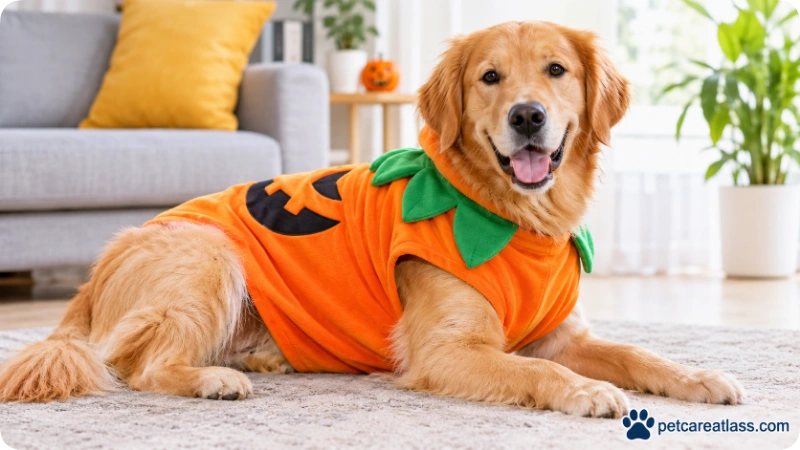
A good dog costume should complement your dog’s natural shape rather than force the body into an uncomfortable position. Before choosing a design, consider how your dog moves, how much coverage the outfit provides, and whether your pet is comfortable wearing clothing.
1. Comfortable, Breathable Materials
Look for soft, lightweight fabrics that feel comfortable against your dog’s coat and skin. Breathable materials are particularly important when your dog will wear an outfit indoors or during an outdoor celebration.
Consider these options:
- Soft cotton blends: Often suitable for lightweight accessories and simple outfits.
- Lightweight polyester: Common in decorative costumes, but check that the fabric does not trap excessive heat.
- Soft fleece: Better suited to cool environments, although thick fleece may become uncomfortable indoors.
- Stretch fabrics: Can provide flexibility, provided they are not tight around the chest or legs.
Avoid rough seams, stiff decorations, sharp edges, and materials that cause rubbing. No fabric is automatically safe for every dog, so monitor your pet’s skin and behavior during wear.
2. Proper Fit Around the Body
A costume should stay in position without squeezing or slipping. Pay particular attention to the neck, chest, shoulders, abdomen, and leg openings.
A poorly fitted outfit can restrict movement, rub against the skin, or become caught on furniture and other objects. The costume should allow your dog to walk, sit, lie down, turn around, and use the bathroom normally.
3. Simple and Secure Design
Simple costumes are generally easier to manage than complicated outfits with multiple accessories.
Choose designs with:
- Secure, smooth fasteners.
- No small detachable decorations.
- No long ribbons or dangling strings.
- No tight elastic around the neck or legs.
- No sharp pins, exposed wires, or rigid attachments.
Avoid masks and headpieces that interfere with your dog’s eyes, ears, nose, or mouth.
Popular Pet Costume Ideas for Dogs
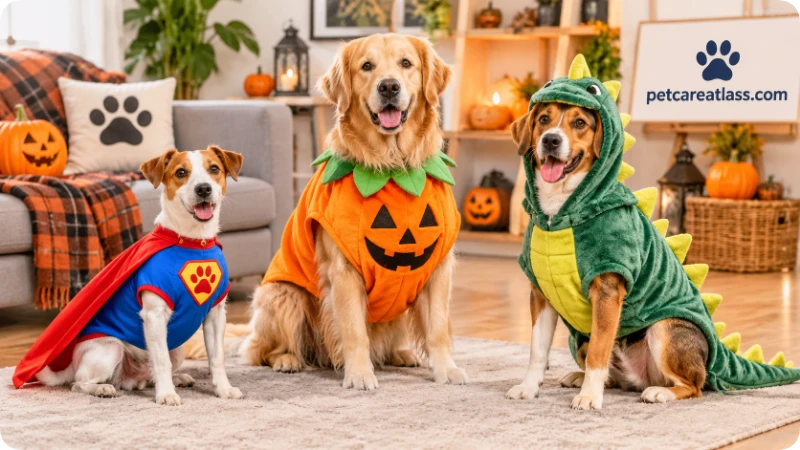
The best costume depends on your dog’s size, personality, coat, and tolerance for clothing. These ideas can help you find an attractive design without prioritizing appearance over comfort.
Halloween Costumes
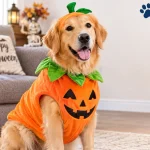
Halloween outfits are among the most recognizable dog costume styles. Popular choices include pumpkins, superheroes, dinosaurs, skeleton-themed designs, and simple seasonal accessories.
For Halloween events, prioritize visibility and freedom of movement. A lightweight themed bandana or decorative harness may be a better option than a full-body costume.
Holiday and Christmas Costumes
Christmas-themed outfits often include red sweaters, festive bandanas, reindeer-inspired accessories, and Santa-style clothing.
Choose lightweight designs appropriate for the room temperature. Avoid heavy layers if your dog already has a thick coat or becomes warm easily.
Funny and Creative Costumes
Funny costumes can turn an ordinary photo into a memorable occasion. Food-inspired outfits, simple animal designs, and miniature character costumes are popular possibilities.
Keep the design uncomplicated. Your dog should not have to tolerate an uncomfortable outfit simply to achieve a particular appearance.
Birthday and Party Outfits
For birthdays and family celebrations, consider a soft bow tie, lightweight party bandana, or comfortable decorative shirt.
These accessories can create a festive appearance without covering most of your dog’s body.
How to Choose the Correct Dog Costume Size
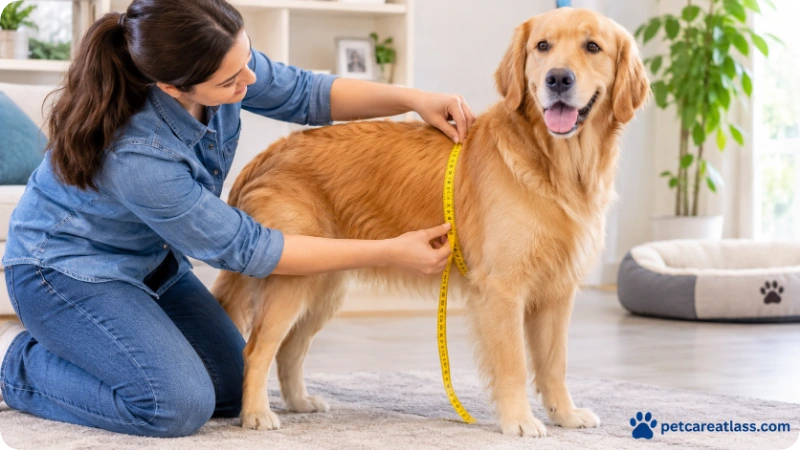
Correct sizing is essential because dog breeds have different body proportions. Two dogs with similar weights may need completely different costume sizes.
Do not select an outfit based on breed or weight alone. Use the manufacturer’s size chart and measure your dog before ordering.
Measurements to Take Before Buying
| Measurement | How to Measure |
|---|---|
| Neck | Measure around the neck base where the collar rests |
| Chest | Measure around the widest part of the rib cage, behind the front legs |
| Back Length | Measure from the neck base to the tail base |
| Waist | Measure around the abdomen if the costume has a fitted waist |
Keep the measuring tape comfortably positioned rather than pulling it tightly against your dog’s body.
Check the Manufacturer’s Size Chart
Dog costume sizes are not standardized across brands. One company’s medium costume may fit differently from another company’s medium.
Compare your dog’s measurements with the specific product chart. If your dog falls between sizes, check the manufacturer’s fitting advice rather than automatically choosing a tighter option.
After trying the outfit on, check that:
- Your dog can move all four legs naturally.
- The fabric does not pull across the chest.
- The neck opening does not press against the throat.
- The costume does not cover the tail or interfere with toileting.
- No part of the outfit drags along the floor.
How to Introduce a Costume Without Stressing Your Dog
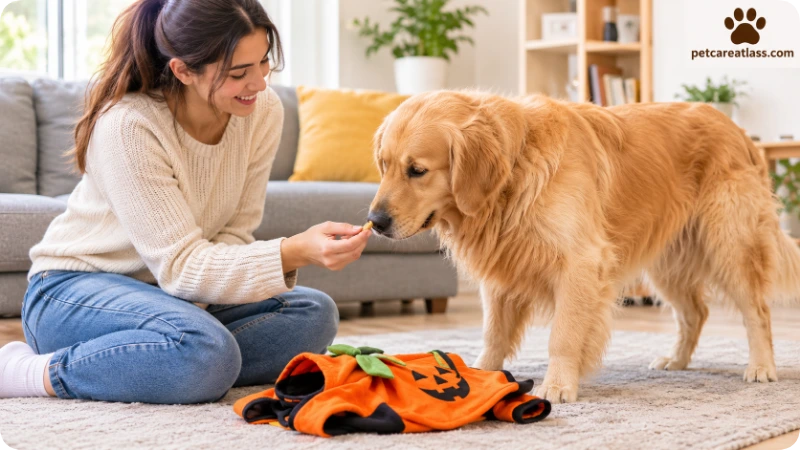
Some dogs are comfortable wearing clothing, while others dislike the sensation of fabric or unfamiliar accessories. A gradual introduction gives your dog an opportunity to respond without being forced into an outfit.
Follow these steps:
- Let your dog investigate: Place the costume on the floor and allow your dog to sniff it voluntarily.
- Create a positive association: Offer praise or a small treat when your dog calmly approaches the outfit.
- Introduce brief contact: If your dog remains relaxed, gently place a small part of the costume against its body.
- Try the outfit briefly: Allow your dog to wear it for a very short period while you observe its response.
- Check normal movement: Make sure your dog can walk, sit, and turn without difficulty.
- Remove it if uncomfortable: Stop immediately if your dog tries to escape, freezes, or shows signs of distress.
Do not restrain your dog or force it to wear the costume. If your pet repeatedly resists, choose a simple accessory or celebrate without clothing.
Signs Your Dog Is Uncomfortable in a Costume
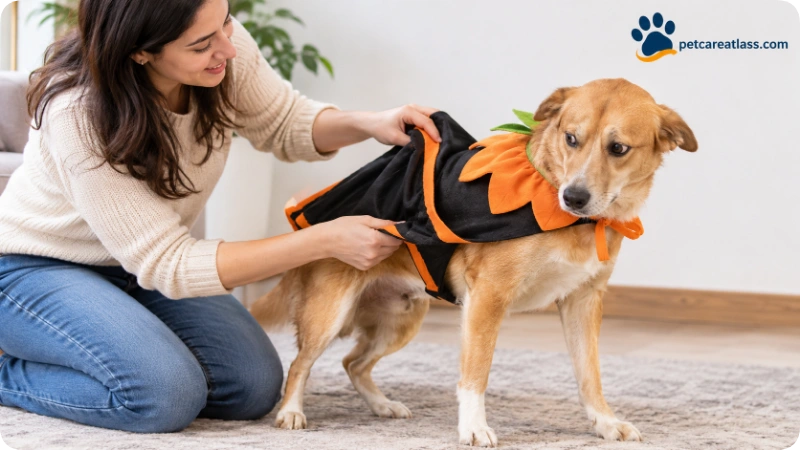
A dog that stands still in an outfit is not necessarily comfortable. Some dogs freeze when they feel uncertain or overwhelmed.
Watch for changes in posture, movement, and behavior.
| Behavior | What It May Indicate |
| Repeated pawing at clothing | The outfit may feel irritating or unfamiliar. |
| Freezing or refusing to walk | The dog may feel uncomfortable or restricted. |
| Flattened ears or tucked tail | Possible fear, uncertainty, or stress. |
| Repeated lip licking or yawning | Possible signs of discomfort in context. |
| Excessive panting | Stress, overheating, or another physical problem. |
| Trying to bite or remove the costume | The dog may be trying to escape the clothing. |
These behaviors should be interpreted together with the dog’s normal behavior and surroundings. No single signal proves that a dog is distressed, but repeated or escalating signs are a reason to remove the outfit.
What should you do?
Remove the costume calmly and give your dog space to relax. Do not punish growling, struggling, or avoidance. If your dog continues panting, appears overheated, has difficulty breathing, or does not return to normal after the outfit is removed, contact a veterinarian.
Costume Safety Mistakes Dog Owners Should Avoid
Even a costume that looks harmless can create problems if it is poorly designed or used without supervision.
| Common Mistake | Why It’s a Problem | Safer Approach |
|---|---|---|
| Tight outfit | Restricts movement or breathing | Check chest and neck fit |
| Small decorations | May cause choking or swallowing | Avoid detachable pieces |
| Covered face | Affects vision and breathing | Keep the face uncovered |
| No supervision | Clothing may tangle or be chewed | Supervise your dog |
| Wearing too long | May cause discomfort or overheating | Keep wear periods short |
| Ignoring stress | Prolongs discomfort | Remove the outfit if stress appears |
The ASPCA specifically advises against costumes that restrict movement, vision, or breathing and recommends checking for small or dangling parts that dogs could chew off.
Are Some Dogs Better Off Without Costumes?
Yes. Not every dog is a suitable candidate for decorative clothing, and there is no need to dress up a pet to include it in a celebration.
Consider skipping costumes for:
- Dogs with breathing difficulties: Restrictive clothing can add unnecessary discomfort, particularly in dogs with existing respiratory problems.
- Senior dogs: Stiffness, arthritis, or reduced mobility may make getting dressed uncomfortable.
- Dogs recovering from illness or surgery: Additional clothing may interfere with recovery garments, wounds, or veterinary instructions.
- Anxious or sensitive dogs: Unfamiliar clothing may increase stress.
- Dogs with skin irritation: Fabric, seams, and fasteners may aggravate sensitive areas.
If you are unsure whether a costume is appropriate for a dog with an existing health condition, ask your veterinarian first.
Comfortable Alternatives to Full Dog Costumes
If your dog dislikes full-body clothing, you can still include it in seasonal photographs and celebrations.
Some practical alternatives include:
- Festive bandanas: Lightweight accessories that provide a seasonal appearance without covering the body.
- Decorative collars: A simple way to add holiday colors or themes.
- Pet-safe bow ties: Small accessories that can be attached securely to a properly fitted collar.
- Themed harnesses: Useful for creating a festive appearance while keeping your dog’s walking equipment functional.
- Photo props: Place a seasonal decoration beside your dog instead of dressing it up.
These options are not automatically suitable for every dog. Check for secure attachments, comfortable fit, and potential chewing hazards.
Frequently Asked Questions
Are pet costumes for dogs safe?
Pet costumes can be safe for some dogs when they fit properly, allow normal movement and breathing, and contain no hazardous decorations. However, not every dog enjoys wearing clothing. Always supervise your pet and remove the outfit if it shows signs of discomfort.
How long can a dog wear a costume?
There is no universal safe wearing time. Keep costume sessions brief, supervise your dog continuously, and consider the temperature and your pet’s response. Remove the outfit if your dog becomes uncomfortable, overheated, or restricted.
Can dogs sleep in costumes?
No. Remove decorative costumes before your dog sleeps. Clothing can become tangled, shift out of position, or create discomfort when the dog changes sleeping positions. Your dog should have an unobstructed, comfortable sleeping area.
Should I buy a costume based on my dog’s breed?
Breed can help you understand your dog’s general body shape, but it should not determine costume size. Measure your dog’s neck, chest, and back, then compare those measurements with the manufacturer’s sizing chart.
Can puppies wear dog costumes?
Puppies can be introduced to lightweight clothing if they are comfortable with it, but their safety and movement should come first. Choose simple designs, supervise closely, and avoid forcing a puppy to wear an unfamiliar outfit.
Are dog costumes suitable for outdoor Halloween events?
Some dogs may tolerate a short outdoor costume session, but consider temperature, visibility, crowds, and distractions. Keep your dog securely leashed, maintain proper identification, and avoid costumes that interfere with walking or normal communication.
Conclusion
Pet costumes for dogs can add a festive touch to birthdays, Halloween, and holiday celebrations, but comfort should always come before appearance.
Choose lightweight materials, measure carefully, avoid hazardous decorations, and watch your dog’s body language throughout the experience.
If your pet dislikes wearing clothing, a simple bandana or decorative collar can be a better alternative. The best celebration is one where your dog feels safe, comfortable, and included.

Dr. Emily Carter is a pet-care writer with a focus on animal health, nutrition, and everyday pet wellness. She creates practical, easy-to-understand guides that help pet owners make informed and responsible care decisions.