Quick Answer:
Your cat usually purrs when you pet her because she feels comfortable, relaxed, or enjoys the interaction. Purring can also help her communicate, seek attention, or soothe herself. However, cats sometimes purr when they feel anxious or experience pain, so consider her overall body language and behavior rather than assuming every purr means happiness.
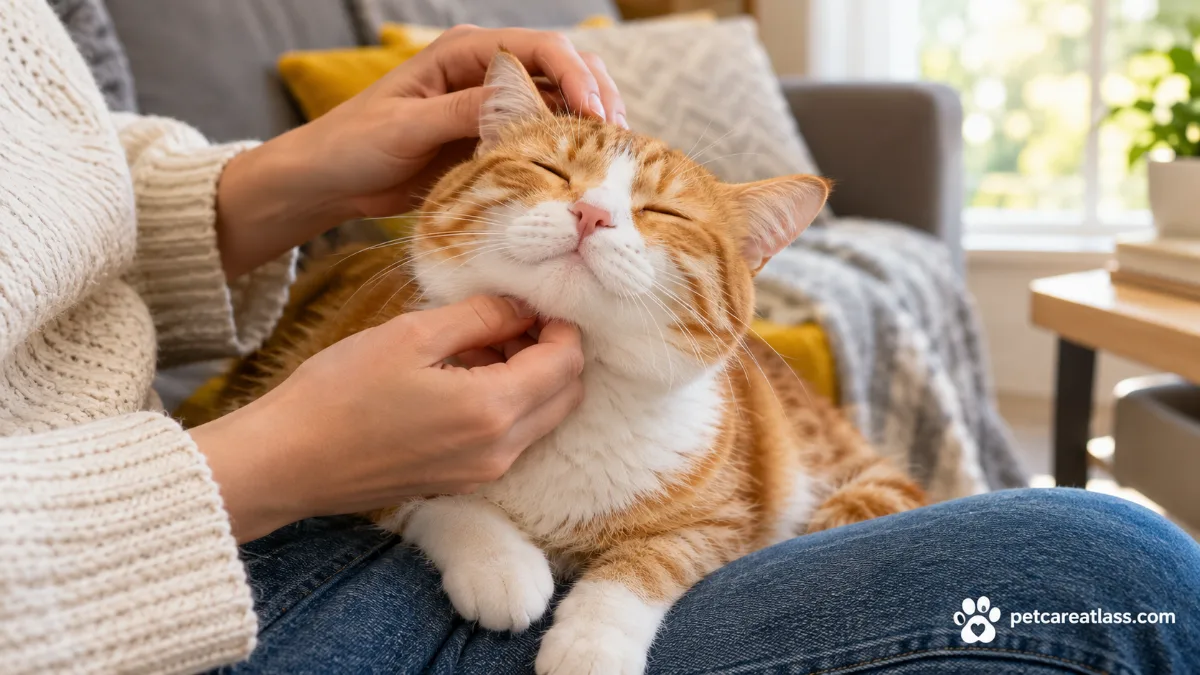
Hearing your cat purr when you gently stroke her head, scratch behind her ears, or rub her chin can be one of the sweetest parts of having a feline companion.
That familiar vibrating sound often suggests she feels comfortable around you and welcomes your attention. But cat purring is more complicated than a simple expression of happiness.
Sometimes, cats purr to communicate, strengthen social connections, or calm themselves in unfamiliar situations. Understanding the circumstances behind this behavior can help you recognize what your cat is communicating.
This guide explains why cats purr during petting, which physical signals suggest contentment, and when unusual purring deserves attention.
What Your Cat’s Purring May Be Telling You
Cats use purring as a form of communication in different situations. When your cat starts purring as soon as you touch her, she may be responding positively to your attention, expressing familiarity, or seeking more interaction.
Here are six possible explanations.
1. She Feels Relaxed and Comfortable
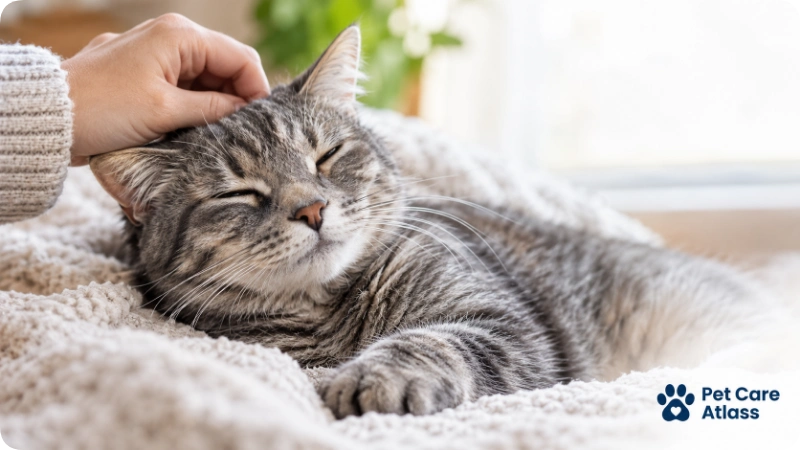
One of the most common reasons cats purr during petting is that they feel comfortable and relaxed.
When your cat enjoys being stroked, gentle physical contact may encourage her to purr. You might notice this when she settles beside you on the couch, stretches out on your lap, or closes her eyes while you gently scratch her head.
Other signs of relaxation include:
- Soft, partially closed eyes.
- Relaxed ears pointing naturally forward.
- Loose muscles and a comfortable resting position.
- Gentle kneading with her front paws.
- A tail resting comfortably without rapid movements.
When these signals appear together, her purring is likely associated with a positive interaction.
2. She Enjoys Your Attention and Affection
Your cat may purr because she welcomes the attention you give her.
Some cats actively seek physical contact by approaching their owners, rubbing their cheeks against their hands, or settling beside them. When you respond with gentle petting, they may begin purring as part of the interaction.
This behavior is also connected to social bonding. Cats can develop familiar relationships with people through predictable, comfortable interactions.
However, every cat has individual preferences. Some enjoy long petting sessions, while others prefer a few gentle strokes before taking a break.
3. She Is Strengthening Her Bond With You
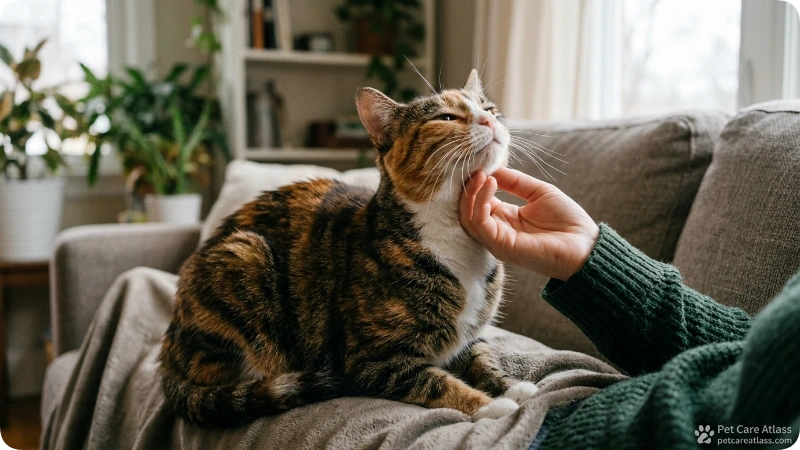
Purring can be part of the social communication cats use with familiar companions.
Kittens begin purring very early in life, and mother cats also purr while interacting with their young. These early interactions help establish communication between a mother and her kittens.
As adult cats, they may continue using purring during positive social contact with familiar animals and people.
If your cat regularly settles beside you, rubs against your hand, and purrs when you pet her, these behaviors may reflect familiarity and a comfortable relationship.
4. She Wants You to Continue Petting Her
Sometimes, your cat purrs because she is encouraging you to continue an interaction she welcomes.
You may notice that she:
- Moves closer when you stop petting.
- Gently pushes her head against your hand.
- Rubs her cheeks against your fingers.
- Repositions herself to receive more scratches.
- Continues resting comfortably beside you.
These behaviors can indicate that she is interested in more attention.
However, purring alone does not guarantee that she wants continuous petting. Pay attention to changes in her posture and movements, and give her the opportunity to walk away whenever she wants.
5. Petting May Help Her Feel Safe and Secure
Cats often develop familiar routines around people they trust. Gentle petting in a quiet, comfortable environment may help your cat settle and feel secure.
For example, your cat might climb onto your lap while you are reading or watching television. As you gently stroke her head, she begins purring and relaxes against you.
The combination of familiar surroundings, predictable handling, and comfortable physical contact may contribute to this response.
Some cats also purr when they are uncertain or frightened, so consider the environment and other body-language signals before interpreting the sound as reassurance or happiness.
6. She May Be Using Purring to Soothe Herself
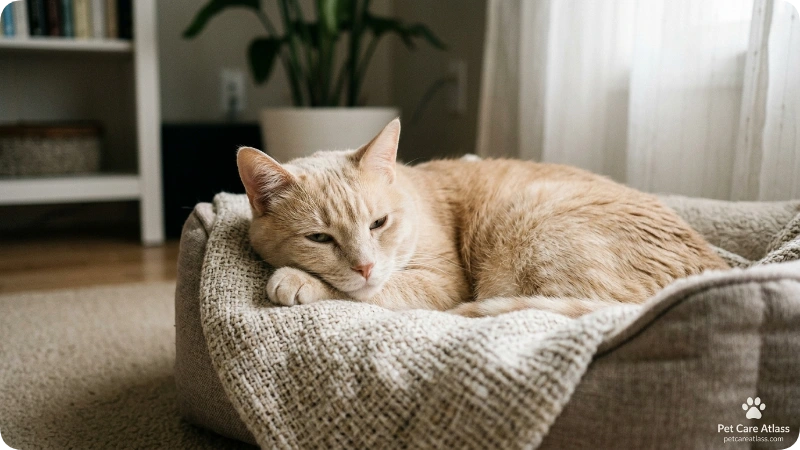
Not every purring cat is necessarily enjoying the situation.
Cats can also purr during stressful or uncomfortable experiences, including veterinary examinations, unfamiliar surroundings, and periods of physical discomfort.
Researchers and veterinary professionals recognize that purring occurs in both positive and negative situations. One possible explanation is that it can serve a self-soothing function, although its precise purpose in these circumstances is not fully understood.
If your cat purrs while hiding, remaining tense, avoiding contact, or showing other unusual behaviors, do not assume she is comfortable simply because she is making a familiar sound.
How to Tell Whether Your Cat’s Purring Means Happiness
The sound of purring alone cannot tell you exactly how your cat feels. Her facial expressions, posture, movements, and surroundings provide important clues.
A relaxed cat generally displays several comfortable body-language signals at the same time.
| Body Language | Possible Meaning |
|---|---|
| Slow blinking | Comfort and relaxed interaction |
| Kneading with front paws | Commonly associated with comfort |
| Relaxed ears | No obvious ear-related distress |
| Loose body posture | Physical relaxation |
| Rubbing against your hand | Interest in social contact |
| Resting comfortably | Possible contentment and security |
Look for several signs together rather than relying on one behavior. For example, a cat that purrs while stretching comfortably, slow blinking, and leaning into your hand is more likely to be enjoying the interaction than one that remains tense or tries to move away.
Where Do Cats Usually Like Being Petted?
Cats have individual preferences, but many tolerate or welcome gentle contact around their head and face more readily than touching their belly or paws.
Understanding these preferences can make petting more comfortable for your cat.
Commonly preferred areas include:
- Cheeks: Gentle rubbing around the cheeks may be welcomed by many cats.
- Under the chin: Some cats lean forward when their chin is scratched.
- Between the ears: Light strokes around the head may be comfortable.
- Forehead: Gentle contact around the forehead is often tolerated.
- Neck and shoulders: Some cats enjoy gentle scratching in these areas.
Be more cautious around the belly, paws, legs, and tail. Even a cat that exposes her stomach may not want you to touch it.
The best approach is to let your cat initiate contact. Offer your hand, allow her to sniff it, and see whether she leans forward or rubs against it. Start with a few gentle strokes and observe her response.
Can Cats Purr When They Are Unhappy or in Pain?
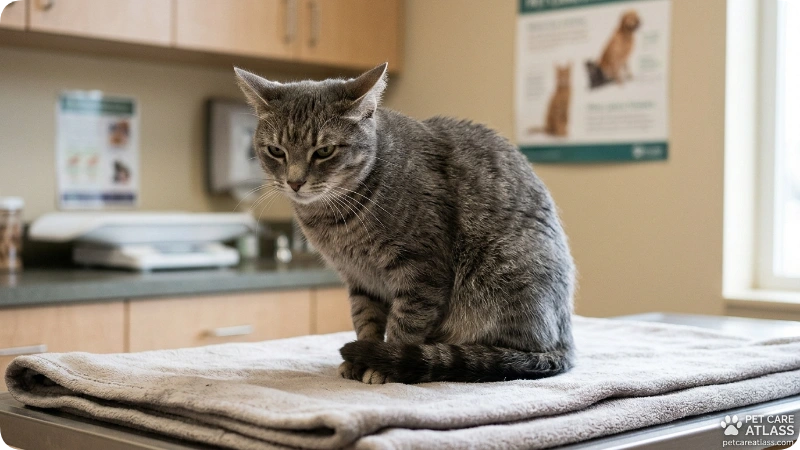
Yes. Although purring is commonly associated with positive interactions, cats can also purr when they are frightened, anxious, uncomfortable, or experiencing pain.
This is one reason owners should avoid treating purring as a guaranteed sign of happiness.
For example, a cat may purr during a veterinary examination even when she feels frightened. Another cat may purr while resting in an unusual position because she is experiencing physical discomfort.
The sound itself may be similar in both situations, making body language and changes in normal behavior especially important.
Signs That Purring May Be Associated With Discomfort
Pay attention if your cat purrs while displaying any of these behaviors:
- Hiding more frequently than usual.
- Keeping her body tense or crouched.
- Flattening or rotating her ears backward.
- Avoiding touch or moving away from your hand.
- Eating less or showing changes in appetite.
- Limping or avoiding normal movement.
- Showing unusual aggression or vocalization.
These signs do not establish a diagnosis, but they can indicate that something is wrong.
If your cat develops persistent changes in behavior, appetite, movement, or social interaction, arrange a veterinary examination. Seek prompt veterinary care if she has difficulty breathing, collapses, or experiences another serious or sudden symptom.
Why Does My Cat Purr Louder When I Pet Her?
Your cat may increase the volume of her purring when you pet her because the interaction stimulates a familiar response or she becomes more vocal during social contact.
Some cats naturally have louder purrs than others. The sound may also seem louder when she is sitting directly on your lap or resting against your body because you can feel the vibrations as well as hear them.
A louder purr is not automatically a sign of greater happiness. Consider whether she is relaxed, voluntarily approaching you, and responding comfortably to your touch.
If her purring suddenly becomes noticeably different and is accompanied by unusual breathing, discomfort, or other physical changes, consult your veterinarian.
Why Does My Cat Purr and Knead When I Pet Her?
When a cat purrs and kneads at the same time, the combination is commonly associated with a comfortable or positive state.
Kneading is the repeated movement of the front paws against a soft surface. Kittens perform this action while nursing because it helps stimulate milk flow from their mother.
Many cats continue kneading into adulthood. They may knead blankets, cushions, their owners’ laps, or other soft surfaces while purring.
This behavior may be connected to familiar comfort-related experiences from kittenhood, although the exact reason varies between individual cats.
If your cat kneads your lap while you pet her, let her continue if she appears comfortable. If her claws become uncomfortable, place a thick blanket between your lap and her paws rather than pushing her away.
What Should You Do When Your Cat Starts Purring During Petting?
The best response is to respect your cat’s preferences and allow her to control the interaction.
Follow these simple practices:
- Let her approach first: Give your cat the opportunity to initiate contact rather than forcing attention.
- Start gently: Use slow, light strokes around her cheeks, forehead, or chin.
- Watch her body language: Look for relaxed muscles, comfortable ears, and voluntary contact.
- Take short breaks: Pause occasionally to see whether she wants more petting.
- Respect her boundaries: Stop if she moves away, becomes tense, or shows signs of irritation.
- Avoid forced handling: Never hold her in place to continue an interaction she is trying to end.
Recognize Signs of Petting Overstimulation
Some cats enjoy petting initially but become uncomfortable when it continues for too long. This is called petting-induced overstimulation.
According to Cornell University’s Feline Health Center, some cats show warning signals such as tail lashing, dilated pupils, and ears moving backward before reacting aggressively.
| What You Notice | Possible Meaning | What to Do |
|---|---|---|
| Relaxed body and soft eyes | Comfortable interaction | Continue gently if welcomed |
| Tail twitching or swishing | Possible irritation | Pause petting |
| Ears turning backward | Possible discomfort | Give her space |
| Skin twitching along the back | Possible overstimulation | Stop touching her |
| Turning quickly toward your hand | Possible warning signal | Remove your hand |
| Growling, hissing, or swatting | Clear discomfort | Stop and let her settle |
Remember that cats have different tolerance levels. Learning your cat’s individual signals is more useful than following a fixed petting duration.
When Should You Be Concerned About Your Cat’s Purring?
Occasional purring during petting is generally not a reason to worry when your cat otherwise behaves normally.
However, pay attention to changes in her usual purring patterns, particularly when they occur alongside physical or behavioral symptoms.
Consider arranging a veterinary examination if:
- She begins purring unusually often while withdrawing from interaction.
- She purrs while hiding or remaining in an uncomfortable position.
- Her appetite, drinking habits, or activity level changes.
- She reacts painfully when you touch a particular area.
- She shows unusual aggression or avoids normal activities.
Important: Do not attempt to diagnose pain based on purring alone. Cats can hide signs of illness, and a veterinary examination is the appropriate way to investigate persistent or unexplained changes.
FAQs
Does my cat purr because she loves me?
Purring during comfortable interactions may reflect familiarity, social bonding, and a positive relationship with you. However, purring cannot establish exactly what a cat feels. Look for additional signs, such as voluntarily approaching you, rubbing against your hand, relaxing nearby, and welcoming gentle contact.
Why does my cat start purring as soon as I touch her?
Your cat may have learned to associate your touch with familiar, comfortable interactions. When you begin stroking her, she may respond by purring. If she also leans into your hand, relaxes her body, and remains nearby, she is probably comfortable with the attention.
Why does my cat purr when I stop petting her?
Your cat may continue purring because she remains relaxed after the interaction ends. Alternatively, she may be seeking more attention, particularly if she moves toward your hand or gently nudges you. Watch her movements to determine whether she wants you to continue or simply enjoys resting beside you.
Is it normal for my cat to purr every time I pet her?
Yes, some cats regularly purr during petting because they associate familiar physical contact with comfortable experiences. Individual cats differ in how frequently and loudly they purr. If her behavior, appetite, movement, and general health remain normal, frequent purring during gentle petting is usually not concerning.
Should I stop petting my cat when she starts purring?
Not necessarily. If your cat has a relaxed posture and actively welcomes your touch, you can continue gently. However, stop if she starts swishing her tail, flattening her ears, tensing her muscles, or moving away. Purring does not override other signs that she wants space.
Conclusion
When your cat purrs while you pet her, she is often responding to comfortable physical contact, familiar attention, or social interaction. However, purring can also occur during anxiety, discomfort, and pain.
Pay attention to her entire body language rather than relying on the sound alone. By respecting her preferences, recognizing signs of overstimulation, and noticing unusual behavioral changes, you can make petting a more comfortable experience for both of you.

Daniel Brooks is a pet care and animal behavior writer at petcareatlass.com focused on helping owners better understand their pets’ behavior and everyday needs. He creates practical, easy-to-follow content on pet communication, training, welfare, and responsible care.