Quick Answer:
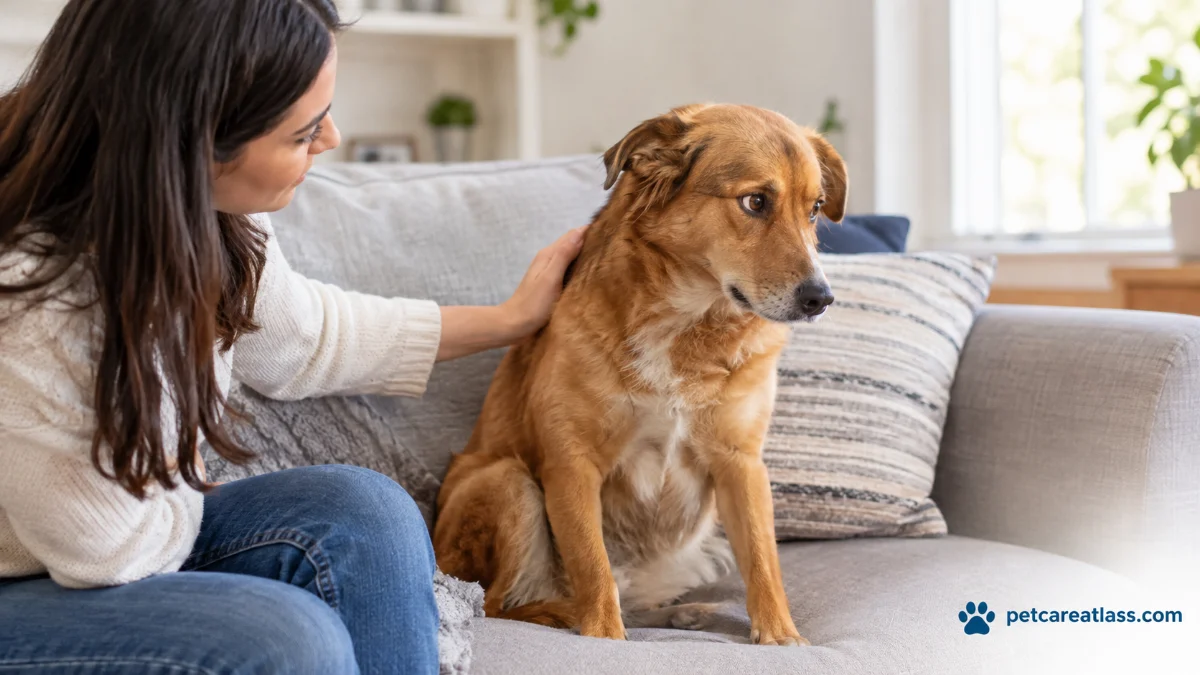
If your dog growls when you pet him, he may be uncomfortable, frightened, overstimulated, protective of his space, or experiencing pain. Growling is a warning signal that communicates discomfort or a desire for distance, not necessarily aggression. Stop petting, give him room to move away, and look for the trigger instead of punishing the behavior
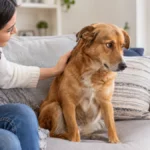
Petting your dog is usually a way to show affection, strengthen your bond, and make him feel loved. However, things can become confusing when your dog suddenly responds with a low growl while you’re gently rubbing his head, scratching his back, or cuddling beside him.
You might wonder whether he is angry, afraid, or simply doesn’t enjoy being touched. The truth is that dogs use growling to communicate different emotions and physical needs.
Understanding why your dog reacts this way can help you recognize his boundaries, identify possible health problems, and prevent uncomfortable interactions. Learning to read his body language is the first step toward building a safer, more trusting relationship.
7 Reasons Behind Your Dog’s Reaction to Physical Touch
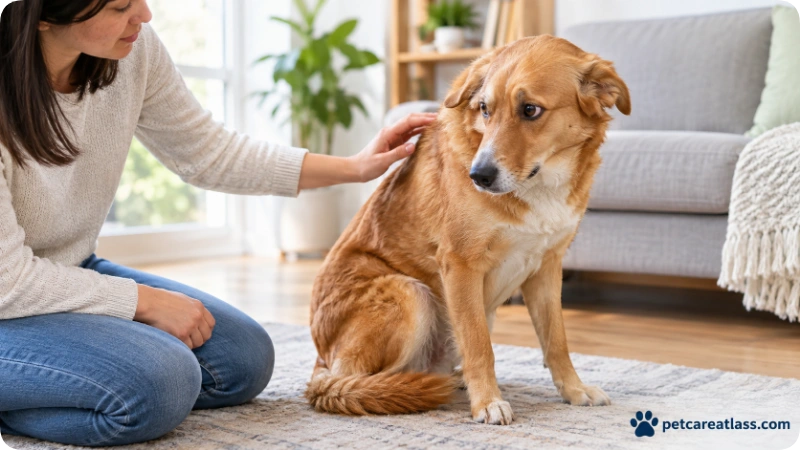
A dog may growl during petting for several reasons. The type of touch, your dog’s environment, previous experiences, and physical condition can all influence his response.
1. Your Dog Feels Uncomfortable With Being Touched
Not every dog enjoys physical affection in the same way. Some dogs prefer staying close to their owners without being hugged, held, or repeatedly stroked.
Your dog might initially accept petting but become uncomfortable when you continue for too long. He may also dislike particular types of touch, such as rubbing his head, touching his paws, or putting your arms around his body.
Watch for signs that he wants the interaction to end:
- Turning his head away from your hand.
- Moving his body away from you.
- Lowering his head or pulling his ears back.
- Repeatedly licking his lips.
- Becoming stiff or unusually still.
- Showing the whites of his eyes.
These signals can indicate discomfort, uncertainty, or stress. If you notice them, stop petting and allow your dog to decide whether he wants to approach again.
2. Your Dog Is Experiencing Fear or Anxiety
Some dogs growl because physical contact makes them feel threatened. This can happen when someone approaches too quickly, reaches over their head, bends over them, or touches them unexpectedly.
Dogs with limited positive handling experiences or a history of frightening interactions may be particularly sensitive to certain types of contact.
Fear-related growling may occur alongside:
- A tucked tail.
- Ears held back.
- A lowered body posture.
- Trembling or excessive panting.
- Avoiding eye contact.
- Trying to hide or move away.
Your dog may be using growling to communicate that he feels unsafe or needs more distance.
What you should do: Approach calmly, avoid reaching over his head, and give him an opportunity to initiate contact. Never force him to accept petting when he appears frightened.
3. Your Dog May Be Experiencing Pain or Physical Discomfort
Pain is one of the most important possibilities to consider, especially if your dog previously enjoyed being petted but has recently started growling.
An injury, joint problem, skin irritation, ear infection, dental issue, or another medical condition may make certain areas painful to touch. Even gentle petting can become uncomfortable when it puts pressure on a sensitive area.
You might notice that your dog growls when you touch:
- His back, hips, or legs.
- His ears or head.
- His stomach or sides.
- His neck or shoulders.
- A particular area of his skin.
Other possible signs of pain include limping, reduced activity, difficulty getting up, excessive licking of one area, changes in appetite, or unusual withdrawal.
What you should do: Arrange a veterinary examination, particularly if the behavior is new, persistent, or associated with other physical changes. Avoid repeatedly pressing or touching the suspected painful area to test his reaction.
4. Your Dog Has Had Enough Petting
Some dogs enjoy physical contact initially but become uncomfortable when it continues for too long.
This is sometimes called overstimulation. Repeated strokes, vigorous scratching, or touching sensitive areas may become unpleasant even when your dog willingly approached you at first.
For example, your dog may happily accept back scratches for a few seconds before turning his head, stiffening his body, and eventually growling.
Signs that your dog needs a break include:
- Repeatedly turning toward your hand.
- Tightening facial muscles.
- Moving away from your touch.
- Becoming restless.
- Showing a stiff body posture.
What you should do: Keep petting sessions short and gentle. Pause frequently to see whether your dog chooses to remain close or actively seeks more contact.
5. Your Dog Is Protecting His Personal Space
Some dogs become uncomfortable when people approach or touch them while they are resting, sleeping, or relaxing in a favorite spot.
For example, your dog might growl when you pet him while he is lying on the couch, resting in his bed, or sleeping beside you.
This reaction may be associated with fear, discomfort, or guarding a preferred resting place.
A dog that feels threatened may use growling to communicate that he wants more distance.
What you should do: Give your dog an undisturbed resting area. Avoid touching, hugging, or moving him when he is sleeping. If he needs to move, encourage him to get up voluntarily rather than grabbing his collar or physically pulling him.
6. Your Dog Is Guarding Something Valuable
Resource guarding occurs when a dog tries to protect something he considers valuable. This may include food, toys, treats, resting places, or access to a particular person.
For instance, your dog might growl when you pet him while he is chewing a favorite toy or lying beside his food bowl.
Possible signs include:
- Becoming stiff when you approach.
- Hovering over an object.
- Turning his body to block access.
- Eating more quickly when someone approaches.
- Growling when you attempt to touch or remove something.
Resource guarding is not necessarily a sign that your dog is trying to dominate you. It is a behavior that can be associated with anxiety about losing access to something valuable.
What you should do: Avoid taking the guarded object away by force or repeatedly testing your dog’s reaction. If guarding involves growling, snapping, or biting, seek help from a qualified, reward-based behavior professional.
7. Your Dog Is Vocalizing During Play or Excitement
Not every growl indicates fear or a desire to be left alone. Some dogs make growling sounds during playful, exciting interactions.
For example, your dog might vocalize while playing tug, rolling around with a toy, or engaging in an energetic game.
Play-related growling may occur with:
- A loose, relaxed body.
- Play bows, with the front legs lowered.
- Bouncy movements.
- Voluntary re-engagement in play.
- Brief pauses followed by renewed playful activity.
However, context matters. A playful-sounding growl should never be interpreted from the sound alone. If your dog becomes stiff, tries to move away, or shows signs of discomfort during petting, stop the interaction.
How to Tell Whether Your Dog’s Growling Is a Warning
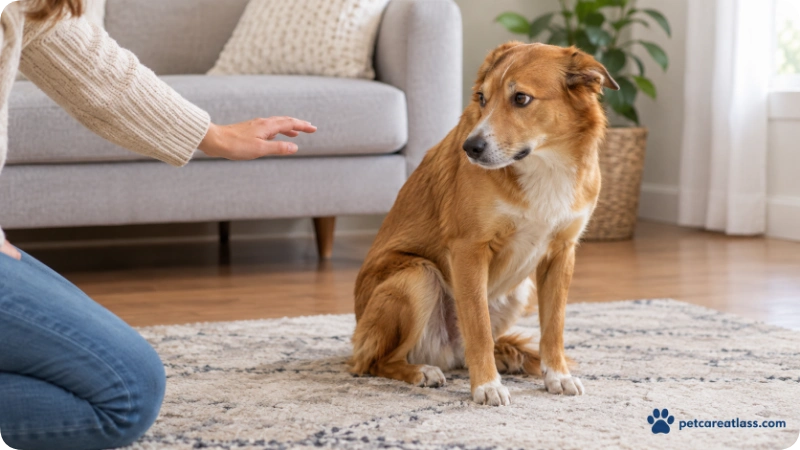
Understanding your dog’s body language is just as important as listening to the growl. The same sound can occur in different situations, so consider what your dog is doing immediately before and after vocalizing.
| Body Language | Possible Meaning |
|---|---|
| Loose body and playful movements | Excitement or play |
| Stiff body and fixed stare | Tension or defensive behavior |
| Ears pulled back and tucked tail | Fear or discomfort |
| Turning away from your hand | Avoiding contact |
| Lip licking and repeated yawning | Possible stress or uncertainty |
| Freezing before growling | Significant discomfort or perceived threat |
| Moving away and hiding | Fear or desire for distance |
These signs are not definitive diagnoses. Look at the complete body posture and situation rather than relying on one signal.
A wagging tail does not automatically mean a dog is comfortable. Some dogs wag their tails when excited, uncertain, or stressed. Similarly, a dog that becomes completely still may be uncomfortable even if it isn’t growling yet.
What Should You Do When Your Dog Growls While Being Petted?
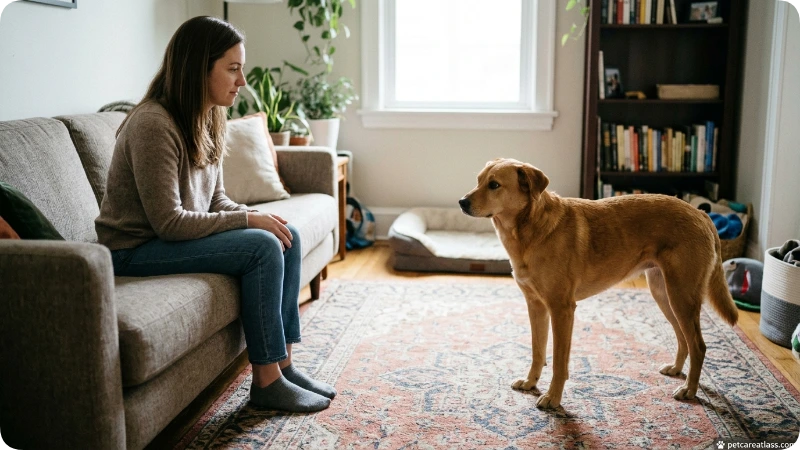
The safest response is to respect the growl and identify what triggered it. Your reaction can influence whether your dog feels safer during future interactions.
1. Stop Petting Immediately
As soon as your dog growls, stop touching him. Do not continue scratching his head, rubbing his belly, or holding him.
Give him an opportunity to move away without feeling trapped.
2. Give Your Dog Enough Space
Move your hands away and allow your dog to settle. Avoid leaning over him, staring directly into his eyes, or reaching toward his collar.
If he is resting, let him remain undisturbed unless there is an immediate safety concern.
3. Identify What Triggered the Growling
Think about what happened immediately before the growl.
Ask yourself:
- Was I touching a particular body part?
- Was my dog sleeping or resting?
- Had I been petting him for a long time?
- Was he holding a toy or chewing food?
- Did someone approach him unexpectedly?
- Has this behavior started recently?
Recognizing a pattern can help you understand whether the reaction is associated with touch, fear, pain, or a particular environment.
4. Respect Your Dog’s Preferred Way of Receiving Affection
Allow your dog to decide when he wants physical contact.
When he approaches with relaxed body language, offer a brief, gentle stroke around an area he appears comfortable having touched, such as the chest or shoulder.
Then pause. If he moves closer or actively seeks more contact, you can offer another short interaction. If he turns away or moves off, respect that choice.
5. Avoid Punishing the Growl
Never hit, yell at, intimidate, or physically correct your dog for growling.
Growling is a warning signal that communicates discomfort. Punishing it may suppress the warning without resolving the underlying fear, pain, or stress.
This can make future interactions harder to interpret and potentially more dangerous.
6. Seek Professional Help When Necessary
If your dog repeatedly growls during everyday interactions, snaps, guards objects, or has previously bitten someone, consult a qualified professional.
A veterinarian can investigate medical causes, while a board-certified veterinary behaviorist or appropriately qualified reward-based behavior professional can help develop a safe behavior plan.
How Can You Help Your Dog Become More Comfortable With Petting?
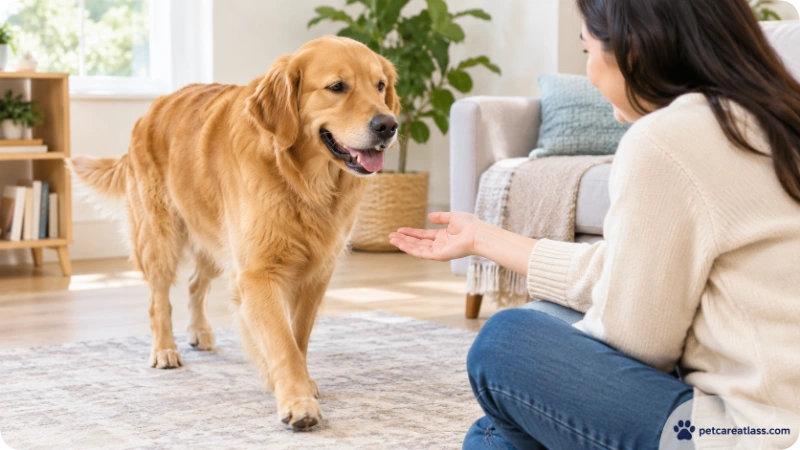
If your veterinarian has ruled out medical causes, gradual reward-based training may help your dog develop more positive associations with gentle handling.
This approach is often called desensitization and counterconditioning.
The goal is not to force your dog to tolerate petting. Instead, you gradually introduce comfortable levels of contact while pairing the experience with something positive.
Try the following general approach:
- Start with distance: Allow your dog to remain in a comfortable position without reaching toward him.
- Build positive associations: Offer a treat when he is relaxed around your presence.
- Introduce brief contact: If he voluntarily approaches and remains comfortable, try a very brief touch in a non-sensitive area.
- Pair contact with rewards: Give a treat for calm, comfortable participation.
- Watch his reactions: Stop if he stiffens, turns away, freezes, or shows signs of stress.
- Progress gradually: Increase contact only when your dog consistently remains comfortable.
Do not use this process to push through growling or other warning signals. If your dog has a history of snapping or biting, have a qualified professional guide the training.
When Should You Take Your Dog to a Veterinarian?
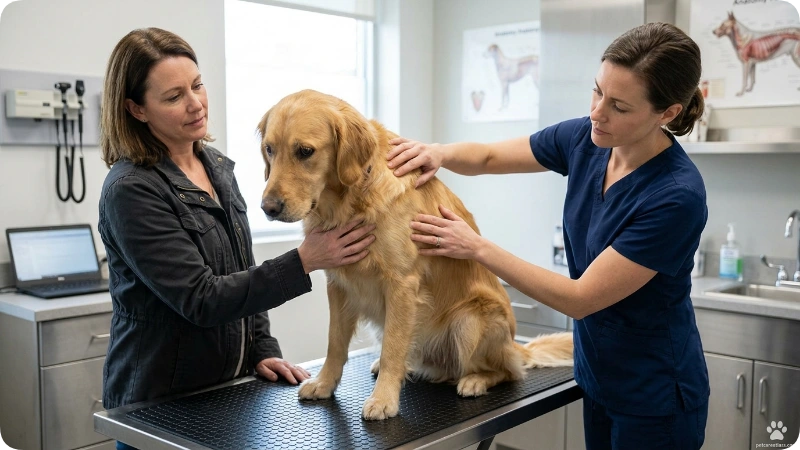
A dog that suddenly begins growling when petted deserves particular attention because changes in behavior can be an early indication of physical discomfort.
Arrange a veterinary appointment if you notice:
- New or worsening growling during physical contact.
- Sensitivity when touching a particular area.
- Limping or difficulty standing.
- Reluctance to climb stairs or jump.
- Excessive licking or chewing of one body part.
- Changes in appetite or sleeping habits.
- Unusual withdrawal or irritability.
- Growling accompanied by snapping or other defensive behavior.
Seek urgent veterinary care if the growling occurs alongside signs of a serious injury, difficulty breathing, collapse, or another apparent emergency.
Do not attempt to diagnose the problem by repeatedly touching painful areas. Your veterinarian can perform an examination and determine whether further testing is needed.
Common Mistakes Dog Owners Should Avoid
Even well-meaning owners can unintentionally make handling more stressful for their dogs.
| Common Mistake | Why It Can Be Harmful | Better Approach |
|---|---|---|
| Punishing growling | May suppress warning signals | Stop and give space |
| Forcing affection | Can increase fear and discomfort | Let your dog choose contact |
| Hugging a growling dog | May make him feel trapped | Avoid restricting movement |
| Repeatedly touching sensitive areas | Can worsen pain or fear | Arrange a veterinary examination |
| Ignoring body language | Misses early discomfort signs | Observe the entire body |
| Taking guarded objects by force | Can increase defensive reactions | Seek professional guidance |
The most helpful approach is to recognize your dog’s boundaries rather than trying to make him accept every form of affection.
Frequently Asked Questions
Why does my dog growl when I pet him but still wag his tail?
A wagging tail does not always mean your dog is happy or comfortable. Dogs may wag their tails when excited, uncertain, or stressed. Look at the rest of his body, including his ears, facial expression, posture, and movements. If he growls, pause petting and give him space regardless of whether his tail is wagging.
Why does my dog growl when I pet his head?
Your dog may dislike having his head touched, feel threatened by a hand approaching from above, or experience discomfort around his ears, eyes, teeth, or neck. Some dogs simply prefer chest or shoulder contact. If head sensitivity is new or accompanied by other symptoms, arrange a veterinary examination.
Why does my dog growl when I pet him while he is sleeping?
Your dog may be startled when touched unexpectedly during sleep. He may also feel uncomfortable being disturbed in his resting area. Avoid waking him through physical contact. Instead, use your voice from a comfortable distance and allow him to wake up and approach you voluntarily.
Why does my dog growl at me but not other family members?
Your dog may respond differently to individual handling styles, movements, voices, or interactions. For example, he may be comfortable with someone who approaches slowly but uncomfortable with someone who reaches over his head. Previous experiences and differences in handling can also influence his reactions. Everyone in the household should respect his boundaries and use consistent, gentle interactions.
Should I stop petting my dog if he growls?
Yes. Stop petting immediately and give your dog space. A growl is a signal that the current interaction is uncomfortable or that he wants something to change. Do not punish him or continue touching him to see whether he will tolerate it. Investigate the trigger and seek professional advice if the behavior continues.
Can a friendly dog suddenly become aggressive when petted?
Yes. A normally friendly dog may begin growling or snapping if he develops pain, becomes fearful, or experiences discomfort during handling. A sudden behavioral change should not automatically be treated as a training problem. Have your veterinarian check for possible medical causes before starting behavior modification.
Conclusion
If your dog growls when you pet him, the best response is to pause, give him space, and understand what is causing the reaction. Fear, physical discomfort, overstimulation, and personal boundaries can all contribute to growling. Never punish this warning signal or force affection.
Instead, respect your dog’s communication, arrange a veterinary examination when appropriate, and use gradual, reward-based guidance to build more comfortable interactions. A trusting relationship begins with understanding when your dog wants affection and when he needs space.

Dr. Emily Carter is a pet-care writer with a focus on animal health, nutrition, and everyday pet wellness. She creates practical, easy-to-understand guides that help pet owners make informed and responsible care decisions.