Quick Answer:
A pet safe flea spray must be specifically labeled for the animal or surface being treated. Choose a formula approved for your pet’s species, age, and weight, and check its active ingredients before use. Never apply household flea spray directly to an animal or use a dog-only product on a cat, as some ingredients can cause serious poisoning.
Fleas can turn a comfortable home into an irritating environment for both pets and their owners. A few fleas on your dog’s coat or your cat’s bedding can develop into a larger infestation if the problem is not addressed properly.
However, choosing a pet safe flea spray is not as simple as picking a product labeled natural or pet-friendly. Different formulas contain different insecticides, and an ingredient suitable for one animal may be harmful to another.
Understanding product labels, species restrictions, and application methods can help you control fleas while reducing unnecessary risks to your pets and family.
Key Takeaways
- Select a flea spray specifically approved for the animal or surface you intend to treat.
- Never use a dog-only flea treatment on cats.
- Essential oils and natural ingredients are not automatically safe for pets.
- Follow age, weight, application, and drying restrictions on the product label.
- Treating pets and cleaning their environment together can improve flea control.
What Makes a Flea Spray Safe for Pets?
A flea spray is considered suitable for a particular pet when its formulation, active ingredients, and directions are approved for that animal and intended use.
The word pet-safe on packaging does not mean a product is harmless to every species. Safety depends on several factors, including the animal’s age, weight, health, and possible exposure to other household treatments.
Before purchasing a flea spray, check the following:
- Target species: Confirm that the label specifically lists dogs, cats, or the intended animal.
- Age restrictions: Check the minimum age for puppies, kittens, and adult pets.
- Weight requirements: Make sure the product is suitable for your pet’s weight.
- Active ingredients: Identify the pesticides or other substances in the formulation.
- Application method: Determine whether the spray is intended for an animal, indoor surfaces, or outdoor areas.
- Safety instructions: Review drying times, ventilation requirements, and restrictions around children and other animals.
In the United States, flea and tick products may be regulated by the Environmental Protection Agency (EPA) or approved by the Food and Drug Administration (FDA), depending on their formulation and classification. Look for the appropriate EPA registration number or FDA approval information on the label when applicable.
Different Types of Pet Safe Flea Sprays
Not every flea spray is designed to do the same job. Some products treat adult fleas on an animal, while others target fleas developing in carpets, furniture, or outdoor areas.
Understanding these differences helps prevent incorrect application.
Flea Sprays for Direct Application to Pets
These products are formulated for application to an animal’s coat or skin when the label specifically permits that use.
Depending on the formulation, they may:
- Kill adult fleas on the animal.
- Help control an existing flea infestation.
- Provide protection for a specified period.
- Target ticks or other parasites if those uses appear on the label.
Application methods and treatment intervals vary between products. Never assume that two sprays from the same manufacturer have identical ingredients or instructions.
Household Flea Sprays for Carpets and Furniture
Household flea sprays are designed to treat approved indoor surfaces rather than an animal’s body.
Depending on the label, they may be intended for:
- Carpets and rugs.
- Upholstered furniture.
- Floor edges and cracks.
- Certain pet resting areas.
- Other approved household surfaces.
Some environmental treatments contain insect growth regulators (IGRs), such as methoprene or pyriproxyfen. These ingredients interfere with flea development rather than simply targeting adult fleas.
Remove pets, toys, food bowls, and bedding when instructed. Keep animals away from treated areas until all label-specified reentry conditions are satisfied.
Outdoor Flea Sprays
Outdoor flea treatments may be formulated for lawns, shaded areas, patios, and other approved locations.
Fleas can develop in protected outdoor areas where animals regularly rest. However, a product designed for outdoor pest control is not automatically suitable for direct contact with pets.
Check the label for approved application locations, environmental restrictions, and instructions about when animals can safely return.
Comparison of Flea Spray Types
| Spray Type | Intended Use | Main Precaution |
|---|---|---|
| Pet flea spray | Animal’s coat or skin | Must be approved for that species |
| Carpet flea spray | Approved carpets and rugs | Follow drying and reentry instructions |
| Furniture spray | Approved upholstered surfaces | Check fabric restrictions |
| Outdoor flea spray | Approved outdoor areas | Follow environmental precautions |
| Flea development spray | Environmental flea control | Check which flea life stages it targets |
Which Flea Spray Ingredients Should Pet Owners Avoid?
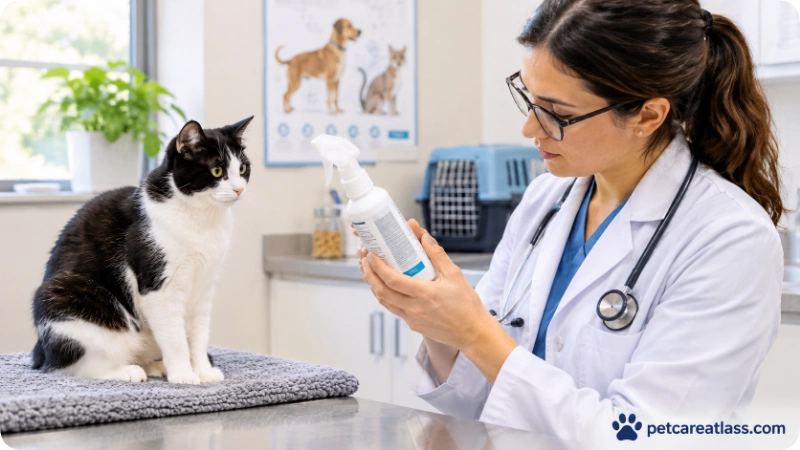
Reading the active ingredient section is one of the most important parts of choosing a flea spray. Different pesticides work in different ways, and their suitability depends on the animal, concentration, formulation, and exposure.
Permethrin: A Serious Risk for Cats
Important cat safety warning
Permethrin is an insecticide found in certain dog flea and tick treatments. It can cause serious poisoning in cats.
Never apply a dog-only permethrin treatment to a cat. Cats may also be exposed through contact with a recently treated dog, particularly before the application site is dry or when product instructions have not been followed.
Possible signs of poisoning include:
- Muscle twitching or tremors.
- Excessive drooling.
- Unsteady walking.
- Vomiting.
- Unusual agitation.
- Seizures.
Essential Oils and Plant-Based Ingredients
Some flea sprays are marketed with peppermint, eucalyptus, citrus, cedarwood, clove, or tea tree oil.
However, plant-derived ingredients are not automatically harmless. Concentrated essential oils can cause adverse reactions through skin exposure, ingestion during grooming, or inhalation.
Cats require particular caution because they frequently groom their coats. Dogs can also experience problems when exposed to concentrated oils.
Avoid applying homemade essential-oil mixtures directly to pets. Choose a properly labeled treatment and discuss questionable ingredients with your veterinarian.
Insect Growth Regulators
Some environmental flea treatments contain insect growth regulators, including:
- Methoprene.
- Pyriproxyfen.
These ingredients interfere with immature flea development and can help prevent certain flea life stages from becoming adults.
They are useful components of some environmental flea-control programs, but they do not necessarily kill adult fleas immediately. Check the complete formulation and label to understand what the product controls.
Common Flea Spray Ingredients at a Glance
| Ingredient or Category | Main Purpose | Important Consideration |
|---|---|---|
| Permethrin | Insect control | Can cause serious poisoning in cats |
| Essential oils | Repellent or insect-control claims | Natural does not always mean safe |
| Methoprene | Interrupts flea development | Targets immature flea stages |
| Pyriproxyfen | Prevents immature flea development | Does not replace other flea-control measures |
| Other insecticides | Kill or control fleas | Species restrictions vary |
These categories are not universal safety ratings. The complete product formulation and approved label instructions determine whether a particular treatment is appropriate.
How to Choose Flea Spray for Dogs and Cats
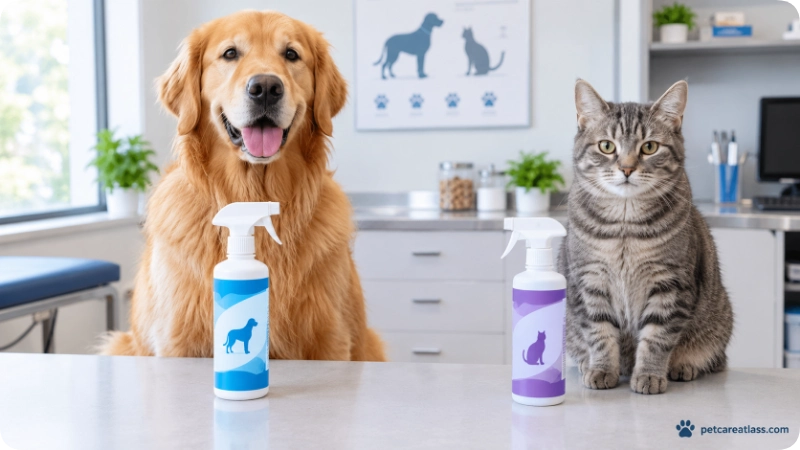
The right flea spray depends on the animal receiving treatment, its age and weight, and the location where fleas need to be controlled.
Choosing Flea Spray for Dogs
Before buying a dog flea spray, confirm that:
- Dogs are specifically listed as the target species.
- Your dog’s age and weight meet the product requirements.
- The label identifies the parasites the product controls.
- Application instructions are clear.
- The product provides precautions for other household animals.
If you also have cats, pay particular attention to secondary exposure. Some dog flea treatments can be dangerous to cats, even when the product is correctly intended for the dog.
Follow the manufacturer’s separation and contact instructions, and ask your veterinarian when the animals can safely interact.
Choosing Flea Spray for Cats
Cats require products specifically labeled for feline use.
Before selecting a cat flea spray, check:
- Whether cats are explicitly listed as an approved species.
- The minimum age and weight requirements.
- The active ingredients and formulation.
- Whether the product is intended for direct application.
- Any restrictions related to pregnancy, nursing, illness, or medication.
Never use a dog-only flea spray on a cat, even if the animals are similar in size.
What About Puppies and Kittens?
Puppies and kittens need additional consideration because many flea treatments have minimum age and weight restrictions.
A product suitable for an adult animal may not be appropriate for a young pet. Do not reduce the amount of an adult treatment yourself to make it suitable for a puppy or kitten.
Ask a veterinarian to recommend an age-appropriate flea-control approach. A flea comb can help remove adult fleas while you arrange suitable treatment, but heavy infestations need professional attention.
Flea Spray Suitability for Different Animals
| Animal | Important Consideration |
|---|---|
| Adult dogs | Use products labeled specifically for dogs |
| Adult cats | Use products labeled specifically for cats |
| Puppies | Check minimum age and weight limits |
| Kittens | Seek veterinary guidance before treatment |
| Pregnant or nursing pets | Consult a veterinarian before using pesticides |
| Rabbits and guinea pigs | Do not assume dog or cat sprays are suitable |
| Birds | Avoid pesticide exposure without veterinary guidance |
The EPA cautions that many flea and tick products are not marketed for reptiles, rabbits, ferrets, and other less common companion animals.
How to Use Flea Spray Safely Around Pets
Even a suitable flea spray can cause problems if it is applied incorrectly. Always follow the manufacturer’s complete directions rather than relying on instructions intended for another product.
Step 1: Identify Where the Fleas Are
Start by checking your pet’s coat, bedding, favorite resting places, and frequently used areas of the home.
Common signs include:
- Small, fast-moving insects in the fur.
- Black specks that may be flea dirt.
- Frequent scratching or biting at the skin.
- Fleas around pet bedding and carpets.
A flea comb can help inspect your pet’s coat. Finding fleas in the environment does not automatically mean that every household surface needs pesticide treatment.
Step 2: Read the Complete Product Label
Before opening the spray, identify its active ingredients, intended use, target species, age restrictions, application instructions, and safety precautions.
Confirm whether the product is intended for:
- Direct application to pets.
- Indoor environmental treatment.
- Outdoor pest control.
Never use a product for one purpose when its label only permits another.
Step 3: Prepare the Treatment Area
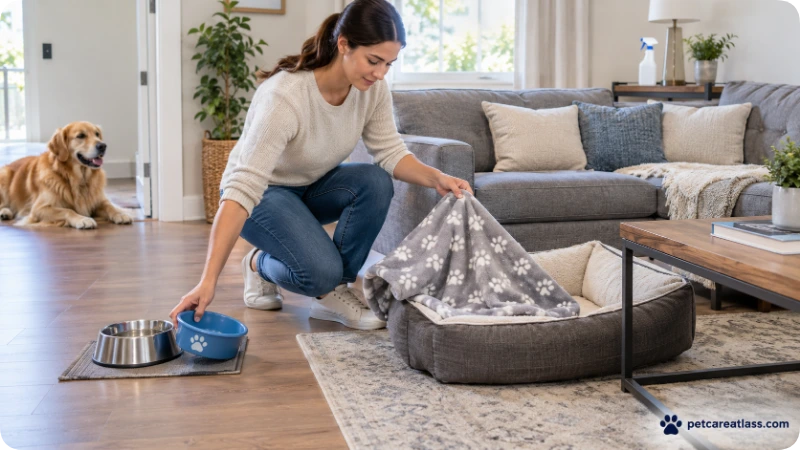
For household sprays, prepare the area according to the label.
Depending on the formulation, preparation may include:
- Removing pets from the treatment area.
- Moving food and water bowls.
- Removing toys and pet bedding.
- Covering or removing aquariums as directed.
- Following the specified ventilation instructions.
Keep children and other animals away during application.
Step 4: Apply the Product as Directed
For sprays intended for direct application to pets, follow the specified method and amount.
For environmental sprays, treat only approved surfaces and locations.
Avoid spraying an animal’s eyes, nose, mouth, or other sensitive areas unless the label specifically provides instructions for safe application.
Never combine different flea treatments or repeat an application early simply because fleas remain visible.
Step 5: Follow Drying and Reentry Instructions
Keep pets away from treated surfaces until the product label’s reentry conditions are satisfied.
Some formulations require complete drying and adequate ventilation. Others may have additional waiting requirements.
There is no universal waiting time that applies to every flea spray. Follow the exact instructions for the product you are using.
Step 6: Monitor Your Pet After Treatment
Watch for unusual behavior or possible adverse reactions.
Contact a veterinarian if you notice:
- Excessive drooling.
- Vomiting or diarrhea.
- Skin redness or irritation.
- Unusual weakness.
- Trembling or muscle twitching.
- Changes in coordination.
Seizures, breathing difficulty, collapse, or suspected pesticide poisoning require urgent veterinary attention.
Are Natural Flea Sprays Safer Than Chemical Sprays?
Not necessarily. The word natural describes an ingredient’s origin, not its safety for every animal.
Some plant-based products contain concentrated substances that can irritate the skin or cause poisoning. Essential oils are particularly concerning when applied directly to pets without appropriate veterinary guidance.
Likewise, a synthetic ingredient is not automatically unsafe when used in an appropriately formulated, regulated product according to its label.
Rather than choosing a flea spray based on marketing language, evaluate:
- Active ingredients and their concentrations.
- Approved animal species.
- Intended application method.
- Regulatory information.
- Manufacturer safety precautions.
A properly labeled product with clear directions is a better starting point than an unverified homemade recipe.
How to Get Rid of Fleas in Your Home
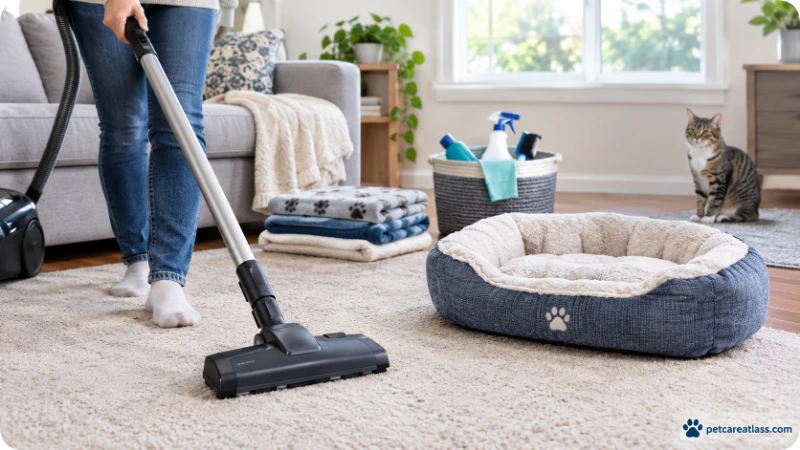
Treating your pet alone may not eliminate a household flea infestation. Fleas have four life stages: egg, larva, pupa, and adult. Much of their development takes place in the surrounding environment rather than on the animal.
Flea pupae can remain protected inside their cocoons and emerge later, which helps explain why fleas may continue appearing after initial treatment.
Wash Pet Bedding Regularly
Wash pet blankets, washable beds, and frequently used fabrics according to their care instructions.
Regular cleaning helps remove flea eggs, larvae, and debris from areas where pets spend time.
Vacuum Carpets and Furniture
Vacuum areas where your pets sleep, rest, or play, including:
- Carpets and rugs.
- Upholstered furniture.
- Areas beneath furniture.
- Floor edges and baseboards.
- Cracks and crevices.
Repeat cleaning regularly during flea control. Empty and dispose of vacuum contents appropriately.
Treat All Household Pets
If several animals live in the same home, each needs an appropriate flea-control plan.
Do not share flea treatments between different species. Ask your veterinarian to coordinate suitable products, particularly when dogs and cats live together.
Consider Environmental Treatment
If fleas remain a problem, an appropriate household flea spray may help control their development in approved areas.
An environmental product containing an insect growth regulator may provide additional control by interfering with immature flea development.
Common Flea Spray Mistakes Pet Owners Should Avoid
| Common Mistake | Why It Matters | Better Approach |
|---|---|---|
| Using dog spray on cats | Some ingredients can cause serious poisoning | Use species-specific products |
| Assuming natural means safe | Plant-based ingredients can be harmful | Check the full formulation |
| Spraying household products on pets | Household sprays may not be approved for animals | Follow the product label |
| Applying too much spray | Excess exposure can cause adverse effects | Follow label directions |
| Ignoring age restrictions | Young pets may not be suitable for treatment | Check minimum age and weight limits |
| Mixing flea treatments | Combined exposure can increase risks | Consult a veterinarian first |
| Treating only the pet | Fleas may continue developing indoors | Combine pet treatment with cleaning |
What to Do If Your Pet Has a Reaction to Flea Spray
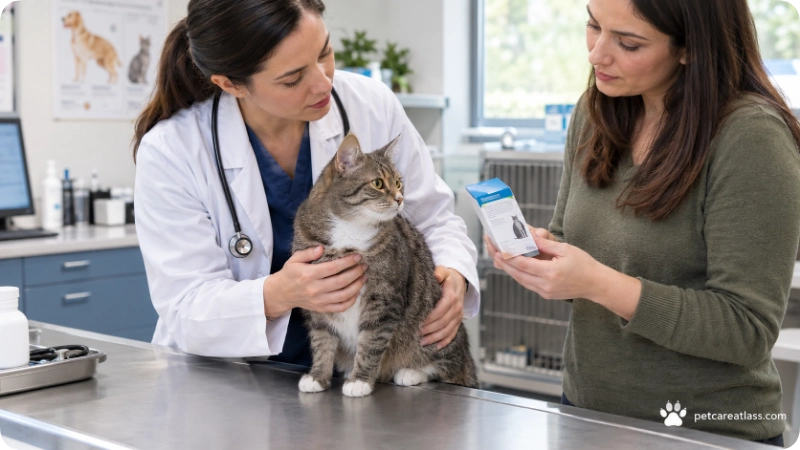
If your pet develops unusual symptoms after flea spray exposure, stop further exposure and contact a veterinarian promptly.
For suspected pesticide poisoning, do not wait for symptoms to become severe. Keep the product packaging or take a photograph of its label so the veterinarian can identify the active ingredients.
Do not induce vomiting unless a veterinary professional specifically instructs you to do so.
In the United States, pet owners can also contact the ASPCA Animal Poison Control Center at 888-426-4435. A consultation fee may apply.
If the animal experiences seizures, breathing difficulty, collapse, or severe tremors, seek emergency veterinary care immediately.
For suspected exposure involving a cat that contacted a recently treated dog, tell the veterinarian the exact product used and when it was applied.
Frequently Asked Questions
Can I use the same flea spray on dogs and cats?
Only if the product label explicitly approves its use on both species and provides appropriate directions for each. Similar packaging or a shared brand name does not mean the formulations are interchangeable. Never use a dog-only flea treatment on a cat.
Is pet safe flea spray suitable for puppies and kittens?
Not every flea spray is suitable for young animals. Puppies and kittens may have different minimum age and weight requirements from adult pets. Check the label and consult a veterinarian before treatment, particularly if the animal is very young or has a heavy flea infestation.
Can I spray flea treatment directly on my pet’s bedding?
Only when the product label specifically permits application to that type of bedding or fabric. Some environmental treatments are approved for certain household surfaces, while others are not. Follow the drying, washing, and reentry instructions before allowing your pet to use the bedding again.
How often should I use flea spray?
The correct frequency depends on the product, its ingredients, and whether it is intended for an animal or the environment. Some treatments have specific repeat-application schedules, while others provide longer-lasting protection. Never reapply earlier than directed simply because you continue to see fleas.
Does flea spray kill flea eggs?
Some environmental sprays contain insect growth regulators that interfere with flea development. These products can help prevent immature fleas from developing into adults. However, not every flea spray targets eggs or other immature stages, so check the label to understand which life stages it controls.
Can I make homemade flea spray with essential oils?
Applying homemade essential-oil mixtures directly to pets is not recommended. Concentrated oils can cause adverse reactions, particularly in cats and animals that groom their coats. Choose a properly labeled flea-control product and ask your veterinarian about suitable alternatives.
How long does it take to get rid of fleas completely?
A significant household infestation can take several weeks or even months to control. Flea pupae can remain protected inside their cocoons and emerge later. Consistent pet treatment, vacuuming, washing bedding, and appropriate environmental control help reduce the chance of recurring infestations.
Conclusion
Choosing a pet safe flea spray requires more than looking for a natural or pet-friendly label. The product must be appropriate for your animal’s species, age, weight, and intended use.
Keep dog and cat treatments separate unless both are explicitly approved, and never apply /-p-household sprays directly to pets without label authorization. ‘=#=For more effective flea control, combine suitable veterinary-approved prevention with regular cleaning and responsible environmental treatment.

Dr. Emily Carter is a pet-care writer with a focus on animal health, nutrition, and everyday pet wellness. She creates practical, easy-to-understand guides that help pet owners make informed and responsible care decisions.