Quick Answer:
Your cat may drool when you pet him because he feels relaxed, comfortable, and safe. Some cats release a little saliva while purring, kneading, or enjoying affection. However, excessive or sudden drooling can indicate dental disease, mouth pain, nausea, or another health problem. If the behavior is new, persistent, or accompanied by other symptoms, contact your veterinarian.
Does your cat leave little wet spots on your clothes or lap whenever you pet him? Although drooling is commonly associated with dogs, some cats also produce extra saliva during affectionate interactions.
It may happen while you scratch his head, rub his cheeks, or cuddle together on the couch. Sometimes, this is simply a relaxation-related behavior. However, unusual or excessive salivation can also point to dental problems, mouth irritation, nausea, or illness.
Understanding the difference can help you recognize your cat’s normal habits, identify warning signs, and decide when he needs veterinary attention.
Why Some Cats Drool During Affection
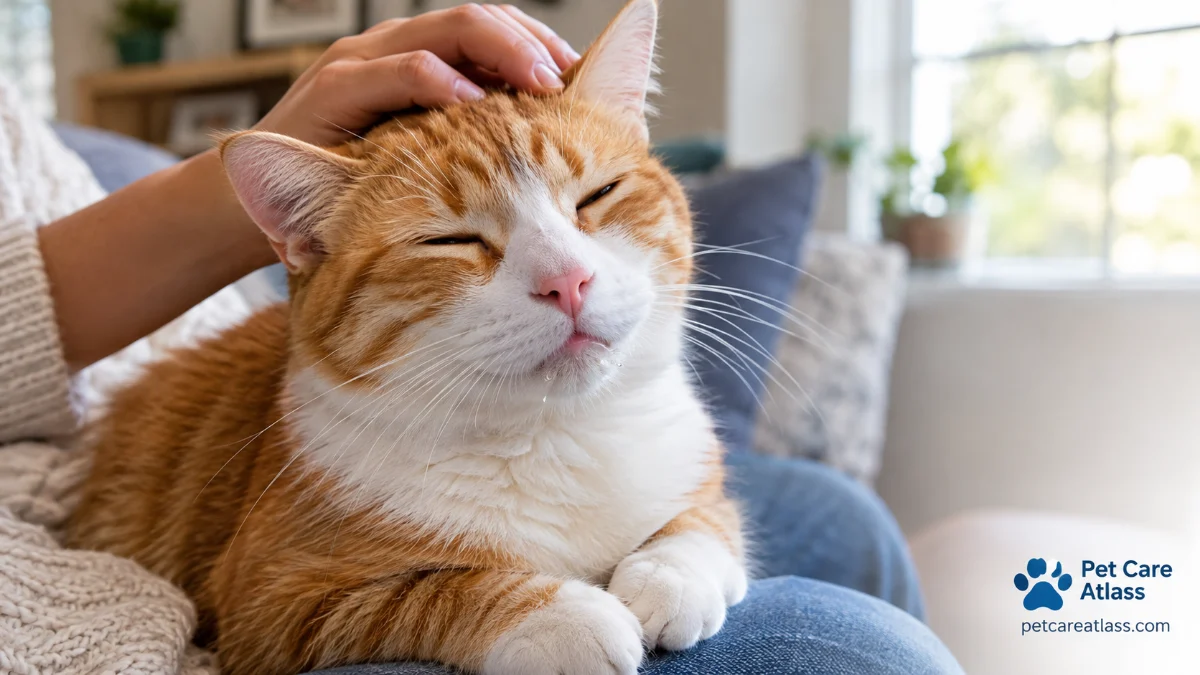
Some cats produce a little saliva when they become deeply relaxed during positive interactions. You might notice your cat purring, kneading a soft blanket, closing his eyes, and allowing his body to settle while you pet him.
This behavior is sometimes called happy drooling. It is not universal, and researchers have not established one exact explanation for why certain cats do it.
A relaxed cat may allow saliva to escape without swallowing it immediately. However, drooling should always be considered alongside other signs, including appetite, grooming habits, facial expressions, and general behavior.
If your cat has always drooled slightly during comfortable interactions and otherwise behaves normally, it may simply be an individual characteristic. A sudden increase in saliva deserves more attention.
6 Reasons Your Cat May Drool When You Pet Him
Not all drooling has the same explanation. Some causes are associated with relaxation, while others may indicate discomfort or an underlying medical condition.
1. He Feels Relaxed and Comfortable
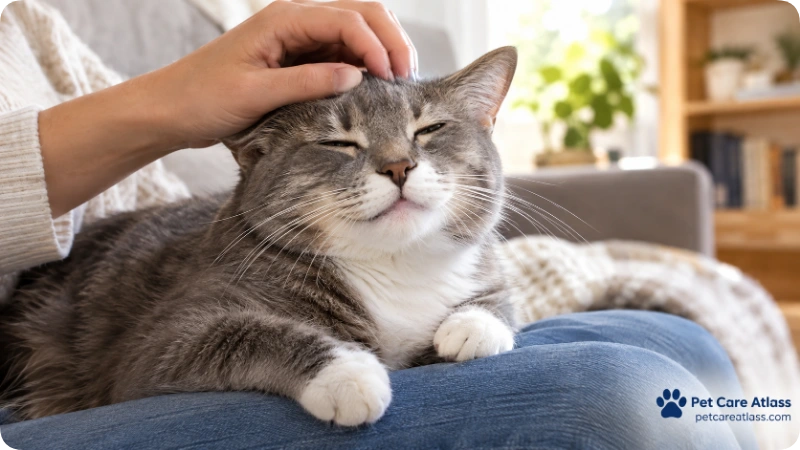
One possible explanation is that your cat feels safe and comfortable around you.
Some cats become so relaxed during gentle petting that a small amount of saliva escapes from their mouths. This may happen when they settle into your lap, close their eyes, or enjoy gentle scratches around their head.
You may notice:
- Soft, partially closed eyes.
- Relaxed ears and whiskers.
- A loose, comfortable body posture.
- Gentle purring or kneading.
- A small amount of clear saliva.
If this behavior is familiar and your cat shows no other concerning symptoms, it is generally less worrying than sudden or continuous drooling.
2. He Purrs During Petting
Purring and drooling sometimes occur together, especially when a cat is comfortable.
When your cat starts purring while you stroke his head or back, he may become physically relaxed. Some cats also drool during these interactions.
However, purring does not always mean happiness. Cats can purr when frightened, uncomfortable, or experiencing pain.
Look at the complete picture. Relaxed muscles, comfortable movements, and a willingness to remain near you are more reassuring than purring alone.
3. He Kneads While Receiving Affection
Does your cat push his front paws rhythmically against your lap or blanket while you pet him?
This behavior is called kneading. It begins during kittenhood when kittens press against their mother’s mammary glands while nursing.
Many adult cats continue kneading soft surfaces when they settle down. Some also drool during these moments.
Kneading and drooling may occur together as part of a comfortable interaction, although the exact connection is not fully understood.
4. He Has Dental Disease or Mouth Pain
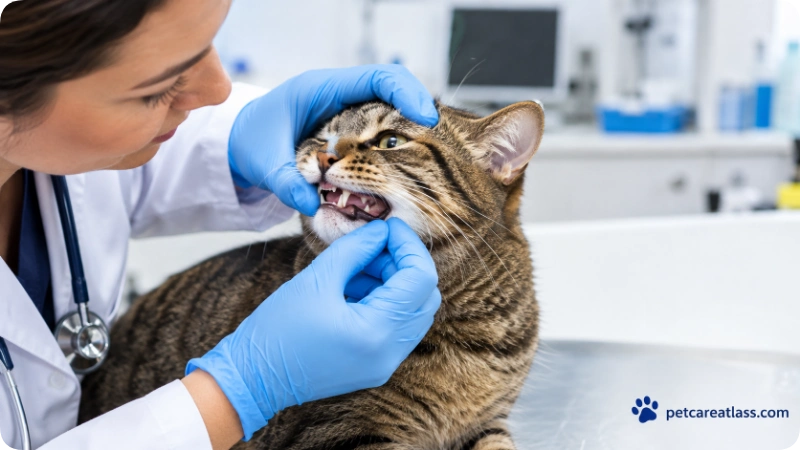
Dental disease is an important medical reason cats may drool excessively.
Problems such as gingivitis, periodontal disease, damaged teeth, and inflammation inside the mouth can make swallowing uncomfortable. Your cat may produce more saliva or struggle to manage it normally.
Watch for these additional signs:
- Bad breath.
- Red, swollen, or bleeding gums.
- Dropping food while eating.
- Chewing on one side of the mouth.
- Pawing at his face.
- Eating less than usual.
- Avoiding hard food.
Cats sometimes continue seeking affection even when they have mouth pain. Therefore, do not assume that drooling during petting is harmless if your cat also shows these symptoms.
A veterinarian can examine his mouth and determine whether dental treatment is needed.
5. He Feels Stressed or Uncomfortable
Drooling is not always connected to positive emotions. Stress, fear, and anxiety can also cause excessive salivation in some cats.
For example, your cat may become uncomfortable if someone touches a sensitive area, holds him too tightly, or continues petting after he wants to stop.
Other possible stress signals include:
- Ears flattened or turned backward.
- A twitching or rapidly moving tail.
- Dilated pupils.
- Tense muscles.
- Attempts to hide or move away.
- Hissing or growling.
If you notice these behaviors, stop petting and allow your cat to choose whether he wants further interaction.
6. He Feels Nauseated or Has Another Health Problem
Nausea and certain medical conditions can cause increased saliva production.
A cat experiencing digestive discomfort, an oral infection, or another illness may drool even when nobody is touching him.
Other possible causes include:
- Mouth ulcers or oral inflammation.
- An object stuck inside the mouth.
- Exposure to toxic plants or household chemicals.
- Certain medications.
- Kidney disease or other metabolic conditions.
If your cat suddenly starts drooling heavily, especially if he never behaved this way before, contact your veterinarian. Do not assume petting is the cause simply because you first noticed the saliva during an affectionate interaction.
How to Recognize Normal and Concerning Drooling
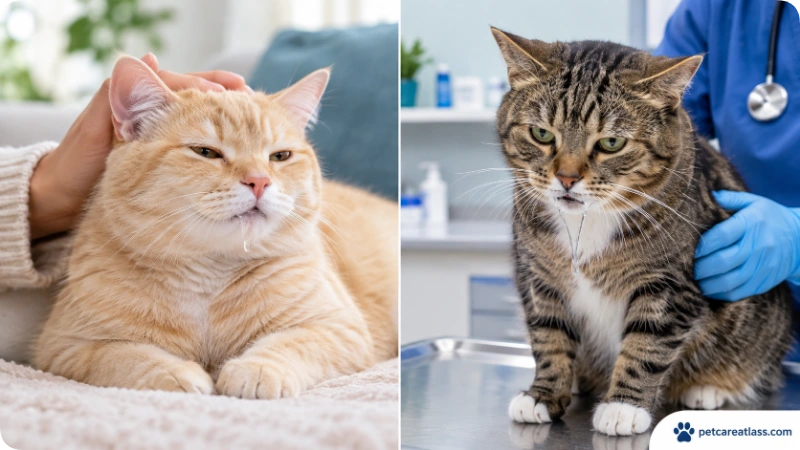
The amount of saliva, when it appears, and your cat’s overall behavior can help you decide whether the situation needs attention.
| What You Notice | Possible Meaning |
|---|---|
| A few drops while purring | Possible relaxation-related drooling |
| Light drooling while kneading | Comfort-related behavior |
| Drooling during stressful handling | Possible fear or anxiety |
| Bad-smelling saliva | Possible dental or oral disease |
| Blood in saliva | Possible mouth injury or disease |
| Drooling with difficulty eating | Possible dental pain or oral discomfort |
| Sudden, heavy, continuous drooling | Possible medical problem |
| Drooling with vomiting or weakness | Possible illness or toxin exposure |
These signs are not a diagnosis. A veterinarian can determine the actual cause through an examination.
When Excessive Salivation Becomes a Health Concern
A change in your cat’s usual drooling habits is more important than the behavior alone. If he previously produced only a few drops during cuddling but now leaves wet patches throughout the day, something may be wrong.
Watch for the following warning signs:
- Changes in appetite: He refuses food, eats less, or struggles to chew.
- Unpleasant breath: His breath develops a strong or unusual odor.
- Mouth discomfort: He paws at his face, shakes his head, or resists having his mouth examined.
- Blood in saliva: You notice pink, red, or bloody discharge.
- Unusual behavior: He hides, becomes less active, or avoids interaction.
- Digestive symptoms: He vomits, repeatedly licks his lips, or appears nauseated.
Dental disease and inflammation inside the mouth can cause several of these symptoms.
When to seek emergency veterinary care
Do not wait for a routine appointment if your cat:
- Has difficulty breathing or swallowing.
- Collapses or experiences seizures.
- Has heavy drooling after possible exposure to a poisonous substance.
- Shows signs of severe weakness or heatstroke.
If you suspect poisoning, contact an emergency veterinarian immediately. Do not induce vomiting or give home remedies unless instructed by a veterinary professional.
What to Do When Your Cat Starts Drooling During Petting
Your response should depend on whether the drooling is a familiar habit or a new development.
1. Observe When It Happens
Notice whether your cat drools only when you pet him, or whether it also happens while eating, sleeping, playing, or resting.
Drooling limited to familiar relaxing interactions may be less concerning than saliva that appears throughout the day.
2. Read His Body Language
Look at his ears, eyes, whiskers, tail, and overall posture.
A relaxed cat may have soft eyes and loose muscles. A stressed cat may flatten his ears, tense his body, or attempt to move away.
3. Avoid Forcing Physical Contact
If your cat enjoys gentle petting, allow him to approach and leave whenever he wants.
Stop touching him if he becomes uncomfortable. Avoid repeatedly pressing or rubbing his mouth, jaw, or cheeks to test whether they hurt.
4. Watch for Changes Around His Mouth
Look for visible blood, unusual odor, swelling, or changes in eating behavior.
Do not force his mouth open or pull on a string or other object that may be lodged inside it. These situations need veterinary assessment.
5. Contact Your Veterinarian When Necessary
Arrange an examination if the drooling is new, persistent, unusually heavy, or accompanied by other symptoms.
Even if your cat continues eating and behaving normally, a noticeable change in saliva production deserves attention.
How Veterinarians Identify the Cause of Drooling
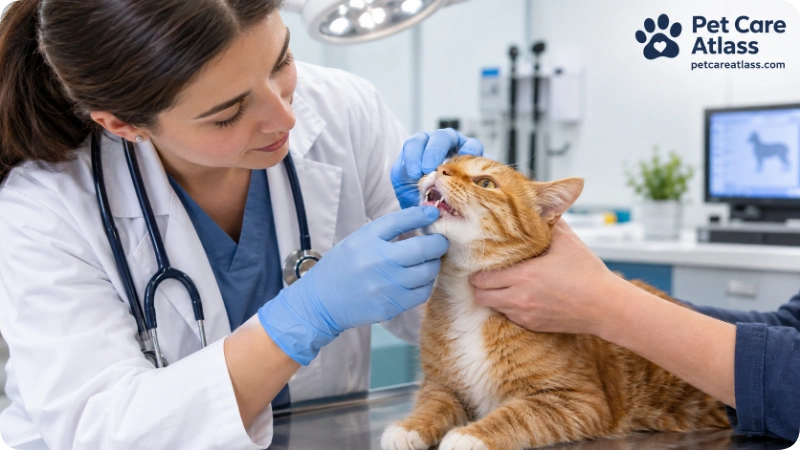
A veterinarian considers your cat’s medical history, symptoms, and the circumstances surrounding the drooling.
An examination may include:
- Medical history: When the drooling started, how frequently it happens, and whether it occurs during petting.
- Oral examination: Checking the teeth, gums, tongue, and visible mouth tissues.
- Physical examination: Looking for signs of discomfort, dehydration, injury, or illness.
- Additional testing: Bloodwork, dental X-rays, or other diagnostic procedures when needed.
Some dental problems are difficult to identify through a basic visual examination. A more thorough dental assessment, sometimes under anesthesia, may be necessary.
Treatment depends on the underlying cause. Dental disease may require professional dental treatment, while nausea, oral injuries, poisoning, and other conditions need different veterinary care.
Frequently Asked Questions
Is it normal for my cat to drool when I pet him?
Yes, a small amount of drooling can be normal for some relaxed cats. It may happen while they purr, knead, or receive affection. However, excessive, continuous, or newly developed drooling should not automatically be considered a sign of happiness. Contact your veterinarian if you notice a change.
Why does my cat drool and purr at the same time?
Some cats drool while purring because they become deeply relaxed during affectionate interactions. One theory suggests that this behavior may be associated with comforting experiences from kittenhood, although the exact mechanism has not been established. Purring can also occur during discomfort, so consider your cat’s other behaviors.
Why does my cat drool when I scratch his cheeks?
Your cat may be responding to comfortable physical contact. However, drooling specifically when you touch his cheeks could also indicate dental or oral discomfort. If he flinches, pulls away, has bad breath, or resists facial contact, arrange a veterinary examination.
Should I stop petting my cat if he starts drooling?
Not necessarily. If the drooling is light and your cat appears relaxed, you can continue gentle petting while respecting his boundaries. Stop if he becomes tense, moves away, or shows discomfort. If the drooling is new or unusually heavy, investigate possible medical causes.
Can dental problems cause excessive drooling in cats?
Yes. Gingivitis, periodontal disease, tooth resorption, damaged teeth, and mouth inflammation can all cause excessive salivation. Other signs may include bad breath, difficulty eating, bleeding gums, and pawing at the mouth. A veterinary dental examination can help identify the problem.
Do cats drool when they are stressed?
Yes. Fear, nervousness, and stressful situations can trigger temporary drooling in some cats. This may happen during car rides, veterinary visits, or uncomfortable handling. If the salivation continues after the stressful situation ends, contact your veterinarian to investigate other possible causes.
When should I take my drooling cat to the vet?
Arrange a veterinary appointment if drooling is new, frequent, excessive, or accompanied by bad breath, appetite changes, or mouth discomfort. Seek emergency veterinary care if your cat has breathing difficulties, seizures, collapse, severe weakness, or suspected poisoning.
Conclusion
If your cat drools when you pet him, he may simply be relaxed and comfortable, especially when he also purrs or kneads. However, excessive or sudden drooling can indicate dental disease, mouth pain, nausea, or another health problem.
Pay attention to changes in his usual habits and overall behavior. If the saliva increases, continues outside affectionate interactions, or appears alongside other symptoms, arrange a veterinary examination rather than assuming it is harmless.

Daniel Brooks is a pet care and animal behavior writer at petcareatlass.com focused on helping owners better understand their pets’ behavior and everyday needs. He creates practical, easy-to-follow content on pet communication, training, welfare, and responsible care.