Quick Answer:
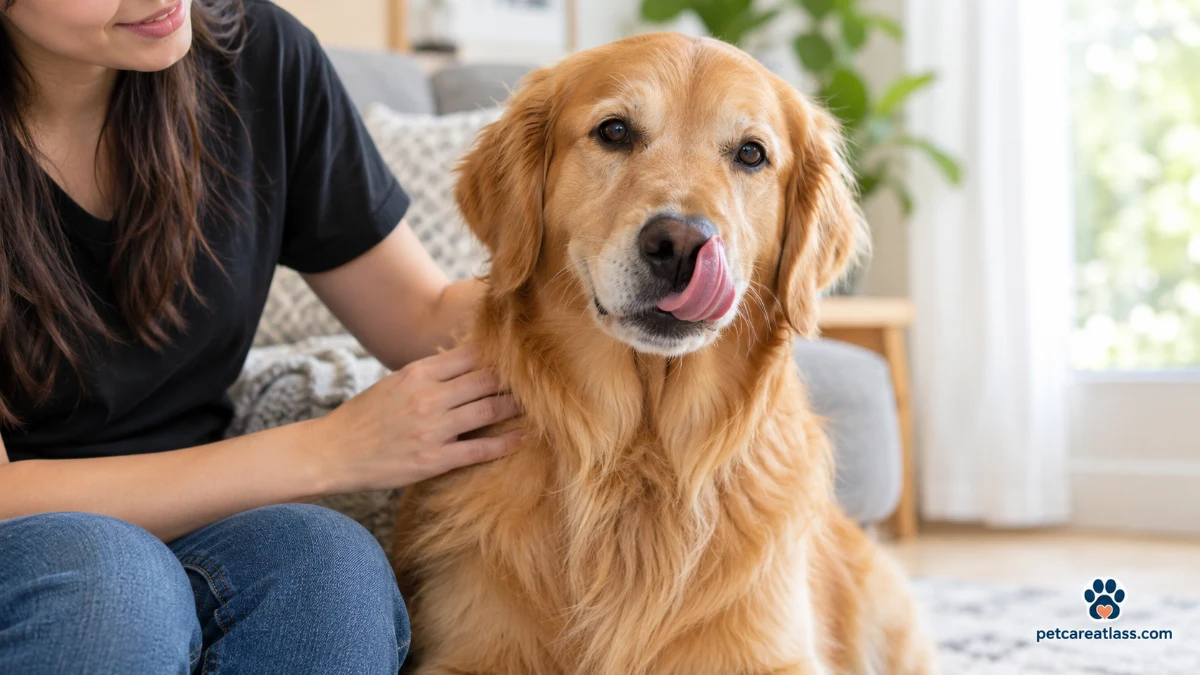
Dogs often lick their lips when you pet them because they feel uncertain, mildly stressed, or uncomfortable with the interaction. However, lip licking can also happen when a dog anticipates food, responds to a smell, or experiences nausea. Check your dog’s ears, eyes, posture, and willingness to stay near you to understand what the behavior may mean.
Have you noticed your dog quickly flicking its tongue over its nose or licking its lips while you pet its head, back, or belly? This small behavior can be easy to overlook, especially when your dog otherwise seems calm and friendly.
However, lip licking is one way dogs communicate through body language. Depending on the situation, it may indicate uncertainty, an attempt to reduce social tension, anticipation, or physical discomfort.
Understanding the surrounding signals can help you recognize whether your dog is comfortable with your attention or would prefer a little space. It can also help you respond appropriately without misinterpreting normal canine behavior.
What Does Lip Licking Mean in Dogs?
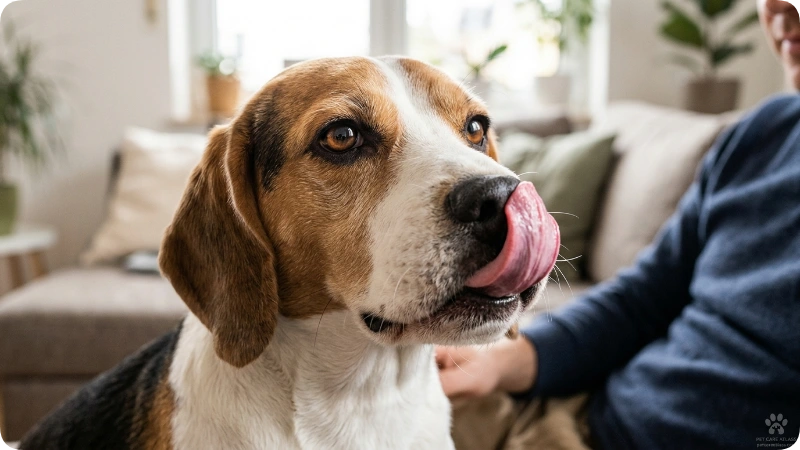
Lip licking is a subtle behavior that can have several meanings depending on the situation. Dogs may briefly move their tongues over their noses or lips when responding to food smells, social interactions, unfamiliar situations, or physical discomfort.
When your dog licks its lips during petting, it may be communicating uncertainty or discomfort. Some dogs show this behavior when someone reaches toward their face, touches a sensitive area, or continues petting after they have had enough.
However, lip licking does not automatically mean your dog dislikes being petted. A dog that briefly licks its lips while remaining relaxed may simply be responding to a smell or another stimulus.
Pay attention to the complete picture. Relaxed muscles, soft eyes, and voluntary interaction suggest a different situation from repeated licking, a stiff body, flattened ears, and attempts to move away.
7 Possible Reasons Behind This Behavior
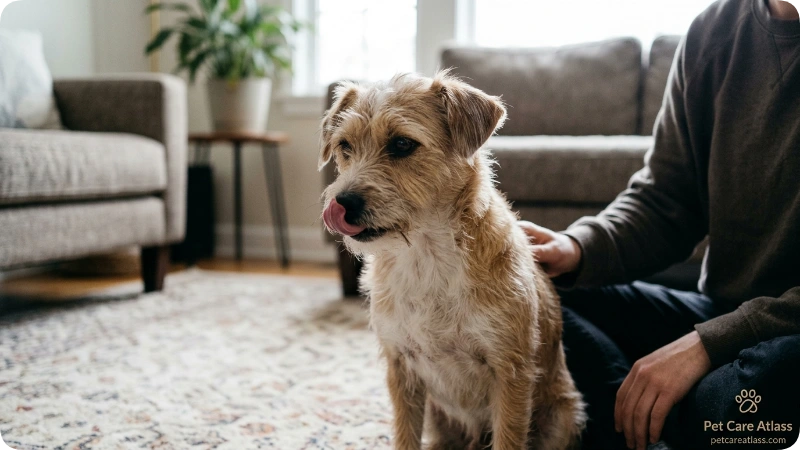
Dogs lick their lips for several behavioral and physical reasons. Understanding the circumstances surrounding the behavior can help you identify the most likely explanation.
1. Your Dog Feels Nervous or Uncomfortable
One common reason dogs lick their lips during petting is mild stress or uncertainty.
Some dogs enjoy physical affection but become uncomfortable when someone touches sensitive areas, moves too quickly, or reaches toward their face. Lip licking may appear as an early sign that the interaction is making them uneasy.
For example, your dog might lick its lips when you reach over its head, lean close to its face, or continue rubbing its body after it has started moving away.
Other signs of discomfort include:
- Ears pulled backward or held unusually low.
- Looking away or turning the head.
- A tense mouth or facial expression.
- Lowering the head or body.
- Repeated yawning.
- Moving away or trying to hide.
If you notice these behaviors, pause the petting and give your dog an opportunity to move away. Avoid forcing physical contact.
2. Your Dog Is Using an Appeasement Signal
Dogs sometimes lick their lips to communicate non-threatening intentions and reduce social tension.
This behavior is commonly described as an appeasement signal. It may occur when a dog feels uncertain about another person’s actions and responds with a gesture associated with peaceful social interaction.
For instance, your dog might lick its lips when you bend over it, approach its face, or reach toward its head. The behavior does not necessarily mean the dog is frightened of you. It may simply be responding cautiously to the way you approach.
Other possible appeasement signals include:
- Turning the head away.
- Avoiding direct eye contact.
- Lowering the head.
- Moving slowly.
- Holding the ears back.
- Briefly lifting a front paw.
Recognizing these signals early helps prevent uncomfortable interactions from escalating. Give your dog space rather than trying to encourage more contact.
3. Your Dog Dislikes Being Touched in a Particular Area
Not every dog enjoys being touched in the same way. Some tolerate petting on their head, paws, ears, or legs less comfortably than contact along their chest or sides.
If your dog repeatedly licks its lips when you touch a particular area, it may be communicating that the contact is unwelcome.
Previous negative handling experiences, limited early socialization, or individual preferences can influence how a dog responds to physical contact.
Pay attention to the location and timing of the behavior:
- Head: Your dog may dislike hands approaching its face.
- Ears: It may be sensitive to ear handling.
- Paws: It may feel uncomfortable having its feet touched.
- Belly: It may not enjoy belly rubs, even if it sometimes rolls over.
A dog that consistently reacts to one area may also have pain or irritation there. Do not assume the response is purely behavioral.
Try gentle contact around the chest or shoulders instead, provided your dog willingly approaches and appears comfortable.
4. Your Dog Is Anticipating Food or Treats
Sometimes lip licking has nothing to do with discomfort.
Dogs frequently lick their lips when they anticipate food, smell something appetizing, or expect a reward. If you regularly give your dog treats while petting it, the behavior may become associated with that experience.
For example, your dog might lick its lips when you reach for a treat, open a food container, or prepare a favorite snack.
You may notice:
- Looking toward your hands.
- Watching a food container.
- Sniffing the air.
- Moving closer to you.
- Appearing alert and attentive.
In this situation, lip licking may reflect food anticipation rather than a request to stop petting.
Consider what happened immediately before the behavior. The surrounding context can help distinguish food-related licking from stress-related signals.
5. Your Dog Is Responding to a Smell or Taste
Dogs have a highly developed sense of smell, and interesting scents can trigger licking movements.
If you have recently handled food, applied lotion, used scented products, or touched something with a strong smell, your dog may lick its lips while investigating the scent.
A dog might also lick its lips after tasting something on your skin.
This behavior is more likely to be ordinary sensory exploration when your dog has a relaxed posture and shows no other signs of discomfort.
However, do not allow your dog to lick skincare products, cleaning chemicals, or substances that may be harmful if swallowed. Prevent access to potentially hazardous products.
6. Your Dog Is Experiencing Nausea or an Upset Stomach
Lip licking can also be associated with nausea.
Dogs sometimes repeatedly lick their lips, swallow, or smack their mouths when they feel sick. If the behavior happens during petting but also occurs at other times, consider whether an underlying physical problem could be involved.
Other possible signs include:
- Excessive swallowing.
- Drooling more than usual.
- Vomiting or retching.
- Reduced appetite.
- Restlessness.
- Unusual interest in eating grass.
Nausea is one recognized cause of lip licking and increased drooling in dogs.
If your dog repeatedly licks its lips without an obvious behavioral trigger, particularly when accompanied by digestive symptoms, contact your veterinarian.
Do not assume that every episode of lip licking is caused by stress.
7. Your Dog Has Dental Pain or Mouth Discomfort
Problems involving the teeth, gums, tongue, or other parts of the mouth can cause unusual licking movements.
A dog experiencing oral discomfort may lick its lips while being petted because physical contact or excitement draws attention to an existing problem. The timing alone does not establish that petting caused the behavior.
Possible accompanying signs include:
- Bad breath.
- Red or swollen gums.
- Dropping food while eating.
- Chewing on one side of the mouth.
- Pawing at the face.
- Difficulty chewing.
- Excessive drooling.
- Reluctance to eat hard food.
Dental disease, mouth injuries, and objects lodged in the mouth can contribute to excessive drooling and unusual mouth movements.
Arrange a veterinary examination if you notice these symptoms. Avoid forcing your dog’s mouth open or attempting to remove a deeply lodged object yourself.
How to Read Your Dog’s Body Language
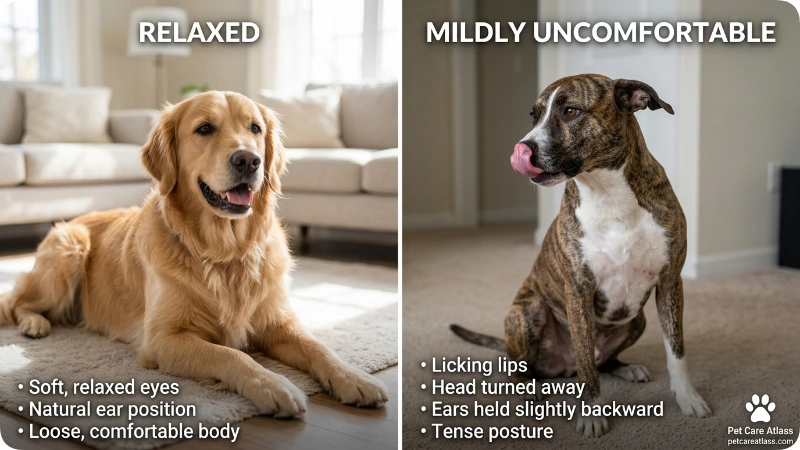
Lip licking becomes easier to interpret when you pay attention to other physical signals. Your dog’s ears, eyes, tail, facial expressions, and posture can help you understand whether it feels comfortable during petting.
Watch Your Dog’s Ears and Eyes
A relaxed dog often has soft facial muscles and a natural ear position. A dog experiencing discomfort may pull its ears backward, narrow its eyes, avoid eye contact, or show more of the whites of its eyes.
These signs become more meaningful when they appear alongside repeated lip licking or attempts to move away.
Pay Attention to Tail and Body Position
A dog’s tail movement should always be interpreted in context. Wagging does not automatically mean happiness.
A relaxed dog may have a loose, naturally moving tail. An uncomfortable dog might hold its tail low, tuck it between its legs, or become unusually still.
Body stiffness, crouching, and leaning away can also indicate that the dog wants more distance.
Notice Changes in Facial Expressions
Dogs often communicate discomfort through small facial movements.
Watch for:
- Repeated nose or lip licking.
- Frequent yawning.
- A tightly closed mouth.
- Facial tension.
- Turning the muzzle away.
- Repeated swallowing.
If several of these behaviors appear together, stop petting and allow your dog to choose whether to approach again.
Body Language Signs Your Dog Needs a Break
Some dogs communicate discomfort through subtle changes before they try to move away. Recognizing these early signals can help you avoid making an interaction more stressful.
| Common Mistake | Better Approach |
|---|---|
| Assuming every rear lift means happiness | Check overall body language |
| Repeatedly scratching the tail base | Stop if your cat shows sensitivity |
| Assuming purring always means pleasure | Look for relaxed muscles and voluntary contact |
| Continuing when the tail lashes | Pause or end the interaction |
| Treating every rear lift as mating behavior | Consider age, sex, and spay status |
| Ignoring sudden sensitivity changes | Arrange a veterinary exam when needed |
These signals do not prove that a dog is stressed individually. Consider the whole body and the situation. The American Animal Hospital Association includes lip licking, nose licking, yawning, muscle rigidity, and turning away among commonly recognized signs of anxiety or distress in dogs.
Which Areas Do Dogs Usually Feel Comfortable Being Petted?
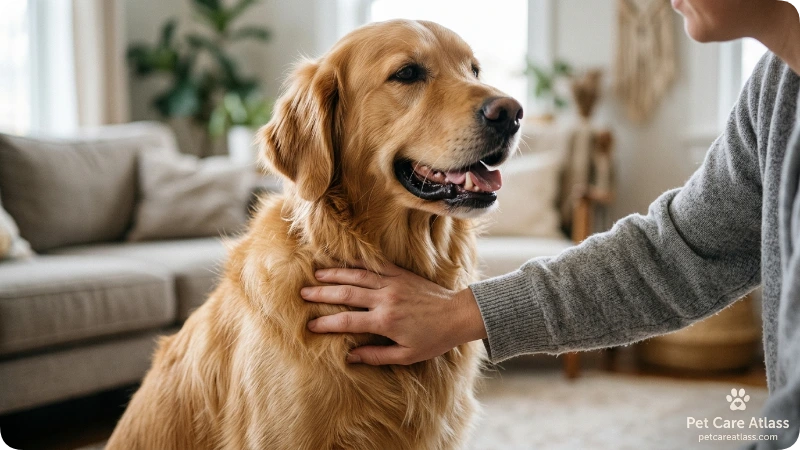
Dogs have individual preferences, but many tolerate gentle contact around the chest, shoulders, and sides better than direct handling around the face or paws.
The following areas are useful starting points, not guaranteed favorite spots.
| Body Area | General Response | Petting Advice |
|---|---|---|
| Chest | Often well tolerated | Use gentle strokes |
| Shoulders | Often comfortable | Start gently |
| Body sides | Depends on the dog | Watch for tension or avoidance |
| Under the chin | Some dogs enjoy it | Approach slowly |
| Top of the head | May feel uncomfortable | Avoid sudden contact |
| Paws | Often sensitive | Handle only when accepted or needed |
| Tail and hind legs | Preferences vary | Stop if your dog moves away |
Let Your Dog Choose the Interaction
Instead of immediately reaching over your dog, allow it to approach you.
Try these simple steps:
- Approach calmly without leaning over your dog.
- Offer your hand near its chest or shoulder rather than directly over its head.
- Begin with a few gentle strokes.
- Pause and observe your dog’s response.
- Continue only if your dog voluntarily seeks more contact.
If your dog moves closer, nudges your hand, or comfortably remains near you, it may be interested in continuing.
If it turns away, becomes stiff, or walks off, respect that choice.
How to Respond When Your Dog Licks Its Lips
The best response depends on whether your dog is communicating discomfort or showing signs of a possible health problem.
Here are practical ways to respond.
1. Pause the Petting
If your dog repeatedly licks its lips, stop touching it briefly. Give it room to move away rather than holding it in place or continuing to pet it.
A short pause allows you to see whether your dog voluntarily returns for more attention.
2. Change Where You Pet Your Dog
If your dog reacts when you touch its head, ears, or paws, try a different area, such as the chest or shoulders.
Use slow, gentle movements and avoid sudden reaching or restraining.
3. Avoid Punishing or Correcting the Behavior
Never scold your dog for licking its lips, turning away, or showing other signs of discomfort.
These behaviors provide useful information about how your dog responds to an interaction. Punishing communication signals may make it harder to recognize when your dog is uncomfortable.
4. Learn Your Dog’s Normal Body Language
Some dogs naturally lick their lips more frequently than others.
Observe your dog’s usual behavior during meals, playtime, relaxation, and physical contact. Changes from its normal pattern can help you identify when something is wrong.
5. Arrange a Veterinary Checkup When Necessary
If lip licking becomes frequent, happens without an obvious trigger, or occurs alongside drooling, appetite changes, vomiting, or signs of mouth pain, arrange a veterinary examination.
A veterinarian can investigate possible dental, digestive, or other medical causes.
When Lip Licking May Indicate a Health Problem
Occasional lip licking is not necessarily a problem. However, persistent or unusual licking deserves attention, particularly when other symptoms appear.
| Signs You Notice | Possible Concern | Recommended Action |
|---|---|---|
| Occasional licking, relaxed posture | Normal behavior or mild stimulation | Observe the situation |
| Repeated licking during petting | Possible discomfort or stress | Pause contact |
| Licking with bad breath or chewing difficulty | Possible dental problem | Schedule a vet exam |
| Licking with vomiting or low appetite | Possible digestive illness | Contact your vet |
| Licking with excessive drooling | Oral discomfort, nausea, or other health issue | Seek prompt veterinary advice |
| Licking with breathing difficulty, collapse, or seizures | Potential emergency | Seek emergency veterinary care immediately |
Important: If you suspect your dog has swallowed a toxic substance, contact a veterinarian or animal poison-control service immediately. Do not wait for additional symptoms to appear.
Persistent lip licking accompanied by physical symptoms should not automatically be treated as a behavioral issue.
Mistakes to Avoid When Reading Your Dog’s Signals
Even attentive owners can misunderstand this small behavior. Avoiding a few common mistakes can help you respond more appropriately.
| Common Mistake | Better Approach |
|---|---|
| Assuming every lip lick means stress | Consider the situation |
| Assuming lip licking means happiness | Check overall body language |
| Petting when the dog turns away | Pause and give space |
| Assuming a wagging tail means comfort | Check tail position and body tension |
| Ignoring repeated licking outside petting | Consider possible medical causes |
| Forcing physical contact | Let the dog choose to interact |
| Punishing lip licking | Treat it as communication |
Understanding these differences makes it easier to recognize when your dog welcomes affection and when it needs a break.
Frequently Asked Questions
Why does my dog lick his lips when I rub his head?
Your dog may lick his lips because he feels uncertain or uncomfortable with head handling. Some dogs dislike hands approaching their faces, especially when someone reaches over them. Watch for additional signals such as turning away, lowering the head, or pulling the ears backward.
Does a dog licking its lips mean it is stressed?
Not always. Lip licking can indicate stress, uncertainty, food anticipation, or nausea. A dog that repeatedly licks its lips while avoiding eye contact or moving away may be uncomfortable. Consider the entire situation rather than interpreting one behavior on its own.
Why does my dog lick his lips when I talk to him?
Your dog may respond to your voice, facial expressions, or body movements with lip licking. It can also happen when your dog anticipates food, attention, or an interaction. If the behavior occurs alongside a tense posture or avoidance, your dog may feel uncertain.
Why does my dog lick his lips and look away when I pet him?
Lip licking combined with looking away can indicate discomfort or an attempt to reduce social pressure. Your dog may be asking for a little space. Stop petting temporarily and see whether it chooses to approach you again.
Why does my dog lick his lips and yawn when I pet him?
Repeated lip licking and yawning can be signs of stress or uncertainty, particularly when they occur during unwanted handling. If your dog also lowers its head, pulls its ears back, or becomes stiff, give it a break from physical contact.
Should I stop petting my dog when it licks its lips?
If your dog repeatedly licks its lips while you pet it, pause and observe its response. If it relaxes and voluntarily approaches again, you can try gentle contact. If it moves away, turns its head, or becomes tense, respect its preference and stop.
Conclusion
Dogs lick their lips when you pet them for several reasons, including uncertainty, discomfort, food anticipation, and possible physical problems.
The behavior does not always indicate stress, so consider your dog’s facial expressions, posture, and willingness to continue interacting.If your dog repeatedly licks its lips while turning away or becoming tense, pause the petting and give it space.
When the behavior occurs alongside drooling, appetite changes, or other physical symptoms, consult your veterinarian. Respecting these signals helps build a more comfortable relationship with your dog.

Daniel Brooks is a pet care and animal behavior writer at petcareatlass.com focused on helping owners better understand their pets’ behavior and everyday needs. He creates practical, easy-to-follow content on pet communication, training, welfare, and responsible care.