Quick Answer:
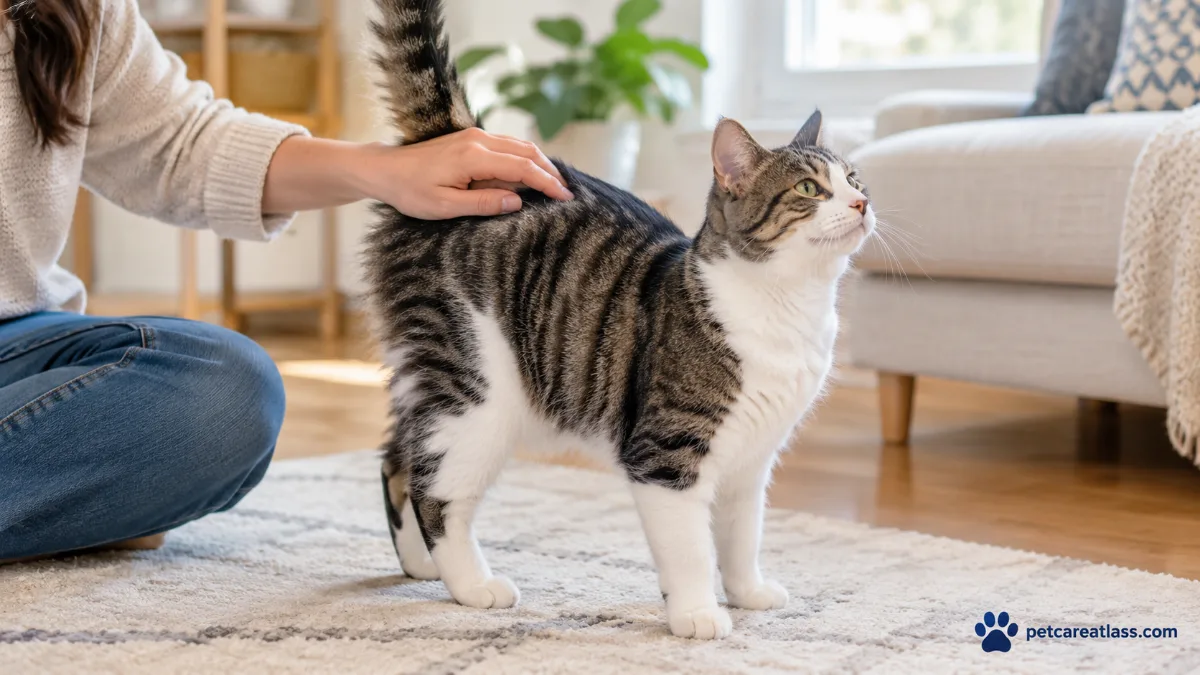
Cats raise their butts when you pet them because they may enjoy the sensation, respond to gentle stimulation near the tail base, or communicate through natural body language. This behavior is usually normal, especially when your cat appears relaxed. However, watch for signs of discomfort, pain, or overstimulation before continuing to pet them.
Have you ever gently stroked your cat’s back and noticed their hindquarters suddenly rise toward your hand? This funny behavior can make you wonder whether your cat enjoys being petted or is trying to communicate something.
In most cases, raising the rear is a normal part of feline body language. Cats use their posture, tail movements, scent, and physical contact to communicate with people and other animals.
However, the meaning can vary depending on where you touch them, how they respond, and whether they show other signs of comfort or discomfort.
Understanding these signals can help you recognize your cat’s preferences, avoid overstimulation, and build a more positive relationship through everyday interactions.
What Does It Mean When a Cat Lifts Its Rear During Petting?
When a cat lifts its rear during petting, it may be responding to physical stimulation, enjoying attention, or displaying a familiar social posture.
The behavior is not always associated with one specific emotion. Some cats raise their hindquarters when someone scratches their lower back, while others do it during greetings or close interactions.
The most useful way to understand this behavior is to consider the surrounding circumstances. A relaxed cat leaning into your hand communicates something different from a tense cat that flicks its tail or tries to move away.
6 Reasons Cats Lift Their Hindquarters When You Touch Them
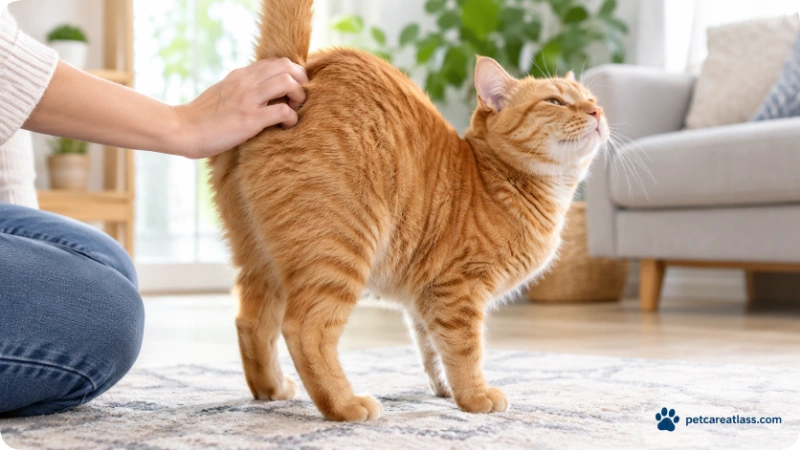
Several explanations may account for this behavior. Your cat’s age, personality, reproductive status, previous experiences, and sensitivity to touch can all influence how they respond.
1. They Enjoy Being Petted
One common explanation is that your cat enjoys the physical sensation of being touched.
Some cats particularly like gentle strokes around their lower back and the area just above the tail. When you pet this region, they may lift their hindquarters or move closer to your hand.
This response can indicate that your cat welcomes the interaction, especially when accompanied by:
- Relaxed muscles and a comfortable posture.
- Soft eyes and normally positioned ears.
- Gentle purring.
- Leaning into your hand.
- Remaining close instead of moving away.
However, raising the rear alone does not prove that your cat enjoys being touched. Always consider their complete body language.
2. The Base of Their Tail Is Sensitive
The area where the back meets the tail contains sensory structures that make it responsive to touch.
For some cats, gentle scratching around this region produces a noticeable physical response. They may raise their hindquarters, straighten their tail, stretch their back, or move closer to your fingers.
Sensitivity varies between individual cats. While one cat may enjoy gentle scratches near the tail base, another may find the same contact irritating.
Avoid repeatedly scratching this area if your cat shows discomfort, skin twitching, or attempts to move away.
3. They Are Communicating Through Body Language
Cats use body posture, tail position, facial expressions, and physical contact to communicate.
Presenting their hindquarters can occur during friendly social interactions between familiar cats. An upright tail can also accompany a friendly greeting.
When your cat raises its rear during petting, the posture may be part of this broader communication. It does not necessarily mean your cat is asking you to continue scratching.
Pay attention to whether your cat approaches voluntarily, rubs against you, and remains relaxed.
4. They May Be Responding to Scent Communication
Scent plays an important role in feline communication.
Cats have scent-producing glands in several areas of their bodies, including around the face and tail base. They also use rubbing behaviors to leave familiar scents on people, objects, and other animals.
Raising their hindquarters can occur during close social contact, but it does not necessarily mean your cat is deliberately presenting its scent glands.
This is one reason why posture and context are more useful than interpreting a single movement in isolation.
5. It May Be Related to Reproductive Behavior
An elevated hindquarters posture can also occur during feline reproductive behavior.
Female cats in heat may display a characteristic posture called lordosis. They typically lower their front body, raise their hindquarters, move their tail to one side, and sometimes tread with their back feet.
Other signs may include:
- Increased vocalization.
- Frequent rubbing against furniture or people.
- Rolling on the floor.
- Restlessness.
- Attempts to escape outdoors.
- Increased attention-seeking behavior.
This behavior is particularly relevant to unspayed female cats.
A simple rear lift during ordinary petting does not automatically mean your cat is in heat. Consider the additional reproductive signs before drawing that conclusion.
6. They Have Learned to Associate Petting With Attention
Cats can develop associations between familiar interactions and pleasant experiences.
For example, if your cat regularly receives gentle scratches around the lower back, they may begin lifting their hindquarters during similar interactions.
This behavior may become part of their usual response to familiar people.
Some cats also approach, position themselves near a person’s hand, or rub against their legs when seeking attention. These actions can suggest that they welcome interaction, although individual preferences still matter.
Understanding Your Cat’s Tail and Body Position
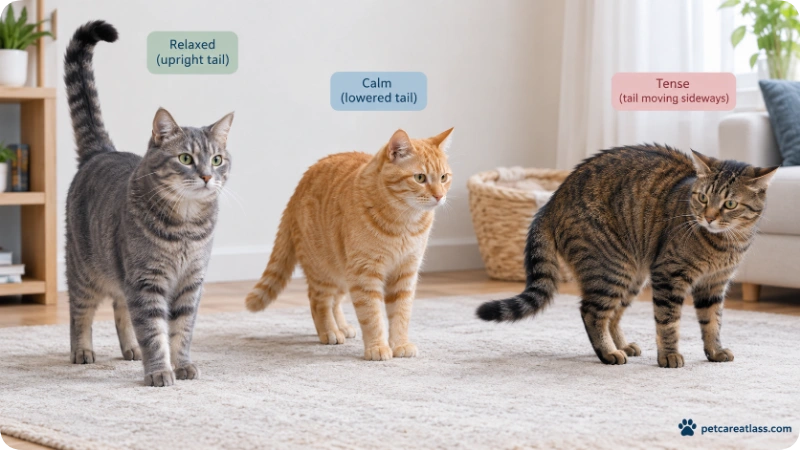
A raised rear does not tell the whole story. Your cat’s tail, ears, eyes, and muscles provide additional clues about how they respond to physical contact.
| Body Language | Possible Meaning | What to Do |
|---|---|---|
| Relaxed muscles and soft eyes | Comfortable interaction | Continue gentle petting |
| Upright tail | Often signals friendly communication | See if your cat approaches |
| Leaning into your hand | May welcome more contact | Continue gently |
| Gentle purring | Possible contentment | Check other body signals |
| Repeated tail flicking | Irritation or excitement | Pause and observe |
| Flattened ears | Discomfort or overstimulation | Stop petting |
| Rippling back skin | Sensitivity or irritation | Stop touching the area |
| Quickly turning toward your hand | Possible warning of discomfort | Give your cat space |
| Growling, hissing, or biting | Clear warning to stop | End the interaction |
Remember that purring is not always a sign of happiness. Cats may also purr when stressed or uncomfortable.
Where Do Cats Prefer to Be Petted?
Many cats prefer gentle contact around their head and face, although individual preferences differ.
Some enjoy back scratches, while others prefer only brief contact around their cheeks or chin.
Commonly preferred petting areas include:
- Chin: Gentle scratching underneath the chin is welcomed by many cats.
- Cheeks: Some cats enjoy soft rubbing around their cheeks.
- Forehead: Gentle strokes between the ears can be comforting.
- Behind the ears: Many cats respond positively to light scratching.
- Upper back: Some cats enjoy gentle strokes along their back.
- Base of the tail: Certain cats welcome contact here, while others are particularly sensitive.
Avoid assuming that a cat who enjoys head scratches will also enjoy belly rubs, tail handling, or repeated scratching near the hindquarters.
How to Pet Your Cat Without Causing Overstimulation
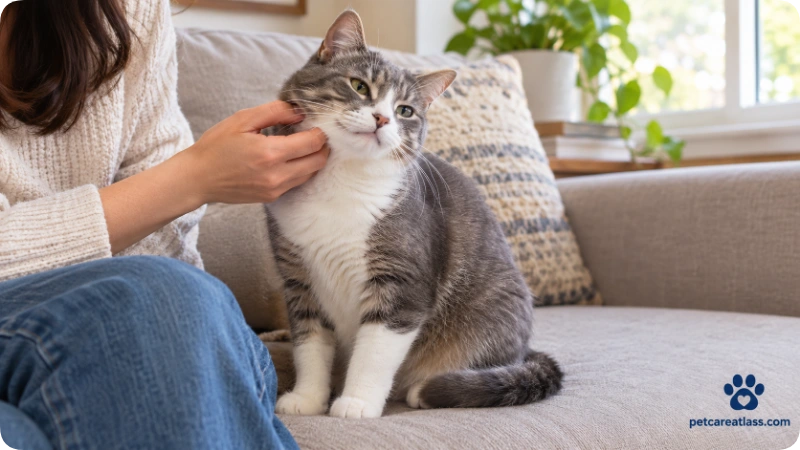
Even cats that enjoy attention can become uncomfortable when petting continues for too long.
Petting-induced aggression occurs when a cat responds negatively to physical contact, sometimes after initially appearing comfortable. The reaction may include biting, scratching, swatting, or suddenly moving away.
Follow these steps to make interactions more comfortable:
- Let your cat approach: Offer your hand and allow your cat to sniff or rub against it.
- Start with familiar areas: Try gentle strokes around the cheeks, forehead, or chin.
- Keep petting sessions short: Begin with a few gentle strokes rather than prolonged contact.
- Observe their response: Look for relaxed muscles, comfortable eyes, and voluntary engagement.
- Take regular breaks: Pause and see whether your cat moves closer or chooses to leave.
- Respect their preferences: Stop when your cat shows signs of discomfort, even if they previously seemed happy.
Allowing your cat to control the interaction helps build trust and reduces the likelihood of uncomfortable encounters.
When Should You Be Concerned About This Behavior?
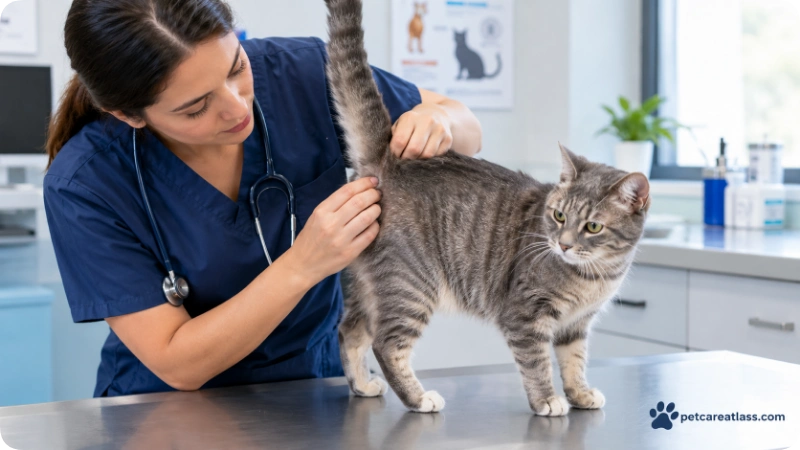
Although raising the hindquarters during petting is often normal, a sudden change in your cat’s response deserves attention.
Pain, skin irritation, injuries, and increased sensitivity around the lower back can make physical contact uncomfortable.
Warning Signs to Watch For
Pay attention if your cat:
- Suddenly cries or growls when you touch their back.
- Repeatedly twitches or ripples the skin along their spine.
- Turns around and bites when you touch the tail base.
- Excessively licks or chews their lower back.
- Avoids jumping, climbing, or normal activities.
- Becomes unusually withdrawn or irritable.
- Shows unexpected changes in tail movement or posture.
One possible condition is feline hyperesthesia syndrome. It involves episodes of increased sensitivity, often around the lower back and the area just in front of the tail.
Affected cats may display skin rippling, sudden running, excessive grooming, vocalization, or attempts to bite the sensitive area. Other medical conditions can cause similar signs, so a veterinary examination is needed to identify the underlying problem.
When to Contact a Veterinarian
Arrange a veterinary examination if your cat develops new or persistent sensitivity, pain when touched, unusual skin movements, or noticeable behavioral changes.
A veterinarian can investigate possible skin conditions, injuries, pain, or neurological problems.
If your cat experiences severe pain, a significant injury, difficulty walking, or trouble urinating, seek prompt veterinary attention.
Why Do Female Cats Sometimes Raise Their Rear and Move Their Tail to One Side?
If your female cat is not spayed, raising her hindquarters may sometimes be associated with being in heat, also called estrus.
During this reproductive phase, a female cat may:
- Raise her rear when someone strokes her back.
- Move her tail to one side.
- Tread repeatedly with her hind feet.
- Roll around on the floor.
- Become unusually affectionate.
- Vocalize more frequently.
- Show restlessness or attempts to escape outdoors.
This characteristic mating posture is called lordosis. It differs from the ordinary rear lift that some cats display during petting.
If you notice several of these behaviors together in an unspayed female, contact your veterinarian to discuss reproductive care and spaying.
Spayed females and male cats can also raise their hindquarters during ordinary social interactions. Therefore, this behavior alone does not indicate sexual behavior.
Common Mistakes Cat Owners Make When Interpreting This Behavior
Understanding feline body language helps prevent misunderstandings during everyday interactions.
| Common Mistake | Better Approach |
|---|---|
| Assuming every rear lift means happiness | Check overall body language |
| Repeatedly scratching the tail base | Stop if your cat shows sensitivity |
| Assuming purring always means pleasure | Look for relaxed muscles and voluntary contact |
| Continuing when the tail lashes | Pause or end the interaction |
| Treating every rear lift as mating behavior | Consider age, sex, and spay status |
| Ignoring sudden sensitivity changes | Arrange a veterinary exam when needed |
Your cat does not need to enjoy every type of physical contact. Respecting their preferences helps build trust and makes interactions more comfortable.
FAQs About Cat Petting and Body Language
Why does my cat lift her bum when I scratch her lower back?
Your cat may be responding to the physical sensation or moving closer to your hand because she enjoys the contact. Some cats are particularly sensitive around the tail base. Observe her body language to determine whether she welcomes the interaction or wants you to stop.
Why does my male cat raise his butt when I pet him?
Male cats can raise their hindquarters during ordinary social interactions, just like female cats. It may be a response to enjoyable touch, a familiar interaction, or individual sensitivity. This behavior alone does not indicate sexual excitement.
Why does my cat lift her tail when I pet her?
An upright tail can be part of friendly feline communication. When your cat raises her tail while you pet her, she may be comfortable with the interaction. However, consider her ears, facial expression, and overall posture before interpreting the movement.
Why does my cat raise her butt but not move?
Your cat may simply be holding a comfortable position while responding to your touch. If she remains relaxed and shows no signs of discomfort, this is usually not concerning. If the posture accompanies stiffness, pain, or difficulty moving, consult a veterinarian.
Do cats raise their butts when they are happy?
Some cats raise their hindquarters during pleasant interactions, but this behavior alone is not a reliable indication of happiness. Relaxed muscles, soft eyes, voluntary contact, and a comfortable tail position provide additional clues.
Should I keep petting my cat when she raises her rear?
You can continue gently if your cat remains relaxed and actively engages with you. However, pause if she becomes tense, flicks her tail repeatedly, flattens her ears, or turns toward your hand. Allow her to decide whether she wants more attention.
Conclusion
Cats raise their hindquarters during petting for several possible reasons, including responding to physical stimulation, enjoying attention, and displaying natural social behavior. In most ordinary interactions, this posture is not a cause for concern.
However, understanding the complete body language is more useful than interpreting one movement alone.
Pay attention to your cat’s preferences, avoid overstimulation, and consult a veterinarian if the behavior becomes painful, unusually sensitive, or changes suddenly.

Daniel Brooks is a pet care and animal behavior writer at petcareatlass.com focused on helping owners better understand their pets’ behavior and everyday needs. He creates practical, easy-to-follow content on pet communication, training, welfare, and responsible care.