Quick Answer:
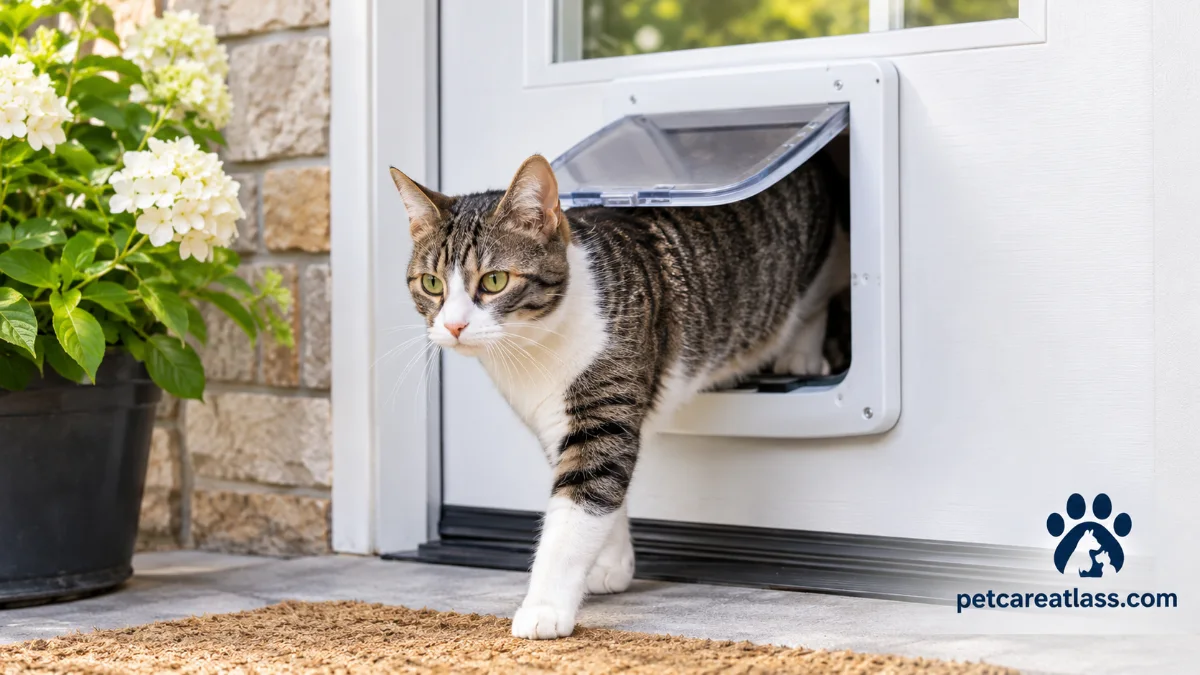
A cat door can make everyday life easier by giving your cat more independence and allowing you to avoid repeatedly opening and closing doors. However, choosing one involves more than finding a flap that fits your doorway. You need to consider your cat’s measurements, the type of door or wall, unwanted animal entry, weather protection, and how much access you want your cat to have.
Giving your cat the freedom to move between indoor and outdoor spaces can make everyday life more convenient, especially when you cannot always open the door for them.
Pet doors for cats provide a simple way to manage independent access, but choosing the right one involves more than finding a flap that fits your door.Different designs offer different levels of security, convenience, insulation, and access control.
Some use basic manual flaps, while others feature locking mechanisms or microchip recognition to help prevent unfamiliar animals from entering.
Your cat’s size, age, mobility, and daily routine also matter when selecting a suitable option.In this guide, you’ll learn what to look for in a cat door, how different styles compare, and which features can make installation and everyday use easier.
Key Takeaways
- Choose a cat door according to your cat’s measurements rather than weight or breed alone.
- Microchip and electronic models provide better access control than basic manual flaps.
- Locking mechanisms help manage when your cat can enter or leave.
- Wall, glass, sliding-door, and standard door installations require different products.
- Outdoor cat doors are best connected to a secure, controlled environment whenever possible.
Types of Pet Doors for Cats
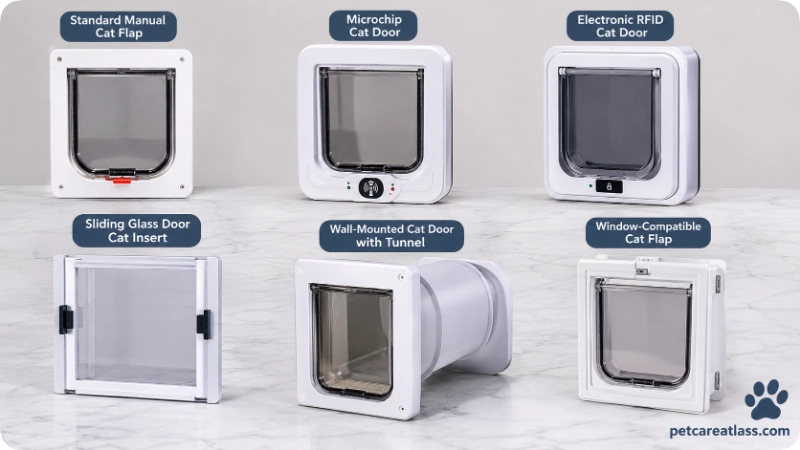
Cat doors come in different designs to suit various homes, installation locations, and security needs. Some provide simple passage between rooms, while others use electronic identification to control which animals can enter.
1. Standard Manual Cat Doors
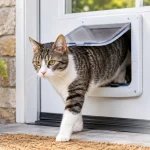
Standard cat doors use a hinged flap that your cat pushes to move through. They are among the simplest options and do not require batteries, microchips, or electronic components.
Many models include a manual locking mechanism with different settings:
- Unlocked: Allows movement in both directions.
- Entry only: Allows the cat to enter but prevents it from leaving.
- Exit only: Allows the cat to leave but prevents reentry.
- Fully locked: Prevents movement in both directions.
These doors work well for indoor spaces, such as connecting a laundry room with the rest of the house or giving a cat access to a designated feeding area.
Best for: Owners who want an affordable, straightforward cat door without electronic access controls.
2. Microchip-Activated Cat Doors
Microchip cat doors use an electronic reader to recognize an enrolled cat’s identification microchip. Some models also work with compatible RFID collar tags.
The door unlocks when it recognizes an authorized pet. This helps prevent unfamiliar neighborhood cats and other animals from entering your home.
Some advanced models offer separate entry and exit permissions, which can be useful in multi-cat households. However, features vary by product, so check whether the system controls entry only or both directions.
For example, Sure Petcare’s DualScan model provides selective access using registered microchips or compatible identification methods. Its published specifications distinguish the usable opening from the overall frame dimensions, making measurement particularly important before purchasing.
Best for: Multi-cat households and owners who want to restrict access to authorized pets.
3. Electronic Cat Doors
Electronic cat doors use a compatible collar tag or identification system to control access. Depending on the model, they may offer programmable locking schedules, selective entry, or additional access settings.
These features can be helpful when you want your cat to have outdoor access only during certain hours or need to prevent unfamiliar animals from entering.
Before buying, check:
- Whether the door uses RFID tags or microchip recognition.
- How many pets it can register.
- Whether replacement tags are available.
- Battery requirements and low-battery alerts.
- Whether entry and exit can be controlled separately.
Best for: Owners who want more control over when their cats can use a door.
4. Sliding Glass Door Cat Doors
Sliding glass door cat doors are designed to fit into or alongside a sliding patio door. Many use a vertical insert panel with a built-in flap, allowing installation without cutting an opening into the existing glass.
They can be a practical choice for homes with patio access, particularly when modifying a permanent door is not desirable.
Check the panel height, track compatibility, locking arrangement, weather sealing, and whether the insert allows the main patio door to remain secure.
Best for: Homes with sliding glass patio doors and owners who prefer a removable installation.
5. Wall-Mounted Cat Doors
Wall-mounted cat doors allow you to create an access point where a traditional door installation is not practical.
They typically use a tunnel that extends through the wall. The tunnel length must match the wall thickness, and additional extensions may be necessary.
Installation can involve cutting through drywall, siding, insulation, or other building materials. Electrical wiring, plumbing, structural components, and moisture barriers must also be considered.
A professional installer is generally the safer choice when the wall construction is unfamiliar or the opening affects the exterior of the home.
Best for: Homeowners who want to create a cat entrance in a specific wall location.
6. Window-Mounted Cat Doors
Window-mounted cat doors provide another option when you do not want to modify a traditional doorway.
Some designs fit into window openings, while others require a compatible glass panel or specially designed mounting system.
Not every cat flap can be installed in glass. Tempered or double-pane glass may require a replacement panel manufactured with an appropriate opening rather than cutting the existing glass.
Best for: Homes where window access is more practical than door or wall installation.
How to Choose the Right Pet Door for Your Cat
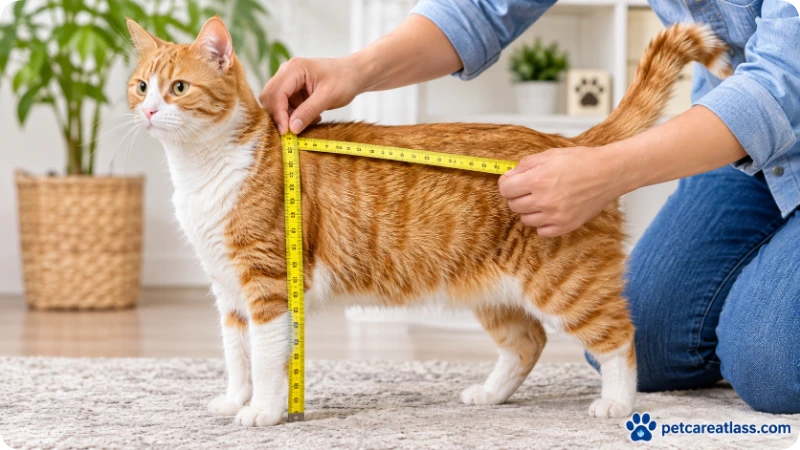
Choosing the right cat door means balancing your cat’s comfort with your home’s layout and security requirements. These factors can help narrow down your options before you purchase.
1. Measure Your Cat Before Buying
A cat door should provide enough space for your cat to walk through comfortably without squeezing, crouching excessively, or getting caught.
Measure your cat while it is standing naturally. Pay particular attention to:
- Body width: Measure the widest part of the chest or shoulders.
- Body height: Measure from the floor to the top of the shoulders.
- Body length: Consider the space needed for comfortable movement through a tunnel.
- Weight: Use the manufacturer’s recommended weight range as an additional suitability check.
Compare these measurements with the actual flap opening, not the outside dimensions of the frame.
For example, a cat door with a large exterior frame may have a much smaller usable opening. Manufacturers often publish separate measurements for the opening, mounting hole, and exterior frame, so check each measurement before ordering.
Also consider future changes. A growing kitten may need a larger opening as it matures, while an older or less mobile cat may benefit from an easier-to-push flap.
2. Consider Where You Want to Install It
The installation location determines which type of cat door will work.
| Installation Location | Suitable Cat Door | Key Consideration |
|---|---|---|
| Interior wooden door | Standard or electronic flap | Check door thickness |
| Exterior door | Weather-resistant or microchip model | Security and insulation |
| Sliding glass door | Sliding door insert | Track and panel fit |
| Exterior wall | Wall-mounted model | Tunnel depth and professional fitting |
| Window | Window-compatible flap | Glass type and mounting needs |
Think about the route your cat will take after passing through the door. An entrance should not lead directly into an unsafe area, busy driveway, or space where another animal could corner your cat.
3. Check the Locking and Security Features
Security becomes especially important when installing a cat door that connects to the outdoors.
A basic manual flap may allow neighborhood cats, wildlife, or other animals to enter if they can push it open. A microchip-operated model can reduce this problem by recognizing authorized pets.
Look for:
- Selective-entry technology.
- Manual locking controls.
- Secure frame attachment.
- A flap that closes reliably.
- Weather-resistant construction.
- A locking system that works during power or battery interruptions.
Remember that microchip recognition does not make the surrounding entrance completely secure. The main door, window, and installation area still need appropriate protection.
4. Look for Weather Protection and Insulation
If you plan to install a cat door in an exterior entrance, weather protection deserves attention.
A poorly fitted flap can allow cold air, rain, dust, and insects to enter your home. This may affect indoor comfort and increase heating or cooling demands.
Useful features include:
- Flexible weather-resistant flap material.
- Brush or rubber sealing around the opening.
- A secure magnetic closure.
- A well-fitted frame.
- Suitable insulation around the installation opening.
No cat door is completely airtight simply because it advertises weather protection. Check the construction and installation instructions before purchasing.
5. Choose Durable and Easy-to-Clean Materials
Cat doors are available in different materials, including plastic, metal-framed designs, and combinations of both.
| Material or Component | Potential Benefit | What to Check |
|---|---|---|
| Durable plastic | Lightweight and easy to clean | Cracking and UV resistance |
| Metal frame | Provides sturdy support | Corrosion and sharp edges |
| Flexible flap | Makes passage easier | Flexibility and replacement options |
| Rubber seals | Reduce gaps around the flap | Wear and weather resistance |
| Reinforced frame | Supports secure installation | Fit and build quality |
Look for smooth edges, secure hinges, replaceable components, and surfaces that can be cleaned without difficulty.
6. Consider Your Cat’s Age and Mobility
A cat door that works well for a young, active cat may not suit an older pet.
Kittens may initially need a low, easy-to-use opening and gradual introduction to the flap. Older cats may have reduced mobility, joint discomfort, or difficulty pushing a stiff door.
For these cats, consider:
- A lightweight flap.
- A wider opening.
- A low threshold.
- A short, unobstructed tunnel.
- An installation height that allows comfortable movement.
If your cat suddenly struggles to use a previously familiar opening, do not assume it is simply stubbornness. A veterinarian can help assess possible pain or mobility problems.
Indoor vs. Outdoor Cat Doors: Which Should You Choose?
Not every cat door needs to provide access to the outdoors. The right choice depends on what you want your cat to access and how much control you need over its movement.
| Feature | Indoor Cat Door | Outdoor Cat Door |
|---|---|---|
| Main purpose | Access between rooms | Access between home and outdoors |
| Security | Controls household access | Keeps unwanted animals out |
| Weather protection | Less important | Essential |
| Locking features | Optional | Strongly recommended |
| Installation | Interior doors or partitions | Exterior doors, walls, or windows |
| Common use | Litter or feeding room | Patio or outdoor enclosure |
When an Indoor Cat Door Makes Sense
Indoor cat doors can be useful when your cat needs access to a particular room without requiring the entire household to keep a door open.
Examples include:
- Access to a litter box in a laundry room.
- Entry to a quiet resting area.
- Access to a feeding space separated from dogs.
- Movement between rooms while maintaining privacy.
For households with multiple pets, selective-access models can help keep dogs away from cat food or litter areas.
When an Outdoor Cat Door Makes Sense
An outdoor cat door can provide access to a garden, patio, or enclosed outdoor space.
However, unrestricted outdoor access introduces risks, including traffic, predators, fights, infectious diseases, and exposure to parasites.
The Feline Veterinary Medical Association recommends considering controlled outdoor access, such as secure enclosures and cat-safe fencing, to help reduce some of these risks.
A cat flap connected to a secure catio can offer a useful compromise: your cat can move between the home and an enclosed outdoor area without having unrestricted access to the neighborhood.
How to Install a Pet Door for Cats
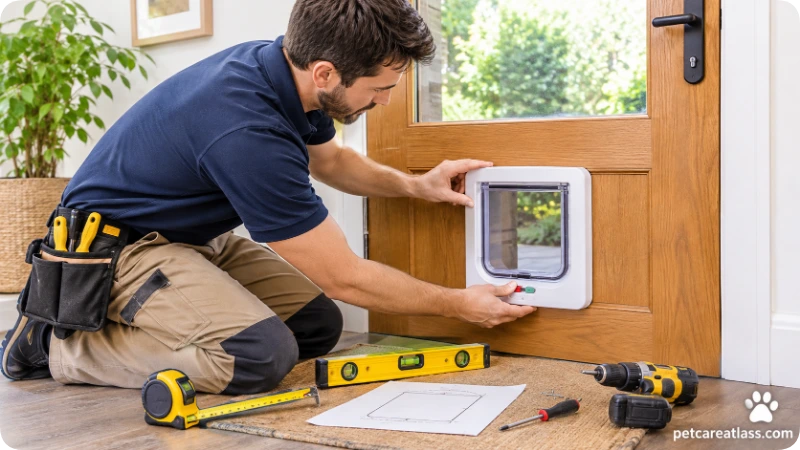
The installation process depends on the cat door design and the material you are modifying. A basic interior-door flap may be manageable for someone with suitable DIY experience, while glass and exterior-wall installations often require professional assistance.
Step 1: Select the Installation Location
Choose a location that provides a comfortable and accessible route for your cat.
For an outdoor entrance, consider the surrounding environment, weather exposure, security, and whether the exit leads to a safe enclosed area.
Step 2: Check the Measurements
Read the manufacturer’s installation guide and compare the required opening dimensions with your available space.
Check:
- The cat door’s exterior frame dimensions.
- The required cutting-hole dimensions.
- The flap opening dimensions.
- The thickness of the door or wall.
- Any additional tunnel or mounting accessories.
Do not use the outside frame as the cutting measurement unless the manufacturer specifically instructs you to do so.
Step 3: Prepare the Installation Area
Before cutting or drilling, check for electrical wiring, plumbing, structural components, and other hidden hazards.
Use the correct mounting equipment and follow the product instructions. For glass, exterior walls, and unfamiliar construction, hire a qualified professional.
Step 4: Secure and Test the Cat Door
Once installed, check that:
- The frame is firmly attached.
- The flap swings freely.
- The locking mechanism works correctly.
- There are no sharp edges or exposed gaps.
- The tunnel is smooth and free from obstructions.
- The exterior installation is properly sealed.
Test the door several times before allowing your cat to use it independently.
How to Train Your Cat to Use a Cat Door
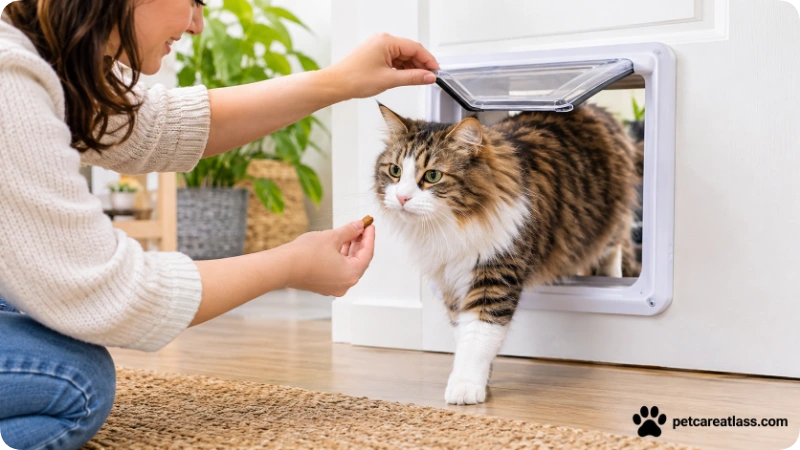
Some cats quickly understand how a flap works, while others need time to become comfortable with the unfamiliar movement and sound.
Avoid pushing your cat through the opening or forcing the flap against its body. A gradual, reward-based approach is more appropriate.
1. Let Your Cat Explore the Door
Allow your cat to investigate the installed door while it is secured open. Let it sniff the frame, inspect the opening, and approach at its own pace.
2. Encourage Movement With a Reward
Place a favorite treat or toy on the other side of the opening. Encourage your cat to approach and walk through voluntarily.
Keep the first attempts easy and avoid creating pressure.
3. Introduce the Moving Flap Gradually
Once your cat is comfortable with the opening, gradually introduce the flap.
Allow your cat to touch and push it gently. If the movement or sound causes hesitation, return to the previous step.
4. Practice From Both Directions
Encourage your cat to use the door in both directions if the model allows it.
Reward calm, voluntary attempts rather than repeatedly calling or pushing your cat through.
5. Allow Time for Adjustment
Some cats learn quickly, while others need several short practice sessions over multiple days.
Keep an alternative route available during training so your cat never feels trapped or forced to use the new entrance.
Common Mistakes to Avoid When Buying Cat Doors
A cat door may look suitable online but still be inconvenient or unsafe once installed. Avoid these common purchasing mistakes.
| Common Mistake | Why It Causes Problems | Better Approach |
|---|---|---|
| Choosing by frame size | Opening may be too small | Check usable opening size |
| Ignoring cat mobility | Stiff flaps are hard to push | Choose an easy-opening flap |
| Skipping compatibility checks | Door may not fit | Check thickness and mounting needs |
| Ignoring outdoor security | Unwanted animals may enter | Consider selective-entry technology |
| Ignoring weather sealing | Drafts and moisture may enter | Choose a well-sealed exterior model |
| Skipping training | Cat may avoid the flap | Introduce it gradually |
| Forgetting maintenance | Dirt and wear affect operation | Clean and inspect regularly |
How to Maintain a Cat Door
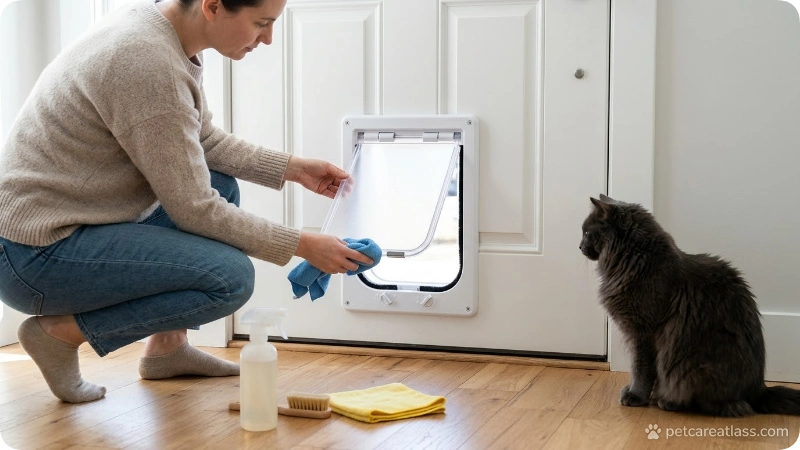
Regular maintenance helps keep the door functional, clean, and comfortable for your cat.
Clean the Flap and Frame
Remove dust, hair, and dirt from the flap, hinges, frame, and tunnel. Follow the manufacturer’s cleaning instructions and avoid harsh products that could damage the material.
Inspect the Locking Mechanism
Check manual locks, electronic readers, and moving components regularly. Make sure the door closes properly and does not remain partially open.
Check Weather Seals
For exterior installations, inspect rubber seals, brush strips, and the surrounding frame. Replace worn components when necessary.
Monitor Electronic Components
If your cat door uses batteries, follow the manufacturer’s replacement schedule and pay attention to low-battery warnings.
For microchip-operated models, periodically confirm that your cat’s identification is still recognized.
Watch Your Cat’s Behavior
Notice whether your cat continues to use the door comfortably. Hesitation, avoidance, or difficulty passing through may indicate that the flap is too stiff, the opening is uncomfortable, or something about the installation needs attention.
Are Pet Doors for Cats Safe?
Pet doors can be useful, but their safety depends on where they lead, how they operate, and how well they are maintained.
For indoor use, the main considerations are comfortable access, household separation, and preventing other pets from entering restricted areas.
For outdoor use, additional concerns include:
- Unwanted animals entering the house.
- Exposure to traffic and predators.
- Contact with unfamiliar cats.
- Weather conditions.
- Escape from the property.
- Difficulty controlling outdoor access.
The Feline Veterinary Medical Association’s indoor/outdoor lifestyle guidance highlights the different welfare considerations associated with indoor and outdoor living. Controlled outdoor access, including secure enclosures, can provide enrichment while reducing some outdoor risks.
If you want your cat to enjoy fresh air without unrestricted roaming, consider connecting the cat door to a properly secured catio.
Important: A microchip cat door controls access through the flap; it does not make an outdoor area escape-proof or protect a cat from hazards after it leaves the house.
Frequently Asked Questions
Are microchip cat doors better than regular cat doors?
Microchip cat doors provide better selective-entry control because they recognize registered pets. Regular manual cat doors are simpler and generally do not require batteries or electronic identification. The better option depends on whether you need to prevent unfamiliar animals from entering your home.
Can a cat door keep other cats out?
A microchip-operated cat door can help prevent unfamiliar cats from entering because it opens for registered identification chips or compatible tags. However, check the access-control features carefully because some models control entry but allow any animal to exit.
Can I install a cat door in a glass door?
Yes, certain cat doors are designed for glass installation, but compatibility depends on the product and glass construction. Tempered and double-pane glass generally require specialist handling or a suitable replacement panel. Do not attempt to cut existing glass without professional guidance.
What size cat door should I buy?
Choose a door with an opening wide and tall enough for your cat to pass through comfortably. Measure the widest part of the body and the height of your cat’s shoulders. Compare these measurements with the manufacturer’s usable opening dimensions rather than the outside frame.
Can I use a cat door for a kitten?
Yes, provided the opening is appropriately sized and the kitten can pass through comfortably. Start with the flap secured open and introduce the moving door gradually. Reassess the size as your kitten grows.
Do cat doors let cold air into the house?
They can allow drafts, particularly if the flap does not close securely or the frame is poorly sealed. Look for weather-resistant materials, effective seals, and a properly fitted frame when selecting an exterior cat door.
Should indoor cats have access to an outdoor cat door?
Not necessarily. Indoor cats can have a fulfilling lifestyle without unrestricted outdoor access when their environmental needs are met. If you want to provide outdoor enrichment, a secure catio or enclosed patio can be a more controlled option.
Conclusion
The best pet door for cats is one that fits your cat comfortably, suits your home’s construction, and provides the level of access control you need.
Standard flaps are practical for simple indoor access, while microchip and electronic models offer additional security for multi-pet households.
Before purchasing, check measurements, installation requirements, locking features, and weather protection. Most importantly, consider where the door leads and make sure your cat can use it comfortably and safely.

Dr. Emily Carter is a pet-care writer with a focus on animal health, nutrition, and everyday pet wellness. She creates practical, easy-to-understand guides that help pet owners make informed and responsible care decisions.