Quick Answer:
Cats may drool when you pet them because they feel relaxed, comfortable, and content. Some cats naturally salivate while purring or enjoying gentle affection. However, drooling is not always harmless. If it starts suddenly, becomes excessive, or occurs with bad breath, difficulty eating, vomiting, or unusual behavior, it may indicate dental pain, nausea, stress, or another health problem. Understanding when and how your cat drools can help you decide whether it is normal or needs veterinary attention.
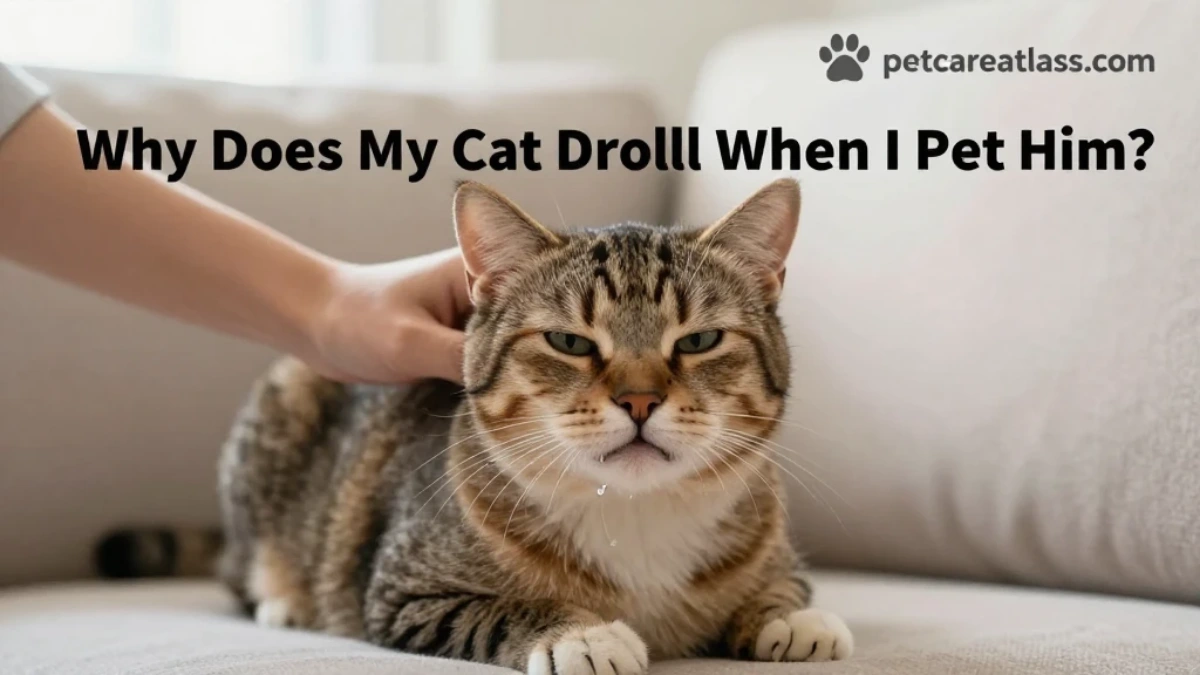
Have you ever noticed your cat drooling while you pet him, especially when he is purring or enjoying your attention? It might look unusual, but in some cats, drooling is simply a sign of relaxation and contentment. Gentle petting can make them feel safe and comfortable enough to salivate.
However, not every case of cat drooling during petting is harmless. Dental problems, mouth pain, nausea, stress, and other health conditions can also cause excessive saliva. The difference often depends on when the drooling happens, how much saliva your cat produces, and whether other symptoms appear.
In this guide, you’ll discover why your cat drools when you pet him, how to recognize normal versus concerning drooling, and when a veterinary checkup may be necessary.
Is It Normal for a Cat to Drool When You Pet Him?
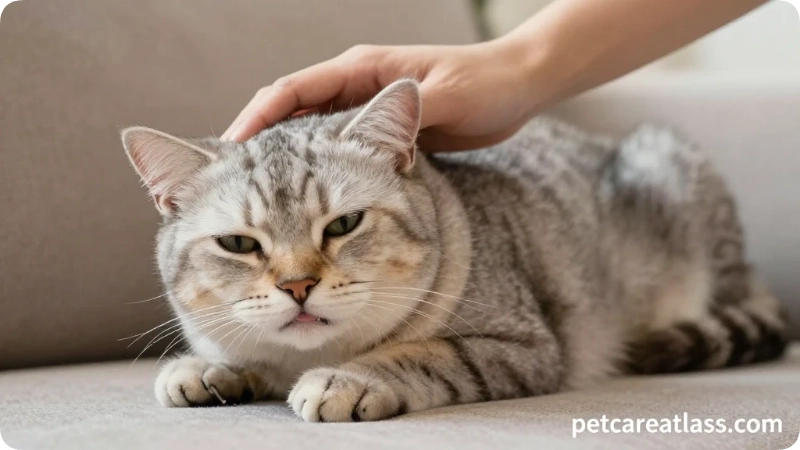
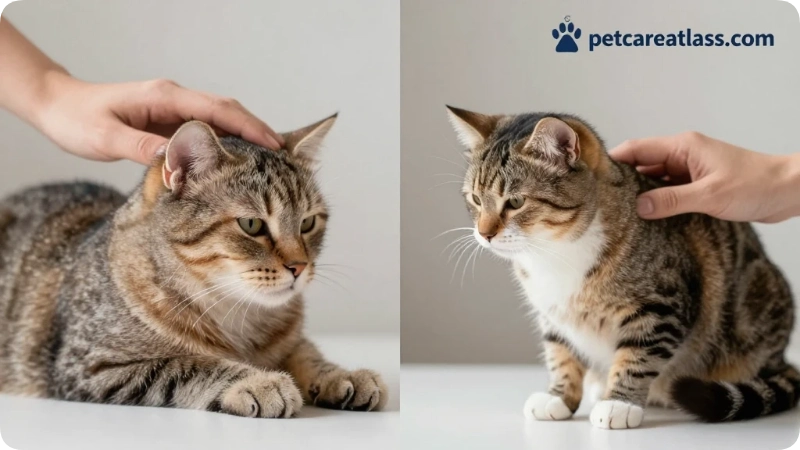
Yes, a small amount of drooling can be normal for some cats, particularly during very relaxed interactions.
Cats Protection notes that some cats may dribble when they are relaxed and happy, especially when purring or kneading. Some cats may also drool while being stroked when they enjoy the interaction.
This does not mean every cat should drool when happy. Many perfectly healthy cats never drool during petting.
Your cat’s individual personality matters. One cat may respond to affection by purring and kneading, another may rub against your hand, and another may simply lie quietly beside you.
Signs that the drooling may be linked to relaxation
Look at what your cat is doing at the same time. Drooling is more reassuring when your cat:
- Purrs normally
- Kneads with the paws
- Has relaxed ears and facial muscles
- Keeps a loose, comfortable body posture
- Leans into your hand
- Comes back when you stop petting
- Appears comfortable rather than distressed
- Eats, drinks, grooms, and behaves normally afterward
For example, imagine your cat climbs onto your lap, starts purring, kneads your blanket, and relaxes while you gently stroke his head. A tiny wet spot around his mouth during this interaction may simply be part of his individual response to relaxation.
Cats Protection also recommends paying attention to whether the cat chooses to remain involved in the interaction and shows relaxed body language.
Table: What Your Cat’s Behavior May Tell You
| What you notice | What it may suggest | What to do |
| Small amount of drool + purring | Relaxation or pleasure | Continue gently if your cat remains comfortable |
| Drooling + kneading | Deep relaxation or stimulation | Observe the overall body language |
| Drooling + relaxed posture | May be normal for that individual cat | Monitor for changes |
| Drooling + hiding or avoiding touch | Possible stress or discomfort | Stop petting and give space |
| Drooling + pawing at the mouth | Possible oral discomfort | Arrange veterinary advice |
| Drooling + difficulty eating | Possible dental, mouth, throat, or other problem | Contact your veterinarian |
| Sudden heavy drooling | Possible medical issue or exposure | Seek veterinary advice promptly |
What Does Drooling During Petting Mean?
There is not one explanation for every cat. The reason can depend on your cat’s personality, the situation, how much you are petting him, and whether any other symptoms are present.
1. He may be extremely relaxed
Some cats become deeply relaxed during physical contact with a person they trust.
Petting can be calming for cats that enjoy human touch. A relaxed cat may purr, knead, close or soften the eyes, stretch out, and remain close to you. A small amount of drooling may occur during this state.
If your cat has always done this during enjoyable petting sessions and otherwise appears healthy, the behavior may simply be part of his individual response.
2. He may associate petting with comfort
Cats can develop strong associations between familiar people and positive experiences.
If your cat regularly seeks you out for gentle attention, petting may become part of a comfortable routine. Your cat might settle down, purr, knead, or drool slightly while receiving attention.
This does not mean drooling itself is necessarily an emotional signal. It is better to interpret it alongside the rest of your cat’s behavior.
3. Purring and kneading may happen at the same time
Some cats drool while purring and kneading. These behaviors can occur together during periods of relaxation or stimulation.
But purring should not automatically be interpreted as proof that everything is fine. Cats can also purr in situations involving stress or discomfort, so body language and the surrounding circumstances matter.
For example, a cat with flattened ears, wide pupils, tense muscles, or an attempt to escape should not be assumed to be happy simply because he is purring.
4. He may be overstimulated
Petting is not always relaxing for every cat.
Some cats enjoy a short interaction but become uncomfortable if petting continues for too long or focuses on a sensitive area. Stress or excitement can also be associated with drooling. Veterinary references list fear, nervousness, and excitement among possible causes of excessive salivation.
Watch for signs such as:
- Tail flicking or lashing
- Ears moving backward or flattening
- Tense body posture
- Dilated pupils
- Trying to move away
- Sudden skin twitching
- Growling, hissing, swatting, or biting
If these signs appear, stop petting and allow your cat to leave.
5. The area you are touching may be uncomfortable
If drooling happens specifically when you touch a particular part of your cat’s body, pay attention to the pattern.
For example, if touching the lower back causes your cat to suddenly react, become agitated, twitch the skin, scratch intensely, or drool, that is different from a cat calmly drooling while being stroked.
Cornell University’s Feline Health Center notes that cats with feline hyperesthesia can show increased sensitivity, skin rippling, intense scratching or biting, behavioral changes, and sometimes drooling when the affected area is stimulated.
This does not mean that every cat who drools during back petting has hyperesthesia. It is one reason why unusual reactions to touch deserve closer observation.
When Is Cat Drooling a Sign of a Problem?
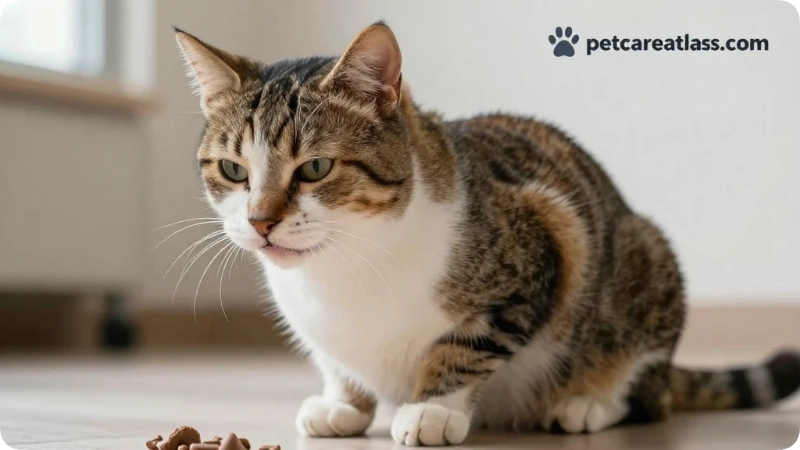
The biggest clue is change.
If your cat has occasionally drooled a little during relaxed petting for years and remains healthy, the behavior may be normal for him.
If your cat suddenly starts drooling when he never did before, the situation deserves more attention.
Cats Protection recommends veterinary assessment when drooling is new, excessive, constant, or smelly because these changes can be associated with medical problems.
Table: Normal-Looking Drooling vs. Concerning Drooling
| Feature | More reassuring pattern | More concerning pattern |
| Amount | Small amount | Large or continuous amount |
| Timing | Mainly during enjoyable petting | Happens at random or most of the time |
| Duration | Stops after relaxation or interaction | Continues for a long time |
| History | Long-standing behavior | New or suddenly increased |
| Body language | Relaxed and comfortable | Tense, withdrawn, restless, or painful |
| Eating | Normal appetite and chewing | Difficulty eating or refusing food |
| Mouth | No obvious discomfort | Pawing at mouth, bad odor, bleeding, or difficulty swallowing |
| Other symptoms | None | Vomiting, weakness, breathing problems, or major behavior changes |
What Health Problems Can Cause a Cat to Drool?
Excessive salivation in cats can have many possible causes. This is why drooling by itself cannot tell you exactly what is wrong.
Dental and mouth problems
Dental disease and painful conditions in the mouth can cause increased salivation.
Possible oral problems include inflammation, injuries, foreign objects, dental disease, and other disorders affecting the mouth or tongue.
You may notice other changes such as:
- Bad breath
- Difficulty chewing
- Dropping food
- Eating more slowly
- Pawing at the mouth
- Reluctance to eat
- Swollen or irritated gums
- Blood around the mouth
Cats can be good at hiding discomfort, so a cat that still eats does not necessarily have a completely healthy mouth.
Nausea or gastrointestinal problems
Nausea can cause excessive salivation in cats. For example, Merck Veterinary Manual notes that excessive salivation can occur before vomiting and with various digestive problems.
If drooling occurs together with repeated swallowing, lip licking, retching, vomiting, loss of appetite, or unusual digestive behavior, it is worth discussing with your veterinarian.
Something irritating or stuck in the mouth
Foreign material can irritate the mouth or throat and cause drooling.
String, plant material, bones, or other objects can potentially become lodged or cause injury. Merck lists foreign objects in the mouth or throat among possible causes of excessive salivation.
Do not pull on a string or other object that appears to be lodged in your cat’s mouth. A veterinarian should assess the situation.
Toxins or irritating substances
Some substances can cause significant drooling if a cat licks or ingests them.
Household chemicals, certain plants, medications, and other toxic substances can cause oral irritation or poisoning.
If you think your cat has been exposed to a potentially toxic substance, do not wait for the drooling to disappear before seeking veterinary guidance.
Stress, fear, or excitement
Drooling can also occur during stressful or highly stimulating situations.
Cats may drool during frightening experiences, travel, or other situations involving nausea, fear, or excitement.
This is another reason context matters. A cat who drools only during a stressful car journey is different from a cat who suddenly begins drooling heavily while resting at home.
How Can I Tell If My Cat Is Enjoying Being Petted?
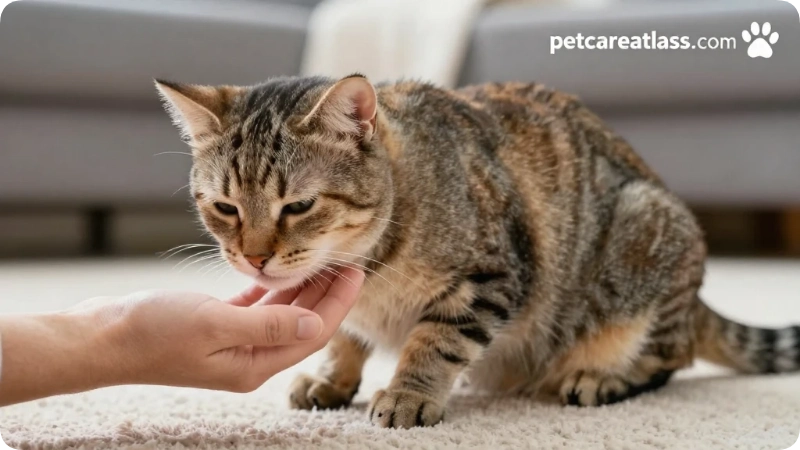
Instead of focusing only on the drool, watch your cat’s complete body language.
A cat who enjoys petting may:
- Approach you voluntarily
- Rub against your hand
- Lean into gentle strokes
- Keep a relaxed posture
- Purr
- Knead
- Have soft or partially closed eyes
- Remain near you after you stop
Cats Protection recommends allowing cats to choose whether they want interaction and paying attention to their body language throughout petting.
A cat who is becoming uncomfortable may:
- Move away
- Turn the head sharply toward your hand
- Flick or lash the tail
- Flatten or rotate the ears
- Become tense
- Try to bite or swat
- Hide
- Show wide pupils or other signs of stress
Table: Body Language to Watch During Petting
| Body language | Likely interpretation | Your response |
| Leaning into your hand | Seeking more contact | Continue gently |
| Kneading + relaxed posture | Comfortable or stimulated | Observe and continue if welcomed |
| Slow blinking + relaxed body | Comfortable | Keep interaction calm |
| Tail suddenly flicking | Possible irritation or overstimulation | Slow down or stop |
| Ears flattening | Stress or discomfort | Stop petting |
| Moving away | Wants space | Let the cat leave |
| Biting or swatting | Interaction has become unwanted | Stop and give space |
| Skin rippling with sudden intense reaction | Unusual sensitivity | Stop touching the area and seek veterinary advice if recurring |
What Should I Do If My Cat Drools When I Pet Him?
Start by observing rather than immediately assuming the worst.
1. Look at the amount of drool
A tiny amount around the lips is very different from saliva dripping continuously from the mouth.
Take note of whether your cat leaves a small wet patch after a relaxed petting session or whether saliva is flowing repeatedly.
2. Look at when it happens
Ask yourself:
- Does it happen only when I pet him?
- Does it happen during purring?
- Does it happen during kneading?
- Does it happen when I touch one particular area?
- Does it happen while eating?
- Does it happen after medication?
- Does it happen during travel?
- Has it started recently?
Patterns can provide useful information for your veterinarian if an examination becomes necessary.
3. Let your cat control the interaction
Do not restrain your cat so you can continue petting him.
If he moves away, let him go. Cats vary greatly in how much physical contact they enjoy, and some become stressed when handling continues after they have had enough.
4. Check for other changes
Pay attention to eating, drinking, grooming, energy, breath odor, vomiting, swallowing, and general behavior.
A change in one of these areas makes the drooling more important to investigate.
5. Do not try to diagnose the cause yourself
Drooling can result from relatively harmless situations as well as medical problems. The same visible symptom can have different causes.
If the pattern is unusual or persistent, a veterinarian can examine your cat’s mouth and overall health and determine whether further investigation is needed.
When Should I Take My Cat to the Vet for Drooling?
Contact your veterinarian if the drooling is new, persistent, excessive, foul-smelling, or accompanied by other changes.
It is particularly important to seek veterinary attention if you notice:
- Difficulty eating or swallowing
- Refusal to eat
- Repeated vomiting or retching
- Blood from the mouth
- Significant bad breath
- Pawing at the mouth
- Swelling around the face or mouth
- Weakness or marked lethargy
- Trouble breathing
- Severe or unusual pain
- Sudden behavioral changes
- Possible exposure to a toxin or chemical
- A foreign object that may be stuck
If toxin exposure, breathing difficulty, severe weakness, collapse, or another potentially urgent problem is suspected, seek emergency veterinary care rather than waiting to see whether the drooling stops.
Table: What to Do Based on the Pattern
| Situation | Recommended response |
| Tiny amount of drool during relaxed petting and your cat is otherwise normal | Monitor and respect his body language |
| Drooling has increased gradually | Arrange a veterinary check |
| New drooling with bad breath or eating changes | Contact your veterinarian |
| Drooling with vomiting or repeated swallowing | Contact your veterinarian |
| Drooling after possible toxin exposure | Seek veterinary advice promptly |
| Drooling with breathing difficulty or collapse | Seek emergency veterinary care |
| Drooling plus unusual reactions when touching the back | Stop touching the area and discuss recurring episodes with your veterinarian |
Should I Stop Petting My Cat If He Drools?
Not necessarily.
If your cat has always produced a small amount of drool during relaxed petting and shows comfortable body language, there may be no reason to stop gentle interaction simply because he drools.
However, drooling should not be used as a reason to keep petting a cat that is showing signs of discomfort.
Let your cat decide whether the interaction continues. If he remains relaxed and seeks more attention, gentle petting may be appropriate. If he moves away, becomes tense, flicks his tail, flattens his ears, or shows other signs of stress, stop.
The goal is not to make your cat tolerate petting. The goal is to recognize when he actually wants it.
Why Does My Cat Drool More When I Pet a Certain Spot?
The location can provide an important clue.
If your cat consistently drools while you gently stroke his head or neck during a relaxed interaction, it may simply coincide with a pleasurable or calming routine.
But if touching a particular area produces a sudden, unusual reaction—especially skin rippling, intense scratching, biting, running, vocalizing, or marked agitation—the response deserves attention.
Cornell describes drooling as one possible sign during episodes of feline hyperesthesia, although that condition has a broader set of signs and requires veterinary evaluation rather than being diagnosed from drooling alone.
Do not repeatedly stimulate a sensitive area simply to test the reaction.
Common Mistakes Cat Owners Make About Drooling
Mistake 1: Assuming all drooling means happiness
Some cats really do drool when relaxed, but drooling can also have medical causes.
Better approach: Look at the entire behavior and whether the pattern is normal for your cat.
Mistake 2: Assuming all drooling means something is seriously wrong
A little drooling during purring and kneading can be normal in some cats.
Better approach: Consider amount, frequency, history, body language, and other symptoms.
Mistake 3: Ignoring a new change
A cat that suddenly starts drooling is different from a cat that has always done it during cuddles.
Better approach: Treat a new or worsening pattern as something worth discussing with a veterinarian.
Mistake 4: Continuing to pet because the cat is purring
Purring does not always mean a cat wants more physical contact.
Better approach: Watch the ears, eyes, tail, posture, and whether the cat chooses to remain near you.
Mistake 5: Trying to inspect or pull something from the mouth
A foreign object can cause drooling, but attempting to remove it yourself can cause additional injury.
Better approach: Seek veterinary guidance, particularly if an object appears lodged or your cat is distressed.
Frequently Asked Questions
Why does my cat drool when I pet him but only a little?
Some cats drool a small amount when they become very relaxed or stimulated during enjoyable petting. If the behavior is long-standing and your cat has no other concerning signs, it may simply be an individual response.
Is drooling a sign that my cat is happy?
It can be, but not always. Some cats drool while relaxed, purring, kneading, or being stroked. However, drooling can also occur with stress, nausea, mouth problems, toxins, or other medical conditions.
Why does my cat drool and purr when I pet him?
Purring, relaxation, and drooling can occur together in some cats during pleasant interaction. Look at his complete body language. A relaxed cat who seeks more contact is different from one who appears tense or tries to escape.
Should I worry if my cat suddenly starts drooling?
A sudden change deserves attention, particularly if the drooling is heavy, persistent, smelly, or accompanied by appetite changes, vomiting, mouth discomfort, weakness, or unusual behavior. Veterinary assessment can help identify the cause.
Can dental problems make a cat drool?
Yes. Dental and oral problems can cause increased salivation. Cats may also show bad breath, difficulty eating, mouth sensitivity, or other changes, although some cats can hide signs of oral discomfort.
Why does my cat drool when I pet his back?
If your cat simply relaxes while you stroke his back, the drooling may be part of his normal response. But drooling combined with skin rippling, sudden agitation, intense scratching, biting, or other unusual reactions can indicate that the area is overly sensitive and should be discussed with a veterinarian if it keeps happening.
Can stress cause cats to drool?
Yes. Fear, nervousness, excitement, and stressful situations can be associated with excessive salivation. Travel can also cause drooling when nausea or motion sickness is involved.
Conclusion
So, why does my cat drool when I pet him? If your cat produces a small amount of drool while purring, kneading, relaxing, and actively enjoying your attention, it may simply be part of his individual response to being comfortable and stimulated.
The important thing is to watch for changes. New, excessive, constant, foul-smelling, or unexplained drooling deserves more attention, especially when it occurs with mouth discomfort, appetite changes, vomiting, unusual behavior, or other signs of illness.
Most importantly, judge your cat by the whole picture rather than the drool alone. Let him choose when he wants affection, watch his body language, and seek veterinary advice when the pattern is new, persistent, or concerning.

Daniel Brooks is a pet care and animal behavior writer at petcareatlass.com focused on helping owners better understand their pets’ behavior and everyday needs. He creates practical, easy-to-follow content on pet communication, training, welfare, and responsible care.