Quick Answer:
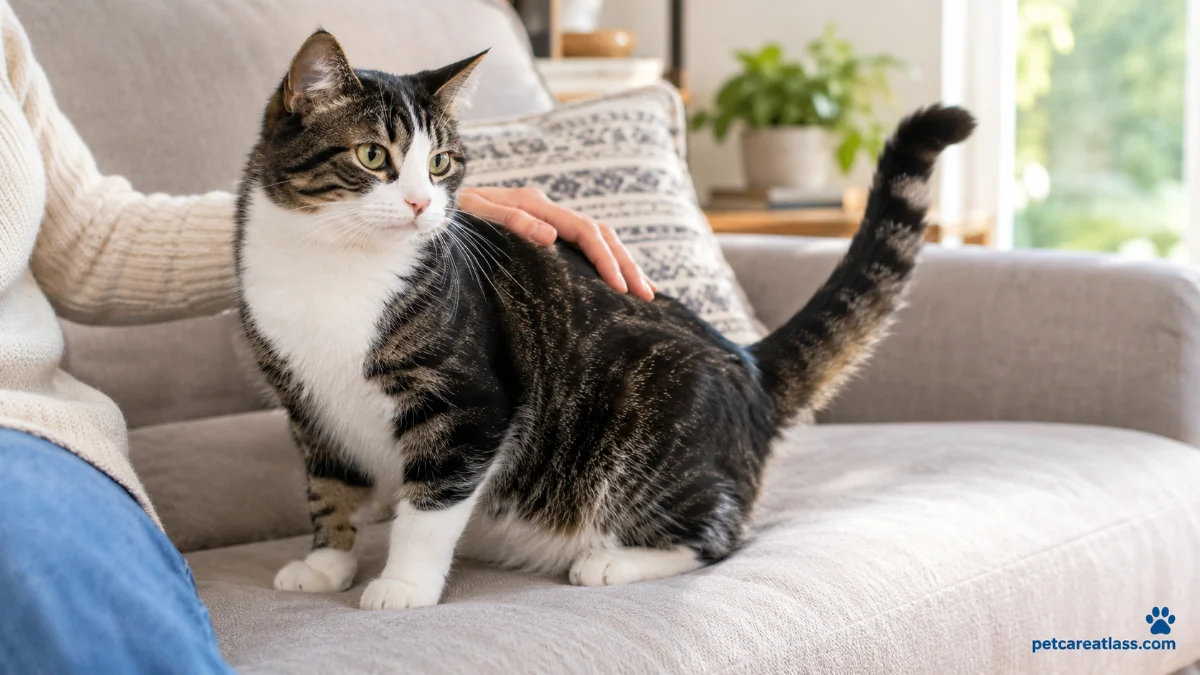
Your cat may wag his tail when you pet him because he is enjoying the attention, feeling excited, becoming overstimulated, or asking you to stop. Unlike dogs, cats often use tail movements to communicate mixed emotions. Pay attention to the speed and direction of his tail, along with his ears, eyes, posture, and overall body language, to understand how he feels.
Introduction
When you pet your cat, you might notice his tail gently moving, flicking from side to side, or suddenly swishing back and forth. It can be confusing because a wagging tail does not always mean a cat is happy. Sometimes, your cat is enjoying your attention, while other movements may indicate excitement, uncertainty, irritation, or overstimulation.
Understanding your cat’s tail language can help you recognize when he welcomes physical affection and when he needs a break. The important thing is to look at his entire body rather than interpreting one tail movement on its own. This guide explains the most common reasons cats wag their tails during petting and how to respond appropriately.
6 Common Reasons Your Cat Wags His Tail When You Pet Him
A cat’s tail is an important part of feline communication. Its movement can provide clues about excitement, attention, comfort, frustration, and stress. However, the meaning depends on the type of movement and what is happening around your cat.
Here are six common reasons your cat may move his tail while you are petting him.
1. He Is Enjoying Your Attention
Some cats gently move their tails when they are relaxed, interested, or enjoying interaction with someone they trust. Your cat may continue leaning into your hand, rubbing his cheeks against you, or positioning himself for more petting.
Look for other relaxed behaviors, such as:
- Soft or partially closed eyes.
- Relaxed ears facing forward or slightly sideways.
- A loose, comfortable body posture.
- Gentle purring.
- Rubbing his head or cheeks against your hand.
A gently moving tail does not automatically mean your cat is happy, but these accompanying signals suggest that he is comfortable with the interaction.
What to do: Continue gentle petting if your cat remains relaxed and actively seeks contact. Give him opportunities to move away whenever he wants.
2. He Is Becoming Overstimulated
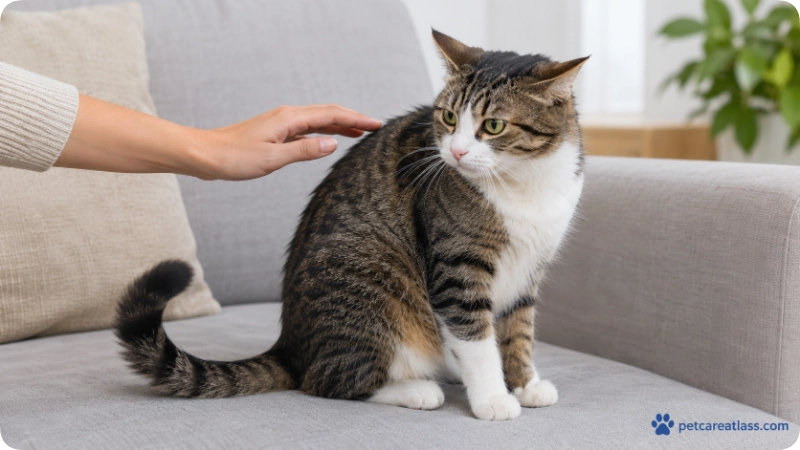
Overstimulation is one of the most common explanations for a cat suddenly flicking or swishing his tail during petting.
Although your cat may initially enjoy being touched, repeated strokes can eventually become uncomfortable. Some cats have a lower tolerance for physical contact and communicate their discomfort through small changes in body language before attempting to bite or scratch.
You may notice:
- His tail starts twitching or swishing more frequently.
- His ears turn sideways or backward.
- His body becomes stiff.
- His skin ripples or twitches along his back.
- He suddenly turns his head toward your hand.
- His pupils become noticeably enlarged.
Cornell University’s Feline Health Center identifies tail lashing, dilated pupils, and backward-facing ears as possible warning signs of petting-induced aggression. [1]
What to do: Stop petting as soon as you notice these warning signs. Give your cat space to relax rather than trying to continue the interaction.
3. He Is Feeling Excited or Playful
Your cat may wag or twitch his tail because he is excited or mentally stimulated.
For example, he might be sitting beside you while watching a moving object, listening to an unfamiliar sound, or noticing another animal nearby. Petting can happen at the same time as these activities, making it appear that your touch is causing the tail movement.
A slow side-to-side tail movement can also occur when a cat concentrates on something interesting, such as a toy or potential prey. [2]
What to do: Observe what has captured his attention. If he appears playful, offer an appropriate toy rather than encouraging him to grab or bite your hands.
4. He Is Feeling Irritated or Frustrated
Not every cat enjoys being petted for long periods. Your cat may appreciate attention initially but become irritated when the interaction continues beyond his comfort level.
A rapidly flicking tail or forceful side-to-side movement can indicate that he is becoming increasingly uncomfortable.
Other signs may include:
- Flattened or backward-facing ears.
- A tense body.
- Moving away from your hand.
- Growling or hissing.
- Sudden swatting.
- Attempting to bite.
These behaviors are communication signals, not necessarily signs that your cat dislikes you. He may simply want to control when physical contact begins and ends.
What to do: Stop touching him and allow him to choose whether to approach you again. Avoid scolding, restraining, or forcing him to accept affection.
5. He Is Reacting to a Sensitive Area
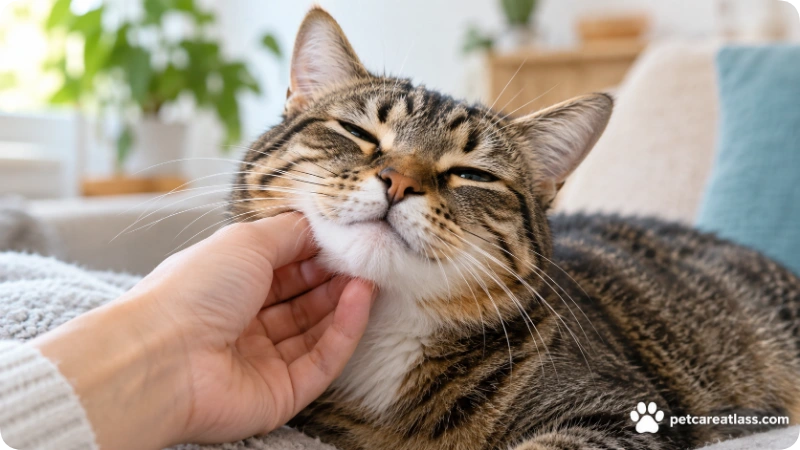
Your cat may wag his tail when you pet a particular part of his body because some areas are more sensitive to touch than others.
Many cats prefer gentle contact around their cheeks, forehead, chin, and head. Others tolerate back strokes but become uncomfortable when someone touches their belly, paws, or the area near the base of their tail.
The 2022 AAFP/ISFM Cat Friendly Veterinary Interaction Guidelines identify the head and neck as commonly preferred areas and report negative responses to touching the belly and the area just before the tail base.
Pay attention to whether your cat’s tail movement happens consistently when you touch one particular spot.
What to do: Try shorter, gentler strokes around his cheeks, chin, and head if he welcomes them. Avoid repeatedly touching areas that trigger discomfort.
If a previously comfortable area suddenly becomes sensitive, particularly when accompanied by other changes, arrange a veterinary examination.
6. He May Be Experiencing Discomfort or Pain
Sometimes, tail movement during petting is associated with physical discomfort rather than an emotional response.
If your cat suddenly starts reacting negatively to touch, especially in an area he previously enjoyed being petted, consider whether an underlying health problem could be involved.
Possible accompanying signs include:
- Flinching when a particular area is touched.
- Hiding or avoiding interaction.
- Reduced activity or reluctance to jump.
- Changes in grooming habits.
- Unusual vocalization when handled.
- Changes in appetite or normal behavior.
Tail wagging alone does not establish that a cat is experiencing pain. However, a new or persistent sensitivity to touch deserves attention.
What to do: Stop touching the uncomfortable area and arrange a veterinary examination. Seek prompt veterinary advice if the change is sudden or accompanied by significant pain, weakness, or difficulty walking.
What Different Tail Movements Mean When You Pet Your Cat
The speed, direction, and intensity of your cat’s tail movement can help you understand his response to physical contact.
However, these are general behavioral clues rather than definite emotional labels. Always consider his ears, eyes, posture, and surroundings.
| Tail Movement | Possible Meaning | How to Respond |
|---|---|---|
| Gentle tail-tip twitch | Interest or mild irritation | Observe other signals |
| Slow side-to-side movement | Focus or curiosity | Check what interests him |
| Rapid tail swishing | Irritation or overstimulation | Stop petting and give space |
| Strong tail lashing | Agitation or frustration | End the interaction |
| Upright tail with curled tip | Friendly greeting or confidence | Let him approach |
| Upright, quivering tail | Excitement or urine marking | Observe the surrounding behavior |
| Puffed-up tail | Fear or defensive arousal | Give him space |
These interpretations are consistent with feline body-language guidance from Cornell, VCA, and other animal behavior resources.
How to Tell Whether Your Cat Likes Being Petted
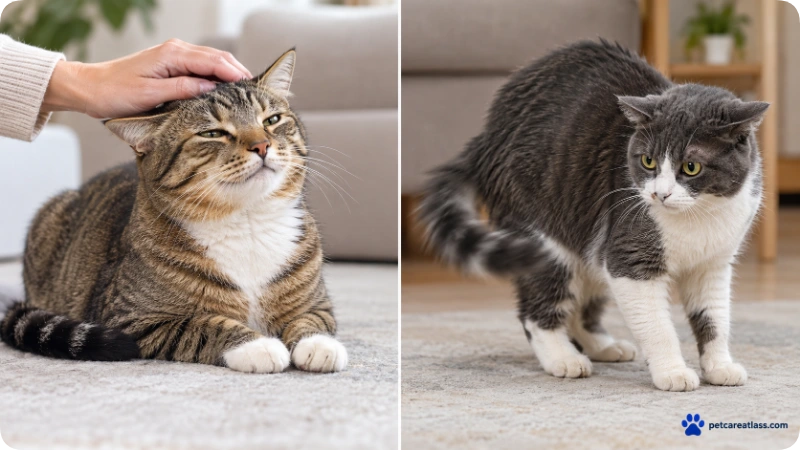
A wagging tail alone cannot tell you whether your cat enjoys being touched. The best approach is to observe his overall body language before and during petting.
Signs your cat may welcome petting
- He approaches you voluntarily.
- He rubs his cheeks or forehead against your hand.
- His muscles appear relaxed.
- His ears remain in a natural, relaxed position.
- He leans into gentle strokes.
- He returns for more attention after you pause.
Signs your cat wants you to stop
- His tail begins flicking or lashing.
- His ears move backward or flatten.
- His body becomes stiff.
- He turns his head quickly toward your hand.
- He moves away or tries to escape.
- He growls, hisses, swats, or attempts to bite.
Remember that purring is not proof of happiness by itself. Cats may also purr in stressful or uncomfortable situations. Consider several signals together rather than relying on one behavior.
How to Pet Your Cat Without Making Him Uncomfortable
Understanding your cat’s preferences can make physical interaction more comfortable and help prevent unwanted biting or scratching.
Follow these practical steps:
- Let your cat approach first: Allow him to decide whether he wants attention instead of reaching for him unexpectedly.
- Offer your hand: Let him sniff or rub against your hand before beginning.
- Start with preferred areas: Try gentle strokes around the cheeks, forehead, and chin.
- Keep petting sessions short: Avoid repeatedly stroking the same area without giving your cat a break.
- Watch his tail and ears: Notice early signs of irritation, such as twitching, swishing, or ears turning backward.
- Pause and observe: Stop briefly to see whether he moves toward your hand for more attention.
- Respect his boundaries: If he moves away, allow him to leave without following or forcing contact.
The goal is not to make your cat tolerate more petting. It is to recognize the amount and type of contact he willingly accepts.
When Should You Be Concerned About Your Cat’s Tail Wagging?
Most tail movements during ordinary interactions are part of normal feline communication. A cat that occasionally flicks his tail while being petted does not necessarily have a behavioral or medical problem.
However, pay attention if the movement is new, unusually frequent, or accompanied by other concerning changes.
| Behavior or Symptom | Possible Meaning | Recommended Action |
|---|---|---|
| Occasional tail flicking | Normal communication or irritation | Observe body language |
| Tail movement with flattened ears | Stress or discomfort | Stop petting |
| Sudden sensitivity to touch | Possible pain or discomfort | Arrange a vet check |
| Repeated biting during petting | Petting intolerance or overstimulation | Adjust interactions; seek behavioral advice if needed |
| Tail injury or limited movement | Possible injury or neurological issue | Seek prompt veterinary care |
| Weakness or difficulty walking | Potentially serious medical issue | Seek urgent veterinary care |
If your cat has a painful or injured tail, do not pull, squeeze, or repeatedly examine it yourself. Let a veterinarian assess the problem.
Frequently Asked Questions
Why does my cat wag his tail when I pet his back?
Your cat may be reacting to the sensation of being touched, feeling excited, or becoming overstimulated. Some cats are more sensitive around their lower back and tail base. If his tail starts moving rapidly or his body becomes tense, stop petting and give him space.
Why does my cat wag his tail but still purr when I pet him?
Your cat may be experiencing mixed stimulation. Purring can accompany relaxation, excitement, stress, or discomfort. If he purrs while leaning into your hand with relaxed muscles, he may welcome the attention. If his tail lashes or his ears flatten, stop petting and observe his response.
Why does my cat flick the tip of his tail when I pet him?
A small tail-tip flick can indicate interest, concentration, or mild irritation. Look at his overall posture to understand the context. If he remains relaxed and continues seeking attention, he may be comfortable. If the flicking becomes faster or more forceful, he may need a break.
Why does my cat wag his tail when I stop petting him?
Your cat may be reacting to the end of an interaction, remaining excited, or expressing mild frustration. Some cats move their tails when they are focused on something else. Look for additional signs, such as approaching your hand again, relaxed posture, or flattened ears, before deciding whether he wants more attention.
Do cats wag their tails when they are happy?
Yes, cats can move their tails when they are happy or excited, but tail wagging is not a reliable sign of happiness on its own. An upright, relaxed tail often accompanies friendly behavior, while rapid swishing or forceful lashing can indicate irritation or heightened arousal.
Should I stop petting my cat when he starts wagging his tail?
Not necessarily. A gentle tail-tip movement does not always mean your cat wants you to stop. However, rapid swishing, tail lashing, flattened ears, or body tension are good reasons to end the interaction. Giving your cat a choice helps prevent uncomfortable encounters.
Conclusion
Your cat may wag his tail when you pet him because he is interested, excited, comfortable, irritated, or becoming overstimulated. The key is understanding the difference between gentle movements and stronger warning signals. Pay attention to his entire body language, keep petting sessions comfortable, and respect his boundaries. When you recognize these signals, you can build a more positive relationship with your cat while avoiding unwanted stress.

Daniel Brooks is a pet care and animal behavior writer at petcareatlass.com focused on helping owners better understand their pets’ behavior and everyday needs. He creates practical, easy-to-follow content on pet communication, training, welfare, and responsible care.