Quick Answer:
A cat drooling when petted is sometimes a normal response to feeling relaxed, comfortable, and content, especially when accompanied by purring or kneading. However, sudden, excessive, or unusual drooling can indicate dental disease, mouth pain, nausea, stress, or toxin exposure. If drooling is new or accompanied by other symptoms, arrange a veterinary examination.
Have you ever been petting your cat when you suddenly notice a little drool on her chin or your clothes? Although cats are not usually known for drooling, some produce extra saliva when they receive affection.
This behavior can be associated with relaxation, purring, and positive experiences.However, not every drooling episode means your cat is happy. Dental problems, mouth injuries, nausea, and other medical conditions can also cause excessive saliva production.
Understanding the difference between normal and concerning drooling can help you respond appropriately.This guide explains seven possible reasons your cat drools when you pet her, the warning signs to watch for, and when to contact your veterinarian.
Why Does My Cat Drool When I Pet Her?
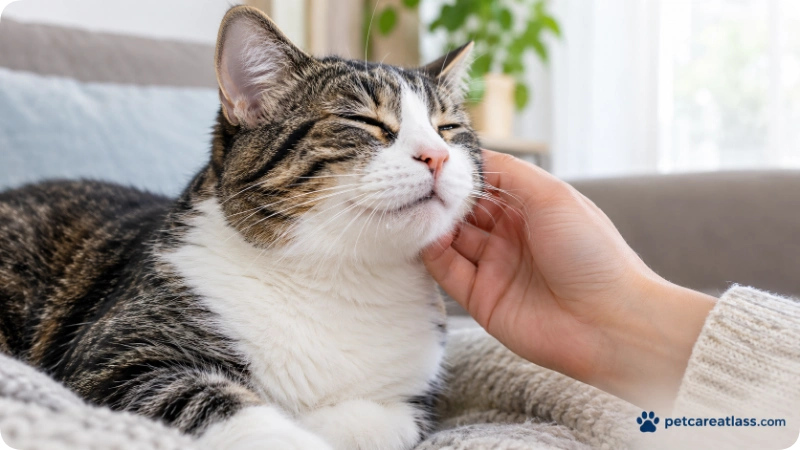
Cats can drool for behavioral and medical reasons. The circumstances surrounding the behavior, how much saliva is produced, and whether other symptoms are present can help you understand what might be happening.
Here are seven possible explanations.
Your Cat Feels Relaxed and Comfortable
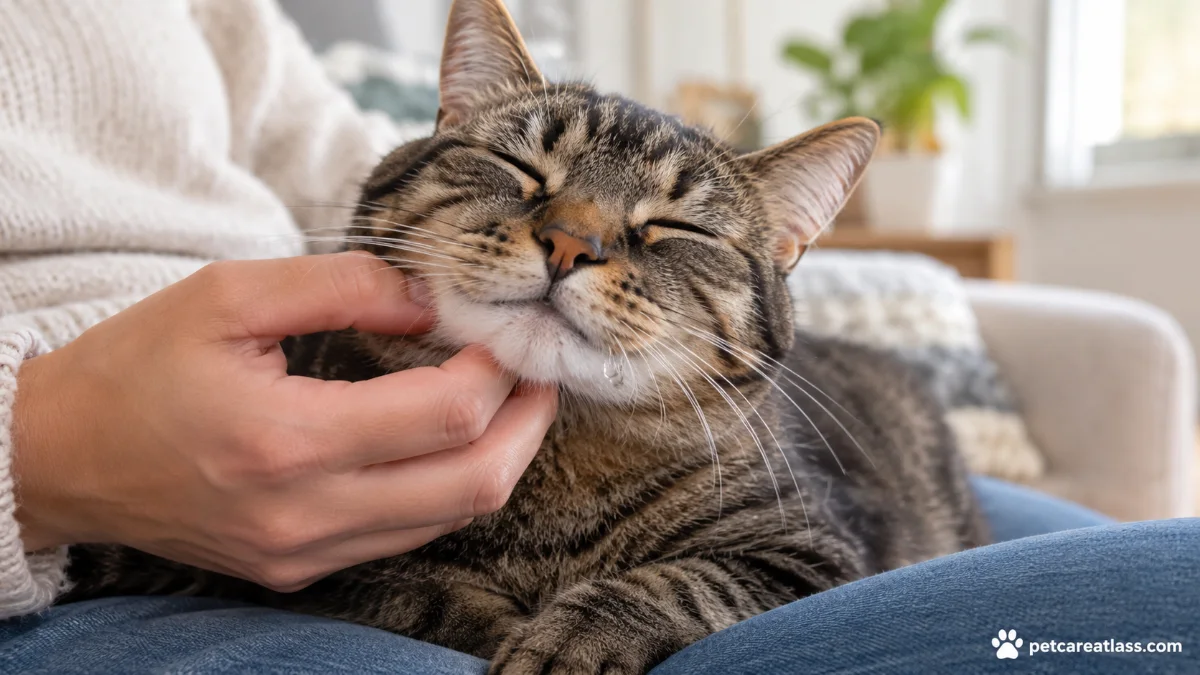
One of the most common harmless explanations is relaxation. Some cats produce a small amount of saliva when they feel comfortable during petting, cuddling, or resting with someone they trust.
As your cat relaxes, her jaw and facial muscles may become less tense. Saliva can collect in her mouth and escape around the lips.
You may notice this behavior when your cat:
- Lies comfortably on your lap.
- Closes her eyes while you stroke her.
- Relaxes her body and stretches her paws.
- Rests her head against your hand.
- Begins drooling during a familiar petting routine.
Some cats naturally drool during enjoyable interactions, while others never do. Individual differences are normal.
Your Cat Is Purring During Petting
Purring and drooling sometimes happen together. When you stroke your cat in areas she enjoys, such as her cheeks, chin, or head, she may begin purring and producing a little saliva.
Purring is associated with several situations, including contentment, social interaction, and sometimes stress or discomfort. Therefore, it should not be treated as definite proof that your cat is happy.
If your cat has always drooled slightly while purring and otherwise behaves normally, the behavior may simply be part of her individual response to relaxation.
However, if purring and drooling begin suddenly, particularly alongside changes in appetite or behavior, a veterinary examination is appropriate.
Petting Triggers a Comfort-Related Response
Some cats develop a strong association between gentle petting and the comfort they experienced during kittenhood.
Kittens naturally knead their mother’s mammary area while nursing. Nursing involves several behaviors and physiological responses that may become associated with comfort.
Some adult cats continue kneading soft blankets, their owners, or comfortable surfaces. A few also drool during these moments.
You might notice your cat:
- Kneading your lap with her front paws.
- Purring while rubbing against you.
- Becoming sleepy during petting.
- Drooling slightly while resting comfortably.
The connection between early nursing behavior and adult happy drooling is a proposed explanation rather than a proven cause for every cat.
Your Cat Is Experiencing Stress or Anxiety
Not all drooling during interaction is a sign of happiness. Some cats produce additional saliva when they feel frightened, overwhelmed, or uncomfortable.
For example, your cat might drool when you pet her in an unfamiliar environment or continue touching her after she has become uncomfortable.
Other possible stress signals include:
- Flattened or sideways ears.
- Dilated pupils.
- A tense or crouched body.
- Repeated lip licking.
- Attempts to move away.
- Hiding or unusual vocalization.
If you notice these behaviors, stop petting and allow your cat to move somewhere quiet.
Stress-related drooling may also occur during car rides, veterinary visits, or other unfamiliar situations.
Your Cat Has Dental Disease or Mouth Pain
Dental problems are an important reason to take unexplained drooling seriously.
Conditions such as gingivitis, periodontal disease, tooth resorption, and mouth ulcers can cause inflammation and discomfort. Your cat may produce excessive saliva because of irritation or difficulty swallowing.
Possible warning signs include:
- Bad breath.
- Red or swollen gums.
- Drooling more than usual.
- Blood-tinged saliva.
- Pawing at the mouth.
- Dropping food while eating.
- Chewing on one side.
- Avoiding hard food or eating less.
Cats can hide signs of dental pain, so the absence of obvious discomfort does not rule out a problem.
Cornell University College of Veterinary Medicine identifies drooling, difficulty eating, and bad breath among the possible signs of feline dental disease. [2]
If you notice these symptoms, arrange a veterinary examination rather than assuming your cat is simply enjoying the attention.
Your Cat Feels Nauseated or Has an Upset Stomach
Nausea can stimulate saliva production in cats. Sometimes, drooling is one of the first signs that your cat feels sick.
Although this type of drooling may not be directly related to petting, you might notice it while holding or stroking your cat.
Possible accompanying signs include:
- Repeated lip licking.
- Frequent swallowing.
- Vomiting or retching.
- Reduced appetite.
- Hiding or unusual behavior.
- Disinterest in normal activities.
Nausea can have several underlying causes, including gastrointestinal problems, motion sickness, and certain systemic illnesses.
If drooling occurs with vomiting, appetite changes, or lethargy, contact your veterinarian promptly.
Your Cat May Have Swallowed Something Irritating or Toxic
Exposure to certain plants, household chemicals, medications, or other harmful substances can cause excessive salivation.
Cats may also drool when something becomes stuck in their mouth or throat, irritating the tissues or making swallowing difficult.
Potential warning signs include:
- Sudden, heavy drooling.
- Foaming around the mouth.
- Repeated pawing at the face.
- Difficulty swallowing.
- Vomiting or unusual weakness.
- Tremors or changes in coordination.
Suspected poisoning requires immediate veterinary advice. Do not wait for additional symptoms to appear.
If you suspect your cat has contacted or swallowed something toxic, contact an emergency veterinarian or animal poison-control service immediately. Do not induce vomiting or give home remedies unless a veterinary professional specifically instructs you to do so.
Is It Normal for Cats to Drool When You Pet Them?
Yes, occasional light drooling can be normal for some cats, particularly when they are relaxed, purring, kneading, or falling asleep.
The most important distinction is whether the behavior is familiar and limited to comfortable situations or represents a new change.
| Drooling Pattern | Possible Meaning | What to Do |
|---|---|---|
| Small amounts during petting | Relaxation or individual behavior | Observe your cat |
| Drooling while purring | Possible contentment | Check body language |
| Drooling while kneading | Comfort-related behavior | Monitor if familiar |
| Sudden excessive drooling | Possible medical problem | Contact your vet |
| Drooling with bad breath | Possible dental disease | Arrange a dental exam |
| Drooling with vomiting | Possible nausea or illness | Contact your vet promptly |
| Drooling after toxin exposure | Possible poisoning | Seek emergency veterinary advice |
Remember that a cat’s normal drooling pattern is individual. A cat that has always produced a little saliva during cuddling is different from one that suddenly starts dripping saliva during an ordinary petting session.
How to Tell Whether Your Cat Is Happy or Uncomfortable
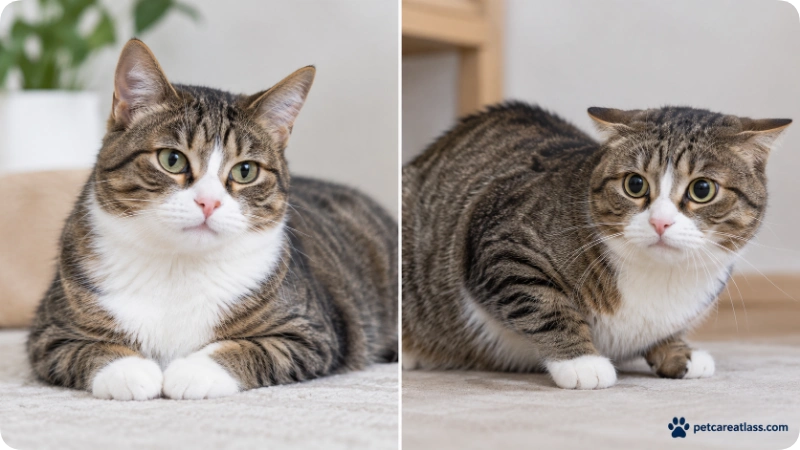
Drooling alone cannot tell you how your cat feels. Look at her entire body, including her ears, eyes, posture, and response to your touch.
| Body Language | Possible Meaning | Recommended Response |
|---|---|---|
| Relaxed body and soft eyes | Comfort or rest | Continue gentle petting if welcomed |
| Purring and kneading | Possible contentment | Let your cat enjoy the interaction |
| Slow blinking | Relaxed social behavior | Keep movements gentle |
| Ears flattened backward | Stress or irritation | Pause petting |
| Repeated lip licking | Discomfort or nausea | Watch for other symptoms |
| Repeated tail twitching | Irritation or overstimulation | Give your cat a break |
| Moving away | Wants to stop contact | Stop petting |
| Pawing at the mouth | Possible oral discomfort | Seek veterinary advice |
A particularly useful habit is to pause petting occasionally. If your cat moves closer, rubs against your hand, or invites more contact, she may be comfortable continuing.
If she turns away, stiffens, or leaves, respect her decision.
When Should You Worry About Your Cat Drooling?
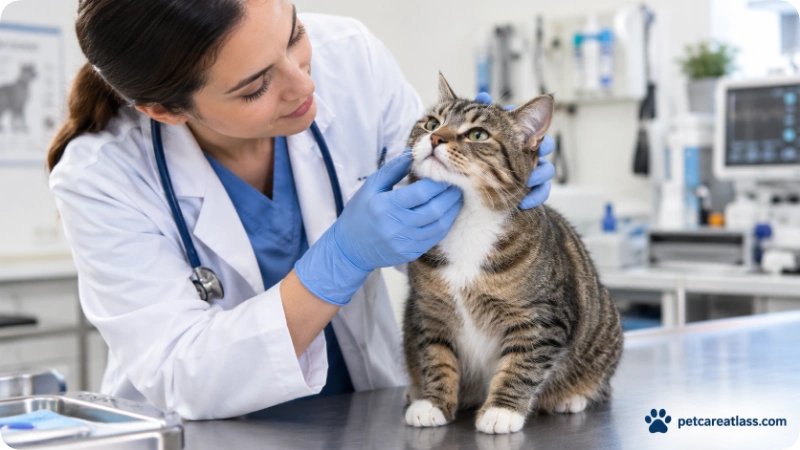
Although a small amount of familiar drooling may be harmless, new or excessive saliva production deserves attention.
Cats sometimes hide pain and illness, making changes in everyday behavior especially important.
Signs That Need a Veterinary Appointment
Arrange a veterinary examination if your cat experiences:
- New or unexplained drooling.
- Persistent or repeated saliva dripping.
- Bad breath or visibly inflamed gums.
- Difficulty chewing or swallowing.
- Reduced appetite.
- Blood in the saliva.
- Repeated pawing at the mouth.
- Unusual hiding or behavioral changes.
Even if your cat continues eating and playing, unexplained changes in drooling should not be ignored.
Signs That Require Emergency Veterinary Care
URGENT WARNING SIGNS
Seek emergency veterinary care if drooling occurs alongside:
- Difficulty breathing or open-mouth breathing.
- Collapse or severe weakness.
- Seizures or tremors.
- Suspected poisoning or chemical exposure.
- Inability to swallow.
- Severe distress or repeated vomiting.
- Signs of heatstroke, such as heavy panting and weakness.
Do not delay care while trying to determine the exact cause at home.
What Should You Do If Your Cat Drools When You Pet Her?
Your response should depend on whether the drooling is familiar and mild or new and unusual.
Here are practical steps to follow.
1. Observe when the drooling happens.
Notice whether your cat drools only during petting, purring, kneading, or sleeping. Also check whether saliva continues dripping after the interaction ends.
2. Watch her body language.
Look for relaxed muscles, comfortable posture, and voluntary interaction. Flattened ears, repeated attempts to escape, or a tense body may indicate discomfort.
3. Check her eating and drinking habits.
Pay attention to whether she eats normally, chews comfortably, and shows interest in her usual food. Changes can help identify possible oral or gastrointestinal problems.
4. Look for other symptoms.
Notice bad breath, mouth irritation, vomiting, unusual hiding, or changes in activity. Do not force your cat’s mouth open or attempt to remove a deeply lodged object.
5. Contact your veterinarian when the behavior changes.
If drooling is new, persistent, excessive, or accompanied by other symptoms, arrange a veterinary examination. If poisoning or another emergency is suspected, seek immediate care.
6. Avoid unapproved treatments.
Do not give human medication, apply household products inside your cat’s mouth, or try home remedies to stop drooling. Treatment depends on the underlying cause.
How Can You Help Prevent Dental Problems in Cats?
Although not every cause of drooling can be prevented, good dental care can help reduce the risk of some oral health problems.
Consider these responsible habits:
- Brush regularly: Introduce gentle toothbrushing using a toothbrush and toothpaste specifically designed for cats.
- Schedule veterinary checkups: Regular examinations help identify dental problems before they become more serious.
- Monitor eating habits: Watch for changes in chewing, food preferences, and appetite.
- Pay attention to bad breath: Persistent unpleasant breath can indicate an oral health problem.
- Discuss dental care with your veterinarian: Ask about professional dental examinations and cleaning when appropriate.
Never force toothbrushing if your cat has painful or inflamed gums. A veterinarian should examine the mouth first.
Cornell University recommends regular plaque removal with cat-specific dental products and veterinary guidance for cats with existing gingivitis. Human toothpaste should not be used on cats.
Frequently Asked Questions
Why does my cat drool when I pet her but not when I leave her alone?
Some cats drool during affectionate interactions because they become relaxed and comfortable. Petting may trigger a familiar response associated with purring, kneading, or resting. If the drooling is mild, familiar, and unaccompanied by other symptoms, it may be normal. New or excessive drooling deserves veterinary attention.
Does a cat drooling when purring mean she is happy?
It can. Some cats produce a little saliva when they are relaxed and purring. However, purring can also occur during stress or discomfort. Consider your cat’s overall body language, appetite, and behavior rather than using purring alone to determine whether she is happy.
Why does my cat drool when I scratch her chin?
Your cat may become relaxed when you scratch an area she enjoys. This can trigger drooling in cats that naturally produce saliva during comfortable interactions. However, if chin scratching causes sudden drooling, sensitivity, or signs of pain, arrange a veterinary examination.
Should I stop petting my cat if she starts drooling?
Not necessarily. If your cat is relaxed, comfortable, and voluntarily interacting with you, a small amount of familiar drooling may not be concerning. However, stop petting if she shows signs of irritation, stress, or discomfort. If the drooling is new or excessive, consult your veterinarian.
Can dental disease cause a cat to drool when petted?
Yes. Dental disease can cause inflammation and pain that lead to excessive saliva production. Your cat may appear comfortable during petting even when an underlying dental problem is present. Bad breath, difficulty eating, pawing at the mouth, and blood-tinged saliva are additional warning signs.
Why is my cat suddenly drooling when I pet her?
Sudden drooling can indicate dental pain, mouth injuries, nausea, stress, or exposure to an irritating or toxic substance. Even if your cat appears normal otherwise, a new drooling pattern warrants a veterinary appointment. Seek emergency care if poisoning, breathing difficulty, severe weakness, or another serious symptom is involved.
Conclusion
A cat drooling when petted is not always a reason to worry. Some cats naturally produce a little saliva when they feel relaxed, purr, or knead.
However, sudden, persistent, or excessive drooling can indicate dental disease, nausea, mouth injuries, or other medical problems. Pay attention to your cat’s normal behavior and watch for additional symptoms.
When drooling changes or appears alongside signs of illness, a veterinary examination is the safest next step.

Daniel Brooks is a pet care and animal behavior writer at petcareatlass.com focused on helping owners better understand their pets’ behavior and everyday needs. He creates practical, easy-to-follow content on pet communication, training, welfare, and responsible care.