Quick Answer:
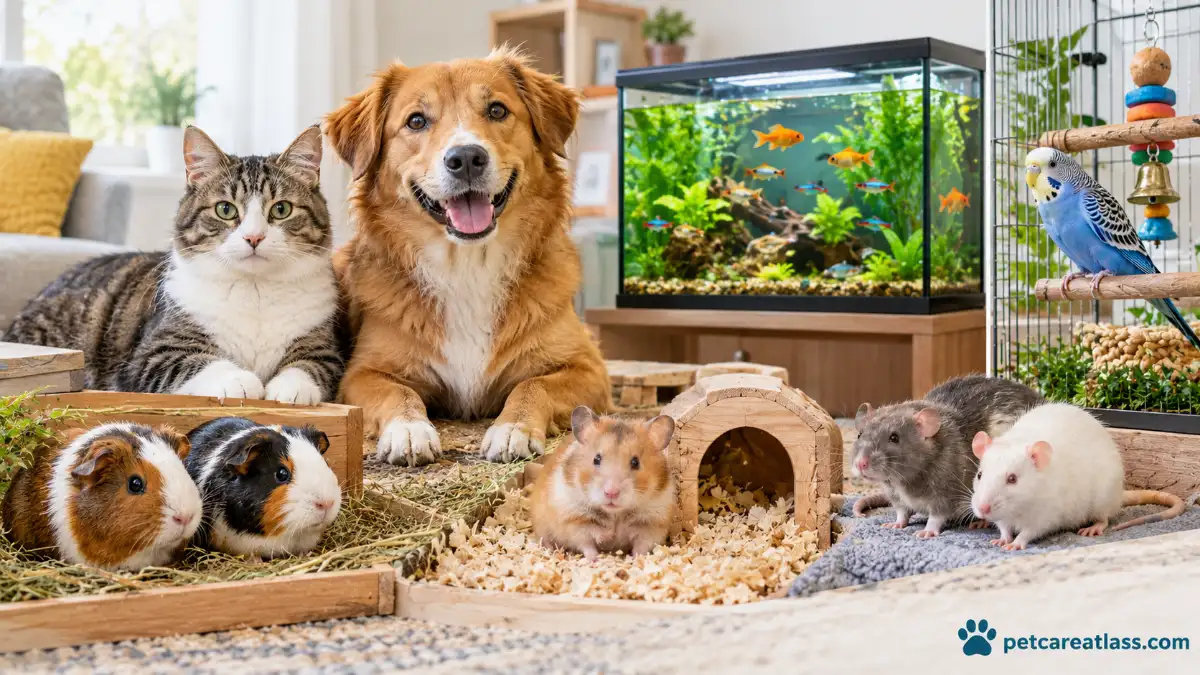
A good first pet is an animal whose care requirements, temperament, lifespan, and daily needs fit your lifestyle. For many beginners, a calm adult cat or a friendly adult dog can be a rewarding choice. Guinea pigs, hamsters, fish, budgies, and rats are other options, but each requires proper housing, daily care, and veterinary attention.
Choosing your first pet is an exciting experience, but finding the right companion involves more than picking an animal you like. The best first pet should match your lifestyle, living space, budget, and ability to provide consistent care.
Some animals need daily interaction, exercise, and training, while others require carefully maintained habitats, specialized diets, or companionship from their own species.
For beginners, understanding these differences can make choosing a pet much easier and help prevent common ownership mistakes. Cats, dogs, guinea pigs, hamsters, fish, and budgies are popular options, but each has different care requirements, activity levels, and lifespans.
Before bringing an animal home, consider how much time you can dedicate to its daily needs and whether you can support its long-term health and well-being. This guide explores seven good first pets, their advantages, care requirements, and important considerations to help you choose a suitable companion for your home.
7 Good First Pets for Beginners
Several animals can make wonderful first pets, depending on your experience, living situation, and expectations. Here are seven options worth considering before making a decision.
1. Cats
Cats can be a good first pet for people who want an affectionate companion without the daily outdoor exercise that dogs generally need.
They are often comfortable spending time independently, although they still need regular attention, play, mental stimulation, and a clean environment.
An adult cat with an established personality can be particularly suitable for a first-time owner. You can ask a shelter or rescue organization about its temperament, activity level, handling preferences, and compatibility with your household.
Why cats can be good first pets:
- They can adapt well to many indoor living environments.
- They generally use a litter box rather than needing outdoor bathroom trips.
- Their exercise needs can often be met through indoor play and enrichment.
- Adult cats may already have established habits and personalities.
- They can develop strong relationships with their owners.
Things to consider:
- Cats need daily feeding, fresh water, litter-box cleaning, and interaction.
- Scratching posts, toys, and climbing opportunities are important.
- Veterinary examinations and preventive healthcare are ongoing responsibilities.
- Some cats dislike being picked up or handled frequently.
Best for: Beginners who want an affectionate but relatively independent indoor companion.
2. Dogs
Dogs are excellent companions for people who enjoy outdoor activities, daily interaction, and training. They can become an important part of family life, but they generally require more hands-on attention than many people expect.
A calm adult dog with a known temperament may be a better first choice than a young puppy. Puppies need frequent feeding, house-training, socialization, supervision, and consistent training.
Why dogs can be good first pets:
- They can provide companionship and encourage outdoor activities.
- Many enjoy learning commands and participating in training.
- They can develop strong relationships with family members.
- Their personalities and activity levels vary, allowing owners to find a suitable match.
Things to consider:
- Dogs need daily walks, exercise, play, and companionship.
- Training and socialization require time and consistency.
- Some dogs need professional grooming.
- Pet sitting, boarding, and dog-walking costs may be necessary.
- Breed, age, health, and individual temperament affect care requirements.
Best for: Beginners who have enough time for daily exercise, training, companionship, and ongoing care.
3. Guinea Pigs
Guinea pigs are social, vocal small mammals that can make rewarding companions for people who prefer smaller animals.
They communicate through different sounds and can become comfortable with gentle, predictable handling. However, they are prey animals and may become frightened by sudden movements or loud noises.
Guinea pigs generally benefit from living with compatible guinea pig companions. They also need spacious housing, unlimited access to suitable hay, fresh vegetables, and appropriate veterinary care.
Why guinea pigs can be good first pets:
- They have interesting social behaviors and vocalizations.
- They can become accustomed to gentle handling.
- Their personalities can make them engaging companions.
- They do not require outdoor walks.
Things to consider:
- They need a spacious, well-maintained enclosure.
- They generally need compatible companionship from their own species.
- Their diet requires careful attention, including vitamin C.
- Their bedding and living areas need regular cleaning.
- They can live for several years, making them a meaningful commitment.
Best for: Beginners who want social small animals and can provide appropriate housing, companionship, and daily care.
4. Hamsters
Hamsters are small, interesting animals that may suit people who enjoy observing animal behavior rather than constantly handling their pets.
They are generally active during the evening and nighttime, which makes them different from animals that are most active during the day.
Syrian hamsters typically live around 1.5–3 years, while dwarf hamsters commonly live around 1.5–2 years.
Why hamsters can be good first pets:
- They need less direct social interaction than dogs.
- Their natural behaviors, such as burrowing and exploring, can be interesting to observe.
- They do not need outdoor exercise.
- Their shorter lifespan may suit someone who is not ready for a decade-long commitment.
Things to consider:
- Hamsters need a sufficiently large enclosure with deep bedding.
- They require an appropriately sized exercise wheel and enrichment.
- Most pet hamsters should be housed individually.
- They may bite when frightened, disturbed, or handled improperly.
- Waking them during their sleeping hours can cause stress.
Best for: People who prefer observing a small animal and can respect its nighttime activity and handling preferences.
5. Fish
Fish can be a good option for people who enjoy watching aquatic animals and creating a peaceful home environment.
However, owning fish involves considerably more than purchasing a bowl and adding water. A healthy aquarium requires appropriate filtration, water conditioning, temperature management, and regular water-quality testing.
Beginners should research specific fish species before setting up an aquarium because different fish have different environmental and social requirements.
Why fish can be good first pets:
- They are interesting to observe.
- They do not need physical handling or outdoor exercise.
- A properly maintained aquarium can provide an engaging environment.
- Some freshwater species have manageable care requirements when their needs are understood.
Things to consider:
- Aquariums require regular maintenance.
- Water quality must be monitored.
- Different species need appropriate tank sizes and water conditions.
- Some fish require specialized diets or compatible tank companions.
- Aquarium equipment and initial setup can be expensive.
Best for: Beginners who enjoy observing animals and are willing to learn aquarium maintenance and water chemistry.
6. Budgies (Parakeets)
Budgies, also called parakeets, are intelligent, active birds that can become engaging companions.
They can learn to recognize familiar people, respond to training, and develop different vocalizations. However, they need much more than a small cage and a food dish.
Budgies require daily interaction, appropriate enrichment, opportunities for safe movement and exercise, and a balanced diet.
Why budgies can be good first pets:
- They are active and interesting to observe.
- They can learn simple behaviors through positive reinforcement.
- They have engaging vocal and social behaviors.
- They do not need outdoor walks.
Things to consider:
- Birds need regular social interaction and mental stimulation.
- Their cages must provide adequate space for movement.
- They can be noisy, particularly during active periods.
- They need species-appropriate nutrition and specialized veterinary care.
- Their lifespan can extend well beyond that of many small mammals.
Best for: Beginners who enjoy birds and can provide daily interaction, appropriate enrichment, and long-term care.
7. Rats
Domesticated rats can be surprisingly interactive and intelligent companions. They often become comfortable with gentle human interaction and can learn simple tasks through positive reinforcement.
Unlike hamsters, pet rats are highly social animals and generally should not be kept alone. They need compatible rat companions, suitable housing, enrichment, and regular interaction.
Why rats can be good first pets:
- They are intelligent and curious.
- They can become comfortable with gentle handling.
- They enjoy exploring and interacting with their environment.
- They can learn simple training activities.
Things to consider:
- Rats need companionship from other compatible rats.
- They require spacious, secure enclosures.
- Their environment needs regular cleaning.
- They can develop health problems that require veterinary attention.
- Their relatively short lifespan means owners should be prepared for a shorter companionship period.
Best for: Beginners who want interactive small mammals and are comfortable caring for more than one animal.
Comparison of the Best First Pets
The following table summarizes the general characteristics of these beginner-friendly options.
| Pet | Interaction | Daily Care | Key Consideration |
|---|---|---|---|
| Cat | Moderate–high | Feeding, play, and litter care | Individual personality |
| Dog | High | Exercise, training, and feeding | Time and commitment |
| Guinea pig | Moderate | Feeding, cleaning, and interaction | Needs social companionship |
| Hamster | Low–moderate | Feeding, cleaning, and enrichment | Active at night |
| Fish | Mostly observational | Feeding and water care | Aquarium conditions |
| Budgie | Moderate–high | Feeding, interaction, and cleaning | Social and enrichment needs |
| Rat | Moderate–high | Feeding, cleaning, and interaction | Needs compatible companions |
Daily care descriptions are general comparisons, not rankings of how easy these animals are to keep. Individual needs vary by species, age, health, and environment.
What Should You Consider Before Choosing Your First Pet?

Choosing an animal based only on its appearance or popularity can lead to problems later. Consider these factors before bringing a new companion home.
1. Your Available Time
Different pets need different amounts and types of attention.
Dogs generally require daily walks, exercise, and training. Cats need play and social interaction, while small mammals require feeding, cleaning, enrichment, and species-appropriate companionship.
Think about your regular schedule, including work, school, travel, and other responsibilities.
2. Your Budget
Pet ownership involves more than the initial adoption fee or purchase price.
You should budget for:
- Food and treats
- Housing and bedding
- Toys and enrichment
- Routine veterinary examinations
- Vaccinations and preventive healthcare, where appropriate
- Grooming and hygiene supplies
- Emergency veterinary expenses
- Pet sitting or boarding when necessary
Planning for both routine healthcare and unexpected veterinary expenses is an important part of responsible pet ownership.
3. Your Living Space
Your home should provide enough room for the animal to move, rest, play, and express normal behaviors.
For example, dogs may need appropriate indoor space and outdoor exercise opportunities. Cats benefit from vertical climbing spaces, while guinea pigs need spacious enclosures.
Fish require aquariums suitable for their particular species rather than small decorative bowls.
4. Your Family and Children
If you have children, choose an animal whose handling and care requirements are appropriate for the household.
Children can participate in feeding, cleaning, and other age-appropriate activities, but an adult must remain responsible for the animal’s health and welfare.
Young children should never be expected to manage a pet independently. Additional hygiene precautions are particularly important around small mammals in households with children under five.
5. Lifespan and Long-Term Responsibility
Some pets live only a few years, while others may remain part of your family for decades.
Consider whether you can provide care if your circumstances change, such as moving, starting a new job, having children, or traveling more frequently.
A pet is a long-term responsibility, not a temporary hobby.
Which First Pet Is Best for Different People?
There is no universal winner. Your expectations and daily routine can help narrow down the options.
| Your Situation | Pets to Consider |
|---|---|
| Want an affectionate indoor companion | Adult cat |
| Enjoy walks and outdoor activities | Adult dog |
| Prefer social small animals | Guinea pigs or rats |
| Prefer observing over handling | Hamster or fish |
| Enjoy birds and interactive training | Budgie |
| Have limited time for outdoor activities | Adult cat or well-maintained aquarium |
| Want a family companion | Temperament-tested adult cat or dog |
Remember that no pet is completely maintenance-free. Even animals that require less direct interaction still depend on their owners for daily care and a suitable environment.
Are Small Pets Easier to Care for Than Dogs and Cats?
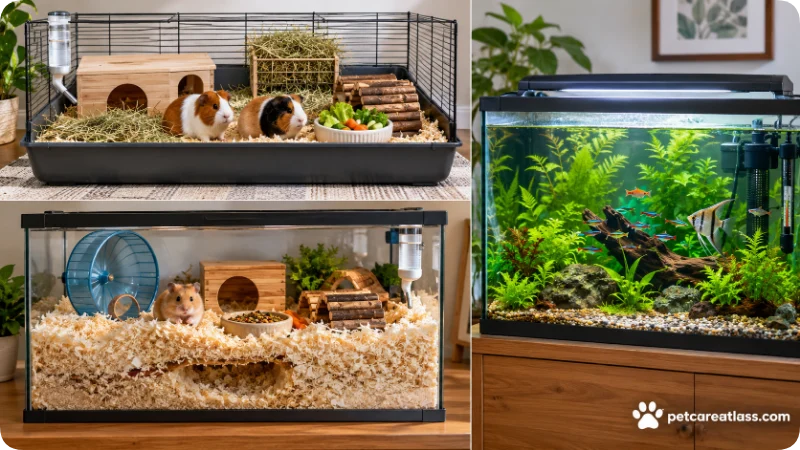
Not necessarily. Smaller animals may require less living space than some dogs, but their care can be more specialized than beginners expect.
For example, rabbits need suitable diets, room to exercise, dental monitoring, and routine veterinary care. Guinea pigs need appropriate hay-based diets and vitamin C, while hamsters need opportunities to burrow and explore.
Fish also require careful water-quality management, and birds need social interaction and environmental enrichment.
The important difference is that smaller animals often have different care requirements, not that they have fewer needs.
Should You Get a Baby Animal or an Adult Pet?
For many first-time owners, an adult animal can be a practical starting point.
Adult pets may already have established personalities, routines, and training habits. This can make it easier to understand whether their behavior and energy levels suit your household.
Young animals can also make wonderful companions, but they generally require additional supervision, patience, and training.
| Factor | Young Pet | Adult Pet |
|---|---|---|
| Training | Often needs more training | May know basic routines |
| Supervision | Usually needs more | Depends on temperament |
| Energy | Often more active | Varies individually |
| Personality | Still developing | More established |
| Adjustment | Needs consistent guidance | May adapt more easily |
If you adopt from a shelter or rescue organization, ask about the animal’s medical history, behavior, social needs, and previous living conditions.
Common Mistakes First-Time Pet Owners Should Avoid
Even well-intentioned beginners can make mistakes when choosing or caring for an animal.
Avoid these common problems:
- Choosing based on appearance: A cute animal may have complicated housing, dietary, or healthcare requirements.
- Assuming small pets are inexpensive: Specialized enclosures, equipment, food, and veterinary care can add up.
- Ignoring social needs: Some animals need compatible companions, while others prefer living alone.
- Buying unsuitable housing: Small cages, fish bowls, and inadequate enclosures can compromise animal welfare.
- Underestimating lifespan: Some pets require a commitment of many years.
- Skipping veterinary care: Regular examinations help identify potential health problems and support preventive care.
- Giving pets as surprise gifts: A new animal should be a planned household responsibility rather than an unexpected purchase.
How to Prepare Before Bringing Home Your First Pet
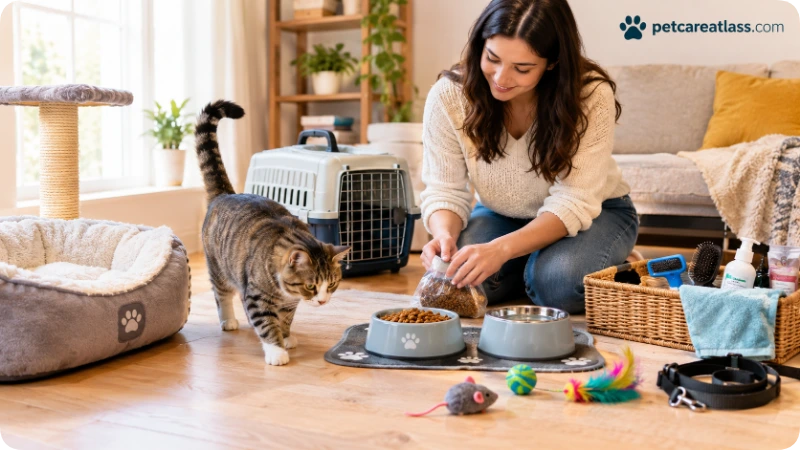
Once you have chosen a suitable animal, prepare your home before bringing it into your care.
- Research its specific needs: Learn about its diet, housing, behavior, lifespan, and healthcare requirements.
- Prepare its living environment: Set up the enclosure, aquarium, sleeping area, or designated living space before arrival.
- Purchase appropriate supplies: Choose species-specific food, bedding, enrichment items, and cleaning equipment.
- Find a suitable veterinarian: Identify a veterinary professional experienced with your chosen species.
- Make your home safe: Remove toxic substances, secure electrical cords, and identify other potential hazards.
- Plan its daily routine: Decide who will handle feeding, cleaning, exercise, and other responsibilities.
- Allow time to adjust: Give your new pet a calm environment and avoid forcing interaction during the settling-in period.
Preparing in advance can make the transition less stressful for both you and your new companion.
FAQs About Choosing Your First Pet
What is the easiest pet for a beginner?
A calm adult cat can be a suitable choice for many beginners because cats generally do not require outdoor walks and can adapt to indoor living. However, they still need daily interaction, enrichment, proper nutrition, and veterinary care. The easiest pet depends on your lifestyle and ability to meet its needs.
What is the best first pet for a child?
A calm, well-matched family cat or dog may be a good choice when adults are prepared to take full responsibility. Guinea pigs may also suit some families, provided their housing, social needs, and handling requirements are understood. No animal should be considered a child’s sole responsibility.
What is a good first pet that does not require much attention?
Fish may suit people who prefer observing animals rather than handling them. However, aquariums require regular maintenance and water-quality monitoring. Hamsters are another option for people who prefer observing a pet, but they still need appropriate housing, enrichment, and daily care.
Are rabbits good first pets?
Rabbits can be wonderful companions, but they are not necessarily easy starter pets. They need spacious housing, a hay-based diet, daily exercise, enrichment, and access to veterinary care from a professional familiar with rabbits. Their specialized requirements should be understood before adoption.
Should I adopt or buy my first pet?
Adoption is worth considering because shelters and rescue organizations can often provide information about an animal’s personality, medical history, and care requirements. An adult animal may also be a good match for beginners who want a more established temperament. Whichever route you choose, prioritize responsible sourcing and animal welfare.
What pets are not recommended for beginners?
Animals with highly specialized environmental, dietary, behavioral, or veterinary requirements may be challenging for inexperienced owners. Some reptiles, amphibians, large parrots, and wild animals require advanced husbandry knowledge. Research the exact species and arrange appropriate veterinary support before considering one.
Conclusion
The best first pet is one whose needs match your lifestyle, experience, budget, and available time. Cats, dogs, guinea pigs, hamsters, fish, budgies, and rats can all be rewarding companions when their individual requirements are understood.
Before choosing, research the animal’s lifespan, housing, diet, social needs, and veterinary requirements. Most importantly, choose a pet because you are prepared to care for it throughout its life, not simply because it looks easy to keep.

Daniel Brooks is a pet care and animal behavior writer at petcareatlass.com focused on helping owners better understand their pets’ behavior and everyday needs. He creates practical, easy-to-follow content on pet communication, training, welfare, and responsible care.