Quick Answer:
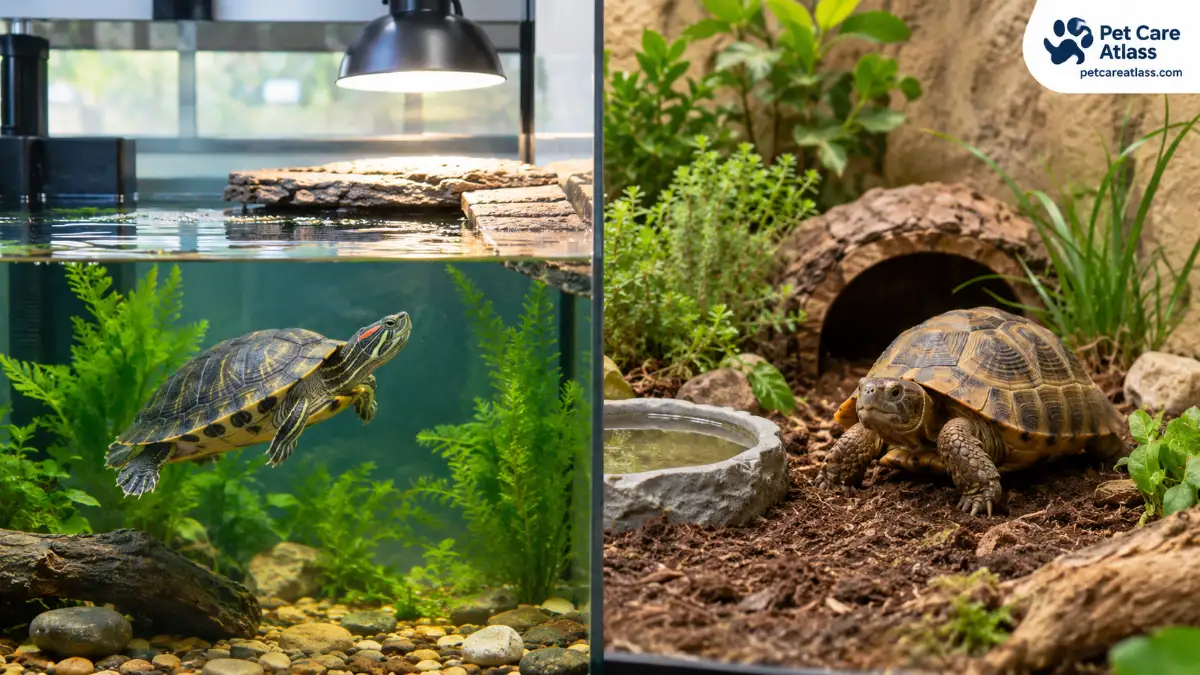
Pet turtles need a species-appropriate habitat, suitable temperatures, UVB lighting, a balanced diet, clean water, and regular veterinary care. Aquatic turtles require enough water for swimming and a dry basking area, while tortoises need spacious land-based enclosures. Their exact food, humidity, lighting, and temperature requirements depend on their species and age.
Introduction
Keeping a pet turtle involves more than providing a small tank, some water, and occasional food. These reptiles have specific environmental and nutritional requirements that support healthy growth, shell development, and normal activity.
Whether you are considering a red-eared slider, painted turtle, box turtle, or tortoise, understanding its needs before bringing it home can prevent common care mistakes. This guide explains the essential supplies, habitat conditions, feeding requirements, and everyday responsibilities involved in keeping a pet turtle healthy.
What Do Pet Turtles Need to Stay Healthy?
Pet turtles need several essential things to remain healthy, but their requirements differ according to their species and natural habitat.
Most pet turtles need:
- A suitable enclosure: Enough space for normal movement, swimming, resting, or exploring.
- Proper lighting: Appropriate UVB exposure and a suitable day-and-night light cycle.
- Temperature control: A warm basking area and suitable cooler areas where the turtle can regulate its body temperature.
- Species-appropriate food: A balanced diet based on whether the turtle is carnivorous, omnivorous, or herbivorous.
- Clean water: Drinking and soaking water for terrestrial species, or properly filtered swimming water for aquatic turtles.
- Hiding and resting areas: Places where the animal can feel secure and behave naturally.
- Regular veterinary care: Health checks from a veterinarian experienced with reptiles.
One important distinction is that aquatic turtles, terrestrial turtles, and tortoises cannot all live in the same type of enclosure. Identifying the exact species should always be the first step when planning their care.
A Spacious and Species-Appropriate Habitat
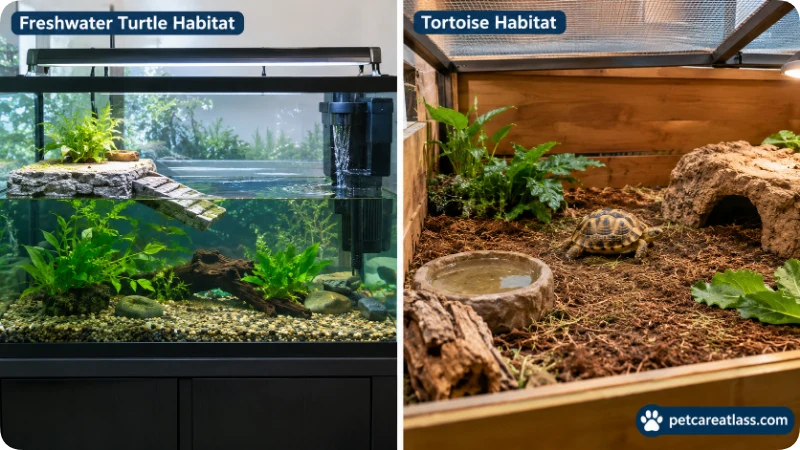
A suitable habitat is one of the most important things a pet turtle needs. The enclosure should provide enough room for the animal to move naturally, access appropriate temperatures, and rest comfortably.
The setup depends on the turtle’s lifestyle.
Aquatic Turtles
Aquatic turtles, such as red-eared sliders and painted turtles, need an aquarium or suitable indoor pond with:
- Enough water for swimming and diving.
- A stable, accessible basking platform.
- A dry area where the entire turtle can climb out of the water.
- Secure enclosure sides to prevent escapes.
- Appropriate filtration and water circulation.
- Safe decorations that do not create trapping or injury hazards.
The enclosure must accommodate the turtle’s adult size, not just its size when purchased. A small juvenile can grow into an animal that needs a considerably larger habitat.
Terrestrial Turtles and Tortoises
Land-dwelling species need a spacious terrestrial enclosure rather than a deep aquarium.
Their habitat should include:
- A suitable walking and exploring area.
- Species-appropriate substrate.
- Hiding shelters.
- A shallow, accessible water dish.
- Appropriate heating and UVB lighting.
- Suitable humidity and ventilation.
Some tortoises also benefit from secure outdoor enclosures when the weather and environmental conditions are appropriate for their species.
Box Turtles
Box turtles are primarily terrestrial but need different conditions from many dry-habitat tortoises. They generally require a humid environment, shaded hiding areas, and access to shallow water for soaking.
Their enclosure should provide both moist and drier areas so they can use different parts of the habitat as needed.
Proper UVB Lighting and Basking Areas
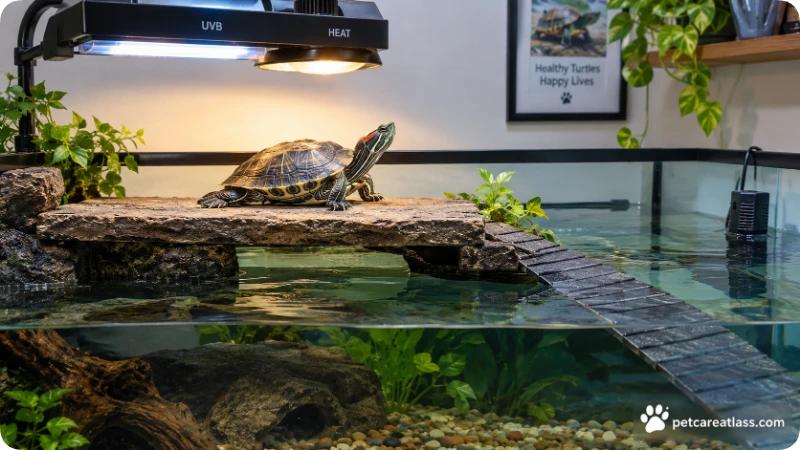
Pet turtles need appropriate ultraviolet B (UVB) exposure to support vitamin D3 production and calcium metabolism. Without sufficient UVB exposure, some turtles can develop metabolic bone disease, which weakens their bones and affects shell development.
Indoor turtles generally need a suitable reptile UVB lighting system positioned according to the manufacturer’s instructions and the requirements of their species.
A proper lighting setup should include:
- A suitable UVB bulb or fixture.
- An appropriate distance between the light and basking area.
- No glass or plastic barrier blocking UVB transmission.
- A regular day-and-night lighting schedule.
- Bulb replacement according to manufacturer guidance and verified UVB output.
Why Do Turtles Need a Basking Area?
Aquatic turtles need a completely dry, stable basking platform where they can climb out of the water and warm themselves under an appropriate heat source.
The platform should:
- Support the turtle’s entire body.
- Have a stable, nonslip surface.
- Be easy to access.
- Remain completely dry above the waterline.
- Provide suitable warmth and UVB exposure.
Land-dwelling turtles and tortoises also need appropriate temperature gradients and access to suitable basking conditions.
Important: UVB lighting and heat lighting serve different purposes. Some specialized bulbs provide both, but a regular household light bulb does not replace a proper UVB source.
Clean Water and Proper Filtration
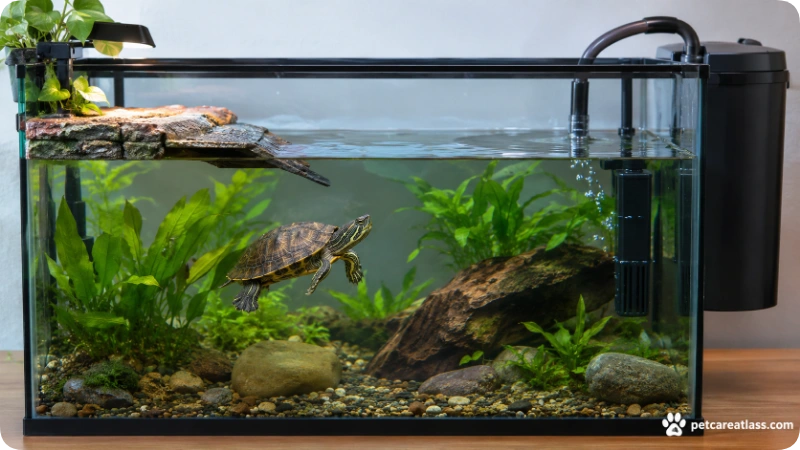
Clean water is essential for aquatic turtles because they eat, swim, and eliminate waste in their aquatic environment. Poor water quality can contribute to skin, shell, and other health problems.
An aquatic turtle’s enclosure needs:
- A properly sized filtration system.
- Regular removal of uneaten food and waste.
- Routine water-quality monitoring.
- Partial water changes when needed.
- Water at the correct temperature for the species.
- A safe swimming area without sharp objects.
Turtles can produce substantial waste, so a filter designed for a lightly stocked fish aquarium may not be sufficient. Choose filtration based on the turtle’s adult size, enclosure volume, and waste production.
Do Land Turtles Need Water?
Yes. Terrestrial turtles and tortoises also need access to fresh, clean water.
Provide a shallow, stable dish that allows the animal to drink and, where appropriate, soak without becoming trapped or struggling to get out.
Water availability and soaking requirements vary by species. Never assume that a land-dwelling turtle can meet all its hydration needs through food alone.
A Balanced and Species-Specific Diet
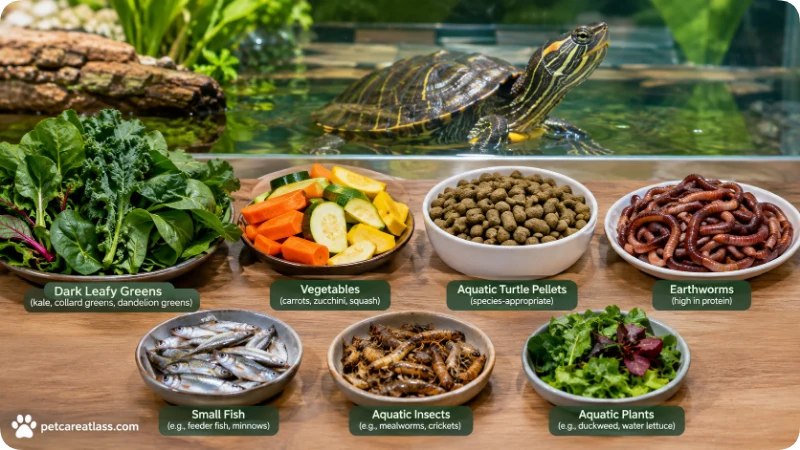
Pet turtles need a balanced diet that supplies the nutrients required for healthy growth, strong bones, and normal body functions. However, there is no single diet suitable for every turtle.
Some freshwater turtles eat a combination of animal-based foods and plant material, while others have more specialized feeding requirements. Tortoises generally eat plant-based diets, with the exact food selection depending on their species.
What Do Aquatic Turtles Eat?
Many commonly kept aquatic turtles are omnivorous, meaning they eat both animal and plant foods.
Depending on the species and life stage, suitable foods may include:
- Commercial aquatic turtle pellets formulated for the species.
- Dark leafy greens, such as collard greens and suitable aquatic plants.
- Earthworms and appropriate insects.
- Other suitable animal-based foods recommended for the species.
- Limited amounts of appropriate vegetables and occasional fruit, where suitable.
Young turtles of some species eat a greater proportion of animal-based foods than adults. Their nutritional requirements can change as they mature.
What Do Tortoises Eat?
Most pet tortoises are herbivores and require diets rich in appropriate plant material and fiber.
Depending on the species, suitable foods may include:
- Grasses and edible weeds.
- Hay, particularly for grazing species.
- Dark leafy greens.
- Appropriate edible flowers.
- Species-formulated tortoise pellets when useful as part of a balanced diet.
Some tropical tortoises, including red-footed tortoises, have different dietary requirements from grazing species. Their diets may include a broader range of plant foods and some animal matter.
Avoid assuming that all tortoises should eat exactly the same vegetables or that fruit is suitable as a regular food for every species.
Foods Turtles Should Avoid
Some foods can cause nutritional imbalances or create other health problems when offered regularly.
| Food or Item | Why to Avoid It |
|---|---|
| Bread and processed snacks | Lack balanced reptile nutrition |
| Salty or seasoned foods | Contain excess salt and unnecessary ingredients |
| Excessive fruit | May be unsuitable for many species |
| Raw kitchen meat | Can cause nutritional imbalances |
| Unidentified wild plants | May be toxic or contaminated |
| Dog and cat food | Does not meet most turtles’ dietary needs |
Always check unfamiliar foods with a reptile veterinarian or a reliable species-specific feeding guide.
Correct Temperature and Humidity
Pet turtles are ectothermic animals, meaning they depend on environmental heat to regulate their body temperature.
They cannot maintain a constant internal temperature in the same way mammals do. Their habitat must therefore provide suitable warm and cooler areas.
Temperature Requirements
A suitable temperature gradient allows a turtle to move between different areas according to its needs.
Aquatic turtles generally require:
- Water maintained within their species’ appropriate temperature range.
- A warmer basking area.
- Access to cooler areas within the enclosure.
- Reliable temperature monitoring.
Tortoises and other terrestrial turtles need appropriately heated enclosures with suitable basking temperatures and cooler retreat areas.
Humidity Requirements
Humidity is especially important for terrestrial species. Some tortoises originate from relatively dry environments, while others come from tropical or humid habitats.
For example:
- Russian tortoises generally require conditions suited to their dry, temperate natural habitat.
- Red-footed tortoises need a more humid environment.
- Box turtles generally require relatively high humidity and access to moist hiding areas.
A humidity gauge helps monitor enclosure conditions. However, the correct humidity level must be selected according to the turtle’s species, age, and environment rather than using one setting for every pet.
Safety tip: Never rely on guesswork when setting up heat lamps. Use suitable temperature-monitoring equipment and, where appropriate, a thermostat to reduce the risk of overheating.
Safe Substrate, Hiding Places, and Enrichment
A good turtle habitat should provide more than food, water, and lighting. It should also support natural activities such as exploring, resting, hiding, and foraging.
Suitable Substrate
The right substrate depends on the species.
For example:
- Aquatic turtles may be kept in bare-bottom enclosures or with carefully selected suitable substrates.
- Some terrestrial species benefit from appropriate soil-based or other species-specific substrates.
- Box turtles generally need substrate that helps maintain suitable humidity.
Avoid loose materials that a turtle may swallow and that could contribute to intestinal obstruction. Sand and gravel require particular caution in aquatic turtle enclosures because turtles may ingest them.
Hiding and Resting Areas
Turtles need places where they can retreat from bright light and activity.
Useful habitat features include:
- Cork bark hides.
- Suitable shelters.
- Safe rocks or climbing structures.
- Aquatic plants and cover where appropriate.
- Shaded areas.
- Stable basking platforms.
All decorations should be securely positioned. Avoid sharp edges, narrow gaps, or structures that could trap a turtle underwater or cause injuries.
Enrichment Activities
Enrichment encourages natural behaviors and makes the habitat more interesting.
Depending on the species, useful activities include:
- Providing safe plants to explore.
- Offering suitable opportunities for foraging.
- Changing the arrangement of safe habitat features occasionally.
- Providing appropriate digging or grazing opportunities for terrestrial species.
Enrichment should never compromise access to food, water, basking areas, or safe resting places.
Gentle Handling and Everyday Interaction
Turtles are not usually pets that enjoy frequent handling. Although some individuals become accustomed to their owners, unnecessary handling can cause stress.
For everyday care:
- Approach your turtle calmly.
- Avoid sudden movements.
- Support its body securely when lifting is necessary.
- Keep handling sessions brief.
- Never pick up a turtle by its tail or limbs.
- Avoid dropping, squeezing, or turning it onto its back unnecessarily.
Aquatic turtles should generally remain in their properly maintained habitat rather than being repeatedly removed for play.
Children should interact with turtles under responsible adult supervision. Turtles are better suited to owners who appreciate observing their natural behaviors than to families looking for pets that enjoy cuddling.
Regular Cleaning and Habitat Maintenance
A clean enclosure helps maintain a healthy living environment and reduces the buildup of waste, uneaten food, and harmful microorganisms.
Aquatic turtle habitats require particular attention because waste accumulates in the water.
A basic maintenance routine includes:
| Task | What to Do |
|---|---|
| Daily | Remove leftover food and waste; check behavior and equipment |
| Regularly | Monitor water quality, temperature, and humidity |
| As needed | Change some water and clean filter components |
| Periodically | Inspect the enclosure, lighting, basking area, and decorations |
| As recommended | Replace UVB bulbs and maintain filtration equipment |
Avoid replacing all the water unnecessarily or using harsh cleaning products around the turtle. Any cleaning or disinfection procedure should be appropriate for reptile enclosures, with the animal kept away from chemical exposure.
Veterinary Care and Health Monitoring
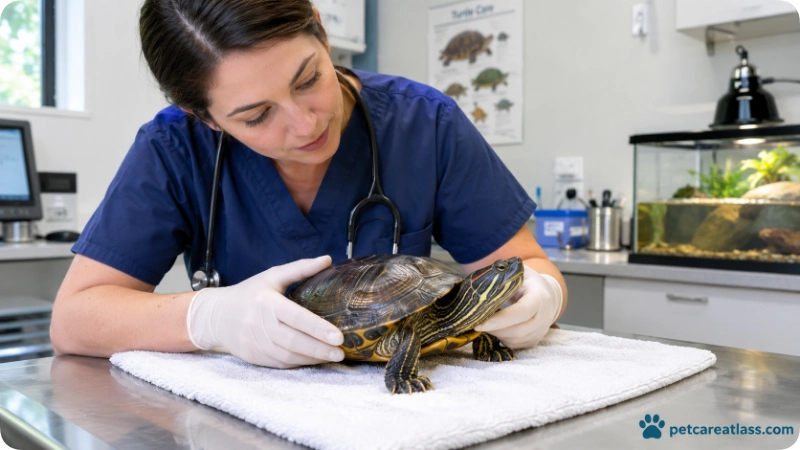
Pet turtles need veterinary care just like other companion animals.However, not every veterinarian has experience treating reptiles, so finding a veterinarian who specializes in reptile or non-traditional pet care is an important part of responsible ownership.
A veterinary examination can help assess:
- Body condition and growth.
- Shell development and condition.
- Eyes, mouth, and skin.
- Nutritional status.
- Signs of parasites or infection.
- Husbandry conditions and potential environmental problems.
An annual examination is recommended for tortoises by the University of Illinois College of Veterinary Medicine. The appropriate schedule for other turtles should be discussed with a reptile veterinarian.
Warning Signs That Need Veterinary Attention
Turtles can hide signs of illness, so changes in normal behavior deserve attention.
| Warning Sign | Possible Meaning |
|---|---|
| Loss of appetite | Illness or unsuitable habitat |
| Unusual inactivity | Temperature issues, stress, or disease |
| Swollen or closed eyes | Possible health problem |
| Nasal discharge | Possible respiratory disease |
| Soft or damaged shell | Nutritional or other health problems |
| Difficulty swimming or abnormal floating | Possible medical issue |
| Unusual swelling or wounds | Needs veterinary assessment |
Difficulty breathing, severe weakness, major shell injuries, or inability to move normally should be treated as urgent reasons to seek veterinary care.
Do not try to diagnose or treat these problems with human medicines or unverified home remedies.
Essential Supplies for a Pet Turtle
Before bringing a turtle home, prepare its enclosure and gather the necessary equipment.
The exact shopping list depends on the species, but the following supplies cover many common requirements.
| Essential Supply | Purpose |
|---|---|
| Proper enclosure | Provides space for normal movement |
| UVB lighting | Supports vitamin D3 and calcium metabolism |
| Heat source | Maintains suitable temperatures |
| Thermometers | Monitor water, air, and basking temperatures |
| Humidity gauge | Monitors moisture levels when needed |
| Water filter | Maintains aquatic water quality |
| Basking platform | Provides aquatic turtles a dry resting area |
| Water dish | Provides drinking and soaking water |
| Suitable substrate | Supports natural movement and habitat needs |
| Hiding shelter | Provides a secure resting place |
| Species-appropriate food | Supplies essential nutrients |
| Water-testing supplies | Help monitor aquatic water quality |
It is better to invest in appropriate equipment before purchasing the turtle than to buy an inadequate setup and replace it later.
How Much Space and Money Does a Pet Turtle Need?
Pet turtles can require more space and money than new owners initially expect.
The enclosure, filtration, lighting, heating, food, replacement equipment, and veterinary care all contribute to the long-term cost of ownership.
Space Requirements
The space needed depends on the turtle’s adult size, activity level, and natural habitat.
A red-eared slider, for example, needs a substantial aquatic enclosure as it grows. A large tortoise may eventually require a dedicated outdoor habitat with secure fencing.
Never select a turtle solely because it looks small in a pet store. Research its expected adult size and lifetime housing requirements before making a decision.
Ongoing Expenses
Owners should budget for:
- Initial enclosure and setup equipment.
- Electricity for lighting and heating.
- Food and nutritional supplies.
- Water filtration and maintenance.
- Replacement UVB bulbs.
- Substrate and cleaning supplies.
- Routine veterinary examinations.
- Unexpected veterinary treatment.
A low purchase price does not mean a turtle is inexpensive to keep.
Important Safety and Legal Considerations
Turtle ownership involves some responsibilities beyond ordinary habitat maintenance.
Salmonella Prevention
Turtles can carry Salmonella bacteria even when they appear clean and healthy. The bacteria can spread through their droppings, bodies, tank water, and surrounding equipment.
To reduce the risk:
- Wash your hands thoroughly with soap and water after touching a turtle or its habitat.
- Do not kiss or snuggle your turtle.
- Keep turtles and their equipment away from food preparation areas.
- Do not clean turtle supplies in kitchen sinks.
- Use dedicated cleaning equipment for the enclosure.
- Supervise children and make sure they wash their hands properly.
The CDC advises that pet turtles are not recommended for children younger than 5, adults aged 65 and older, or people with weakened immune systems because these groups face a greater risk of serious Salmonella illness.
The U.S. Four-Inch Turtle Rule
In the United States, federal regulations generally prohibit the sale and distribution of turtles with shells measuring less than 4 inches because of the risk of Salmonella infections. Limited regulatory exceptions exist.
This is not simply a recommendation about choosing a larger turtle. Buyers should avoid illegally marketed small turtles and check applicable federal and state requirements before purchasing one.
Never Release a Pet Turtle Into the Wild
If you can no longer care for your turtle, contact a reptile rescue, animal shelter, or qualified rehoming organization.
Releasing a captive turtle into a local pond, river, or other natural habitat can harm native wildlife, introduce disease, and may violate local laws.
Frequently Asked Questions
Do pet turtles need a heat lamp?
Most commonly kept pet turtles need an appropriate heat source to maintain suitable environmental temperatures. Aquatic turtles generally need a warm basking area, while terrestrial species require species-specific temperature gradients. The exact equipment and temperature settings depend on the turtle’s natural habitat.
Do pet turtles need sunlight?
Pet turtles need appropriate UVB exposure to support normal calcium metabolism. Outdoor access can provide natural sunlight when conditions are suitable, but direct sunlight through ordinary window glass does not provide adequate UVB. Outdoor enclosures must also offer shade, shelter, and protection from overheating and predators.
Do pet turtles need a filter?
Aquatic turtles generally need effective filtration because they produce waste in their water. A properly sized filter helps maintain water quality, but it does not eliminate the need for regular cleaning, water testing, and partial water changes.
Can pet turtles live without water?
It depends on the species. Aquatic turtles need water for swimming and other normal activities, while terrestrial turtles and tortoises live primarily on land. However, land-dwelling species still need access to fresh drinking water and, depending on the species, suitable soaking opportunities.
Are pet turtles easy to take care of?
Pet turtles are not necessarily easy beginner pets. They require specialized habitats, appropriate lighting, temperature control, species-specific diets, and regular maintenance. Some species also grow considerably larger than expected and can live for several decades, making ownership a long-term responsibility.
Do pet turtles need another turtle for company?
Most pet turtles do not need another turtle to remain healthy. Keeping multiple turtles together can create competition, stress, aggression, and injuries. Housing arrangements should be based on the species, individual temperament, enclosure size, and professional husbandry guidance.
How often should pet turtles visit a veterinarian?
Turtles should receive an initial examination from a reptile-experienced veterinarian after adoption. Regular preventive examinations are also important, with the appropriate frequency determined by the species, age, health, and veterinary recommendations.
Conclusion
Pet turtles need much more than a tank and regular feeding. They require an appropriate habitat, UVB lighting, suitable temperatures, clean water, balanced nutrition, and ongoing health monitoring. Their exact requirements depend on their species and natural environment.
Before bringing a turtle home, research its adult size, lifespan, and long-term care requirements. Preparing the correct habitat first is one of the most responsible steps you can take toward providing a healthy life for your pet.

Daniel Brooks is a pet care and animal behavior writer at petcareatlass.com focused on helping owners better understand their pets’ behavior and everyday needs. He creates practical, easy-to-follow content on pet communication, training, welfare, and responsible care.