Quick Answer:
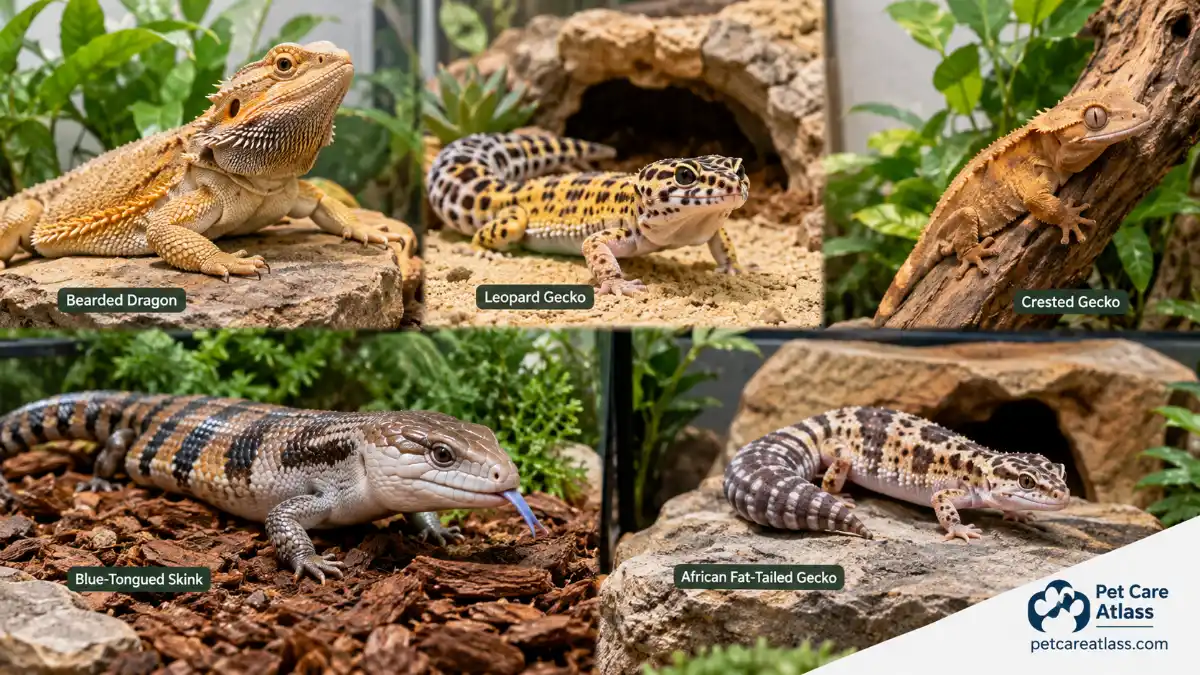
Some pet lizards can be suitable for families with older children when an adult takes primary responsibility for their care. Bearded dragons, leopard geckos, crested geckos, blue-tongued skinks, and African fat-tailed geckos are worth considering. Each has different habitat, feeding, and handling requirements, so families should choose based on their ability to provide proper long-term care.
Introduction
Choosing a pet lizard for kids can introduce children to reptiles, animal behavior, and responsible pet ownership. However, lizards have different needs from traditional household pets. They require carefully maintained habitats, species-specific diets, appropriate lighting, and controlled temperatures.
Some species are more manageable for beginner reptile keepers than others, but no lizard should be treated as a child’s toy or an independent responsibility. Understanding each species’ temperament, adult size, lifespan, and care requirements can help families decide which reptile is appropriate for their household.
5 Best Pet Lizards for Kids
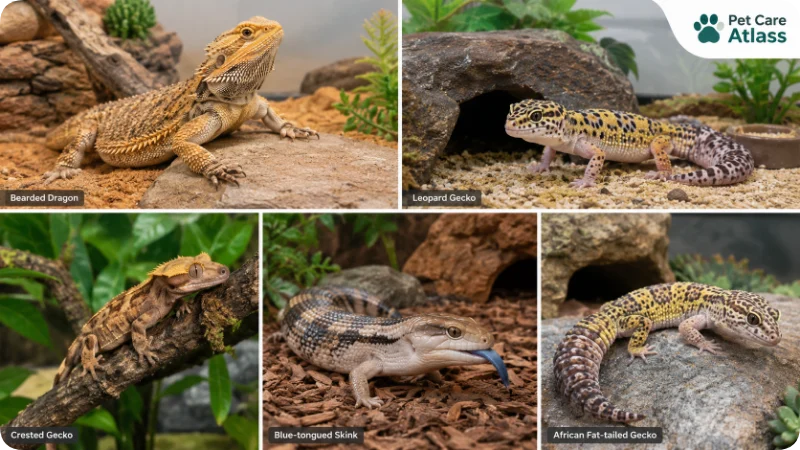
Not every lizard is suitable for a family environment. Some become accustomed to gentle handling, while others are easily stressed or require specialized habitats and diets.
The following five species are worth considering for families interested in beginner-friendly reptiles.
1. Bearded Dragon
One of the most recognizable pet lizards, the bearded dragon is a popular choice among first-time reptile owners.
These reptiles are generally known for their relatively calm temperament and ability to become accustomed to gentle, predictable handling. They are active during the day, making it easier for children to observe their natural behavior.
- Temperament: Generally calm when properly socialized.
- Adult size: Approximately 18–24 inches, including the tail.
- Diet: A combination of appropriate insects and leafy greens, with requirements changing as the lizard grows.
- Habitat: A spacious, secure enclosure with a temperature gradient, basking area, and appropriate UVB lighting.
- Care difficulty: Moderate.
- Lifespan: Often around 10–15 years or longer with good care.
Why families consider them: Their daytime activity, recognizable body language, and relatively manageable handling make them interesting pets for supervised older children.
Important consideration: Bearded dragons need substantial enclosure space, carefully controlled temperatures, UVB lighting, and a varied diet. They are not maintenance-free pets.
2. Leopard Gecko
Leopard Gecko is a small, ground-dwelling lizard that appeals to families because of its manageable adult size and relatively straightforward feeding routine.
Unlike many other geckos, leopard geckos have movable eyelids. They are mostly active around dusk and nighttime, although their activity varies.
- Temperament: Often calm, but individual personalities differ.
- Adult size: Approximately 7–10 inches.
- Diet: Insect-based, using appropriately sized and nutritionally prepared feeder insects.
- Habitat: A secure terrestrial enclosure with suitable heating, hiding places, and appropriate lighting.
- Care difficulty: Moderate.
- Lifespan: Commonly 10–20 years in captivity.
Why families consider them: Their smaller size and ground-dwelling behavior can make supervised observation and gentle handling easier than with some larger or more delicate lizards.
Important consideration: Leopard geckos have delicate skin and tails. Never pull or restrain their tails, and remember that a dropped tail is a stressful defense response, not a play behavior.
3. Crested Gecko
Crested Gecko is an arboreal lizard that spends much of its time climbing branches and resting among foliage.
Its distinctive crests, large eyes, and climbing behavior make it particularly interesting for children who enjoy observing animals.
- Temperament: Often tolerant of brief, gentle handling, but can jump suddenly.
- Adult size: Approximately 7–10 inches, including the tail.
- Diet: A nutritionally complete commercial crested gecko diet, with suitable insects when appropriate.
- Habitat: A tall, well-ventilated enclosure with climbing branches, foliage, and controlled humidity.
- Care difficulty: Moderate.
- Lifespan: Often around 15–20 years with proper care.
Why families consider them: Their climbing behavior and distinctive appearance provide opportunities for children to learn about arboreal reptiles.
Important consideration: Crested geckos can jump unexpectedly, and their tails do not normally grow back if dropped. Avoid rough handling and provide a safe, low-height area for any supervised interaction.
4. Blue-Tongued Skink
Blue-Tongued Skink is a sturdy, ground-dwelling lizard recognized by its broad body, short legs, and distinctive blue tongue.
Many captive-bred individuals become accustomed to regular, gentle handling. Their slower movements and substantial body size can make them easier for experienced adults to support than very small, quick-moving lizards.
- Temperament: Often manageable, although individuals can be defensive.
- Adult size: Approximately 18–24 inches, depending on species.
- Diet: An appropriate balanced omnivorous diet containing animal and plant ingredients.
- Habitat: A spacious terrestrial enclosure with suitable heating, hiding areas, and species-appropriate lighting.
- Care difficulty: Moderate to moderately demanding.
- Lifespan: Often around 15–20 years or longer.
Why families consider them: Their sturdy build, interesting feeding behavior, and distinctive appearance make them engaging animals to observe.
Important consideration: Blue-tongued skinks need more room than many small geckos. They also require careful dietary planning, and their jaws can deliver a painful bite if they feel threatened.
5. African Fat-Tailed Gecko
African Fat-Tailed Gecko is a small, ground-dwelling gecko with a distinctive thick tail that stores fat.
It has care requirements similar to those of a leopard gecko, although humidity management differs. Many individuals are relatively calm once accustomed to their surroundings.
- Temperament: Often gentle, but individual behavior varies.
- Adult size: Approximately 7–9 inches.
- Diet: Insect-based, with appropriately sized and nutritionally prepared feeder insects.
- Habitat: A terrestrial enclosure with suitable heating, hiding places, and carefully managed humidity.
- Care difficulty: Moderate.
- Lifespan: Commonly around 10–20 years in captivity.
Why families consider them: Their compact size, interesting appearance, and ground-dwelling habits make them an option for families interested in smaller reptiles.
Important consideration: They are sensitive to unsuitable humidity and temperature conditions. Their enclosure needs consistent monitoring, and they should not be selected simply because they are small.
Comparing the Best Pet Lizards for Kids
The following comparison helps families understand the differences before choosing a species.
| Lizard | Adult Size | Diet | Care Level | Key Consideration |
|---|---|---|---|---|
| Bearded dragon | 18–24 inches | Insects and greens | Moderate | Needs space and UVB lighting |
| Leopard gecko | 7–10 inches | Insects | Moderate | Delicate tail |
| Crested gecko | 7–10 inches | Prepared diet and insects | Moderate | Can jump and drop its tail |
| Blue-tongued skink | 18–24 inches | Omnivorous | Moderate–high | Needs a spacious enclosure |
| African fat-tailed gecko | 7–9 inches | Insects | Moderate | Requires humidity control |
Sizes and lifespans are approximate. Individual animals, species, genetics, and husbandry conditions can affect adult size and longevity. Care levels are practical comparisons, not standardized veterinary ratings.
Which Pet Lizard Is Easiest for Kids?
There is no single best lizard for every child. The right choice depends on the child’s maturity, the adult’s reptile-care experience, and how much time the family can devote to maintaining the habitat.
For families with older children:
- Bearded dragon: Worth considering if the family wants a larger, daytime-active lizard that may become comfortable with gentle handling.
- Leopard gecko: A good candidate for families who prefer a smaller, ground-dwelling lizard.
- Crested gecko: Interesting for children who enjoy watching climbing and nighttime activity.
- Blue-tongued skink: Better suited to families prepared for a larger enclosure and more involved care.
- African fat-tailed gecko: An option for families comfortable maintaining appropriate humidity and feeding live insects.
A practical starting point is to compare bearded dragons and leopard geckos. Both offer different experiences, so the decision should come down to the habitat, diet, space, and handling requirements your family can consistently meet.
What Age Is Appropriate for a Child to Have a Pet Lizard?
A child’s age matters, but maturity and adult involvement are just as important.
The CDC advises that reptiles should not be kept in households with children younger than five because of the risk of Salmonella infection. Children under five should not touch reptiles, their habitats, or anything in their environment. This applies even when a lizard looks clean and healthy. [1]
For older children, a pet lizard may provide an opportunity to learn about animal behavior and responsible care, provided an adult remains the primary caregiver.
| Child’s Age | Family Guidance |
|---|---|
| Under 5 years | Avoid keeping reptiles, following CDC guidance. |
| 5–7 years | Adults manage care; handling requires close supervision. |
| 8–12 years | Children can help with simple tasks; adults manage feeding, cleaning, and habitat care. |
| 13+ years | Older children can take more responsibility, with adult oversight. |
These age ranges are practical family guidelines, not official developmental or veterinary standards.
What Do Pet Lizards Need to Stay Healthy?
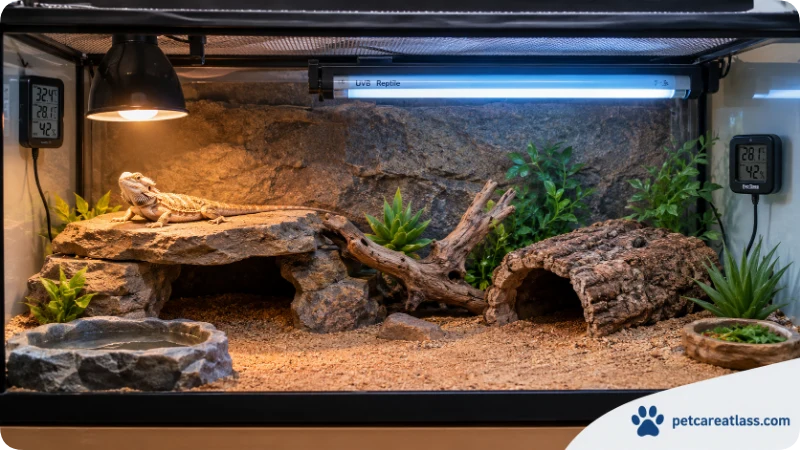
Before choosing a lizard, families should understand that reptiles need a carefully controlled environment. A suitable enclosure is not simply a glass tank with food and water.
1. A Species-Appropriate Enclosure
Every lizard needs a secure enclosure that accommodates its adult size and natural behavior.
For example, bearded dragons need enough floor space to move and bask, while crested geckos need vertical climbing opportunities.
The enclosure should include:
- Enough space for natural movement.
- Secure ventilation and an appropriate escape-proof design.
- Suitable hiding places.
- Safe branches, rocks, or climbing structures where appropriate.
- Easy access for routine cleaning and maintenance.
2. Proper Temperature and Lighting
Lizards depend on their environment to regulate body temperature. Families must provide the correct heating arrangement and temperature gradient for their particular species.
Some species also require carefully selected UVB lighting to support normal calcium metabolism and bone health.
Use reliable thermometers and appropriate measuring equipment rather than guessing whether an enclosure feels warm enough.
3. A Balanced, Species-Specific Diet
Different lizards eat different foods.
- Bearded dragons need an appropriate combination of insects and plant foods.
- Leopard geckos primarily eat insects.
- Crested geckos generally eat a nutritionally complete prepared diet, with suitable insects when appropriate.
- Blue-tongued skinks need a balanced omnivorous diet.
- African fat-tailed geckos primarily eat insects.
Feeder insects should be appropriately sized and nutritionally prepared. Calcium and vitamin supplementation should follow species-specific veterinary guidance rather than an improvised schedule.
4. Clean Water and Appropriate Humidity
Provide fresh water and maintain the humidity range required by the species.
For example, African fat-tailed geckos need different humidity management from leopard geckos. Crested geckos also need a suitable balance of humidity and ventilation.
Excess moisture, poor ventilation, and persistently unsuitable temperatures can contribute to health problems.
5. Routine Reptile Veterinary Care
Find a veterinarian experienced in reptile medicine before purchasing a lizard.
Routine examinations can help identify husbandry problems and health concerns. A veterinarian can also explain appropriate parasite screening, diet, lighting, and preventive care for the selected species.
How Much Does It Cost to Keep a Pet Lizard?
The purchase price is only one part of owning a pet lizard. Families should budget for the complete setup and ongoing care before choosing a species.
| Expense | What to Budget For |
|---|---|
| Initial enclosure | Suitable tank, secure lid, and fittings |
| Heating equipment | Heat source, thermostat, and thermometer |
| Lighting | UVB equipment and replacement bulbs |
| Habitat accessories | Hides, branches, substrate, and water dishes |
| Food | Feeder insects, prepared diets, and fresh produce |
| Supplements | Suitable calcium and vitamins |
| Veterinary care | Initial checkup, routine visits, and emergencies |
| Maintenance | Replacement equipment, cleaning supplies, and electricity |
A bearded dragon may require a larger initial setup than a small gecko. However, smaller lizards are not automatically cheaper to maintain because their specialized environmental requirements can still involve considerable expense.
Before buying, ask a reptile veterinarian or experienced, reputable breeder about realistic setup costs and ongoing expenses for the particular species.
How Should Kids Safely Handle a Pet Lizard?
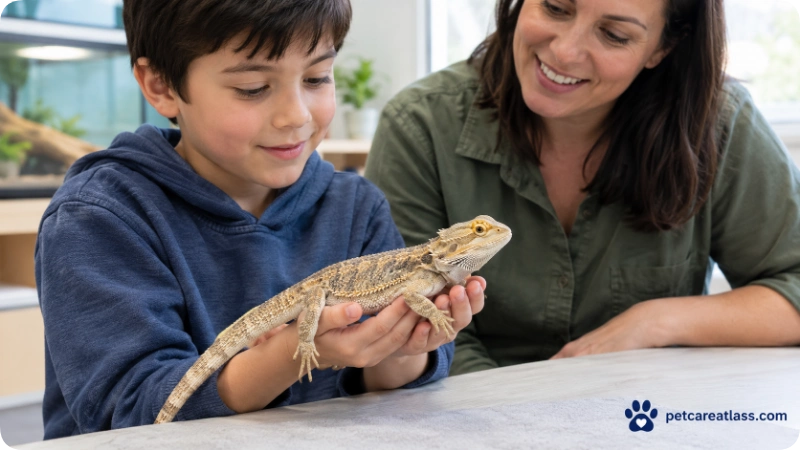
Children should learn that lizards are animals to observe and respect, not toys to carry around or play with.
Even a normally calm lizard may bite, scratch, jump, or attempt to escape when frightened.
Follow these precautions:
- Let the lizard settle in: Give a newly acquired animal time to adjust before introducing handling.
- Start with adult supervision: An adult should demonstrate appropriate handling and remain present.
- Support the whole body: Gently support the animal’s body and feet without squeezing.
- Keep handling low: Interact close to a secure surface to reduce injury if the lizard jumps or falls.
- Watch for stress: Stop if the lizard repeatedly tries to escape, struggles, becomes defensive, or shows other signs of distress.
- Keep sessions short: Allow the animal to return to its enclosure rather than forcing continued interaction.
- Wash hands afterward: Children and adults must wash their hands with soap and running water.
Never pull a lizard’s tail, grab it suddenly, chase it around its enclosure, or force it to remain in someone’s hands.
Salmonella Safety: What Every Family Should Know
One of the most important considerations when choosing a pet lizard for kids is the risk of Salmonella.
Reptiles can carry Salmonella bacteria in their droppings, even when they appear healthy, clean, and well cared for. The bacteria can spread to their bodies, enclosures, equipment, and other surfaces. People can become infected by touching contaminated objects and then touching their mouths or food. [1]
The CDC has also documented Salmonella outbreaks associated with pet bearded dragons and geckos, demonstrating that this is a real concern rather than simply a theoretical risk. [2]
Essential Hygiene Rules for Families
- Wash hands thoroughly with soap and running water after touching a lizard, its food, droppings, or habitat.
- Keep reptiles and their equipment out of kitchens and food-preparation areas.
- Never kiss a lizard or allow it near food or eating utensils.
- Do not allow reptiles to roam freely around the home.
- Clean habitat equipment away from food-preparation areas.
- Keep reptile supplies separate from household food and kitchen equipment.
- Supervise children’s hygiene after every interaction.
- Avoid letting children put their hands near their mouths while handling reptiles.
Children under five should not have contact with reptiles or their environments. The CDC also advises against keeping reptiles in households with children under five, adults over 65, or people with weakened immune systems because these groups face a greater risk of serious illness. [1]
Pet Lizards Kids Should Avoid as First Pets
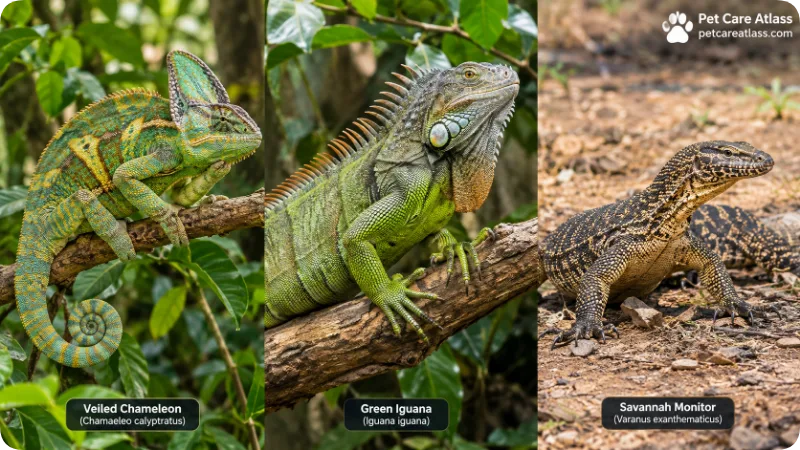
Some reptiles have specialized needs that make them less suitable for inexperienced families.
Chameleons
Chameleons are fascinating animals, but many are sensitive to environmental changes and handling.
They require carefully managed lighting, hydration, ventilation, temperature, and humidity. They are generally better suited to experienced reptile keepers than families looking for a hands-on children’s pet.
Iguanas
Green Iguanas grow much larger than most beginner geckos and require substantial living space.
Adults can become difficult to manage, and their claws and tails can cause injuries. Their size and specialized housing requirements make them a challenging choice for a child’s first reptile.
Monitor Lizards
Monitor Lizards include species with demanding space, heating, feeding, and enrichment requirements.
Some grow large and have powerful jaws and claws. Their care and handling requirements make them unsuitable as casual beginner pets for children.
Important: Avoid choosing any lizard based only on its small size as a baby. Research its adult size, lifespan, behavior, legal status, and full care requirements first.
How to Choose a Healthy Pet Lizard
Once your family has selected a suitable species, finding a healthy animal is the next step.
Whenever possible, consider a reputable breeder who can provide information about the lizard’s origin, feeding history, age, and previous care.
Before purchasing, check for the following:
- Clear eyes: Eyes should appear clear rather than swollen or sunken.
- Healthy skin: Look for unexplained wounds, sores, swelling, or retained shed.
- Normal movement: The lizard should move in a coordinated manner appropriate for its species.
- Healthy body condition: Avoid animals that appear severely thin or unusually swollen.
- Normal breathing: Watch for open-mouth breathing, excessive mucus, or unusual respiratory sounds.
- Feeding history: Ask what the animal eats and whether it has been eating consistently.
- Healthy surroundings: The enclosure should be clean, secure, and maintained at appropriate temperatures.
A healthy appearance does not guarantee that a reptile is free from infection or parasites. Arrange an initial examination with a reptile-experienced veterinarian after bringing the animal home.
Frequently Asked Questions
What is the friendliest lizard for kids?
Bearded dragons and leopard geckos are popular choices for families because many individuals become accustomed to gentle handling. However, friendliness varies between individual animals. Children should never force interaction, and an adult must supervise handling and remain responsible for care.
Are pet lizards good for 10-year-olds?
A pet lizard can be an educational companion for a responsible 10-year-old if an adult manages its essential needs. A child can help with supervised feeding, observation, and simple care tasks, but should not be expected to manage temperature, lighting, veterinary visits, or cleaning independently.
Do pet lizards recognize their owners?
Some lizards can become familiar with their regular caregivers and may learn to associate them with food and predictable routines. However, this should not be confused with the social recognition or attachment commonly associated with dogs and cats. Individual responses vary.
Do pet lizards smell?
Healthy lizards generally have little noticeable body odor. However, dirty enclosures, accumulated droppings, uneaten food, and poor ventilation can produce unpleasant smells. Regular habitat maintenance and appropriate cleaning help prevent these problems.
Can kids sleep with their pet lizards?
No. Lizards should always remain in their secure, species-appropriate enclosures. They should never sleep in a child’s bed because of risks involving accidental injury, escape, and exposure to Salmonella.
Do pet lizards need daily care?
Yes. Lizards need daily observation, access to appropriate water, and regular attention to their environmental conditions. Feeding frequency and enclosure-cleaning schedules depend on the species and life stage. Adults should establish and supervise a consistent care routine.
Conclusion
Choosing the right pet lizard for kids requires more than finding an animal with a friendly appearance. Bearded dragons, leopard geckos, crested geckos, blue-tongued skinks, and African fat-tailed geckos offer different care requirements and experiences for families.
Before bringing one home, consider its adult size, diet, habitat, lifespan, and handling needs. Most importantly, an adult must take responsibility for the animal’s welfare, and families must follow appropriate hygiene precautions.

Daniel Brooks is a pet care and animal behavior writer at petcareatlass.com focused on helping owners better understand their pets’ behavior and everyday needs. He creates practical, easy-to-follow content on pet communication, training, welfare, and responsible care.