Quick Answer:
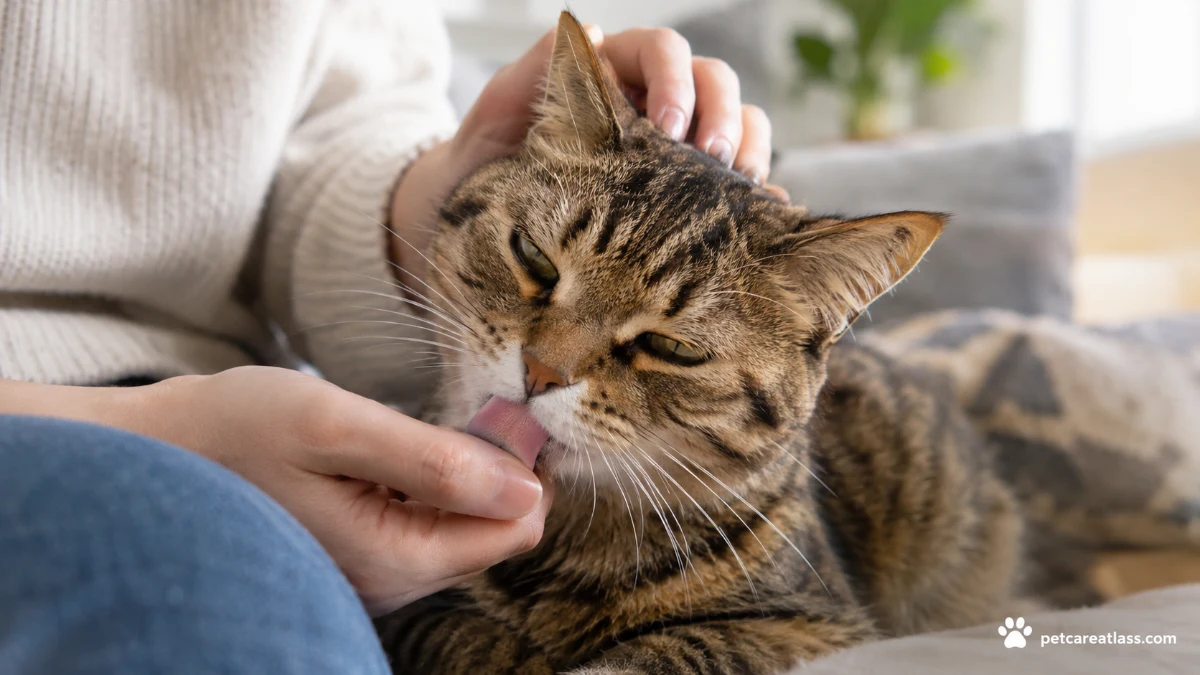
Your cat may lick you when you pet her because she is socially grooming you, responding to familiar physical contact, seeking attention, or exploring your scent and taste. Licking can be part of normal feline social behavior, but its meaning depends on her body language, the situation, and whether she appears relaxed or uncomfortable.
Introduction
Have you ever gently petted your cat, only for her to start licking your hand, fingers, or arm? You might wonder whether she is showing affection, grooming you, enjoying your attention, or trying to communicate something. Although this behavior is common in cats, it does not always have the same meaning.
When your cat licks you while you pet her, she may be responding to familiar physical contact, exploring your scent, seeking attention, or displaying social grooming behavior. In some situations, licking can also occur when a cat becomes overstimulated or uncomfortable. Understanding the reasons behind this behavior, along with your cat’s body language, can help you recognize what she may be communicating and know how to respond.
7 Reasons Your Cat Licks You When You Pet Her
Cats lick people for different reasons, and several explanations may apply to the same interaction. Here are seven common possibilities.
1. She Is Showing Social Affection
One possible reason your cat licks you during petting is that she is engaging in friendly social behavior.
Cats sometimes lick familiar cats as part of a behavior called allogrooming, which means grooming another individual. It can help maintain social relationships and is commonly seen between cats that are comfortable with each other.
Your cat may direct similar grooming behavior toward you because you are a familiar part of her social environment.
You might notice this behavior when:
- She gently licks your hand while you stroke her head.
- She rubs her face against your fingers before licking.
- She stays close to you and appears relaxed.
- She alternates between licking and receiving attention.
What it means: Gentle licking alongside relaxed behavior may be consistent with friendly social interaction. However, licking alone does not prove that your cat is expressing affection.
2. She Is Grooming You
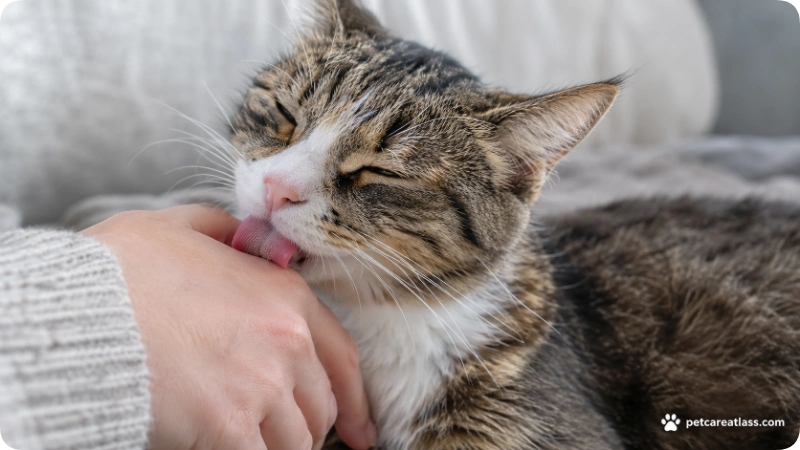
Grooming is an important part of feline behavior. Cats spend considerable time cleaning their fur, and some also groom familiar companions.
When your cat licks your skin or hand while you pet her, she may be directing grooming behavior toward you.
This can happen when:
- You are touching areas around her head and neck.
- She begins licking your hand during a relaxed interaction.
- She alternates between grooming herself and licking you.
- She repeatedly returns to the same area of your skin.
Cats do not necessarily distinguish human skin from fur in the same way they distinguish different parts of their own bodies. Your hand may simply become the focus of her grooming behavior during a familiar interaction.
What it means: Your cat may be including you in a social grooming interaction rather than simply reacting to the physical sensation of petting.
3. She Likes the Taste or Smell of Your Skin
Sometimes the explanation is much simpler: your cat may be interested in the taste or smell of your skin.
Human skin naturally carries sweat, oils, and environmental scents. Sweat contains salt, which may attract a cat’s attention. Your hands may also carry the smell of food, other animals, soap, or household products.
You may notice this when:
- She repeatedly licks your fingers.
- She focuses on your hands after you prepare food.
- She sniffs your skin before licking.
- She shows more interest in one particular area.
What it means: Your cat may be investigating something she smells or tastes rather than communicating a social message.
Avoid allowing your cat to lick hands or skin contaminated with cleaning products, essential oils, medications, or other substances that could be harmful if swallowed.
4. She Wants Your Attention
Cats can learn that certain behaviors encourage people to interact with them.
If your cat licks your hand and you respond by talking to her, petting her longer, or offering attention, she may repeat the behavior because it has become part of your interaction routine.
For example, she might:
- Lick your fingers when you stop petting her.
- Nudge your hand and then lick it.
- Begin licking when you look away.
- Repeat the behavior until you respond.
What it means: Licking may be an attention-seeking behavior, particularly when it consistently happens after you pause or redirect your attention.
If you enjoy the interaction, you can respond calmly. If you do not want your cat to lick your skin, gently redirect her without scolding or punishing her.
5. She Feels Comfortable During Petting
Some cats lick familiar people during calm, comfortable interactions.
Your cat may be relaxed enough to combine several behaviors, such as receiving petting, rubbing against your hand, resting beside you, and occasionally licking your skin.
Look at the whole interaction rather than interpreting licking by itself.
Signs that may accompany a comfortable interaction include:
- A loose, relaxed body.
- Soft eyes or slow blinking.
- Ears held in a neutral position.
- Gentle rubbing against your hand.
- Voluntary approaches and continued contact.
What it means: When licking occurs alongside these signals, it may be part of a comfortable social interaction.
However, cats can enjoy some petting while still having limits. Even a relaxed cat may eventually decide that she has had enough.
6. She Is Responding to Familiar Contact and Scent
Cats rely heavily on their sense of smell when exploring their surroundings and recognizing familiar individuals.
When you pet your cat, your scent and her own scent can mix through physical contact. She may then lick your hand as part of investigating or responding to those familiar smells.
This explanation may be relevant when your cat:
- Sniffs your hand before licking it.
- Licks the areas you have just touched.
- Rubs her cheeks against your fingers.
- Repeats the behavior during familiar daily routines.
What it means: Licking may be connected to scent investigation and familiar social contact.
It is difficult to determine whether scent recognition is the specific reason for an individual licking episode, so this explanation should be considered a possibility rather than a definite interpretation.
7. She Is Becoming Overstimulated
Not every licking episode during petting is a sign that your cat wants more attention.
Some cats become overstimulated when physical contact continues for too long or involves sensitive areas. They may initially accept petting but gradually become uncomfortable.
Licking can sometimes occur during a tense interaction, particularly when accompanied by other signs of discomfort.
Watch for:
- Tail flicking or forceful tail movements.
- Ears turning sideways or flattening.
- Skin twitching along the back.
- A stiff or tense body.
- Repeated head turning toward your hand.
- Moving away, swatting, or attempting to bite.
What it means: Your cat may be reaching her tolerance limit rather than asking you to continue.
If you notice these signals, stop petting and give her space. Avoid interpreting every lick as an invitation for more physical contact.
How to Tell Whether Your Cat Enjoys Being Petted or Wants You to Stop
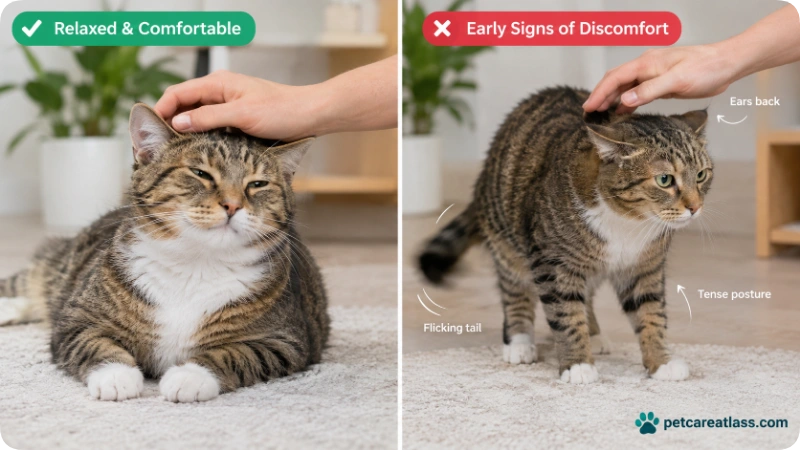
The most useful way to understand your cat’s licking is to observe what she does before, during, and after you touch her.
A cat that is comfortable may continue approaching your hand, rubbing against you, or resting nearby. A cat that wants the interaction to end may show subtle warning signals before moving away or reacting defensively.
Use the following table to understand the difference.
| Body Language | Possible Meaning |
|---|---|
| Leaning into your hand | Enjoys the contact |
| Gentle licking and rubbing | Social interaction |
| Soft eyes and relaxed posture | Comfort and relaxation |
| Ears turned sideways or backward | Possible discomfort |
| Repeated tail flicking | Irritation or overstimulation |
| Stiff body or skin twitching | Possible tension |
| Turning or moving away | Wants more space |
| Swatting or biting | Stop petting immediately |
Remember that no single signal explains everything. Consider several behaviors together and pay attention to what is normal for your individual cat.
What Should You Do When Your Cat Licks You While Being Petted?
You do not need to discourage occasional licking if your cat appears comfortable and your skin is clean. However, responding appropriately helps keep the interaction pleasant and safe.
1. Let Her Choose When to Interact
Allow your cat to approach you rather than reaching for her every time she comes nearby.
Offer your hand and let her investigate it. If she rubs against your fingers or stays close, you can try gentle petting.
If she walks away, respect her decision rather than following her or trying to hold her in place.
2. Pet Her in Areas She Prefers
Many cats respond more positively to gentle contact around the cheeks, chin, forehead, and head.
Start with short strokes and observe her response. Avoid assuming that she wants her belly, paws, or tail touched simply because she is licking your hand.
Individual preferences matter, and your cat should always have the option to move away. Feline-friendly handling guidelines also emphasize allowing cats to choose their position and participate voluntarily in physical interactions.[2]
3. Watch for Signs of Overstimulation
Some cats have a limited tolerance for continuous petting.
If your cat begins flicking her tail, turning her ears backward, twitching her skin, or stiffening her body, pause the interaction.
Do not wait until she bites or scratches to recognize that she needs a break.
4. Keep Your Skin Free From Harmful Products
Avoid allowing your cat to lick areas of skin covered with:
- Medicated creams or ointments.
- Essential oils.
- Strongly scented lotions.
- Sunscreen or other topical products that may contain harmful ingredients.
- Household cleaning chemicals.
Some substances that are safe for human use can be dangerous to cats if swallowed.
If your cat licks a potentially toxic substance, contact your veterinarian or an appropriate animal poison-control service for guidance.
5. Redirect Unwanted Licking Gently
If you do not like being licked, calmly move your hand away and offer another activity.
You can redirect her attention toward a toy or a suitable play activity. Avoid shouting, pushing her away roughly, or punishing her.
The goal is to establish a comfortable interaction without making your cat fearful of approaching you.
When Should You Be Concerned About Your Cat’s Licking?
Occasional licking during petting is generally not concerning when your cat otherwise behaves normally.
However, a sudden change in licking habits or unusually persistent behavior deserves attention. Licking can sometimes be associated with stress, discomfort, nausea, or other medical problems.
Contact your veterinarian if you notice:
- Sudden behavioral changes: Your cat begins licking you, herself, or household objects much more frequently than before.
- Excessive self-grooming: She repeatedly licks the same area and develops thinning fur or bald patches.
- Skin irritation: You notice redness, sores, scabs, or wounds associated with repeated licking.
- Signs of discomfort: She becomes unusually sensitive to touch, hides, or reacts defensively during normal interactions.
- Other changes in health: Her appetite, activity, or normal behavior changes alongside the licking.
A veterinarian can help determine whether the behavior is related to a medical condition, stress, or another underlying cause. Cornell University’s Feline Health Center explains that excessive grooming can be associated with skin irritation, pain, parasites, and psychological stress.[3]
Do not assume that persistent licking is simply an expression of affection when it represents a noticeable change in your cat’s behavior.
Frequently Asked Questions
Why does my cat lick me and then bite me when I pet her?
Your cat may lick you and then bite because she is becoming overstimulated, wants the interaction to stop, or is reacting to discomfort. Some cats tolerate only short periods of petting. Watch for tail flicking, flattened ears, body tension, or repeated head turning, and stop petting when these signals appear.
Why does my cat lick my hand when I stop petting her?
Your cat may lick your hand because she wants continued attention, is engaging in social grooming, or is investigating your scent. If she nudges your hand and remains relaxed, she may be inviting further interaction. However, observe her other signals rather than assuming every lick means she wants more petting.
Does my cat licking me mean she loves me?
Licking can be part of friendly social grooming and may indicate a familiar, comfortable relationship. Cats also lick people for attention, taste, scent, and other reasons. It can be a positive social behavior, but licking alone cannot establish exactly what your cat is feeling.
Why does my cat lick me more when I pet her head?
Your cat may respond to head petting because many cats prefer gentle contact around their cheeks, forehead, and chin. These areas are also important in feline scent communication and social interactions. If she remains relaxed, rubs against your hand, and voluntarily stays nearby, she may be comfortable with the interaction.
Is it safe to let my cat lick my hands?
Occasional licking of clean, uninjured skin is generally low risk for most healthy people. However, avoid allowing your cat to lick open wounds, contaminated skin, or areas containing lotions, medications, and potentially toxic products. Wash your hands afterward, particularly before eating or preparing food.
Why does my cat suddenly start licking me when I pet her?
A sudden increase in licking may reflect a change in her routine, attention-seeking behavior, interest in a new scent, stress, or discomfort. Consider whether anything else has changed in her environment or health. If the behavior is persistent, excessive, or accompanied by other unusual signs, arrange a veterinary examination.
Conclusion
When your cat licks you while you pet her, she may be grooming you, engaging in familiar social behavior, seeking attention, or investigating the taste and smell of your skin. Sometimes, licking can also occur when she becomes uncomfortable with continued physical contact.
The best way to understand the behavior is to look beyond the licking itself. Pay attention to her ears, tail, posture, and willingness to remain close. Respect her boundaries, keep interactions gentle, and consult your veterinarian if the behavior changes suddenly or becomes excessive.

Daniel Brooks is a pet care and animal behavior writer at petcareatlass.com focused on helping owners better understand their pets’ behavior and everyday needs. He creates practical, easy-to-follow content on pet communication, training, welfare, and responsible care.