Quick Answer:
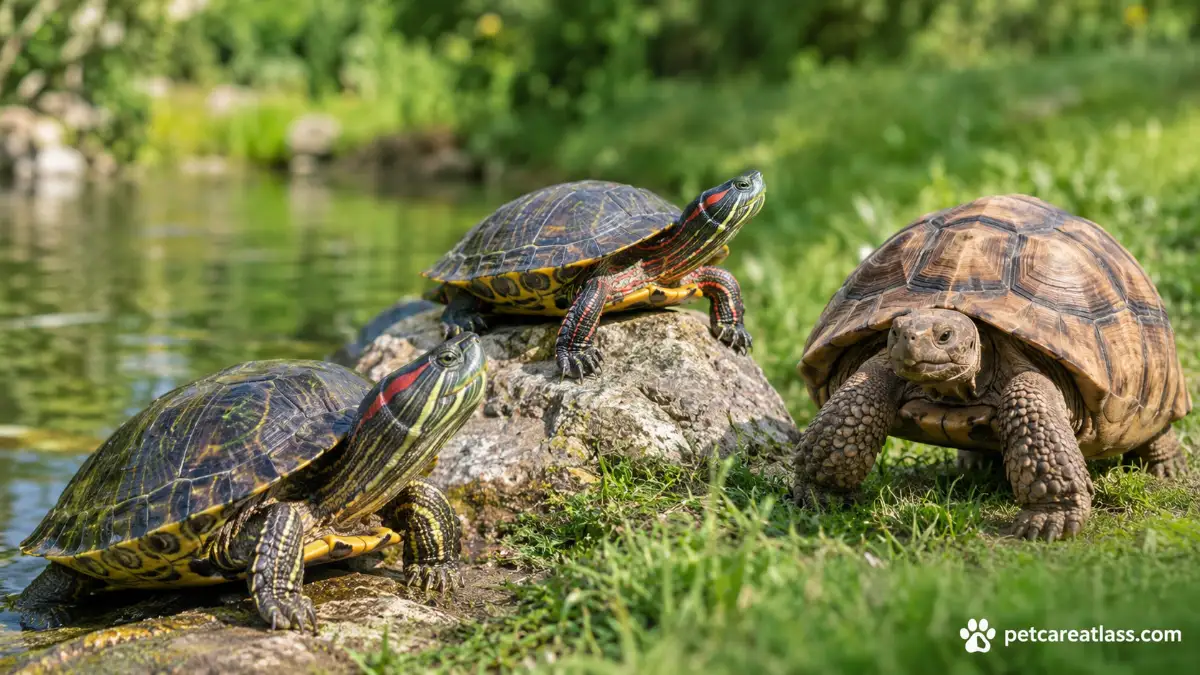
Pet turtles can live anywhere from about 20 to more than 80 years, depending on their species, genetics, and quality of care. Many commonly kept aquatic turtles live for 20–40 years, while certain tortoises can survive for 50–80 years or longer. Before adopting one, consider whether you can provide suitable care throughout its potentially lengthy life.
Introduction
Turtles are often chosen as pets because they are quiet, fascinating, and relatively independent compared with many other companion animals. However, their small size, especially when they are young, can make it easy to underestimate how long they may live.
If you are considering getting a pet turtle or already own one, understanding its expected lifespan is essential. Different species have very different life expectancies, and factors such as diet, habitat, temperature, UVB lighting, and veterinary care can influence their long-term health.
This guide explains how long popular pet turtles live, which species tend to have the longest lifespans, and what responsible owners can do to support a healthy life.
Key Takeaways
- Pet turtles can live for 20–40 years or longer, depending on the species.
- Red-eared sliders, painted turtles, and other aquatic species can become decades-long commitments.
- Some land tortoises, including sulcatas and red-footed tortoises, may live 50–80 years or more.
- Proper nutrition, UVB exposure, temperature control, clean water, and suitable housing support long-term health.
- A turtle’s small size as a hatchling does not indicate how much space or care it will need as an adult.
How Long Do Different Pet Turtle Species Live?
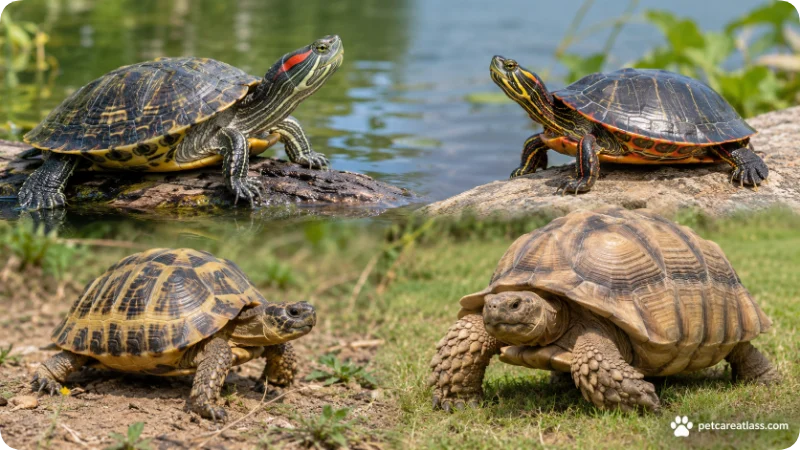
There is no single lifespan for all pet turtles. Their longevity depends largely on their species, natural biology, genetics, and living conditions.
Aquatic turtles generally have shorter expected lifespans than some large tortoises, although many still live for several decades. The following estimates provide a practical starting point when comparing commonly kept species.
| Species | Approximate Lifespan |
|---|---|
| Red-eared slider | 20–40+ years |
| Painted turtle | 25–40 years |
| Map turtle | 20–30+ years |
| Musk turtle | 20–30+ years |
| Box turtle | 30–50+ years |
| Russian tortoise | 40–50+ years |
| Hermann’s tortoise | 50–75+ years |
| Red-footed tortoise | 50+ years |
| Sulcata tortoise | 50–80+ years |
| Desert tortoise | 50–60+ years |
These are broad estimates, not guaranteed lifespans or precise averages. Actual longevity varies by species, individual, and quality of care. Some species have limited reliable captive-lifespan data.
1. Red-Eared Slider
Approximate lifespan: 20–40+ years
The red-eared slider is one of the most commonly kept aquatic turtles in the United States. It is recognizable by the red markings behind its eyes and its green, patterned shell.
With appropriate care, red-eared sliders can live for several decades. They need a spacious aquatic habitat, clean filtered water, a dry basking area, appropriate heating, and UVB lighting.
One common mistake is choosing a small tank because the turtle is young. These turtles grow considerably, and their adult housing requirements should be considered before adoption.
2. Painted Turtle
Approximate lifespan: 25–40 years
Painted turtles are freshwater turtles known for their colorful shell markings and bright red or orange patterns along their bodies.
The University of Illinois College of Veterinary Medicine reports an average lifespan of approximately 40 years for painted turtles, with a documented individual reaching 55 years.
They need clean water, suitable swimming space, a basking platform, UVB lighting, and a species-appropriate diet.
3. Map Turtle
Approximate lifespan: 20–30+ years
Map turtles get their name from the intricate lines and patterns on their shells, which resemble markings on a map.
Their lifespan varies among species and individual animals. They generally require well-maintained aquatic habitats with good water quality, appropriate basking temperatures, and adequate lighting.
Some map turtles are more sensitive to poor water conditions than owners expect, making filtration and regular habitat maintenance particularly important.
4. Musk Turtle
Approximate lifespan: 20–30+ years
Musk turtles are relatively small aquatic turtles that spend much of their time in water. Their compact size can make them appealing to people with limited space, but they still need an appropriately designed aquatic enclosure.
They benefit from clean water, accessible resting and basking areas, suitable temperatures, and a balanced diet.
Do not assume that a smaller turtle needs only a small container. Its habitat must allow normal movement, swimming, and natural behavior.
5. Box Turtle
Approximate lifespan: 30–50+ years
Box turtles are primarily terrestrial turtles. Unlike aquatic sliders, they spend most of their time on land and need an enclosure that supports their natural ground-dwelling behavior.
Their lifespan can extend for several decades, and some individuals live considerably longer.
They require appropriate humidity, temperature gradients, hiding places, suitable substrate, UVB exposure, and a varied species-appropriate diet.
Box turtles also need secure housing because they are capable of escaping through surprisingly small gaps. Before acquiring one, check the applicable state and local wildlife regulations, particularly for native species.
6. Russian Tortoise
Approximate lifespan: 40–50+ years
The Russian tortoise is a small land-dwelling tortoise compared with many other pet tortoise species.
Despite its relatively compact adult size, it can live for several decades. It needs a suitable enclosure, access to appropriate temperatures, UVB lighting, and a high-fiber diet based primarily on suitable leafy plants and weeds.
Its long lifespan means prospective owners should plan for many years of feeding, cleaning, habitat maintenance, and veterinary care.
7. Hermann’s Tortoise
Approximate lifespan: 50–75+ years
Hermann’s tortoises are popular among experienced tortoise keepers because of their manageable size compared with giant species.
They are herbivores and require a suitable plant-based diet, appropriate UVB exposure, temperature management, and enough room to move and explore.
Their potential longevity makes them a serious commitment. An owner who adopts a young Hermann’s tortoise may need to plan for its care well into later adulthood.
8. Red-Footed Tortoise
Approximate lifespan: 50+ years
Red-footed tortoises are recognizable by the reddish or orange scales on their legs and feet.
They originate from tropical regions and need different environmental conditions from Mediterranean or desert tortoises. Maintaining suitable warmth and humidity is essential.
The University of Illinois College of Veterinary Medicine notes that red-footed tortoises can live at least 50 years with proper care.
Their long-term needs include a spacious enclosure, suitable humidity, appropriate temperatures, UVB exposure, and a balanced diet.
9. Sulcata Tortoise
Approximate lifespan: 50–80+ years
The sulcata tortoise is one of the largest tortoises commonly kept by private owners.
Although young sulcatas may look small enough for a modest enclosure, adults can become extremely large and heavy. Some males can weigh more than 100 pounds.
The University of Illinois reports that sulcata tortoises can live as long as 80 years.
They need substantial outdoor space in suitable climates, secure fencing, appropriate indoor accommodation when necessary, and a high-fiber diet.
This species is not a suitable choice for someone who wants a small, easy-to-house pet.
10. Desert Tortoise
Approximate lifespan: 50–60+ years
Desert tortoises are adapted to dry environments and can live for many decades under suitable conditions.
The University of California, Davis School of Veterinary Medicine reports that desert tortoises in captivity can live 60 years or more with proper care.
However, desert tortoises are not ordinary beginner pets. Some populations are legally protected, and removing a wild desert tortoise from its natural habitat is illegal.
Anyone considering one must investigate the applicable wildlife laws and acquire an animal only through a lawful, responsible route.
Why Do Pet Turtles Live So Long?
Turtles are known for their longevity, but their long lives are not simply the result of moving slowly. Their biology, metabolism, genetics, and environmental adaptations all contribute to how they age.
Several factors help explain why some turtle species can survive for decades.
1. Species and Genetics
A turtle’s species is one of the strongest influences on its potential lifespan. Some aquatic turtles naturally have shorter lifespans than large tortoises, while certain tortoise species can survive for many decades.
Genetics also influence individual longevity. Even turtles belonging to the same species may differ in their health, development, and ability to cope with environmental challenges.
2. Slow Growth and Development
Many turtles grow and mature more slowly than common household pets such as dogs and cats.
Some tortoises take many years to reach their adult size. This slow development is part of their natural life history, although it does not guarantee that an individual will live to an advanced age.
3. Environmental Adaptations
Turtles are ectothermic, meaning they rely on external environmental heat to regulate their body temperature.
Their metabolism and activity change with environmental conditions. Some species also undergo seasonal periods of reduced activity.
However, a pet turtle should never be deliberately exposed to extreme cold or encouraged to hibernate without species-specific knowledge and appropriate veterinary guidance.
4. Protection and Natural Survival Strategies
A turtle’s shell provides important physical protection against many potential threats. Its protective structure is part of its anatomy and supports survival in natural environments.
However, a shell does not make turtles immune to injuries, infections, nutritional problems, or unsuitable living conditions.
What Factors Affect a Pet Turtle’s Lifespan?
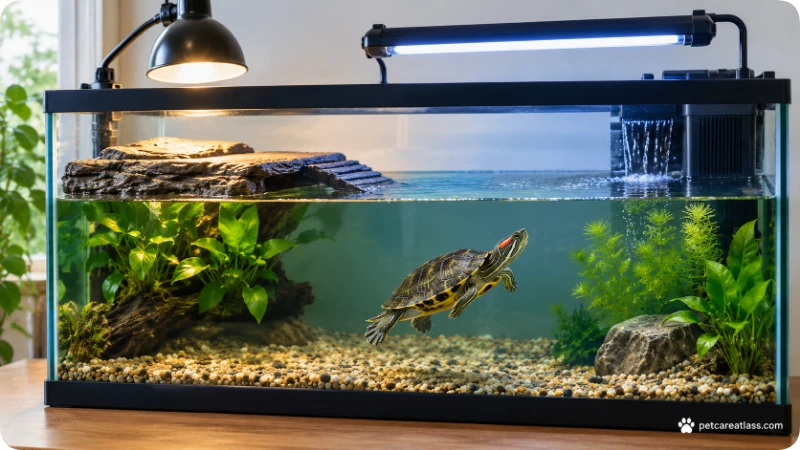
A turtle may have the genetic potential to live for decades, but its actual lifespan depends partly on the conditions in which it is kept.
Good husbandry supports normal growth, healthy development, and long-term well-being.
1. Proper Habitat and Living Space
An appropriately designed habitat allows a turtle to move, feed, rest, and display natural behaviors.
Aquatic turtles need enough water for swimming, a dry basking platform, and suitable filtration. Terrestrial turtles need secure ground-level enclosures with appropriate substrate, hiding areas, and enough room to explore.
A habitat that is too small can restrict movement and make it difficult to maintain suitable environmental conditions.
2. UVB Lighting and Temperature
UVB lighting helps turtles produce vitamin D3, which supports calcium absorption and healthy shell and bone development.
Without appropriate UVB exposure, turtles may develop nutritional secondary hyperparathyroidism, a condition associated with poor calcium balance and weakened bones.
Temperature is equally important because turtles depend on external heat for normal body functions.
Owners should provide species-specific basking and ambient temperatures rather than using one temperature setting for every turtle.
3. Balanced, Species-Appropriate Nutrition
A turtle’s nutritional requirements depend on its species and age.
Aquatic turtles may eat a combination of suitable animal-based foods and aquatic vegetation, while many tortoises require diets dominated by appropriate grasses, weeds, and leafy plants.
Feeding an unsuitable diet or relying too heavily on one food can contribute to nutritional problems.
A varied, species-appropriate diet helps support healthy growth, shell development, and normal body functions.
4. Clean Water and Good Hygiene
Poor water quality can expose aquatic turtles to unhealthy living conditions and contribute to skin, shell, and other health problems.
Owners should:
- Use an appropriately sized filtration system.
- Remove leftover food and visible waste.
- Monitor water quality and temperature.
- Perform regular partial water changes.
- Clean the habitat using reptile-safe methods.
- Avoid overcrowding the enclosure.
Clean water is particularly important for aquatic species that spend most of their lives swimming.
5. Regular Veterinary Care
Turtles can develop health problems without showing obvious symptoms during the early stages.
“An experienced reptile veterinarian can assess body condition, shell health, nutrition, and overall development.”
Arrange a veterinary examination if you notice:
- A soft, damaged, or unusually deformed shell.
- Swelling around the eyes or face.
- Loss of appetite or unexplained weight loss.
- Unusual swimming or difficulty moving.
- Nasal discharge, wheezing, or open-mouth breathing.
- Changes in activity that persist or seem abnormal.
Breathing difficulty, severe weakness, and significant injuries require prompt veterinary attention.
How Can You Help Your Pet Turtle Live Longer?
You cannot guarantee a particular lifespan, but responsible husbandry can help your turtle remain healthy throughout its life.
Here are practical ways to support its long-term well-being.
- Research your turtle’s exact species: Identify whether it is aquatic, semi-aquatic, or terrestrial before choosing its habitat and diet.
- Provide enough living space: Plan for the animal’s adult size instead of buying an enclosure based on its hatchling size.
- Maintain appropriate temperatures: Use reliable thermometers and species-specific temperature requirements.
- Provide suitable UVB lighting: Follow the lighting manufacturer’s replacement guidance and ensure the setup provides appropriate exposure.
- Feed a balanced diet: Choose foods according to the turtle’s species, age, and nutritional requirements.
- Maintain clean living conditions: Keep water, substrate, basking areas, and feeding spaces hygienic.
- Minimize unnecessary handling: Turtles are not usually animals that benefit from frequent handling. Allow them to rest and behave naturally.
- Schedule veterinary examinations: Establish a relationship with a veterinarian experienced in reptile care.
- Monitor changes in behavior: Notice changes in appetite, movement, swimming, shell condition, and activity.
- Plan for lifelong care: Make arrangements for your turtle’s care if you move, experience financial difficulties, or can no longer look after it.
Are Turtles Really Low-Maintenance Pets?
No. Although turtles are generally quiet and do not need daily walks, they are not necessarily easy pets.
Their care can involve specialized equipment, substantial living space, regular cleaning, carefully controlled environmental conditions, and veterinary expenses.
Aquatic turtles may require powerful filtration systems and large tanks. Tortoises may need secure outdoor enclosures, specialized indoor housing, and considerably more space as they grow.
Their long lifespans also create a responsibility that many first-time owners underestimate.
Before adopting a turtle, consider:
- Whether you can afford its habitat and ongoing maintenance.
- Whether you have enough room for its adult size.
- Whether a qualified reptile veterinarian is accessible.
- Whether you can provide consistent care for several decades.
- Who will care for the turtle if you cannot continue doing so.
A turtle should be chosen because you can meet its long-term needs, not simply because it looks small or requires less attention than a dog or cat.
Can a Pet Turtle Outlive Its Owner?
Yes. Some pet turtles, particularly long-lived tortoises, can survive longer than their original owners.
For example, a sulcata or red-footed tortoise may live for 50 years or longer under suitable conditions. Certain other tortoise species can have even greater longevity.
This possibility makes future care planning especially important.
If you own a long-lived turtle, consider identifying a trusted family member, experienced keeper, or reputable reptile rescue that could provide appropriate care if necessary.
Do not assume that another household member will automatically be able to accommodate a large adult tortoise. Its enclosure, diet, heating, and veterinary needs may require substantial resources.
What Is the Oldest Age a Turtle Can Reach?
Some turtles and tortoises have reached extraordinary ages, but exceptional records should not be confused with the expected lifespan of an ordinary pet.
The Galápagos giant tortoise and Aldabra giant tortoise are among the best-known examples of exceptionally long-lived reptiles.
A scientific review of reptile longevity includes maximum observed lifespan estimates of approximately 177 years for Galápagos tortoises and 152 years for Aldabra tortoises. These are exceptional estimates, not typical pet-lifespan expectations.
For most prospective owners, the more useful question is how long their particular species is likely to live under responsible captive care.
What to Consider Before Getting a Pet Turtle
A turtle can be a fascinating companion, but choosing the right species requires more than considering its appearance or purchase price.
Think about the following:
| Consideration | Why It Matters |
|---|---|
| Expected lifespan | Helps you understand the long-term commitment |
| Adult size | Determines the space and enclosure needed |
| Habitat type | Helps you choose an aquatic or land-based setup |
| Diet | Ensures you can meet the species’ nutritional needs |
| Temperature and lighting | May require specialized heating and UVB equipment |
| Veterinary access | Ensures access to a reptile-experienced veterinarian |
| Legal requirements | Helps you understand ownership and collection restrictions |
If you are a beginner, research the full adult care requirements of a species before making a decision. A smaller species is not automatically easier to care for, and a long lifespan should always be treated as a serious responsibility.
Frequently Asked Questions
Do Pet Turtles Live Longer Than Dogs and Cats?
Some pet turtles and tortoises can live longer than dogs and cats. Many dogs and cats live around 10–15 years or longer, while aquatic turtles may live 20–40 years and certain tortoises can survive for 50–80 years or more.
However, lifespan varies considerably by species and individual.
Can a Pet Turtle Live for 100 Years?
Yes, certain turtle and tortoise species can potentially reach or exceed 100 years, although this is not typical for most commonly kept aquatic turtles.
Some giant tortoises and other exceptionally long-lived species have documented or estimated lifespans exceeding a century.
What Pet Turtle Lives the Longest?
Certain tortoises, including giant tortoises, are among the longest-lived members of the turtle family. Among commonly kept private-pet species, some tortoises can live for 50–80 years or longer.
Their exceptional longevity also means they require substantial space and lifelong care.
How Long Do Baby Pet Turtles Live?
Baby turtles have the same general lifespan potential as adults of their species. For example, a red-eared slider hatchling may eventually live for several decades if it receives suitable care.
However, young turtles are vulnerable to unsuitable temperatures, poor nutrition, dehydration, and inadequate habitat conditions.
Do Turtles Live Longer in Captivity or in the Wild?
There is no universal answer. Suitable captive care can protect turtles from some natural threats and provide consistent access to food and veterinary attention.
However, poor captive conditions can cause serious health problems and premature death. A well-managed habitat must meet the animal’s species-specific needs.
How Can I Tell How Old My Pet Turtle Is?
It is usually difficult to determine a turtle’s exact age, especially if you do not know when it hatched.
Shell growth rings are not reliable age indicators because their formation depends on factors such as growth rate, nutrition, and environmental conditions. An experienced veterinarian may help assess an animal’s development, but an exact age often cannot be established from appearance alone.
Conclusion
Pet turtles can live much longer than many people expect. While some aquatic species live around 20–40 years, certain tortoises can remain part of a family for 50–80 years or more.
The most important factor is choosing a species whose long-term needs you can realistically meet. Proper nutrition, suitable housing, UVB lighting, clean water, and regular veterinary care all contribute to responsible turtle ownership. Before bringing one home, make sure you are prepared for the commitment throughout its life.

Daniel Brooks is a pet care and animal behavior writer at petcareatlass.com focused on helping owners better understand their pets’ behavior and everyday needs. He creates practical, easy-to-follow content on pet communication, training, welfare, and responsible care.