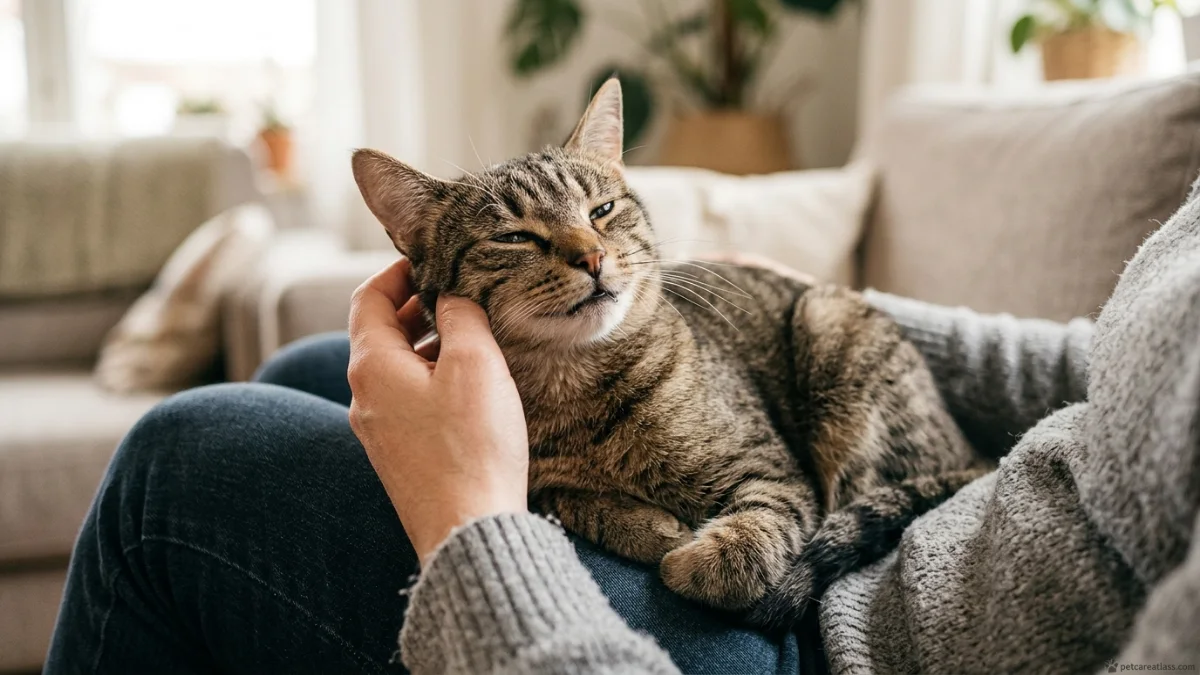
Quick Answer:
Cats may drool when you pet them because they feel relaxed, comfortable, or happy. However, drooling can also happen because of dental problems, mouth irritation, nausea, or other health concerns. If your cat suddenly starts drooling, produces excessive saliva, or shows symptoms such as pain or difficulty eating, contact your veterinarian.
Have you noticed your cat drooling while you gently pet her? Although it might seem unusual, this behavior is not always a reason to worry.
Some cats produce a little extra saliva when they feel relaxed, comfortable, and content during affectionate interactions with their owners. For them, gentle petting can create a soothing experience that triggers drooling.
However, not every case of drooling is related to happiness. Dental disease, mouth injuries, nausea, stress, and other medical conditions can also cause excessive saliva production.
Understanding the difference between occasional, relaxed drooling and unusual changes in your cat’s behavior can help you recognize when something needs attention.
In this guide, you’ll discover seven possible reasons your cat drools when you pet her, the warning signs to watch for, and when veterinary care may be necessary.
She Feels Relaxed and Comfortable
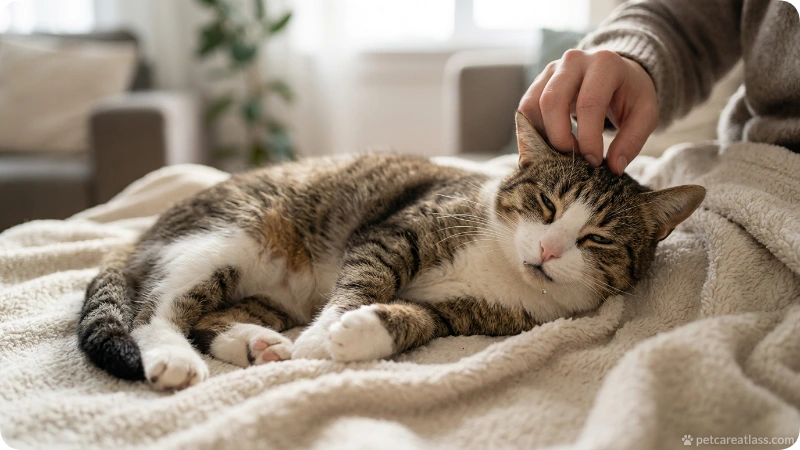
One of the common explanations for occasional drooling during petting is relaxation. Some cats become so comfortable during affectionate moments that a little saliva escapes from their mouths.
You may notice this when your cat is resting on your lap, lying beside you, or enjoying gentle strokes around her cheeks, chin, or head.
Relaxation-related drooling may happen when:
- Your cat feels secure in her surroundings.
- She enjoys the physical contact.
- She becomes comfortable during a familiar interaction.
- She associates gentle petting with positive experiences.
Not every relaxed cat drools. Some never do, while others occasionally leave a small wet spot on your clothes or blanket.
When you pet your cat, gentle touch may help her feel safe and comfortable, which can sometimes be accompanied by a little drooling. This is especially noticeable when she enjoys being stroked around her cheeks, chin, or head. However, if she suddenly starts drooling or produces more saliva than usual, consider possible dental problems, mouth irritation, or other health concerns rather than assuming she is simply enjoying the attention.
What should you look for?
A relaxed, comfortable cat may show several positive signals:
- Soft, partially closed eyes.
- Gentle purring.
- Ears in a natural position.
- A loose, comfortable body posture.
- Kneading with her front paws.
- Choosing to remain close to you.
If your cat drools only during enjoyable interactions and otherwise eats, drinks, grooms, and behaves normally, it may simply be an individual response to relaxation.
She Is Purring and Enjoying Your Attention
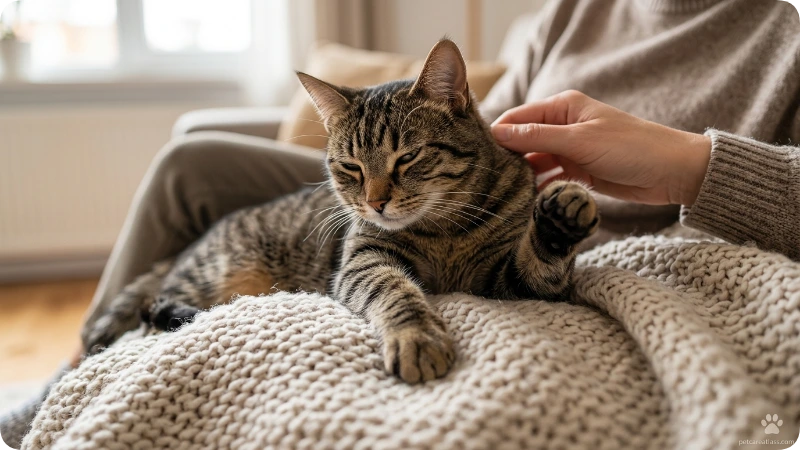
Cats may sometimes dribble when they purr because they feel relaxed and comfortable during affectionate interactions. When your cat enjoys being petted, she may produce a little saliva while resting on your lap, kneading a blanket, or receiving gentle strokes around her head and cheeks.
However, purring does not directly cause drooling in every cat. These behaviors may simply happen together when a cat feels comfortable. Some cats drool during affectionate moments, while others purr without producing any noticeable saliva.
If your cat only dribbles occasionally while purring and otherwise behaves normally, it may be an individual relaxation response. However, frequent drooling, bad breath, difficulty eating, or unusual behavior can indicate an underlying health problem.
When your cat purrs while you pet her, she may also produce a little extra saliva. This does not mean that purring directly causes drooling in every cat. Rather, both behaviors may occur during the same relaxed interaction.
For example, your cat might climb onto your lap, begin purring, close her eyes, and gradually start drooling while you gently stroke her head.
This combination can be a sign that she is comfortable, especially if her body language remains loose and relaxed.
However, remember that purring does not always mean happiness. Cats can also purr when frightened, uncomfortable, or in pain.
How to understand the difference
| Body language | Possible meaning |
| Soft eyes and relaxed posture | Comfortable and settled |
| Gentle purring with loose muscles | May indicate contentment |
| Kneading while resting | Often associated with comfort |
| Flattened ears and tense body | Possible fear or discomfort |
| Hiding with unusual drooling | Possible health or stress concern |
What should you do?
Continue gentle petting if your cat appears comfortable and willingly stays near you. Let her decide when she has had enough attention.
If the drooling occurs alongside unusual behavior, don’t assume that purring means everything is fine.
She Has a Strong Comfort Association With Petting
Some cats develop positive associations between gentle touch and familiar experiences from kittenhood.
For example, a cat may associate gentle stroking with warmth, safety, nursing-related comfort, or being cared for. When she receives similar attention as an adult, she may display behaviors such as kneading, purring, or occasionally drooling.
Kneading is particularly interesting because kittens use rhythmic paw movements around their mother’s mammary area during nursing. Many adult cats continue this behavior when resting or interacting with people.
You might notice your cat:
- Pushing her paws gently against your lap.
- Pressing her face against your hand.
- Closing her eyes while you pet her.
- Purring more noticeably.
- Drooling slightly while settling down.
These behaviors can occur together during a comfortable interaction.
However, there is no need to assume that every drooling cat is remembering kittenhood. Individual behavior varies, and the exact reason for occasional relaxation-related drooling is not always clear.
What should you do?
Give your cat a comfortable place to rest and allow her to choose whether she wants attention. Avoid forcing physical contact, even if she usually enjoys being petted.
She Feels Nervous or Overstimulated
Not all drooling during petting is a sign of happiness. Some cats produce extra saliva when they feel nervous, frightened, or overwhelmed.
For example, your cat might initially enjoy being petted but become uncomfortable when the interaction continues for too long. She may start showing signs of stress before moving away.
Common situations that can trigger stress-related drooling include:
- Being handled by unfamiliar people.
- Receiving too much physical attention.
- Being restrained or held against her wishes.
- Experiencing loud noises or unfamiliar surroundings.
- Visiting the veterinarian or traveling in a carrier.
How to recognize stress-related drooling
| Sign | What it may indicate |
| Flattened ears | Fear or discomfort |
| Tail flicking repeatedly | Irritation or overstimulation |
| Dilated pupils | Arousal, fear, or excitement |
| Trying to escape | Wants the interaction to stop |
| Tense body posture | Feeling uncomfortable |
| Excessive lip licking | Possible stress or nausea |
What should you do?
If your cat starts showing these signals, stop petting her and give her space.
Let her move somewhere quiet and comfortable. Avoid picking her up or forcing affection to calm her down.
If drooling continues after the stressful situation has ended, or happens repeatedly, arrange a veterinary checkup rather than assuming stress is the only explanation.
She Has Dental Problems or Mouth Pain
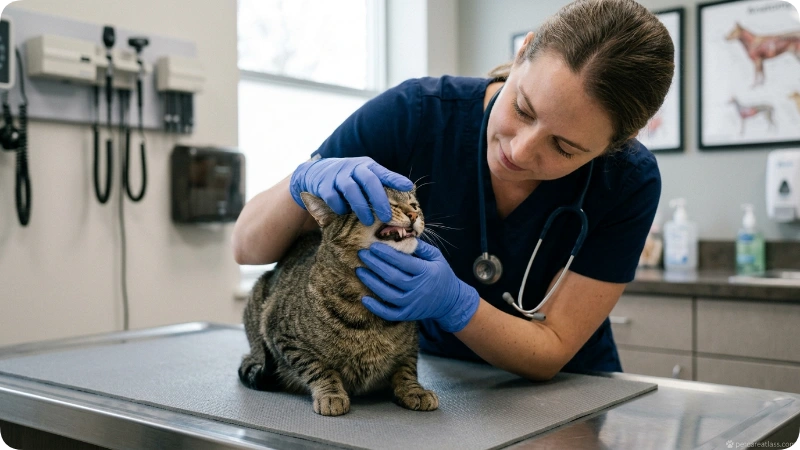
Dental disease is an important medical reason to consider when your cat drools during petting.
Although your cat may appear comfortable while resting on your lap, she could have an uncomfortable tooth, inflamed gums, or another problem inside her mouth.
Cats can hide signs of pain, which makes dental problems difficult to recognize without an examination.
Possible oral health problems include:
- Gingivitis: Inflammation of the gums that can cause redness, swelling, and discomfort.
- Periodontal disease: Infection and damage to the tissues supporting the teeth.
- Tooth resorption: A painful condition in which a cat’s tooth structure gradually breaks down.
- Mouth ulcers: Painful sores that can make eating and swallowing uncomfortable.
- Oral injuries: Cuts, irritation, or foreign material inside the mouth.
Dental problems may cause drooling even when you are not touching your cat.
Signs that may indicate mouth pain
Watch for these changes:
- Bad breath that is stronger than usual.
- Red or swollen gums.
- Drooling more frequently.
- Blood mixed with saliva.
- Pawing or rubbing at the mouth.
- Dropping food while eating.
- Chewing on one side of the mouth.
- Eating less or avoiding hard food.
| Dental or oral problem | Possible signs |
| Gingivitis | Red, swollen gums and drooling |
| Periodontal disease | Bad breath, discomfort, and difficulty eating |
| Tooth resorption | Mouth pain, drooling, and reluctance to chew |
| Mouth ulcers | Painful eating and excessive saliva |
| Foreign material | Sudden drooling, pawing at the mouth, and distress |
What should you do?
Arrange a veterinary examination if your cat has new or persistent drooling, especially if you notice bad breath, changes in eating habits, or signs of mouth discomfort.
Do not try to scrape tartar, pull out an object, or force her mouth open. A veterinarian can examine her teeth and gums safely and recommend appropriate treatment.
She Feels Nauseated or Has an Upset Stomach
Another possible explanation is nausea, which means your cat feels sick to her stomach.
When cats experience nausea, they may produce extra saliva. You might notice drooling while petting her, but the actual cause may have nothing to do with physical affection.
Nausea can occur for several reasons, including:
- Eating something that does not agree with her.
- Hairballs or gastrointestinal irritation.
- Motion sickness during car journeys.
- Certain medications.
- Underlying digestive or other medical conditions.
A nauseated cat may also display behaviors that are different from her usual relaxed personality.
Signs of nausea to watch for
- Repeated lip licking.
- Frequent swallowing.
- Drooling outside petting sessions.
- Reduced interest in food.
- Vomiting or retching.
- Hiding or acting unusually quiet.
For example, if your cat normally drools a little when you stroke her head but suddenly begins drooling while walking around the house, pay attention to the change.
The drooling may be associated with nausea rather than relaxation.
What should you do?
Monitor her eating, drinking, and general behavior. If she vomits, stops eating, or continues drooling, contact your veterinarian.
Do not give human stomach medications or anti-nausea treatments without veterinary instructions. The correct treatment depends on the underlying cause.
She Has Something Irritating Her Mouth or Has Been Exposed to a Toxin
Sudden drooling can also happen when something irritates your cat’s mouth or when she comes into contact with a harmful substance.
Cats naturally investigate their surroundings by sniffing, licking, and sometimes chewing unfamiliar objects. Unfortunately, this can expose them to substances that cause irritation or poisoning.
Possible sources include:
- Toxic household plants.
- Household cleaning products.
- Certain insecticides and chemicals.
- Human medications.
- Irritating substances on fur or paws.
- Foreign objects, such as string or small pieces of material.
Some substances cause excessive saliva because they irritate the mouth. Others can produce drooling as part of a wider toxic reaction.
Warning signs that need attention
- Sudden or heavy drooling.
- Foaming around the mouth.
- Vomiting.
- Repeated pawing at the face.
- Weakness or unusual behavior.
- Trembling or seizures.
- Difficulty swallowing or breathing.
What should you do?
If you suspect your cat has licked, chewed, or swallowed something harmful, contact a veterinarian or emergency animal hospital immediately.
Do not wait for additional symptoms to appear. Do not try to make your cat vomit or give home remedies unless a veterinarian specifically instructs you to do so.
If you see string hanging from your cat’s mouth, do not pull it. It may be caught farther inside her digestive tract, and pulling it can cause injury.
How to Tell If Your Cat’s Drooling Is Normal or a Health Concern
One of the most important things to understand is that occasional relaxation-related drooling looks different from drooling caused by illness or discomfort.
The timing, amount of saliva, frequency, and accompanying behavior can help you decide what to do next.
| What you notice | Possible explanation | Recommended action |
| A few drops while purring | Relaxation | Observe if otherwise normal |
| Slight drooling while kneading | Comfortable behavior | Allow her to relax |
| Drooling with flattened ears | Stress or discomfort | Stop petting and give space |
| Drooling with bad breath | Possible dental disease | Arrange a veterinary examination |
| Drooling with vomiting | Possible nausea or illness | Contact your veterinarian promptly |
| Sudden heavy drooling | Possible medical problem | Seek prompt veterinary advice |
| Drooling after possible toxin exposure | Possible poisoning | Seek emergency veterinary care |
Important: Even if your cat seems happy, new, recurring, or unexplained drooling deserves veterinary attention. Cats can hide pain and illness, so normal-looking behavior does not completely rule out a health problem.
What Should You Do When Your Cat Drools While You Pet Her?
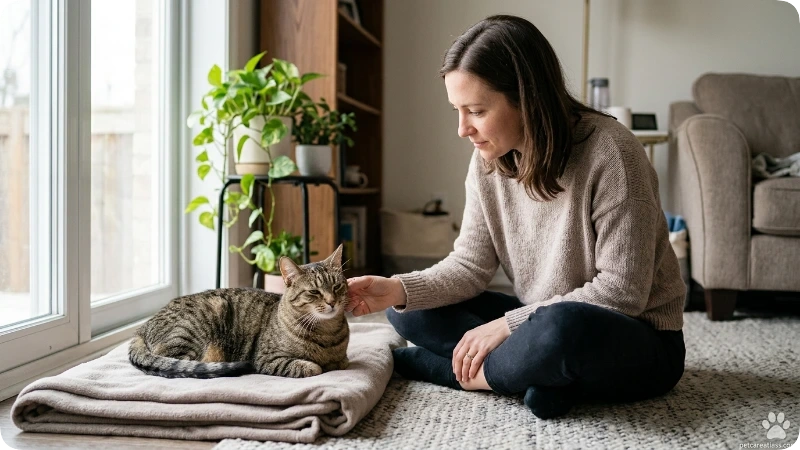
If your cat occasionally drools during affectionate moments, you do not necessarily need to stop petting her. However, it is important to understand her usual behavior and notice any changes.
Here are practical steps you can follow.
Observe When the Drooling Happens
Pay attention to whether your cat drools only when you pet her or also during other activities.
For example:
- Does she drool only when resting on your lap?
- Does it happen when she purrs or kneads?
- Does she drool while eating or drinking?
- Does saliva appear when she is sleeping?
- Has the behavior started recently?
These details can help you explain the problem to your veterinarian.
Watch Her Body Language
Look at her ears, eyes, tail, and overall posture.
A relaxed cat may have soft eyes, naturally positioned ears, and loose muscles. An uncomfortable cat may pull away, flatten her ears, flick her tail, or become tense.
Never continue petting simply because your cat is purring.
Check for Other Changes
Pay attention to her normal daily activities.
Notice whether she is:
- Eating her usual food.
- Drinking normally.
- Grooming herself.
- Playing and moving comfortably.
- Behaving normally around family members.
Changes in these activities can provide useful clues about her health.
Avoid Forcing Her to Accept Petting
Even cats that enjoy affection have personal boundaries.
Allow your cat to approach you and choose where she wants to be touched. If she moves away, respect her decision.
Gentle, short interactions are usually better than holding or restraining her for extended periods.
Arrange a Veterinary Checkup When Needed
If the drooling is new, persistent, increasing, or accompanied by other symptoms, arrange a veterinary examination.
Seek emergency help if she has difficulty breathing, collapses, experiences seizures, or may have been exposed to a toxin.
A veterinarian can assess her mouth, teeth, and general health to identify the underlying cause.
When Should You Worry About Your Cat Drooling?
A little saliva during a relaxing interaction may be harmless for some cats. However, drooling should not automatically be considered normal just because it happens while you are petting her.
The following situations deserve particular attention.
Seek emergency veterinary care:
- Your cat is having difficulty breathing.
- She collapses or has seizures.
- You suspect she has swallowed a poisonous substance.
- She has severe weakness or other sudden, serious symptoms.
- She may have a dangerous object stuck in her mouth or throat.
Arrange a veterinary examination promptly:
- Drooling has recently started.
- Saliva is appearing more frequently than before.
- Your cat has bad breath or bleeding gums.
- She is eating less or dropping food.
- She repeatedly paws at her mouth.
- She is vomiting or behaving unusually.
Do not wait for a problem to become severe before asking for veterinary advice.
Does Every Cat Drool When Being Petted?
No. Drooling during petting is not a behavior shared by every cat.
Some cats occasionally drool when they feel comfortable, while others enjoy the same attention without producing noticeable saliva.
Individual differences may be influenced by:
- Personality and temperament.
- Previous experiences with handling.
- Comfort level around people.
- Individual responses to relaxation.
- Underlying oral or medical conditions.
For example, two cats may both enjoy sitting on their owner’s lap. One might purr and knead without drooling, while the other occasionally leaves a small wet patch on the blanket.
Neither response automatically indicates a problem.
What matters most is knowing what is normal for your own cat and recognizing changes in her behavior.
Frequently Asked Questions
Is it normal for my cat to drool when I pet her?
Yes, occasional light drooling can be normal for some cats when they feel relaxed and comfortable. However, new, frequent, or excessive drooling should be checked by a veterinarian.
Why does my cat drool and purr at the same time?
Your cat may be experiencing relaxation and contentment. Some cats drool while purring, kneading, or resting comfortably. However, purring can also occur during stress or pain, so consider her overall body language.
Why does my cat drool when I scratch her chin?
Some cats enjoy gentle chin scratches and become very relaxed during the interaction. They may occasionally drool as a result. However, if chin touching causes discomfort or your cat suddenly starts drooling, mouth or dental problems should be considered.
Why does my cat drool when I stop petting her?
Your cat may remain relaxed after an enjoyable interaction, and a small amount of saliva may continue to escape. However, if she keeps drooling after you stop or the behavior is new, consider arranging a veterinary examination.
Should I stop petting my cat if she starts drooling?
Not necessarily. If she appears comfortable, willingly stays near you, and only produces a few drops of saliva, you can continue gentle petting. Stop if she shows signs of stress, discomfort, or wants to move away.
Can dental problems cause my cat to drool while being petted?
Yes. Dental disease, inflamed gums, painful teeth, and mouth ulcers can cause excessive drooling. Other warning signs include bad breath, difficulty eating, pawing at the mouth, and reduced appetite.
When should I take my drooling cat to the vet?
Contact your veterinarian if drooling is new, persistent, excessive, or accompanied by changes in eating, vomiting, bad breath, or unusual behavior. Difficulty breathing, seizures, collapse, or suspected poisoning require emergency veterinary attention.
Conclusion
If your cat drools when you pet her, the behavior may simply mean she feels relaxed and comfortable around you. Some cats naturally drool during enjoyable interactions, especially when they are purring, kneading, or resting on their owner’s lap.
However, it is important to recognize that drooling can also indicate dental disease, mouth irritation, nausea, stress, or exposure to harmful substances.
Pay attention to when the drooling happens, how much saliva she produces, and whether her normal behavior has changed. If it is new, persistent, or accompanied by other symptoms, arrange a veterinary examination.
Understanding your cat’s individual behavior will help you enjoy affectionate moments while making sure her comfort and health remain a priority.

Daniel Brooks is a pet care and animal behavior writer at petcareatlass.com focused on helping owners better understand their pets’ behavior and everyday needs. He creates practical, easy-to-follow content on pet communication, training, welfare, and responsible care.