Quick Answer:
Pet odors can become trapped in carpet fibers and padding, especially when urine, saliva, or other pet messes are not cleaned properly. To remove pet odors, blot fresh messes, use an enzyme-based cleaner when appropriate, wash removable items, and dry the carpet thoroughly. Proper cleaning and regular maintenance help prevent lingering smells.
Pet odors can make even a clean home feel unpleasant, especially when smells become trapped in carpet fibers and padding. Accidents from dogs, cats, and other pets can leave behind stubborn odors that ordinary vacuuming or air fresheners cannot eliminate.
Whether you are dealing with fresh urine, dried stains, muddy paw prints, or lingering animal smells, choosing the right cleaning method makes a difference. Learning how to remove pet odors from carpets can help you freshen your home without damaging carpet fibers or spreading unpleasant smells.
This guide covers 10 effective cleaning tips, including enzyme cleaners, baking soda, proper blotting, and routine carpet care, so you can tackle common pet odors safely and keep your living space fresher.
Identify the Source of the Pet Odor Before Cleaning
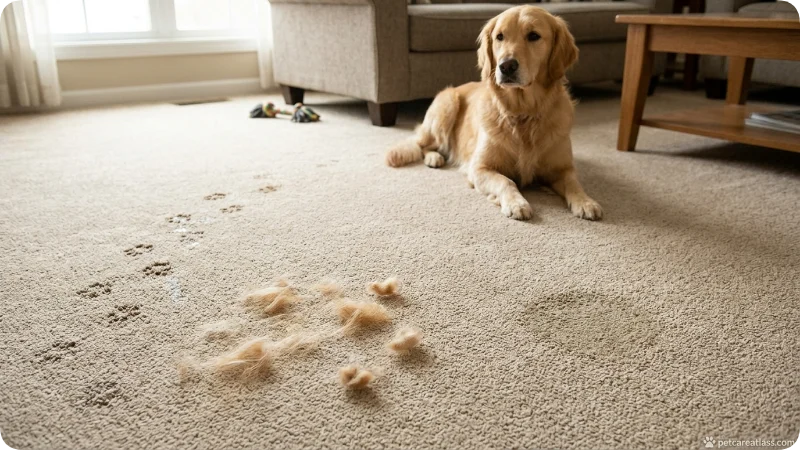
Before choosing a cleaning product, determine what is causing the smell. Different pet messes leave different types of residue, so using the wrong treatment may only cover the odor temporarily.
For example, fresh urine needs to be absorbed quickly, while general pet smells may come from accumulated hair, dander, saliva, and dirt.
Understanding the source helps you select a cleaning method that addresses the actual problem.
Pet Urine
Pet urine is one of the most common causes of persistent carpet odors. When a dog, cat, or other pet urinates on carpet, the liquid can travel through the fibers and reach the backing or padding.
As the urine dries, odor-causing residues remain behind. This explains why a carpet may look clean but still smell unpleasant.
Pet Vomit and Feces
Vomit and feces contain organic material that can become trapped between carpet fibers. If these messes are not removed promptly, they may leave stains and unpleasant smells.
The first step is to remove the solid material carefully before treating the affected area with a suitable carpet cleaner.
Wet Fur and Muddy Paws
Pets can bring moisture, dirt, and outdoor debris into the home. Dogs that walk outside regularly may leave muddy paw prints, while wet fur can transfer moisture and odors to carpets and rugs.
Regular grooming, paw cleaning, and vacuuming can help prevent this buildup.
General Pet Odors
Even well-groomed and house-trained pets contribute to everyday household odors.
Common sources include:
- Shed hair and loose fur.
- Skin flakes and dander.
- Saliva left on carpet fibers.
- Dirt transferred from paws.
- Pet bedding placed directly on carpets.
- Repeated contact with the same carpeted areas.
| Source of pet odor | Why it happens | Recommended cleaning approach |
| Fresh pet urine | Liquid and urine residue enter carpet fibers | Blot immediately and use a suitable enzymatic cleaner |
| Old urine stains | Dried residue may remain in carpet backing or padding | Enzymatic treatment or professional cleaning |
| Pet vomit | Organic material remains between fibers | Remove solids and clean with a suitable product |
| Pet feces | Waste residue can produce persistent odors | Remove waste and treat the affected area |
| Wet fur and muddy paws | Moisture and dirt accumulate | Clean paws and remove dirt after drying |
| General pet odors | Hair, dander, and everyday dirt build up | Regular vacuuming and carpet maintenance |
Practical tip: If the smell is strongest in one particular location, check whether your pet repeatedly uses that area. Treating the same spot without identifying the reason for repeated accidents may not solve the problem.
Remove Fresh Pet Urine From Carpets Immediately
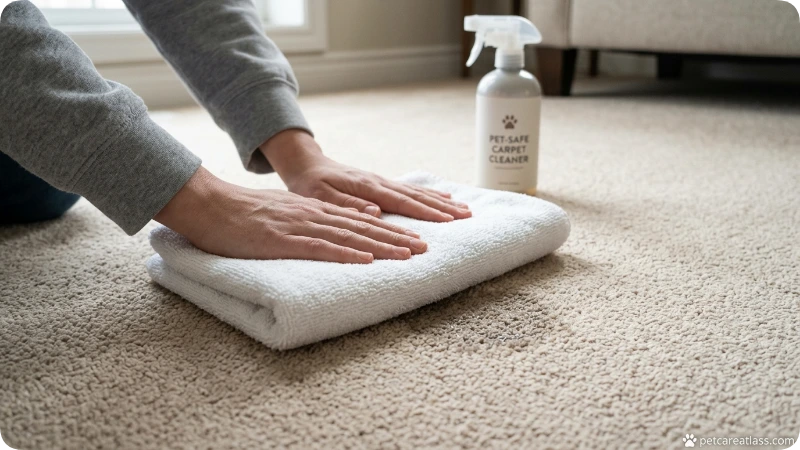
If your pet has an accident on the carpet, act as soon as possible. Fresh urine is generally easier to treat than urine that has dried and soaked into the carpet padding.
The most important thing is to absorb as much liquid as possible before applying a cleaning product.
Blot the Urine With Paper Towels
Place several layers of paper towels or a clean absorbent cloth over the wet area.
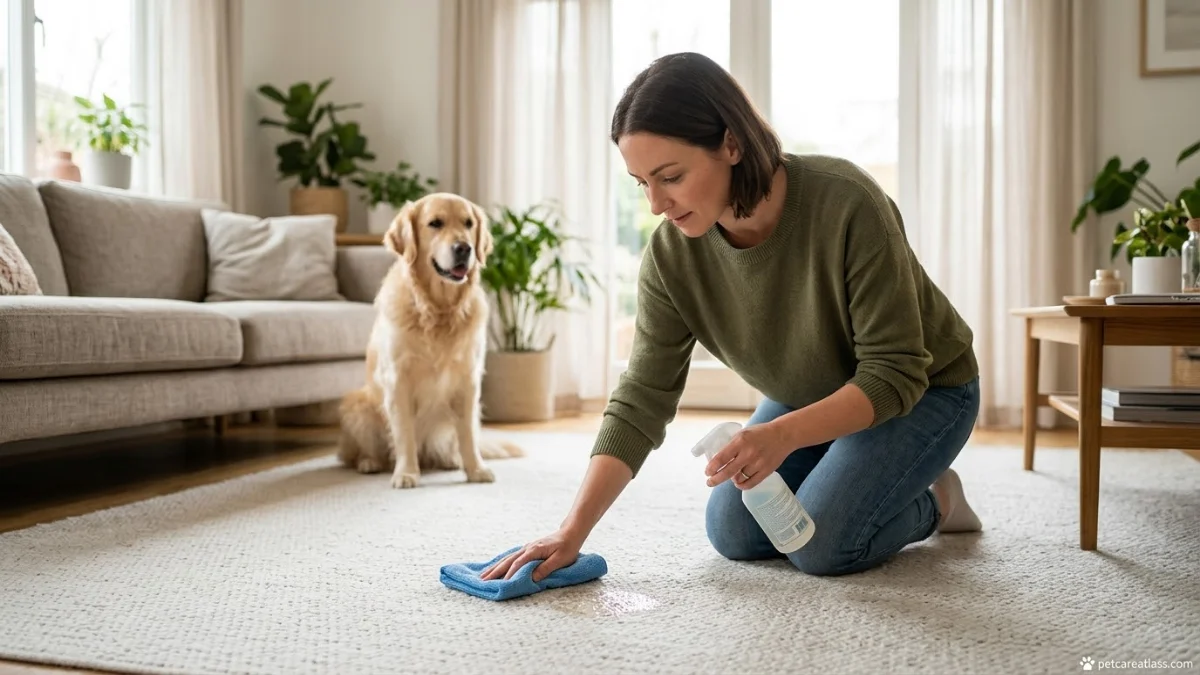
Press gently to absorb the urine. Avoid rubbing or scrubbing because this can spread the liquid and push it deeper into the carpet fibers.
Replace the towels as they become wet. Continue blotting until you have absorbed as much moisture as possible.
Apply a Suitable Pet-Odor Cleaner
Choose a carpet cleaner specifically labeled for pet urine and compatible with your carpet material.
An enzymatic cleaner is often a useful choice because it is designed to break down certain organic residues associated with pet accidents.
Before applying the product:
- Read the manufacturer’s instructions.
- Check whether it is suitable for your carpet.
- Test it on a small, hidden area.
- Check the recommended application amount.
- Never mix it with bleach, ammonia, or other cleaning products.
Step 3: Allow the Cleaner to Work
Apply the cleaner according to its label. Some products need to remain on the affected area for a specific contact time to work effectively.
Do not assume that using more product or leaving it on longer will improve the result. Follow the manufacturer’s directions.
Let the Carpet Dry Completely
Allow the carpet to dry according to the product instructions.
Keep pets away during treatment and until the area is safe for them to access. Once the carpet is dry, check whether the unpleasant smell has disappeared.
If an odor remains, repeat the treatment only if the product label allows it.
Use an Enzymatic Cleaner to Eliminate Stubborn Pet Odors
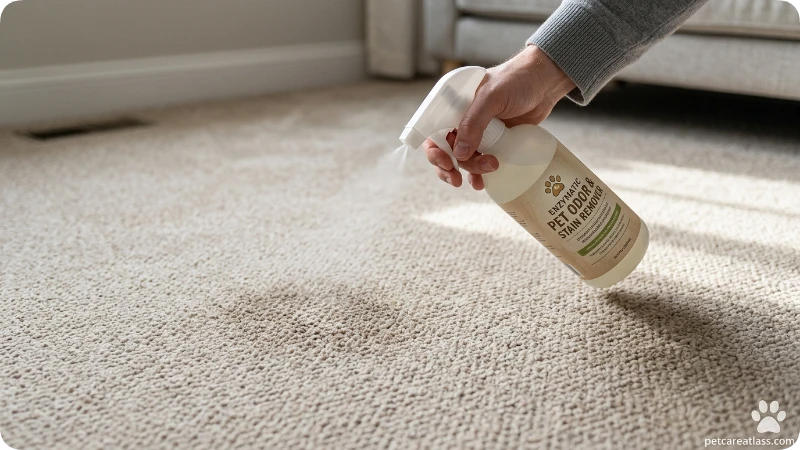
An enzymatic cleaner can be particularly helpful for certain pet urine stains and other organic messes.
Unlike ordinary fragrance sprays, which mainly mask unpleasant smells, enzymatic products are formulated to break down specific organic materials that contribute to odors.
However, not every enzymatic cleaner works equally well on every type of stain.
How Do Enzymatic Pet Cleaners Work?
Enzymes are substances that help break down particular materials into smaller components.
Depending on the formulation, an enzymatic pet cleaner may target organic residues associated with urine and other pet accidents.
For better results:
- Choose a cleaner designed for the type of mess you are treating.
- Check that it is suitable for your carpet material.
- Remove excess liquid or solid waste first.
- Apply the product according to the label.
- Allow the recommended contact time.
- Let the carpet dry completely.
- Recheck the treated area after drying.
Why Choose an Enzymatic Cleaner Instead of a Fragrance Spray?
A fragrance spray may make a room smell fresher temporarily, but it does not necessarily remove the material responsible for the odor.
An enzymatic cleaner is designed to address certain organic residues rather than simply covering their smell.
| Cleaning option | Main purpose | Best suited for | Important limitation |
| Enzymatic pet cleaner | Breaks down targeted organic residues | Suitable pet urine and organic stains | Requires correct application |
| Regular carpet shampoo | Removes dirt and general carpet buildup | Routine carpet cleaning | May not eliminate deep urine odors |
| Baking soda | Helps absorb some mild surface odors | Dry, mildly affected areas | Does not remove underlying urine contamination |
| Air freshener | Adds fragrance or masks odors | Temporary fragrance | Does not clean the carpet |
| Professional carpet cleaning | Deep cleaning and specialized treatment | Persistent or widespread contamination | May require additional padding treatment |
Important: An enzymatic cleaner is not a guaranteed solution for every carpet odor. If urine has reached the padding or subfloor, surface treatment may not be enough.
Remove Old and Dried Pet Urine Smells From Carpets
Old pet urine stains can be more difficult to remove because the liquid may have traveled beyond the visible carpet surface.
You may notice that the carpet looks clean but still smells unpleasant, especially when the room becomes warm or humid.
In these situations, cleaning only the visible stain may not solve the problem.
Locate the Affected Area
Start by identifying where the odor is strongest.
Look for:
- Discolored carpet patches.
- Areas where pets frequently rest or play.
- Corners where pets have previously urinated.
- Carpet sections that smell unpleasant despite looking clean.
A UV urine-detection light may help reveal some dried urine residues. However, other substances can also fluoresce under ultraviolet light, so use it only as a locating aid rather than proof of urine contamination.
Treat the Area With an Enzymatic Cleaner
Choose an enzymatic pet-urine cleaner that is suitable for your carpet.
Follow the manufacturer’s directions carefully. Older stains may require repeated treatment, but do not repeatedly soak the carpet without checking whether moisture is reaching the backing or padding.
Check Whether the Padding Is Contaminated
If the smell remains after appropriate cleaning, urine may have reached the carpet padding or subfloor.
Carpet padding is the cushioning layer underneath the carpet. When urine reaches this material, it can continue producing odors even after the carpet surface has been cleaned.
Depending on the extent of contamination, you may need:
- Professional carpet treatment.
- Removal of affected padding.
- Cleaning of the underlying floor.
- Replacement of damaged carpet materials.
Consider Professional Carpet Cleaning
For widespread contamination or repeated urine accidents, contact a carpet-cleaning professional who has experience treating pet odors.
Explain that the problem involves pet urine rather than ordinary dirt. This helps the professional select an appropriate cleaning approach.
Use Baking Soda to Help Reduce Mild Carpet Odors
Baking soda is a common household product that may help absorb some mild odors from dry surfaces.
It can be useful for general pet smells, especially after the carpet has already been cleaned and dried.
However, baking soda cannot reliably remove urine residue trapped deep inside carpet fibers or padding.
How to Use Baking Soda on Carpets
If your carpet manufacturer permits its use, follow these steps:
- Make sure the carpet is completely dry.
- Test a small hidden area first.
- Sprinkle a light, even layer over the affected section.
- Allow it to sit for an appropriate period.
- Vacuum it thoroughly using equipment suitable for fine powders.
Avoid applying excessive amounts, especially if your vacuum cleaner is not designed to handle fine powders.
Pet safety note: Keep animals away while applying and removing baking soda. Do not allow pets to lick or eat it. If your pet frequently chews or licks carpet fibers, choose another cleaning approach.
Baking soda can help with some mild surface odors, but it should not replace proper treatment for pet urine or deeply absorbed organic messes.
Clean Pet Vomit and Feces From Carpets
Pet urine is not the only source of unpleasant carpet odors. Vomit and feces can also leave organic residue that requires careful cleaning.
Removing these messes promptly helps reduce staining and persistent smells.
How to Remove Pet Vomit
Follow these steps:
- Put on disposable gloves.
- Carefully remove solid material with a spoon or disposable scraper.
- Avoid pressing the vomit into the carpet.
- Blot remaining moisture with paper towels.
- Apply a carpet cleaner suitable for the affected material.
- Follow the product instructions.
- Allow the area to dry completely.
If the vomit has a strong or unusual odor that remains after cleaning, check whether any residue is still present.
Repeated vomiting or vomiting accompanied by other signs of illness should be discussed with a veterinarian rather than treated only as a cleaning problem.
How to Remove Pet Feces
For solid feces:
- Wear disposable gloves.
- Carefully lift the waste without spreading it.
- Remove remaining material with disposable towels.
- Apply a suitable carpet cleaner.
- Follow the product’s instructions.
- Dispose of contaminated materials and wash your hands.
For loose feces or diarrhea, absorb as much material as possible without rubbing it into the carpet.
If your pet has an infectious illness or parasite concern, ask your veterinarian about appropriate cleaning and disinfection procedures. Ordinary carpet cleaning does not necessarily disinfect contaminated surfaces.
Choose a Pet-Safe Carpet Cleaning Product
Choosing the right cleaning product is important because pets spend considerable time walking, sitting, and sometimes sleeping directly on carpets.
A cleaner that removes odors effectively is not automatically suitable for every animal or carpet material. Dogs, cats, rabbits, birds, and other companion animals can have different sensitivities to cleaning ingredients and strong fragrances.
Before purchasing a pet-odor remover, check its ingredients, intended use, safety directions, and carpet compatibility.
What Should You Look for in a Pet-Odor Remover?
Consider these features when comparing cleaning products:
- Pet-specific formulation: Choose a product labeled for the type of pet mess you want to clean.
- Carpet compatibility: Check whether it is suitable for your carpet fibers, backing, and color.
- Clear instructions: Look for directions explaining application, contact time, drying, and precautions.
- Safety information: Check restrictions involving pets, children, ventilation, and skin contact.
- Low-fragrance formulation: Avoid unnecessarily strong fragrances, especially if your animals are sensitive to scented products.
Which Cleaning Ingredients Should Pet Owners Approach Carefully?
Some household cleaning ingredients can cause irritation or other problems if pets come into contact with concentrated products or residues.
| Product or ingredient | Potential concern | Recommended approach |
| Bleach | Can cause irritation, chemical injury, and carpet damage | Avoid using it as a general pet-odor treatment |
| Ammonia-based cleaners | Strong fumes and possible irritation | Choose a suitable pet-odor cleaner instead |
| Strong fragrance sprays | May irritate sensitive animals and mask odors | Clean the source rather than covering the smell |
| Concentrated essential oils | Some oils can be harmful to pets, particularly cats | Avoid applying concentrated oils to pet-accessible carpets |
| Enzymatic pet cleaners | Formulations and safety directions vary | Choose an appropriate product and follow its label |
| Regular carpet shampoo | May leave residue if incorrectly applied or rinsed | Follow carpet and product instructions |
Important: Never mix cleaning products. In particular, mixing bleach with ammonia or acidic cleaners can produce dangerous gases.
Keep animals away during cleaning and until the product instructions confirm that the treated carpet is safe for them to access.
Use a Carpet Cleaner or Professional Cleaning Service
Sometimes household cleaning methods are not enough, particularly when pet urine has soaked deeply into carpet fibers or padding.
A carpet-cleaning machine or professional service may help remove accumulated dirt and certain odor-causing residues. However, the cleaning method must be appropriate for your carpet and the type of contamination.
When Is a Carpet Cleaning Machine Useful?
A carpet-cleaning machine may be helpful for:
- Removing general pet-related dirt.
- Cleaning muddy paw marks.
- Treating larger surface areas.
- Removing accumulated dirt from carpet fibers.
- Performing periodic deep cleaning.
Before using a machine, check your carpet manufacturer’s recommendations and the machine’s cleaning solution requirements.
Avoid using excessive water. Overwetting can cause prolonged drying, unpleasant smells, and moisture-related problems.
Also, do not assume that an ordinary carpet shampooing machine will eliminate old pet urine odors. Deep contamination may require a specialized treatment.
When Should You Hire a Professional?
Professional carpet cleaning may be worth considering when:
- Urine smells remain after appropriate treatment.
- Multiple carpet areas are affected.
- The padding may be contaminated.
- Old stains repeatedly produce unpleasant odors.
- Your carpet requires specialized cleaning.
- You cannot identify the source of a persistent smell.
A professional can assess whether the carpet can be treated or whether the affected padding needs replacement.
| Cleaning method | Suitable situation | Main advantage | Limitation |
| Hand cleaning | Small, fresh accidents | Quick and inexpensive | May not reach deep contamination |
| Enzymatic treatment | Suitable urine and organic stains | Targets specific organic residues | Requires correct application and contact time |
| Carpet-cleaning machine | General dirt and larger areas | Cleans more carpet efficiently | May not remove deeply absorbed urine |
| Professional cleaning | Persistent or widespread odors | Specialized equipment and treatment | Can cost more |
| Padding replacement | Deeply contaminated padding | Removes a source of persistent odor | Requires additional carpet work |
Prevent Pet Odors From Returning
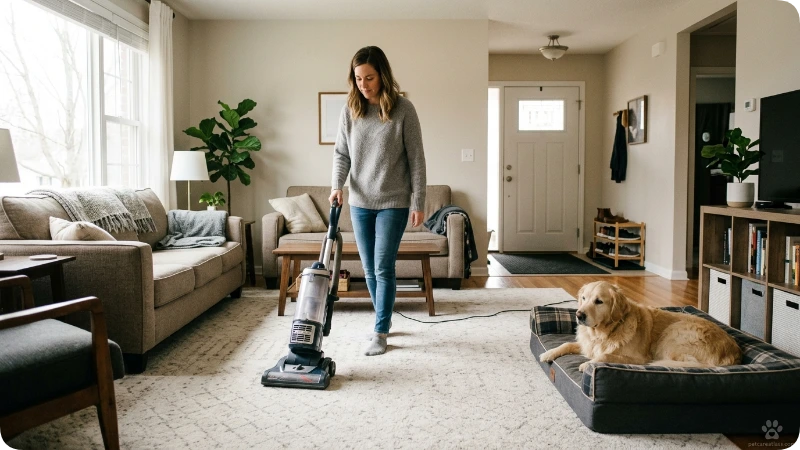
Removing an existing smell is only part of the solution. Regular maintenance can help prevent new odors from developing.
The best prevention routine depends on your pet’s habits, the number of animals in your home, and how frequently they use carpeted areas.
Vacuum Carpets Regularly
Vacuuming helps remove loose fur, dirt, and dander before they accumulate.
Pay particular attention to:
- Areas where pets sleep.
- Carpet near feeding stations.
- Favorite resting spots.
- Hallways and frequently used pathways.
- Areas where pets enter from outdoors.
Choose a vacuum suitable for your carpet and maintain its filters according to the manufacturer’s instructions.
Clean Your Pet’s Paws
If your dog comes indoors after walking outside, gently clean muddy or wet paws with a damp cloth or an appropriate pet-safe paw-cleaning product.
Dry the paws before allowing your dog to walk across carpets.
For cats and other pets, focus on appropriate grooming and maintaining clean living areas rather than unnecessary handling.
Wash Pet Bedding Regularly
Pet beds, blankets, and washable covers can collect hair, saliva, dirt, and body odors.
Wash them according to their care labels and use a detergent suitable for the material.
Make sure bedding is completely dry before returning it to your pet. Placing damp bedding on carpets can contribute to unpleasant smells.
Address Accidents Quickly
If your pet has a carpet accident, clean it promptly using an appropriate method.
For cats, keep litter boxes clean and accessible. For dogs, maintain consistent bathroom routines and provide regular opportunities to go outside.
If a previously house-trained pet suddenly starts having accidents, do not automatically assume it is bad behavior. Changes in toileting habits can sometimes indicate a medical or behavioral issue.
Use Washable Rugs in High-Traffic Areas
Consider placing washable rugs or mats near entrances, feeding areas, and other places where pets frequently walk.
Choose materials that are easy to clean and do not create slipping or chewing hazards.
This simple step can reduce the amount of dirt and moisture transferred to your main carpet.
Avoid Common Mistakes When Removing Pet Odors
Some cleaning mistakes can make odors harder to eliminate or create unnecessary risks for animals.
Understanding what not to do is just as important as choosing the right cleaning product.
Scrubbing the Stain Aggressively
Scrubbing can spread urine, vomit, or feces into surrounding carpet fibers.
Instead, remove solid material carefully and blot liquids with absorbent towels.
Using Air Fresheners Instead of Cleaning
Air fresheners may temporarily cover unpleasant smells without removing their source.
Clean the affected area first. Use fragrance products only when appropriate for the animals in your home.
Applying Too Much Water
Excessive moisture can reach carpet padding and take a long time to dry.
Follow the cleaning product instructions and avoid repeatedly soaking the same area.
Using Steam or Heat on Urine Stains Without Checking Product Guidance
High heat may make some urine stains more difficult to remove, depending on the carpet and contamination.
Avoid steam treatment as a default solution for urine odors. Check the carpet manufacturer’s instructions and the cleaning product’s recommendations first.
Mixing Different Cleaning Products
Combining cleaning chemicals can create dangerous reactions.
Never mix bleach, ammonia, vinegar, or commercial cleaning products together. Use one appropriate product at a time and follow its instructions.
Allowing Pets to Walk on Wet Carpets
Wet carpet may contain cleaning-product residue. Pets can walk through the treated area and later lick their paws.
Keep animals away until the carpet is completely dry and the product instructions confirm that it is safe for them to return.
Know When Persistent Pet Odors May Indicate a Bigger Problem
Sometimes persistent carpet odors are connected to an issue beyond cleaning.
For example, repeated urine accidents may occur because a pet is experiencing a medical problem, stress, or difficulty accessing its usual toilet area.
Pay attention if your pet suddenly starts urinating or defecating indoors despite previously consistent habits.
Possible reasons include:
- Changes in routine or household environment.
- Stress or anxiety.
- Incomplete house training.
- Difficulty accessing a litter box or outdoor bathroom area.
- Urinary or digestive health problems.
- Age-related mobility or toileting difficulties.
For cats, repeated attempts to urinate, straining, crying in the litter box, or producing little or no urine can indicate a urinary emergency, particularly in male cats. Seek immediate veterinary care if these signs occur.
For dogs, frequent urination, discomfort, blood in the urine, or sudden changes in bathroom habits should also be discussed with a veterinarian.
Cleaning the carpet can remove the smell, but it will not address an underlying health or behavioral problem.
Frequently Asked Questions
What is the fastest way to remove pet odors from carpets?
The fastest approach is to blot fresh accidents immediately and apply a suitable pet-odor cleaner according to its instructions. Enzymatic cleaners can help break down certain organic residues that cause persistent smells. Allow the carpet to dry completely before letting your pet return.
Does baking soda remove pet urine smells from carpets?
Baking soda may help reduce some mild surface odors, but it does not reliably remove urine residues trapped in carpet fibers or padding. For pet urine, an appropriate enzymatic cleaner is generally a better option.
How do you remove old dog urine smells from carpet?
Start by locating the affected area and treating it with a carpet-compatible enzymatic urine cleaner. Follow the product’s application and drying instructions. If the smell remains, urine may have reached the carpet padding or subfloor, requiring professional treatment or padding replacement.
Can vinegar remove pet odors from carpets?
Diluted white vinegar is sometimes used as a household cleaning option for certain odors, but it is not a reliable solution for deeply absorbed pet urine. It may also affect some carpet materials. Check your carpet manufacturer’s recommendations before using it, and never mix vinegar with bleach or other cleaning products.
Are enzymatic carpet cleaners safe for dogs and cats?
Some enzymatic cleaners are formulated for use in homes with pets, but safety depends on the specific ingredients and product instructions. Keep animals away during application and until the treated area is dry and the manufacturer confirms that it is safe for pets.
Why does my carpet still smell like pet urine after cleaning?
The urine may have soaked through the carpet fibers and into the backing, padding, or subfloor. Surface cleaning might remove the visible stain without eliminating all odor-causing residue. A deeper enzymatic treatment or professional carpet cleaning may be necessary.
How often should you clean carpets if you have pets?
Vacuuming should be part of your regular cleaning routine, with frequency depending on shedding, foot traffic, and the number of pets. Clean accidents immediately and arrange deeper carpet cleaning when dirt and odors begin accumulating. There is no single cleaning schedule that works for every household.
Conclusion
Learning how to remove pet odors from carpets starts with identifying the source of the smell and choosing the right cleaning method. Fresh urine, old stains, vomit, muddy paws, and general pet odors each require an appropriate approach.
Blot fresh accidents instead of scrubbing them, use carpet-compatible enzymatic cleaners for suitable organic stains, and consider professional treatment when odors have reached the carpet padding.
Baking soda may help with mild surface odors, but it cannot replace proper cleaning when deeper contamination is present.
Most importantly, choose cleaning products carefully, follow their safety instructions, and keep pets away from treated areas until they are safe to access.
With prompt accident cleanup and regular carpet maintenance, you can maintain a fresher home while keeping your pets comfortable.

Daniel Brooks is a pet care and animal behavior writer at petcareatlass.com focused on helping owners better understand their pets’ behavior and everyday needs. He creates practical, easy-to-follow content on pet communication, training, welfare, and responsible care.