Quick Answer:
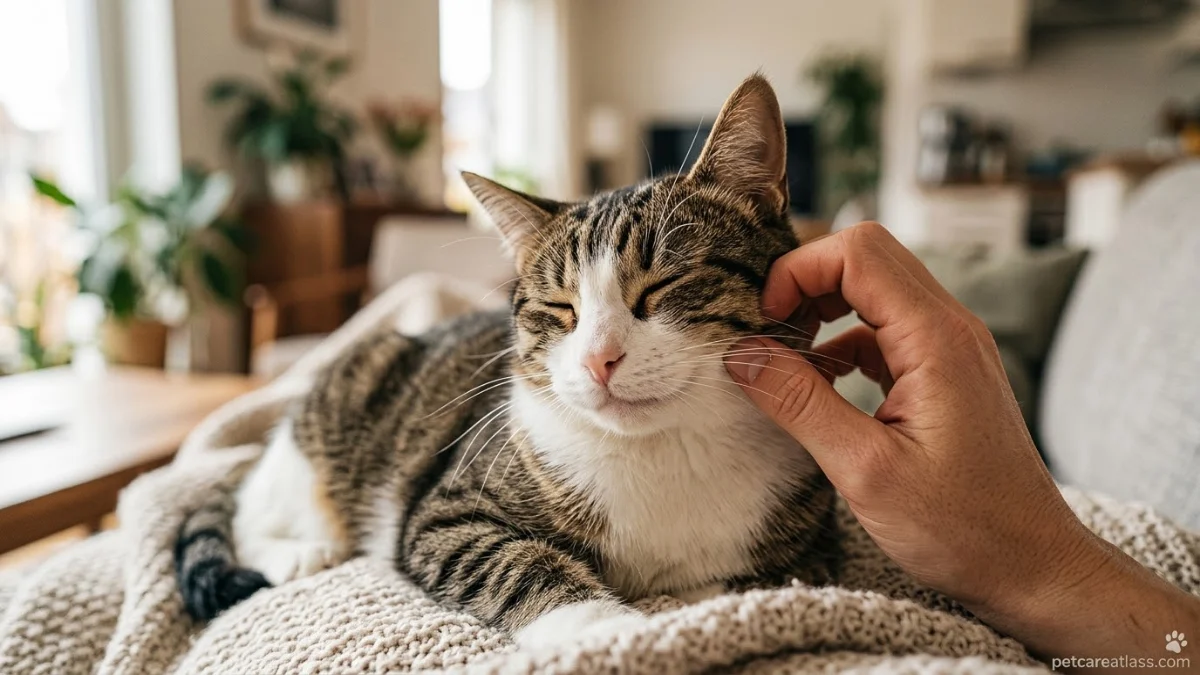
Cats generally enjoy being petted, but their preferences depend on their personality, comfort level, and past experiences. Many cats like gentle strokes around the cheeks, chin, and head, while others prefer less physical contact. Watch your cat’s body language to understand whether it enjoys the attention or needs a break.
Cats can enjoy being petted, but that does not mean every cat likes the same kind of touch. Some happily approach their owners for affection, while others prefer occasional attention or only enjoy being touched in certain areas.
Understanding these differences can help you build trust and make interactions more comfortable for your cat.Many cats enjoy gentle petting around the cheeks, chin, forehead, and behind the ears.
However, touching sensitive areas or continuing when a cat feels uncomfortable can cause stress or irritation.
Paying attention to your cat’s body language, including its tail movements, ears, posture, and facial expressions, helps you recognize when petting is welcome and when it is time to stop.
Why Do Cats Like Being Petted?
Cats may enjoy petting because it provides pleasant physical contact and resembles some of the friendly interactions they experience with other cats.
When cats groom one another, a behavior called allogrooming, they often focus on the head and neck. Friendly cats may also rub their cheeks and bodies against familiar companions. Gentle petting in preferred areas can resemble parts of these familiar social interactions.
There are several reasons a cat might enjoy being touched.
1. It Strengthens Social Bonds
Cats can form strong social relationships with people. Gentle petting may become part of their everyday bonding routine, particularly when it happens on their terms.
For example, a cat that approaches you while you are sitting on the sofa, lifts its head, and presses its cheek against your hand may be inviting friendly contact.
Over time, predictable, comfortable interactions can help your cat associate your presence and touch with positive experiences.
2. It Feels Pleasant and Relaxing
Some cats find gentle strokes soothing, especially around the cheeks, forehead, and chin.
A relaxed cat may close its eyes, lean into your hand, stretch comfortably, or remain beside you while you pet it.
However, purring does not always mean a cat is happy. Cats can also purr when frightened, stressed, uncomfortable, or in pain. Consider the entire body rather than relying on one signal.
3. It Provides Familiar Social Contact
Cats communicate through scent, body posture, grooming, and physical contact.
They have scent glands around their cheeks, chin, forehead, and other parts of their bodies. When a cat rubs its face against your hand, it may be depositing familiar scent signals.
This behavior, sometimes called bunting, is commonly associated with friendly interaction and scent communication.
4. It Gives Them Attention Without Too Much Activity
Some cats enjoy being close to their owners but do not necessarily want to play or move around.
A few gentle strokes may provide the attention they want without requiring much physical activity.
This is particularly noticeable when a cat approaches during a quiet moment, settles beside its owner, and invites a little attention before returning to sleep.
Where Do Cats Like Being Petted Most?
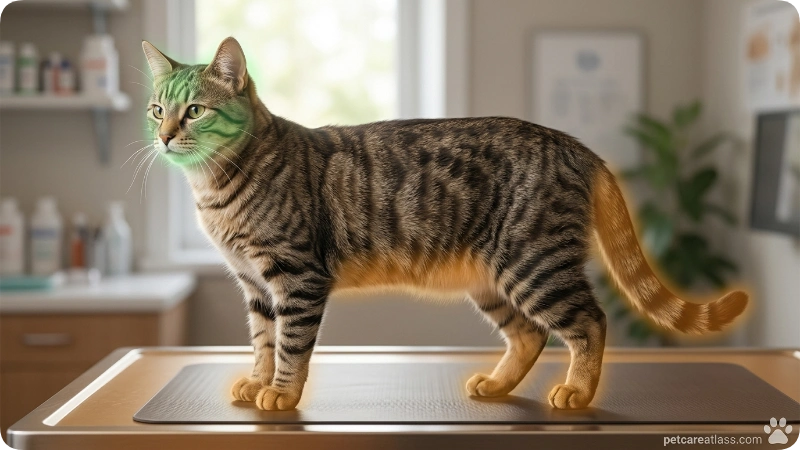
Most cats have preferred petting areas, although there is no universal rule. Many are more comfortable with gentle contact around the head and face than with touching along their belly, paws, or tail.
If you are introducing petting to a cat, begin with the cheeks or forehead rather than reaching immediately for sensitive areas. Here are some commonly preferred petting areas:
| Body Area | Cats’ Preference | How to Pet |
|---|---|---|
| Cheeks | Often enjoyed | Rub gently with fingertips |
| Chin | Often enjoyed | Scratch softly underneath |
| Forehead | Usually preferred | Stroke between the ears |
| Base of Ears | Often preferred | Use gentle fingertip strokes |
| Neck | Varies by cat | Try a few soft strokes |
| Back | Often enjoyed | Stroke in the direction of fur |
1. Cheeks
The cheeks are one of the most commonly enjoyed petting areas.
Many cats naturally rub their cheeks against familiar people, furniture, and other objects. This behavior helps distribute facial scent and can be part of friendly communication.
Try gently rubbing your cat’s cheek with one or two fingers. If it leans into your hand or moves its face to encourage more contact, it may be enjoying the interaction.
2. Chin
Some cats particularly enjoy gentle scratches underneath their chin.
Start with light contact and observe how your cat responds. If it raises its head or gently pushes its chin toward your fingers, that may indicate enjoyment.
Avoid pressing firmly or continuing if your cat turns away.
3. Forehead and Between the Ears
Gentle strokes across the forehead and between the ears are often well received.
Use your fingertips rather than your entire hand, especially if your cat is unfamiliar with you. Slow, predictable movements are usually less intimidating than sudden reaching or rubbing.
4. Base of the Ears
The area around the base of the ears is another commonly preferred location.
Some cats lean into gentle scratches here or lower their heads to make contact easier.
However, avoid scratching inside the ears or applying pressure. If your cat repeatedly shakes its head, scratches its ears, or seems sensitive to touch, it may need a veterinary examination rather than more petting.
5. Back
Many cats enjoy gentle strokes along their backs, particularly when they are already comfortable with the person petting them.
Move your hand slowly in the direction of the fur, starting near the shoulders.
Some cats enjoy a few strokes along their backs but become uncomfortable when petting continues toward the tail. Pay attention to tail movements and changes in posture.
Where Do Cats Usually Dislike Being Petted?
Not every body area feels comfortable to a cat. Some locations are more sensitive, and even friendly cats may dislike being touched there.
Where Cats May Dislike Being Petted
| Body Area | Why Cats Dislike It | What to Do |
|---|---|---|
| Belly | Vulnerable and sensitive | Avoid touching |
| Paws | Highly sensitive | Don’t grab or squeeze |
| Tail | Sensitive to handling | Never pull or hold |
| Legs | Handling may feel uncomfortable | Touch only if welcomed |
| Lower Back | May trigger sensitivity | Stop if discomfort appears |
| Whiskers | Sensitive sensory structures | Never pull or bend |
Why Do Cats Dislike Belly Rubs?
A cat lying on its back and exposing its belly does not automatically mean it wants a belly rub.
This position may indicate relaxation, trust, comfort, or a willingness to play. However, the belly is a vulnerable area, and many cats instinctively protect it.
If you touch the belly and your cat grabs your hand, kicks, bites, or twists away, stop immediately.
It is better to respect the invitation your cat is actually giving rather than assuming every exposed body part is available for petting.
Why Are Paws and Tails Sensitive?
Cats rely heavily on their paws for balance, movement, climbing, and exploring their surroundings. Their paws also contain sensitive structures that help them gather information about surfaces.
The tail plays an important role in balance and communication. Some cats tolerate gentle contact, but many dislike having their tails held, squeezed, or pulled.
Avoid forcing contact with these areas, particularly when your cat is unfamiliar with handling.
How to Tell If Your Cat Enjoys Being Petted
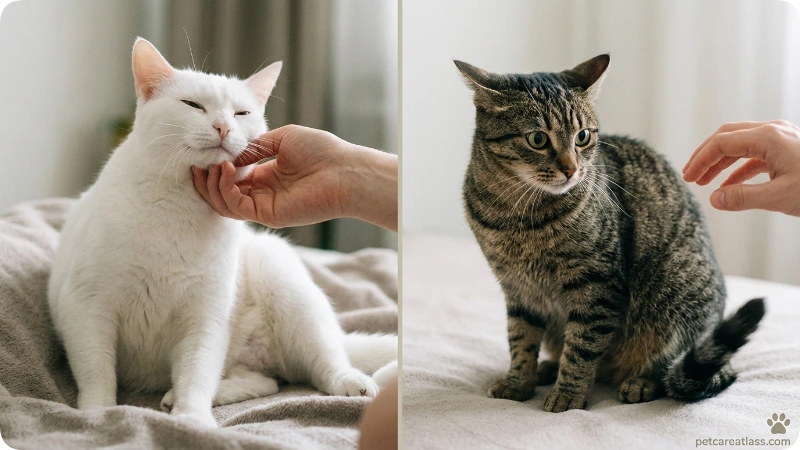
Cats communicate their feelings through body language. They may not be able to tell you directly that they want more attention, but their posture, facial expressions, tail movements, and behavior can provide useful clues.
The most important thing is to look at several signals together rather than interpreting one movement on its own.
Signs Your Cat Likes Being Petted
Your cat may be enjoying petting if it:
- Leans its head or cheeks into your hand.
- Gently rubs its face against your fingers.
- Keeps its body loose and relaxed.
- Holds its ears in a natural, forward-facing position.
- Closes its eyes or gives slow blinks.
- Purrs while displaying relaxed body language.
- Raises its head to encourage chin scratches.
- Returns to your hand when you pause.
For example, if your cat is sitting beside you and repeatedly pushes its forehead against your fingers, it may be asking you to continue.
Signs Your Cat Wants You to Stop
Some cats show discomfort gradually before they hiss, scratch, or bite. Learning to recognize these early signals can prevent unpleasant interactions.
Watch for:
- Tail flicking, twitching, or forceful swishing.
- Ears rotating sideways or flattening backward.
- Skin rippling or twitching along the back.
- Sudden body stiffness.
- Turning the head sharply toward your hand.
- Moving away or attempting to escape.
- Repeatedly licking its nose.
- Growling, hissing, swatting, or biting.
If you notice these signals, stop petting and give your cat space.
Cat Body Language: Enjoyment vs. Discomfort
| Body Language | Possible Meaning | Your Response |
|---|---|---|
| Leaning into hand | Enjoying touch | Continue gently |
| Cheek rubbing | Friendly contact or scent marking | Allow interaction |
| Relaxed posture | Feeling comfortable | Pet if invited |
| Slow blinking | Possible relaxation | Continue if invited |
| Tail-tip twitching | Irritation or excitement | Pause and observe |
| Flattened ears | Fear or discomfort | Stop petting |
| Skin rippling | Overstimulation or sensitivity | Stop touching |
| Sudden stiffness | Tension or discomfort | Give space |
| Hissing or growling | Warning or distress | Stop and move away |
Remember that a single behavior does not always reveal exactly what your cat feels. For example, a twitching tail can occur in different emotional situations. Consider the whole body and the circumstances.
How to Pet a Cat Correctly Without Making It Uncomfortable
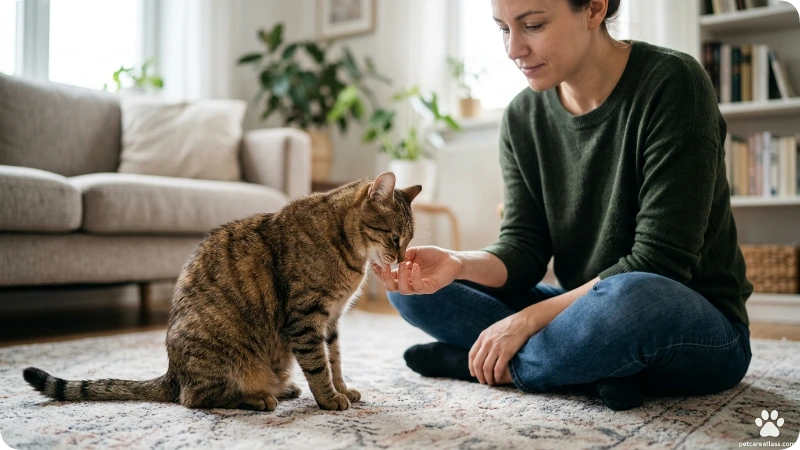
Even cats that enjoy affection may dislike sudden movements, rough handling, or prolonged petting.
A gentle approach gives your cat more control over the interaction and helps you understand its preferences.
Step 1: Let Your Cat Approach You
Avoid chasing a cat or reaching toward it immediately.
Instead, sit down, remain relaxed, and allow the cat to decide whether it wants to interact.
A cat that approaches voluntarily, rubs against your legs, or investigates your hand may be interested in attention.
If it walks away, respect that choice.
Step 2: Offer Your Hand
Hold your hand loosely near the cat without pushing it toward its face.
Give the cat an opportunity to sniff your fingers or rub against them.
If it turns away, withdraws, or appears uncomfortable, do not force contact.
Step 3: Start With the Head or Cheeks
If your cat welcomes contact, begin with a few gentle strokes around its cheeks, forehead, or the base of its ears.
Use light pressure and move in the direction of the fur.
Avoid sudden movements, firm pats, or repeatedly rubbing the same small area.
Step 4: Pause and Check Its Response
One of the simplest ways to understand your cat’s preferences is to stop petting briefly.
If your cat leans forward, nudges your hand, or rubs against your fingers, it may be asking for more.
If it remains still, looks away, or moves elsewhere, allow the interaction to end.
Step 5: Keep Petting Sessions Short
Do not assume that a cat wants continuous attention just because it enjoyed the first few strokes.
Some cats prefer a few seconds of affection, while others enjoy longer interactions.
Start with short sessions and gradually learn what your cat comfortably accepts.
Step 6: Never Force Affection
Avoid holding your cat in place, pulling it out of hiding, or continuing to pet it after it tries to leave.
Allowing your cat to move away freely helps build trust and reduces the likelihood of defensive reactions.
Why Does My Cat Suddenly Bite Me When I Pet It?
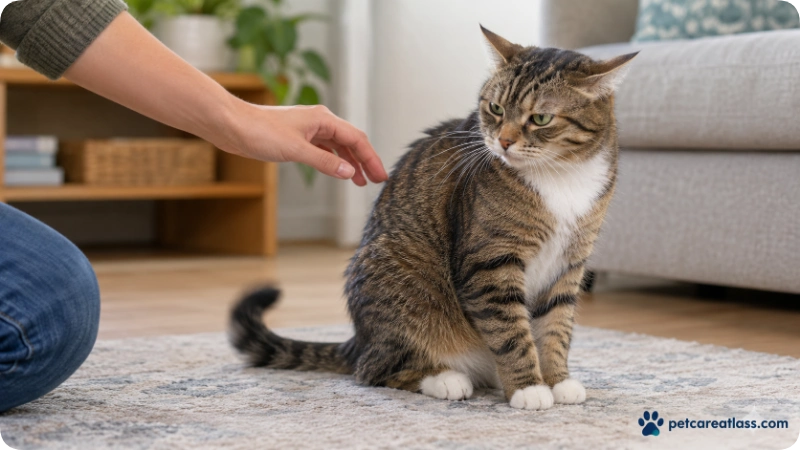
If your cat enjoys being petted and suddenly bites your hand, you may wonder what changed.
This behavior is sometimes called petting-induced aggression. It occurs when physical contact becomes unpleasant, overwhelming, or irritating for the cat.
A cat may initially enjoy gentle strokes but eventually reach its tolerance limit. Instead of simply walking away, it may turn around, nip, or bite to communicate that it wants the interaction to stop.
Common Reasons Cats Bite During Petting
1. Overstimulation
Repeated strokes can become irritating after a certain point. A cat that initially enjoys petting may become uncomfortable when the same movement continues for too long.
2. Sensitive Body Areas
Some cats dislike being touched around the lower back, belly, legs, or tail. Contact in these areas may trigger a defensive reaction.
3. Fear or Uncertainty
An unfamiliar person, sudden movement, or unexpected touch may make a cat feel threatened.
4. Previous Negative Experiences
Cats that have experienced rough handling or frightening interactions may be more cautious about physical contact.
5. Pain or Medical Problems
A cat that suddenly becomes sensitive to touch may have an underlying problem, such as joint discomfort, an injury, skin irritation, or another medical condition.
What Should You Do If Your Cat Bites You?
If your cat bites during petting:
- Stop touching it immediately.
- Avoid shouting, hitting, or physically punishing it.
- Calmly withdraw your hand when you can do so safely.
- Give your cat time and space to settle.
- Identify which movements, locations, or situations triggered the reaction.
- Keep future interactions shorter and stop before warning signs appear.
If biting is new, frequent, severe, or associated with sensitivity in a particular body area, arrange a veterinary examination.
Cat bites can cause serious infections. Wash a broken-skin wound promptly with soap and running water and seek medical advice, particularly for puncture wounds or bites to the hand.
Why Does My Cat Want Attention but Not Want to Be Petted?
This is a common source of confusion for cat owners.
Your cat may follow you around, sit beside you, sleep near your feet, or rub against your legs but still move away when you try to pet it.
This does not necessarily mean your cat dislikes you.
Cats can enjoy companionship without wanting physical contact. Some prefer sharing the same room, sitting nearby, watching their owners, or playing together.
Other cats may enjoy brief contact but dislike being picked up, hugged, or held.
Try offering different ways to interact:
- Sit quietly near your cat.
- Talk in a calm, gentle voice.
- Offer an interactive toy.
- Allow your cat to rest beside you.
- Provide treats as positive reinforcement when appropriate.
- Let your cat initiate physical contact.
The goal is not to make every cat physically affectionate. It is to develop a relationship that respects its individual personality and comfort.
Do All Cats Like Being Petted?
No. Cats have individual personalities, experiences, and handling preferences.
Some cats actively seek affection, while others prefer limited contact. A few may tolerate petting only from familiar people, and some may dislike it altogether.
Several factors can influence how comfortable a cat feels with human touch.
Personality
Some cats are naturally more socially confident and affectionate than others.
A friendly cat may frequently approach people for attention, while a more independent cat may prefer occasional interaction.
Neither personality is automatically better.
Early Socialization
A kitten’s early experiences with people can influence how comfortable it becomes with human interaction.
Gentle, positive, age-appropriate handling during early development can help kittens become more familiar with people. However, early socialization does not guarantee that every adult cat will enjoy being petted.
Previous Experiences
A cat that has experienced rough handling, frightening situations, or repeated unwanted contact may become cautious around human hands.
Patience, predictable interactions, and allowing the cat to choose when to approach can help improve comfort over time.
Age and Health
A cat’s preferences may change as it gets older.
For example, an older cat with joint discomfort may dislike being touched or repositioned. A cat with skin irritation may also react negatively when someone strokes a sensitive area.
Do not automatically assume that a sudden change in affection is simply a personality issue.
Breed and Individual Differences
Some breeds are commonly described as sociable or people-oriented, but breed descriptions cannot predict whether an individual cat enjoys petting.
Personality, socialization, previous experiences, and health are more useful considerations when understanding a particular cat.
How to Help a Cat That Does Not Like Being Petted
If your cat avoids physical contact, forcing affection is unlikely to help. A better approach is to make interactions predictable and allow the cat to develop confidence gradually.
Try these practical methods:
Give your cat personal space. Avoid approaching it repeatedly when it hides, sleeps, eats, or moves away.
Build positive associations. Offer treats, play opportunities, or calm companionship without immediately reaching for the cat.
Let the cat control contact. Allow it to approach your hand instead of trying to pick it up.
Start with brief interactions. If your cat begins accepting touch, try one or two gentle strokes around a preferred area.
Watch for progress and setbacks. Some cats become more comfortable over time, while others continue to prefer limited physical contact.
Avoid punishment. Hissing, scratching, and biting are communication signals. Punishment can increase fear and make handling more difficult.
If your cat has recently stopped enjoying petting or reacts painfully to normal contact, consult a veterinarian to rule out health problems.
How Much Petting Do Cats Need?
There is no fixed amount of petting that every cat needs each day.
Unlike feeding or providing fresh water, petting does not have a universal daily requirement. The amount of physical affection a cat enjoys depends on its personality, preferences, health, and circumstances.
Some cats request attention several times throughout the day. Others are happy with occasional head scratches or simply spending time near their owners.
| Cat’s Behavior | What You Should Do |
|---|---|
| Approaches and rubs against you | Pet gently when invited |
| Enjoys a few strokes | Keep petting brief |
| Sits beside you | Offer quiet companionship |
| Moves away when touched | Respect its space |
| Becomes tense during petting | Shorten sessions |
| Suddenly avoids touch | Consider a vet check |
Remember that companionship, play, enrichment, comfortable resting spaces, and predictable care are also important parts of a cat’s daily well-being.
Common Cat-Petting Mistakes Owners Should Avoid
Even well-meaning owners can accidentally make petting uncomfortable.
Here are some mistakes to watch out for:
| Common Mistake | Why It’s a Problem | Better Approach |
|---|---|---|
| Petting without invitation | May cause fear | Let the cat approach |
| Touching an exposed belly | May trigger defense | Avoid belly contact |
| Ignoring tail flicking | Can increase irritation | Pause and observe |
| Holding too tightly | Restricts movement | Let the cat move freely |
| Repeatedly touching paws or tail | May cause discomfort | Respect sensitive areas |
| Petting too long | May cause overstimulation | Take short breaks |
| Punishing bites or scratches | Can increase fear | Stop and identify the trigger |
The most important principle is simple: a cat should be able to choose when an interaction begins and ends.
Frequently Asked Questions About Petting Cats
1. Do cats like being petted by their owners?
Yes, many cats enjoy gentle petting from familiar people. They may prefer their cheeks, chin, forehead, and the base of their ears. However, some cats prefer companionship without physical contact.
2. Why does my cat close its eyes when I pet it?
Closing the eyes or slow blinking can indicate that your cat feels relaxed and comfortable. However, consider its overall posture and behavior before assuming it wants more petting.
3. Do cats like being hugged?
Some cats tolerate gentle hugs from familiar people, but many dislike being restrained. Avoid tightly squeezing or holding your cat against its will. Let it choose how close it wants to be.
4. Why does my cat purr when I pet it?
Purring can occur during comfortable social interactions, relaxation, and positive experiences. However, cats also purr when stressed, frightened, or uncomfortable, so look for other body language signals.
5. Do cats prefer being petted by men or women?
There is no reliable rule that cats universally prefer men or women. Their comfort with someone is more likely to depend on familiarity, behavior, voice, movement, and previous experiences.
6. Why does my cat walk away after I pet it?
Your cat may have received enough attention, become overstimulated, or simply want to do something else. Allow it to leave without following or trying to continue petting.
7. Can I pet a stray or unfamiliar cat?
Approach unfamiliar cats cautiously. Let the cat approach you rather than reaching toward it immediately. Watch for relaxed body language, avoid sudden movements, and do not attempt to touch a frightened, injured, or defensive cat. Even friendly-looking stray cats may scratch or bite if they feel threatened.
Conclusion:
So, do cats like being pet? Many certainly do, but enjoying physical affection is an individual preference rather than a universal feline behavior.
Most cats that enjoy petting are more comfortable with gentle contact around the cheeks, chin, forehead, and ears. However, their preferences can change depending on their mood, environment, experiences, and health.
The best way to build a positive relationship is to let your cat approach, pay attention to its body language, keep interactions comfortable, and stop when it wants space.
Remember, a cat does not have to enjoy being held or constantly petted to have a strong bond with you. Respecting its boundaries is one of the simplest ways to help it feel comfortable, secure, and loved.

Daniel Brooks is a pet care and animal behavior writer at petcareatlass.com focused on helping owners better understand their pets’ behavior and everyday needs. He creates practical, easy-to-follow content on pet communication, training, welfare, and responsible care.