Quick Answer:
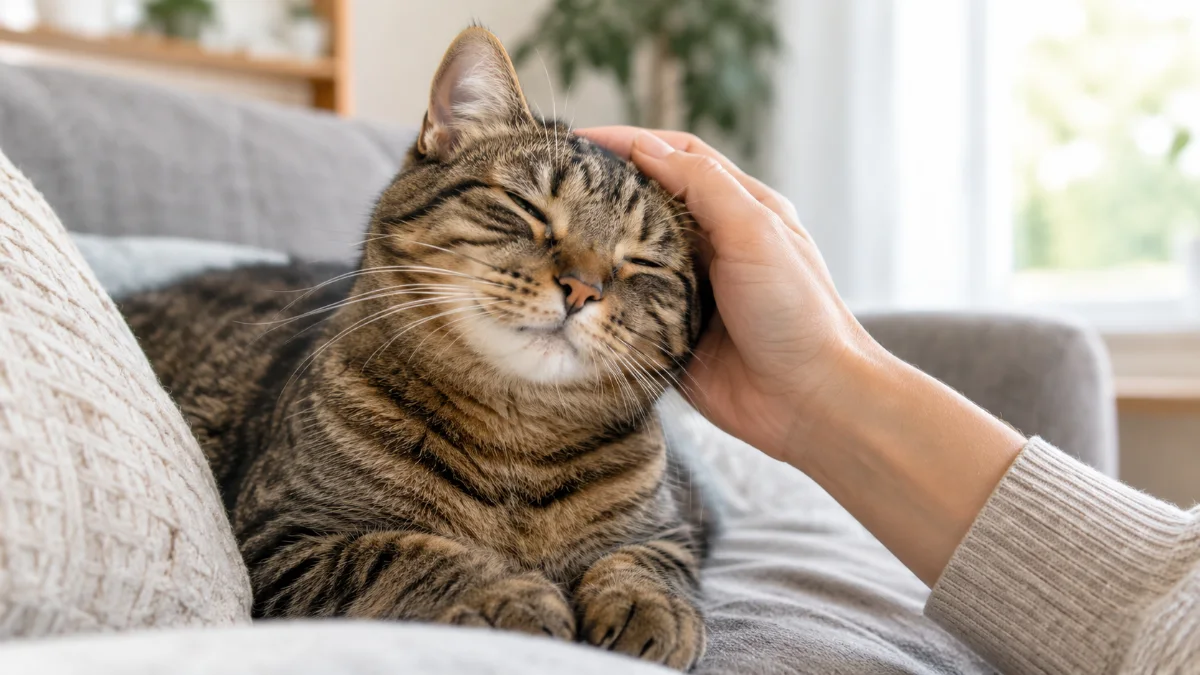
Cats often purr when you pet them because they feel comfortable, relaxed, or socially connected with you. Gentle petting can encourage this behavior, especially when a cat enjoys being touched. However, purring does not always mean happiness. Cats may also purr when they feel anxious, uncomfortable, or unwell, so their body language and surroundings matter.
Introduction
Have you ever started stroking your cat’s head or gently scratching behind her ears, only to hear a soft, steady rumble? That familiar sound can make a simple moment of affection feel special. But why do cats purr when you pet them, and what are they communicating?
For many cats, purring accompanies comfortable social interaction and gentle physical contact. It can also occur for reasons unrelated to pleasure, including stress or pain.
Understanding the difference helps you recognize when your cat welcomes your attention, when she needs a break, and when an unusual change in her behavior deserves attention.
Key Takeaways
- Cats commonly purr during petting because they feel relaxed, comfortable, or socially connected.
- Purring can accompany bonding, attention-seeking, and positive interactions.
- Some cats also purr when frightened, stressed, or experiencing pain.
- Relaxed body language provides important clues about what a purr means.
- Sudden changes in purring or other unusual symptoms may warrant veterinary attention.
Why Do Cats Purr When You Pet Them? 6 Common Reasons
A cat’s purr is a form of communication, but it does not have one universal meaning. The circumstances surrounding the sound, including your cat’s posture, facial expression, and response to touch, help explain what may be happening.
Here are six possible reasons your cat purrs during petting.
1. Your Cat Feels Relaxed and Comfortable
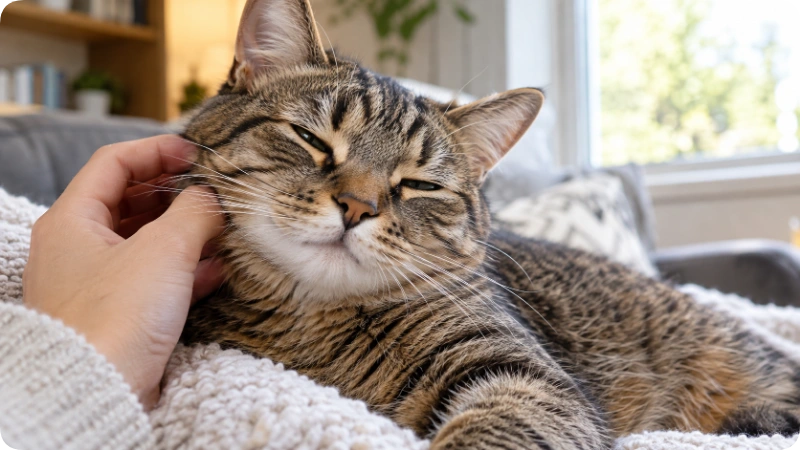
One of the most common reasons cats purr when you pet them is that they feel comfortable and relaxed.
Gentle strokes, particularly around areas your cat enjoys being touched, may create a pleasant interaction. Your cat might settle beside you, close her eyes, stretch her paws, or lean into your hand while producing a steady purring sound.
These behaviors, combined with relaxed muscles and a natural resting position, suggest that your cat is comfortable with the interaction.
Signs your cat may be enjoying the attention:
- She leans her head or cheeks into your hand.
- Her ears remain upright or naturally relaxed.
- Her eyes appear soft or partially closed.
- Her body looks loose rather than tense.
- She stays near you or moves closer when you stop petting her.
However, no single sign proves that a cat is happy. Look at her overall behavior rather than relying on purring alone.
2. Your Cat Is Strengthening Her Bond With You
Purring can also accompany positive social interactions between cats and familiar people.
When your cat approaches you, rubs her face against your hand, or settles beside you while purring, she may be participating in a familiar social routine.
Cats develop relationships through repeated interactions, including gentle physical contact, scent exchange, grooming, and resting near one another.
Petting can become part of that relationship when your cat voluntarily seeks it and responds comfortably.
For example, your cat might jump onto the couch, push her forehead against your hand, and begin purring when you scratch her cheeks. This combination suggests that she welcomes the interaction.
What you should do: Allow your cat to initiate contact whenever possible. Respond with gentle strokes and give her opportunities to walk away whenever she wants.
3. Your Cat Enjoys the Physical Sensation of Being Petted
Some cats purr because they respond positively to the physical sensation of gentle touch.
Cats have sensitive skin and specialized sensory structures that help them detect physical contact. Gentle stroking can provide enjoyable stimulation when it happens in areas they comfortably tolerate.
Many cats prefer being touched around their cheeks, chin, forehead, and the base of their ears. However, preferences vary between individuals.
You might notice your cat:
- Raising her head when you scratch beneath her chin.
- Turning her cheek toward your fingers.
- Pushing her forehead gently against your palm.
- Moving her body to position herself under your hand.
These responses can indicate that she wants you to continue.
Practical tip: Try a few gentle strokes, then pause. If your cat leans toward your hand or invites more contact, you can continue. If she turns away, respect her decision.
4. Your Cat Wants Your Attention
Not every purr during petting is simply a response to physical pleasure. Sometimes, cats purr as part of an interaction that helps them obtain something they want.
Your cat may learn that approaching you, rubbing against your legs, or purring encourages you to respond with attention.
For example, she might:
- Walk toward you while purring.
- Rub her face against your fingers.
- Jump onto your lap and settle beside you.
- Start purring when you begin talking to her.
- Approach you when you are sitting quietly.
Over time, familiar routines can strengthen these interactions.
Purring may also accompany requests for food, companionship, or other forms of attention. The sound alone cannot tell you exactly what your cat wants.
What you should do: Pay attention to the situation. If your cat approaches you around mealtime, she may be anticipating food. If she settles beside you and nudges your hand, she may be inviting interaction.
5. Your Cat May Be Using Purring to Comfort Herself
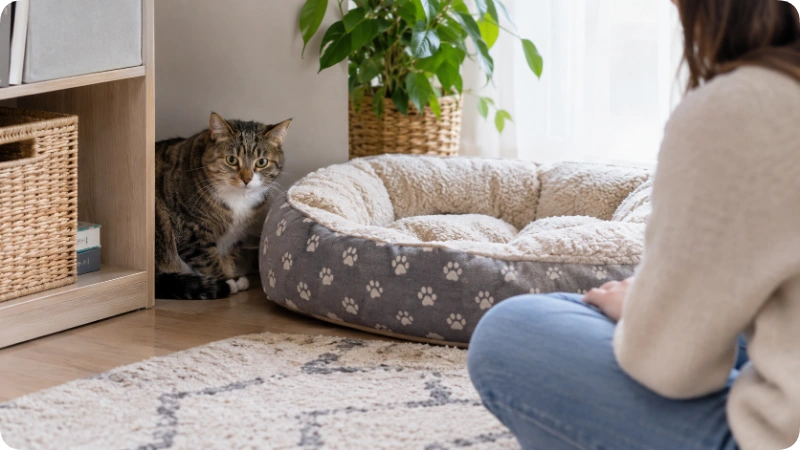
Interestingly, cats do not purr exclusively when they are happy. They may also purr during unfamiliar, stressful, or uncomfortable situations.
Purring in these circumstances is sometimes interpreted as a self-soothing behavior. However, the exact reasons cats purr in different emotional states are not completely understood.
A cat might purr when being handled by someone unfamiliar, visiting a veterinary clinic, or experiencing a stressful change in her environment.
If your cat purrs while you pet her but appears tense, the sound should not automatically be interpreted as enjoyment.
Possible signs of stress include:
- Ears turned sideways or flattened backward.
- A tightly tucked or stiff body position.
- Wide eyes or noticeably enlarged pupils.
- Repeated attempts to move away.
- Tail flicking or twitching.
- Sudden resistance to being touched.
If you notice these signs, stop petting and give your cat some space.
6. Your Cat May Be Experiencing Pain or Discomfort
A less obvious reason for purring is physical discomfort.
Cats sometimes purr when they are injured, unwell, or experiencing pain. This can make the behavior confusing for owners because the same sound may accompany both comfortable and uncomfortable situations.
For instance, a cat with an injury or painful joint might purr while resting beside her owner. She may even continue purring when someone gently touches her, despite not feeling well.
Watch for additional warning signs:
- Hiding more frequently than usual.
- Reduced appetite or changes in drinking.
- Unusual tiredness or reduced activity.
- Reluctance to jump, climb, or walk.
- Avoiding touch or reacting painfully when handled.
- Changes in grooming or litter box habits.
- Unusual vocalizations or changes in normal behavior.
If your cat develops new symptoms or suddenly starts purring more than usual, arrange a veterinary examination. If she has difficulty breathing, collapses, or appears severely distressed, seek emergency veterinary care.
Remember that purring is not a reliable way to determine whether your cat is healthy or pain-free.
How to Tell Whether Your Cat’s Purring Means Happiness
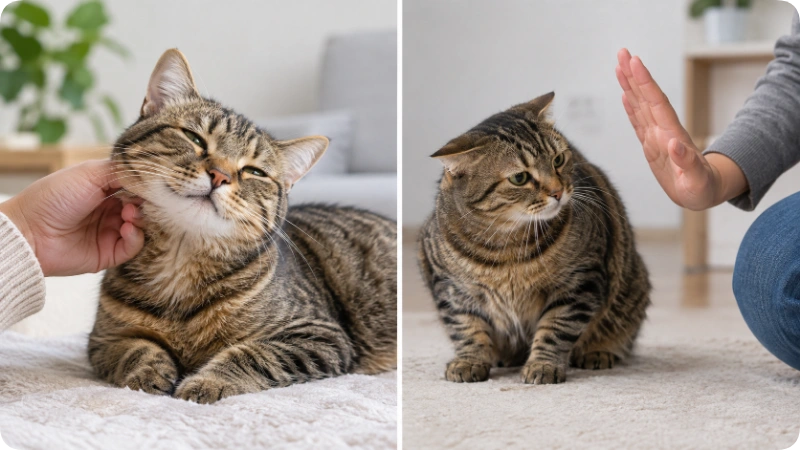
The best way to understand your cat’s purring is to observe the other signals she displays during the interaction.
A relaxed cat usually has loose muscles, comfortable body positioning, and a willingness to remain close. An uncomfortable cat may produce the same sound while displaying signs of tension or trying to avoid contact.
The following comparison can help you interpret what you see.
| Body Language | Possible Meaning |
|---|---|
| Leaning into your hand | Enjoys the petting |
| Soft or half-closed eyes | Relaxation or comfort |
| Gentle head rubbing | Seeking familiar contact |
| Loose, relaxed body | Comfortable interaction |
| Flattened ears | Fear or discomfort |
| Repeated tail flicking | Irritation or overstimulation |
| Moving away | Wants petting to stop |
| Hiding or avoiding contact | Possible stress or illness |
These are behavioral clues, not definitive diagnoses. Consider the entire situation and your cat’s normal personality.
Where Do Cats Usually Enjoy Being Petted?
If your cat frequently purrs during petting, learning her preferred touch areas can make your interactions more comfortable.
Many cats tolerate or enjoy gentle contact around the head and face more readily than around their stomach or paws.
Commonly preferred petting areas:
- Cheeks: Gentle cheek strokes may encourage some cats to rub their faces against your fingers.
- Chin: Light scratching beneath the chin is a favorite for many cats.
- Forehead: Some cats enjoy slow strokes across the forehead.
- Base of the ears: Gentle scratching may be welcomed by cats that enjoy head contact.
- Neck and upper back: Some cats appreciate slow strokes along these areas.
Areas that may be sensitive:
- Belly: Exposing the stomach does not necessarily mean a cat wants it touched.
- Paws: Many cats dislike having their feet handled.
- Tail: Pulling, squeezing, or repeatedly touching the tail may cause discomfort.
- Lower back: Some cats are sensitive to repeated strokes near the base of the tail.
Individual preferences matter more than a general list of favorite spots. Always let your cat’s response guide your actions.
How to Pet Your Cat Without Making Her Uncomfortable
Even a cat that regularly purrs during petting may have limits. Some enjoy several minutes of attention, while others prefer only a few gentle strokes.
Use these simple steps to make physical interaction more comfortable.
- Let your cat approach first. Avoid reaching toward her suddenly or forcing physical contact.
- Offer your hand. Allow her to sniff your fingers and decide whether she wants to interact.
- Begin with gentle strokes. Start around her cheeks, forehead, or chin if she normally enjoys these areas.
- Watch her reaction. Look for leaning, relaxed muscles, and voluntary contact.
- Pause regularly. Brief breaks help you recognize whether she wants more attention.
- Stop when she shows discomfort. Do not continue if she moves away, stiffens, flicks her tail repeatedly, or flattens her ears.
The goal is not to make your cat purr for longer. It is to create an interaction in which she feels comfortable and remains free to choose whether she wants more contact.
Why Does My Cat Stop Purring When I Stop Petting Her?
Your cat may stop purring when you stop petting her because the physical interaction has ended.
Some cats purr mainly during social contact, such as when receiving gentle strokes or sitting on their owner’s lap. When the stimulation stops, the purring may gradually fade.
Other cats continue purring after petting ends because they remain relaxed or are settling down to sleep.
If your cat nudges your hand, rubs against your fingers, or moves closer after you stop, she may be inviting you to continue.
However, if she walks away, there is no need to follow her or restart the interaction. Allowing her to choose when affection begins and ends helps maintain comfortable social contact.
When Should You Be Concerned About Your Cat’s Purring?
Occasional purring during petting is generally not concerning when your cat otherwise behaves normally. However, a change in her usual purring pattern can be worth investigating.
Pay attention if your cat:
- Starts purring unusually frequently without an obvious reason.
- Purrs while hiding or avoiding normal interactions.
- Shows signs of pain when you touch a particular area.
- Stops eating or becomes noticeably less active.
- Develops unusual breathing, movement, or behavioral changes.
A veterinarian can help determine whether an underlying health problem is contributing to these changes.
Do not wait for your cat to stop purring before seeking help if she shows signs of illness. Cats can continue purring even when something is wrong.
Frequently Asked Questions
Does a Cat Purring When You Pet Her Mean She Loves You?
Purring during petting can accompany a positive relationship with a familiar person. If your cat voluntarily approaches you, rubs against your hand, and relaxes while you stroke her, these behaviors suggest she is comfortable with your presence. However, purring alone cannot establish exactly what she feels.
Why Does My Cat Purr Louder When I Pet Her?
Your cat may increase the volume of her purring during enjoyable or familiar interactions. Individual cats naturally produce different purring sounds, and excitement or attention-seeking may also influence vocal behavior. If the sound changes suddenly or comes with other unusual symptoms, consult your veterinarian.
Why Does My Cat Purr and Knead When I Pet Her?
Purring and kneading commonly occur together during relaxed social interactions. Kneading is a behavior that begins during kittenhood, when kittens press their paws against their mother’s mammary area while nursing. Adult cats may continue kneading in comfortable resting or social situations.
Why Does My Cat Purr but Still Bite Me When I Pet Her?
Your cat may initially welcome petting but become overstimulated after repeated strokes. Some cats have a limited tolerance for physical contact and communicate their discomfort through tail movements, tense muscles, or flattened ears before biting. Stop petting when these signals appear rather than waiting for a bite.
Do Cats Purr When They Are in Pain?
Yes. Cats can purr during painful or stressful situations, not just when they are comfortable. If your cat purrs while hiding, eating less, moving differently, or resisting touch, arrange a veterinary examination to investigate possible discomfort.
Why Does My Cat Purr When I Touch Her but Not When Anyone Else Does?
Your cat may be more familiar and comfortable with your touch than with other people’s handling. She may also prefer your particular petting technique, the areas you touch, or the routine you have developed together. Individual temperament and past experiences influence how cats respond to different people.
Conclusion
Cats often purr when you pet them because they feel comfortable, enjoy the interaction, or are communicating socially. However, purring can also accompany stress and physical discomfort, so it should never be treated as automatic proof of happiness.
Pay attention to your cat’s posture, facial expressions, and willingness to continue being touched. By respecting her preferences and recognizing changes in her behavior, you can make affection more comfortable and build a healthier relationship with her.

Daniel Brooks is a pet care and animal behavior writer at petcareatlass.com focused on helping owners better understand their pets’ behavior and everyday needs. He creates practical, easy-to-follow content on pet communication, training, welfare, and responsible care.