Quick Answer:
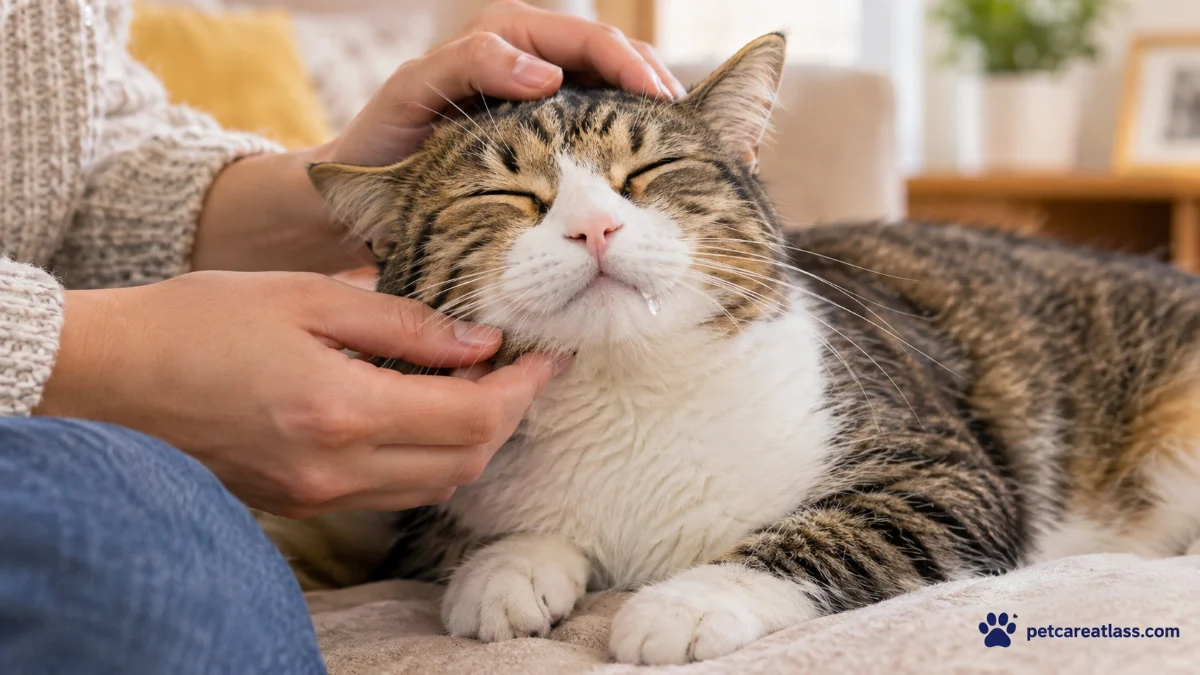
Cats may drool when you pet them because they feel relaxed, comfortable, or content. Some cats also drool in response to excitement, stress, or overstimulation. Occasional drooling during gentle petting can be harmless, but frequent, excessive, or sudden drooling may indicate dental problems, nausea, or another health issue.
Have you ever noticed your cat drooling while you gently pet them? It might seem unusual, especially when your cat appears relaxed, purrs, or rubs against your hand.
In many cases, cats drool during petting because they feel comfortable, safe, and content. However, relaxation is not the only possible explanation.
Excitement, stress, overstimulation, dental discomfort, and other health problems can also cause drooling. Understanding why cats drool when you pet them can help you distinguish normal behavior from potential warning signs.
In this guide, you’ll discover seven possible reasons behind this behavior, how to recognize the difference between harmless drooling and a health concern, and when your cat may need veterinary attention.
Why Do Cats Drool When You Pet Them?
Not every cat drools when receiving affection, but some produce a small amount of saliva during particularly relaxing interactions. This behavior can be associated with emotional comfort, individual temperament, or physical stimulation.
The context matters. A cat that drools slightly while purring in a familiar environment may simply be relaxed. A cat that suddenly starts drooling while eating, resting, or interacting with people may need a closer health assessment.
Here are seven possible reasons behind this behavior.
1. Your Cat Feels Relaxed and Content
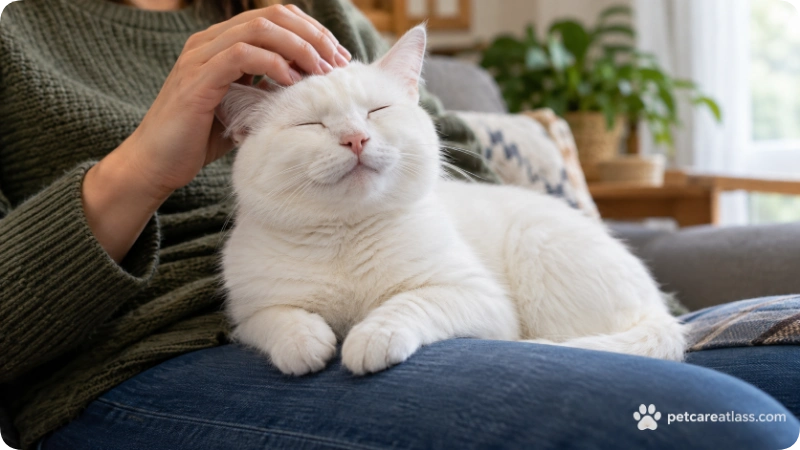
One of the most common explanations for drooling during petting is relaxation. Some cats become so comfortable during affectionate interactions that a small amount of saliva escapes from their mouths.
You may notice this when your cat:
- Lies comfortably beside you.
- Closes her eyes while you gently stroke her head.
- Purrs during petting.
- Kneads a blanket or your lap with her paws.
- Leans into your hand for more affection.
This type of drooling is generally less concerning when it is mild, occasional, and associated with otherwise normal behavior.
Some cats have displayed this response since kittenhood, while others never drool even when they are extremely happy.
What should you do?
If your cat appears comfortable and the drooling happens only during relaxing interactions, you can usually allow her to enjoy the affection. Keep petting gently and let her decide when she has had enough.
2. Petting Reminds Your Cat of Kittenhood
Some cats may associate gentle touch with the comfort they experienced while nursing as kittens.
During kittenhood, nursing involves close physical contact with their mother, warmth, and repeated comforting interactions. Later in life, certain cats may respond to familiar sensations, such as gentle stroking, by showing behaviors associated with comfort.
This may help explain why some cats drool while purring, kneading, or receiving affection.
However, this is a possible behavioral explanation rather than a proven reason for every cat’s drooling. There is no established universal explanation for why relaxed cats sometimes salivate.
What should you do?
Allow your cat to enjoy gentle affection without forcing interaction. If she starts purring, kneading, or relaxing against you, these behaviors may indicate that she is comfortable.
3. Your Cat Is Experiencing Strong Emotional Stimulation
Petting can create different emotional responses depending on the cat, the situation, and the type of physical contact.
Although many cats enjoy affection, some become overstimulated when petting continues for too long. Others may feel uncertain or stressed when touched in sensitive areas.
Stress and anxiety can also contribute to drooling in cats.
Look at your cat’s overall body language rather than assuming that every drooling episode means happiness.
Signs of relaxation may include:
- Soft, relaxed facial expressions.
- Neutral ear positions.
- Gentle purring.
- Loose body posture.
Signs of discomfort may include:
- Flattened or backward-facing ears.
- Rapid tail movements.
- Dilated pupils.
- Skin twitching along the back.
- Turning away or attempting to leave.
What should you do?
Stop petting if your cat shows signs of discomfort. Give her space and allow her to approach you again when she feels ready.
Avoid holding her in place or continuing to touch her simply because she initially seemed comfortable.
4. Dental Disease or Pain in the Mouth
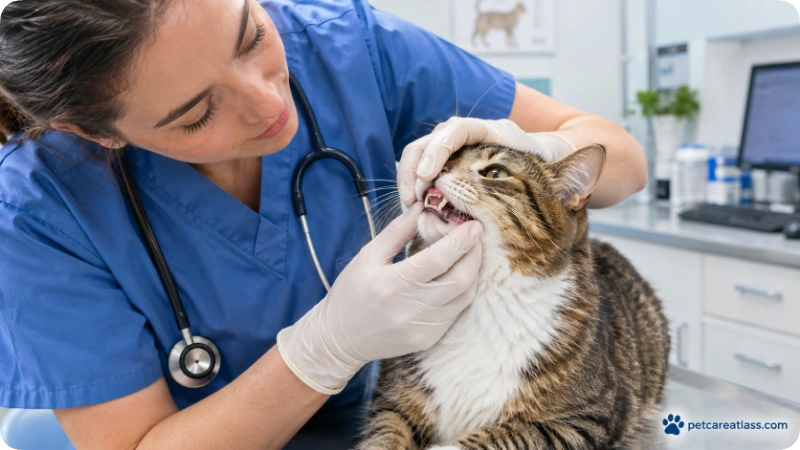
Not all drooling during petting is behavioral. Sometimes, a cat already has an uncomfortable mouth, and the owner notices the saliva while handling or stroking her.
Dental disease is an important possible cause because cats can develop painful problems involving their teeth and gums.
Common dental conditions include:
- Gingivitis: Inflammation of the gums that can make them red, swollen, and painful.
- Periodontal disease: A condition affecting the tissues supporting the teeth.
- Tooth resorption: A painful process in which the structure of a tooth gradually breaks down.
A cat experiencing dental discomfort may also show:
- Bad breath.
- Excessive or frequent drooling.
- Difficulty chewing.
- Dropping food while eating.
- Reduced appetite.
- Pawing at the mouth.
- Resistance to having her face touched.
Some cats hide signs of oral pain, so the absence of obvious discomfort does not necessarily mean their teeth are healthy.
What should you do?
Arrange a veterinary examination if drooling is new, persistent, or accompanied by changes in eating habits or signs of mouth pain.
Do not try to scrape tartar from your cat’s teeth or force her mouth open to inspect painful areas.
5. Something Is Irritating or Stuck Inside Your Cat’s Mouth
A foreign object, mouth injury, or irritation can stimulate saliva production.
For example, a small piece of plant material, a fragment of food, or another object may become lodged between the teeth or around the gums.
Mouth injuries and ulcers can also make swallowing uncomfortable and cause increased salivation.
You may notice:
- Repeated pawing at the mouth.
- Drooling that continues after petting stops.
- Difficulty swallowing.
- Unusual mouth movements.
- Refusal to eat.
- Signs of discomfort when grooming.
What should you do?
Contact your veterinarian if you suspect something is stuck inside your cat’s mouth or she appears uncomfortable.
Never pull on string, thread, or similar material hanging from your cat’s mouth. It may extend farther into the digestive tract and cause serious injury.
6. Your Cat Feels Nauseated
Nausea, which means feeling sick to the stomach, can increase saliva production in cats.
Although you may first notice the drooling while petting your cat, the actual cause might be unrelated to affection.
Nausea can occur with digestive problems, certain illnesses, medication reactions, or exposure to something your cat should not have eaten.
Other possible signs include:
- Repeated swallowing or lip licking.
- Vomiting.
- Reduced interest in food.
- Hiding or unusual behavior.
- Restlessness.
- Excessive salivation outside petting sessions.
A cat that drools only during affectionate moments and otherwise eats and behaves normally is different from one that drools throughout the day and appears unwell.
What should you do?
Monitor your cat’s eating, drinking, and behavior. Contact your veterinarian if drooling continues, vomiting occurs, or your cat shows signs of illness.
If you suspect poisoning, do not wait for additional symptoms. Seek immediate veterinary advice.
7. Your Cat Has Been Exposed to Something Toxic or Irritating
Certain plants, household chemicals, cleaning products, and human medications can cause excessive salivation when a cat chews, licks, or swallows them.
In these situations, drooling is not a sign of affection or relaxation. It may be an early indication of exposure to a harmful substance.
Possible accompanying symptoms include:
- Vomiting.
- Mouth irritation.
- Weakness.
- Trembling or unusual movements.
- Difficulty swallowing.
- Breathing difficulties.
Some toxic exposures can become life-threatening, even when the initial symptoms seem mild.
What should you do?
If you suspect your cat has contacted or swallowed a potentially toxic substance, contact an emergency veterinarian or animal poison service immediately.
Do not attempt to make your cat vomit or give home remedies unless a veterinary professional specifically instructs you to do so.
Is It Normal for Cats to Drool When You Pet Them?
Yes, a small amount of drooling can be normal for some cats, particularly when they are relaxed and purring. However, cats generally do not drool as frequently as dogs.
The important factor is whether the behavior is familiar and limited to comfortable situations or represents a new change.
| Drooling Pattern | Possible Meaning | What to Do |
|---|---|---|
| Small amount while purring | Relaxation or contentment | Monitor normally |
| Drooling while kneading | Comfort or relaxation | Observe body language |
| Only during petting | Response to affection | Check if it’s a familiar habit |
| Sudden excessive drooling | Possible health problem | Contact a veterinarian |
| Drooling with bad breath | Possible dental disease | Arrange a dental checkup |
| Drooling with vomiting | Possible nausea or illness | Seek veterinary advice promptly |
| After possible toxin exposure | Possible poisoning | Seek emergency veterinary help |
Remember that drooling alone cannot confirm whether a cat is happy, stressed, or sick. Consider the timing, amount of saliva, other symptoms, and any recent changes in behavior.
How to Tell Whether Your Cat Is Drooling Because She Is Happy
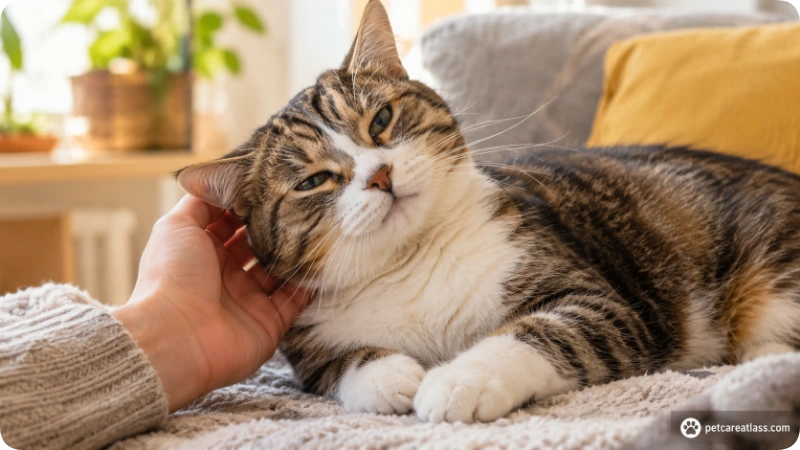
If your cat drools while you pet her, look at her entire body rather than focusing only on her mouth.
A comfortable cat usually shows relaxed behavior and voluntarily participates in the interaction.
The following comparison can help you understand the difference.
Body Language | Relaxed Cat | Uncomfortable Cat |
|---|---|---|
| Ears | Neutral or forward | Flattened or backward |
| Eyes | Soft or slowly blinking | Wide or intensely focused |
| Tail | Relaxed and still | Flicking or lashing |
| Body posture | Loose and comfortable | Stiff or tense |
| Purring | May purr comfortably | May purr when stressed or unwell |
| Movement | Leans toward your hand | Moves away or escapes |
| Response to touch | Enjoys gentle contact | Flinches or avoids touch |
Important: Purring does not always mean a cat is happy. Cats may also purr when frightened, uncomfortable, or in pain. Always consider other behavioral and physical signs.
Where Should You Pet a Cat That Drools During Affection?
If your cat enjoys physical contact, choose areas where she voluntarily welcomes gentle touch.
Many cats prefer being petted around the cheeks, chin, forehead, and sides of the head. However, individual preferences differ.
| Area to Try | How to Pet | Signs of Comfort |
|---|---|---|
| Cheeks | Use gentle fingertip strokes | Leans into your hand |
| Chin | Gently scratch underneath | Relaxed facial expression |
| Forehead | Stroke between the ears | Soft eyes and relaxed posture |
| Base of ears | Use gentle circular motions | Leans toward your hand |
| Neck and shoulders | Use slow, light strokes | Comfortable body posture |
Avoid assuming that every cat enjoys being touched in the same places.
Some cats dislike belly, paw, tail, or lower-back handling. Let your cat guide the interaction, and stop when she shows signs of discomfort.
What Should You Do If Your Cat Drools While You Pet Her?
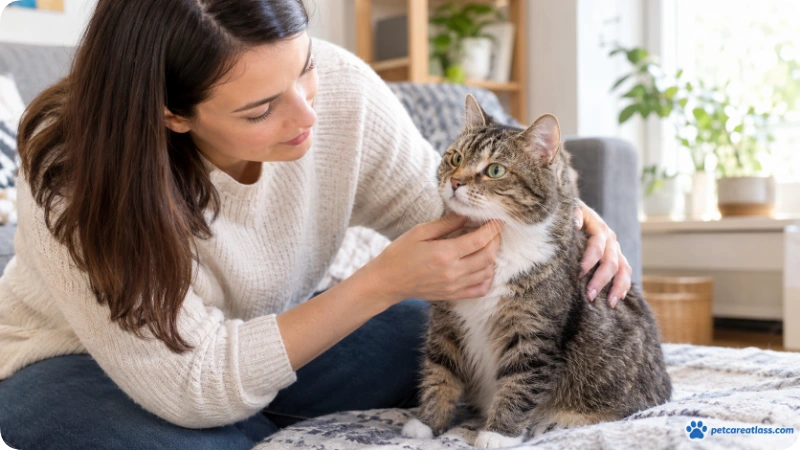
The right response depends on whether the drooling appears to be an established relaxation behavior or a new physical symptom.
Follow these practical steps:
1. Check when the drooling happens.
Notice whether it occurs only during petting, while purring, during sleep, or at other times throughout the day.
2. Observe the amount of saliva.
A few drops are different from continuous dripping or saliva collecting around the mouth.
3. Watch your cat’s body language.
Look for relaxed posture, comfortable facial expressions, and voluntary interaction. Also watch for signs of stress or pain.
4. Check for changes in eating habits.
Notice whether your cat chews normally, drops food, avoids dry food, or shows less interest in meals.
5. Look for other unusual symptoms.
Bad breath, vomiting, mouth pawing, lethargy, or difficulty swallowing can indicate a health concern.
6. Arrange veterinary care when needed.
If drooling is new, frequent, persistent, or associated with other symptoms, arrange a veterinary assessment rather than assuming it is caused by happiness.
7. Keep a record of the behavior.
If possible, take a short video of the drooling episode. Record when it happens, how long it lasts, and whether other symptoms appear. This information can help your veterinarian understand the problem.
When Should You Take Your Drooling Cat to the Vet?
Occasional drooling during relaxation does not always require medical treatment. However, a sudden change in your cat’s drooling habits deserves attention.
Some symptoms require a routine appointment, while others need immediate veterinary care.
Signs That Require a Veterinary Appointment
Arrange a veterinary examination if you notice:
- Drooling that continues after petting stops.
- Repeated or increasing saliva production.
- Persistent bad breath.
- Red, swollen, or bleeding gums.
- Difficulty chewing or swallowing.
- Reduced appetite or refusal to eat.
- Repeated pawing at the mouth.
- Unusual behavior or withdrawal.
These symptoms can be associated with dental disease, oral injuries, digestive problems, or other medical conditions.
Signs That Require Emergency Veterinary Attention
Seek immediate veterinary help if your cat:
- May have swallowed poison, medication, or a toxic substance.
- Has difficulty breathing.
- Cannot swallow normally.
- Is drooling heavily and experiencing tremors or seizures.
- Suddenly becomes extremely weak or collapses.
- Has severe bleeding or a serious mouth injury.
Do not wait to see whether these symptoms disappear on their own. Suspected poisoning requires immediate professional advice.
Normal Drooling vs. Concerning Drooling
| Situation | Concern Level | Recommended Action |
|---|---|---|
| A few drops during familiar cuddling | Low | Observe normally |
| Drooling while purring and kneading | Low | Monitor for changes |
| New drooling without a clear reason | Moderate | Schedule a vet visit |
| Bad breath or eating problems | Moderate–High | Arrange a prompt examination |
| Heavy drooling with weakness or vomiting | High | Seek urgent veterinary care |
| Suspected poisoning or breathing difficulty | Emergency | Get immediate veterinary help |
The severity and combination of symptoms matter more than drooling alone.
Common Mistakes Cat Owners Make When Their Cats Drool
It is easy to interpret drooling as a sign of happiness, especially when it happens during cuddling. However, making assumptions can cause owners to overlook important changes.
Here are some common mistakes and better approaches.
| Common Mistake | Why It’s a Problem | Better Approach |
|---|---|---|
| Assuming drooling means happiness | It may indicate pain or illness | Check overall behavior |
| Ignoring sudden changes | New symptoms may signal health problems | Monitor changes and contact a vet |
| Petting an uncomfortable cat | May increase stress | Stop and give your cat space |
| Ignoring bad breath | May indicate dental disease | Arrange a dental examination |
| Forcing an object out | May cause further injury | Ask a veterinarian for help |
| Giving human medication | Some medicines are toxic to cats | Use vet-approved treatment only |
Frequently Asked Questions
1. Why does my cat drool when I pet her but not at other times?
Some cats produce a little saliva when they feel especially relaxed during affectionate interactions. If your cat has always behaved this way and otherwise eats, drinks, and behaves normally, it may be an individual comfort-related habit. New or increasing drooling should be checked.
2. Why does my cat drool and purr when I pet her?
Your cat may be experiencing relaxation and contentment. Some cats combine purring, kneading, and mild drooling during enjoyable interactions. However, purring does not rule out pain or illness, so consider her other symptoms and behavior.
3. Why does my cat drool when I scratch her chin?
Chin scratching may feel particularly enjoyable to a cat that likes gentle facial contact. Some cats respond to this stimulation by relaxing and producing a small amount of saliva. If the drooling is new, excessive, or accompanied by mouth discomfort, arrange a veterinary examination.
4. Should I worry if my cat drools every time I pet her?
Not necessarily. Some cats consistently drool during affectionate interactions without having an underlying health problem. However, frequent drooling should not automatically be considered normal if it has never happened before or is becoming more noticeable. A veterinarian can assess whether an oral or medical problem is present.
5. Why does my cat suddenly start drooling when I touch her face?
Sudden drooling during facial contact may indicate discomfort around the mouth, teeth, gums, or jaw. Dental disease, an oral injury, or something stuck in the mouth could be responsible. Stop touching the affected area and arrange a veterinary examination.
6. Do kittens drool when they are happy?
Some kittens may drool during comfortable interactions, although drooling is not a behavior shown by every kitten. Excessive salivation, difficulty nursing, mouth irritation, or changes in appetite should be assessed by a veterinarian.
7. How can I stop my cat from drooling when I pet her?
If the drooling is a harmless individual response to relaxation, you may not need to stop it. Let your cat choose how much affection she wants. If drooling is caused by dental disease, nausea, an injury, or another medical problem, treating the underlying cause is more important than trying to suppress the saliva.
Conclusion
Cats may drool when you pet them because they feel relaxed, comfortable, or emotionally stimulated. For some cats, a little saliva during purring and affectionate interactions is simply an individual behavior.
However, drooling should not automatically be treated as a sign of happiness. Dental disease, mouth injuries, nausea, stress, and toxic exposure can also cause increased salivation.
Pay attention to whether your cat’s drooling is familiar, mild, and limited to affectionate moments. If it becomes excessive, starts suddenly, or occurs with other unusual symptoms, consult your veterinarian.
The best approach is to understand your cat’s normal behavior, respect her preferences for physical contact, and recognize when a change in drooling may indicate a health concern.

Daniel Brooks is a pet care and animal behavior writer at petcareatlass.com focused on helping owners better understand their pets’ behavior and everyday needs. He creates practical, easy-to-follow content on pet communication, training, welfare, and responsible care.