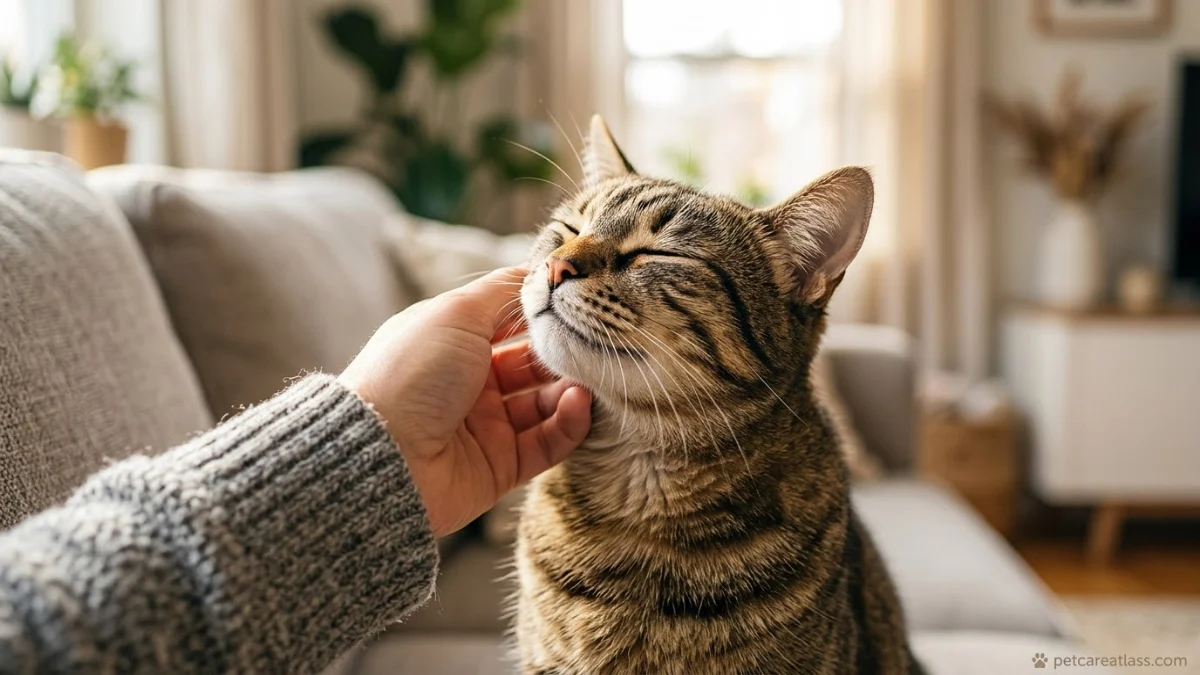
Cats often show their affection in small ways, such as rubbing against your hand, leaning into gentle strokes, or settling beside you when you sit down. If you have noticed these behaviors, you may wonder: why do cats like being petted, and what makes human touch enjoyable for them?
Many cats enjoy petting because it provides pleasant physical stimulation, supports social bonding, and allows them to exchange familiar scents with people they trust. Gentle touch may also remind them of positive physical interactions from kittenhood. However, not every cat enjoys the same type or amount of attention. Understanding your cat’s behavior, preferred petting areas, and body-language signals can help you make physical contact a more comfortable and positive experience.
Quick Answer:
Cats like being petted because gentle touch can provide comfort, social interaction, and pleasant physical stimulation. It may also strengthen their relationship with familiar people and allow them to exchange familiar scents. Many cats enjoy attention around their cheeks, chin, forehead, and head. However, each cat has individual preferences, so watching its body language is essential.
Petting Helps Cats Build a Bond With Their Owners
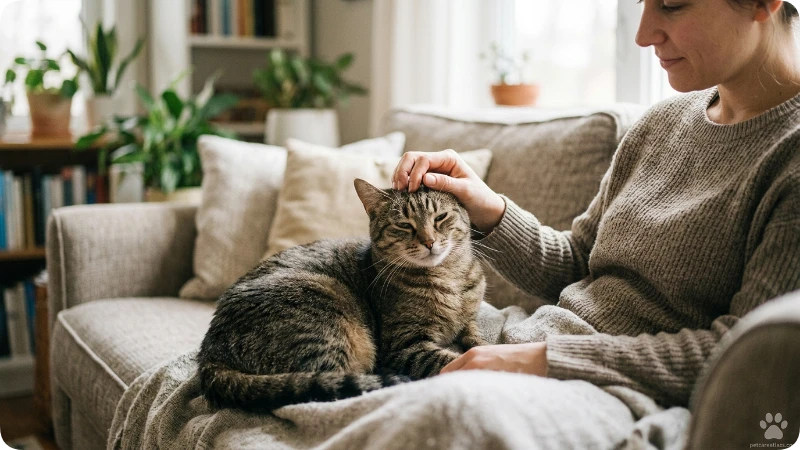
One of the main reasons cats enjoy being petted is that physical contact can strengthen their relationship with familiar people.
Although cats are often considered independent animals, many form close social bonds with their owners. They may seek attention, sit beside someone, rub against their legs, or settle in their lap when they feel comfortable.
Gentle petting can become part of this positive relationship.
When you pet a cat calmly and respectfully, it may associate your touch with pleasant experiences, such as:
- Receiving attention from a trusted person.
- Feeling comfortable during familiar interactions.
- Enjoying gentle physical contact.
- Spending quiet time with its owner.
- Experiencing a predictable and reassuring routine.
For example, your cat might approach you while you are sitting on the sofa, rub its cheeks against your hand, and then settle beside you. If it leans into your gentle strokes, it may be showing that it welcomes the interaction.
Why it matters: Petting should be a shared experience rather than something you force on your cat. Allowing your cat to approach and choose contact helps build trust over time.
Petting May Remind Cats of Their Kittenhood
Another reason some cats enjoy being petted is that gentle touch may resemble the physical contact they experienced when they were young.
Mother cats groom their kittens by licking their fur, cleaning their bodies, and maintaining close physical contact. These early interactions are important parts of kitten care and social development.
As adult cats, some individuals may find gentle human touch familiar and comforting.
However, it is important not to assume that every cat enjoys petting for exactly the same reason. A cat’s early experiences, socialization, personality, and relationship with people can influence how it responds to touch.
For example:
- A well-socialized cat may actively seek gentle contact.
- A cat with limited positive human interaction may need more time to become comfortable.
- A cat that has experienced rough handling may prefer less physical contact.
What owners should do: Let your cat become familiar with your hand before petting it. Offer a finger for investigation and wait to see whether it approaches, sniffs, or rubs against you.
Certain Petting Areas Feel Especially Pleasant
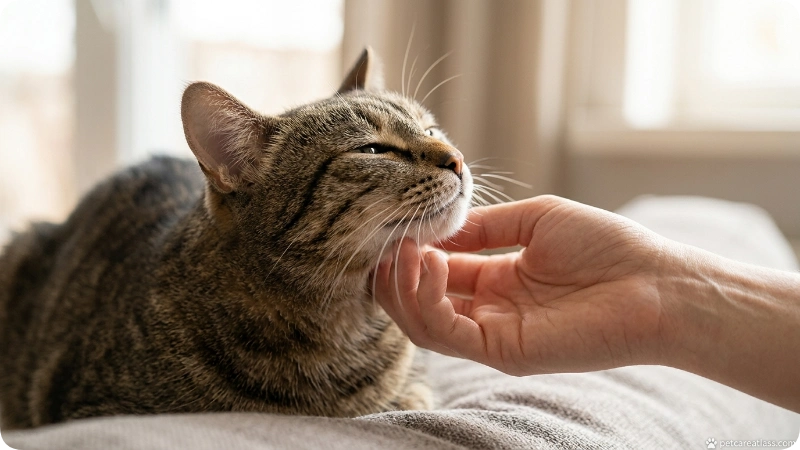
Have you noticed that your cat pushes its head against your hand when you scratch its cheeks or chin?
Many cats enjoy gentle contact around their cheeks, forehead, chin, and the area around the ears. These regions contain scent glands that cats use during familiar social interactions and scent marking.
When a cat rubs its face against your hand, it may be depositing familiar scents and marking you as part of its comfortable environment.
This behavior is often called bunting.
Cats may enjoy gentle petting in these areas because the interaction combines physical stimulation with familiar social and scent-related behaviors.
Where Do Cats Usually Enjoy Being Petted?
| Body Area | Why Some Cats Enjoy It | How to Pet |
| Cheeks | Contact around scent-gland areas | Use light strokes with your fingertips |
| Chin | Many cats enjoy gentle scratching underneath the chin | Scratch softly without pressing |
| Forehead | Familiar head contact can feel comfortable | Stroke gently between the ears |
| Around the ears | Some cats enjoy light scratching near the ear base | Use gentle fingertip movements |
| Head and neck | Often preferred during friendly interactions | Use slow, short strokes |
These are common preferences, not universal rules. Your cat’s individual reactions matter more than a general list of favorite petting spots.
Petting Provides Pleasant Physical Stimulation
Cats experience their surroundings through their senses, including touch. Their skin and hair follicles respond to physical contact, which means gentle petting can provide an enjoyable sensory experience.
For a cat that likes being touched, slow and gentle strokes may feel pleasant and relaxing.
However, the amount of stimulation a cat enjoys can vary.
Some cats prefer:
- Slow strokes along the head and neck.
- Gentle scratching around the cheeks.
- Short petting sessions.
- Light contact from a familiar person.
Others may enjoy only a few seconds of touch before becoming uncomfortable.
Too much stimulation can cause a cat to become irritated, even if it initially appeared to enjoy the attention.
This is sometimes called petting-induced overstimulation. It happens when repeated physical contact becomes uncomfortable or overwhelming for a cat.
For example, your cat may begin by purring and leaning into your hand but later start flicking its tail or moving its skin along the back. These changes may indicate that it wants you to stop.
Helpful tip: Start with a few gentle strokes, pause, and observe your cat’s response before continuing.
Petting Can Help Cats Feel Relaxed and Comfortable
A familiar person’s gentle touch may help some cats settle down and enjoy a quiet moment.
You might notice your cat becoming more comfortable during petting by:
- Closing its eyes slowly.
- Relaxing its body.
- Sitting or lying down.
- Leaning against your hand.
- Purring softly.
- Resting its head near your fingers.
These behaviors can indicate that your cat is comfortable with the interaction.
However, purring does not always mean happiness. Cats may also purr when they are stressed, uncomfortable, or seeking reassurance.
Look at the entire body rather than relying on one behavior.
For example, a relaxed cat with soft eyes, neutral ears, and a loose body posture is more likely to be enjoying the interaction than a cat with flattened ears, a tense body, and a rapidly moving tail.
Cats Enjoy the Attention They Receive From Their Owners
Sometimes, cats simply enjoy the attention that comes with being petted.
Domestic cats can develop routines around their owners. They may learn that approaching someone, rubbing against their hand, or sitting nearby leads to friendly interaction.
This can make petting part of their everyday social routine.
For example, your cat might:
- Approach you when you sit down.
- Rub against your legs when you return home.
- Jump onto your lap while you are watching television.
- Nudge your hand when you stop petting it.
These behaviors can be ways of inviting interaction.
However, attention does not always mean physical contact. Some cats prefer sitting beside their owners rather than being held or stroked.
Respecting these differences is an important part of building a healthy relationship.
Petting Allows Cats to Exchange Familiar Scents
Cats rely heavily on scent to understand their environment and communicate with other animals.
They have scent glands around their cheeks, chin, forehead, and other parts of their bodies. When they rub against familiar objects, people, or animals, they can leave scent information behind.
This is one reason cats sometimes rub their faces against their owners before or during petting.
The behavior can serve several purposes:
- Marking familiar people and surroundings.
- Exchanging scents during friendly interactions.
- Reinforcing familiarity.
- Exploring their environment through scent.
When your cat rubs its cheeks against your hand, it may be combining a friendly greeting with scent communication.
It does not necessarily mean your cat is claiming ownership of you. It is more useful to understand this behavior as part of normal feline scent communication.
Petting Can Become a Positive Part of a Cat’s Daily Routine
Cats often appreciate predictable routines. Regular feeding times, play sessions, resting periods, and familiar interactions can help them feel comfortable in their environment.
For some cats, gentle petting becomes another enjoyable part of the day.
For example, your cat may approach you every morning, rub against your legs, and wait for a few strokes before eating. Another cat may prefer evening attention when the house is quiet.
These preferences are normal.
However, cats also need opportunities to rest, explore, play, and spend time alone. Petting should not replace other forms of attention and enrichment.
To make physical interaction more enjoyable:
- Choose a quiet time when your cat is relaxed.
- Allow your cat to approach you first.
- Begin with gentle strokes around the cheeks or head.
- Keep the interaction short initially.
- Stop if your cat shows signs of discomfort.
- Let your cat decide whether it wants more attention.
A predictable but flexible routine can help your cat feel secure without making it dependent on constant physical contact.
Why Do Some Cats Ask to Be Petted but Suddenly Walk Away?
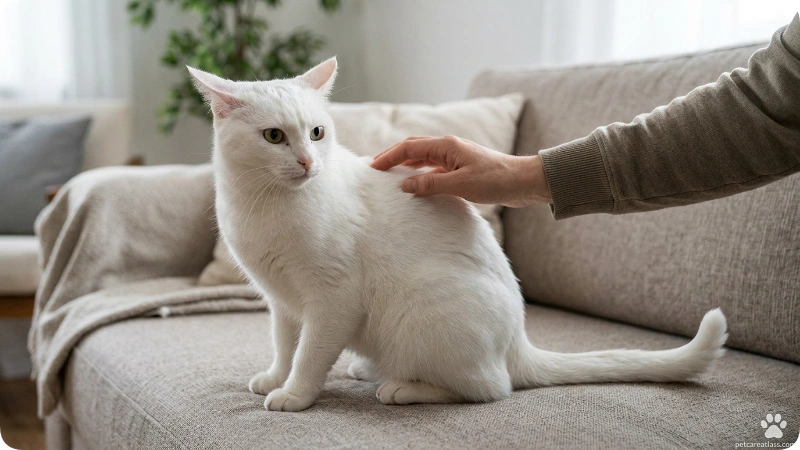
It can be confusing when your cat approaches you for attention, enjoys a few strokes, and then suddenly moves away.
However, this behavior is not necessarily a sign that your cat dislikes you.
Cats have individual preferences for physical contact. Some enjoy brief interactions but become uncomfortable when petting continues for too long.
There are several possible reasons:
- Overstimulation: Repeated strokes may become uncomfortable after a certain point.
- Changing preferences: Your cat may want attention for only a short time.
- Environmental distractions: A noise, movement, or interesting object may attract its attention.
- Need for personal space: Your cat may simply want to rest or explore independently.
- Sensitive areas: You may have touched a part of its body that it does not enjoy.
Signs Your Cat Wants You to Stop Petting
Learning to recognize early warning signs can help prevent unwanted scratching, biting, and stressful interactions.
| Cat’s Behavior | What It May Mean | What You Should Do |
| Tail begins flicking | Irritation or increasing stimulation | Pause petting |
| Ears turn sideways or backward | Discomfort, alertness, or irritation | Give your cat space |
| Skin ripples along the back | Possible sensitivity or overstimulation | Stop touching its back |
| Body becomes stiff | Tension or discomfort | Remove your hand calmly |
| Head turns toward your hand | Monitoring your movement or possible warning | Stop and observe |
| Cat moves away | It wants to end the interaction | Let it leave |
| Growling or hissing | Clear warning of discomfort or fear | Stop immediately |
These signals should be considered together rather than interpreted individually. For example, a moving tail does not always indicate irritation, but rapid tail flicking during petting can be a warning that your cat has had enough.
Important: Never punish your cat for walking away, hissing, or communicating discomfort. These behaviors provide useful information about its boundaries.
Do All Cats Like Being Petted?
No. Not all cats enjoy being petted, and even cats that like human attention may have different preferences.
A cat’s response to touch can depend on its personality, early socialization, previous experiences, age, health, and environment.
Some cats actively seek physical contact, while others prefer sitting nearby without being touched.
Here are some common differences:
- Social and confident cats: May approach familiar people and enjoy longer petting sessions.
- Shy cats: May need time and patience before accepting physical contact.
- Independent cats: May prefer occasional attention rather than frequent petting.
- Previously frightened cats: May become uncomfortable when someone reaches toward them.
- Older cats: May develop physical sensitivities that change their preferences.
Cat Personality and Petting Preferences
| Cat Type or Situation | Possible Response to Petting | Recommended Approach |
| Friendly and social | Frequently seeks physical attention | Follow its preferred petting areas |
| Shy or nervous | Avoids hands or moves away | Build trust gradually |
| Independent | Enjoys brief interactions | Keep sessions short |
| Recently adopted | May be cautious around touch | Allow time to settle in |
| Older cat | May become sensitive to certain touches | Use gentle contact and watch for discomfort |
| Previously mistreated cat | May react defensively | Avoid forced handling and respect boundaries |
These are general possibilities, not fixed personality categories. Every cat should be treated as an individual.
How to Pet a Cat So It Enjoys the Experience
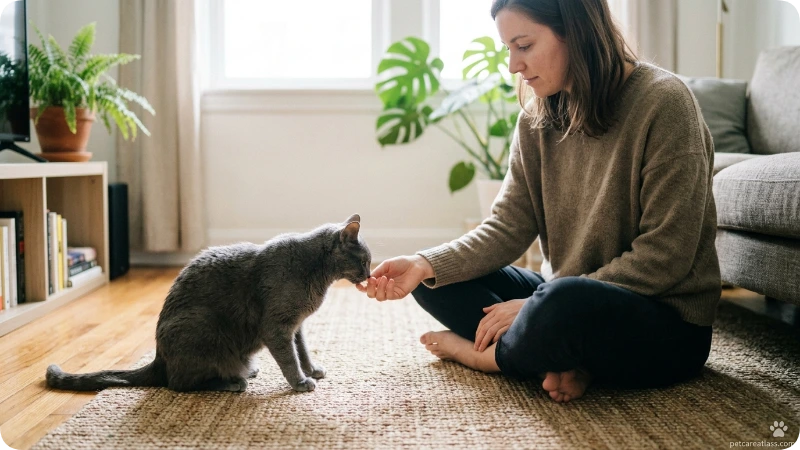
Knowing why cats enjoy petting is useful, but knowing how to approach them correctly is equally important.
Even a friendly cat may become uncomfortable if someone touches it unexpectedly or ignores its body language.
Follow these steps to make petting more comfortable.
Let Your Cat Approach You
Avoid immediately reaching over your cat or picking it up.
Instead, sit nearby and allow it to approach. You can offer a relaxed hand at its nose level so it has an opportunity to investigate your scent.
If it sniffs your hand, rubs against it, or moves closer, it may be interested in interacting.
If it walks away, do not follow it.
Start With the Cheeks or Head
Many cats prefer gentle contact around their cheeks, forehead, chin, and head.
Begin with one or two slow strokes instead of immediately touching the entire body.
Avoid applying pressure or scratching aggressively.
Watch Your Cat’s Body Language
A cat that enjoys petting may lean into your hand, keep its body relaxed, or rub against you.
A cat that becomes tense, moves its ears backward, flicks its tail rapidly, or tries to leave may be uncomfortable.
Always pay attention to changes in behavior.
Take Short Breaks
After a few strokes, stop and see what your cat does.
If it moves closer, nudges your hand, or presents its head again, it may be inviting more attention.
If it remains still, turns away, or leaves, respect its decision.
Avoid Forcing Physical Contact
Never hold a cat in place simply because you want to pet it.
Allowing your cat to control the interaction helps it feel more comfortable and reduces the risk of defensive behavior.
Areas to Approach With Extra Caution
Not every body area is equally comfortable for every cat.
| Body Area | General Guidance | Why Caution Matters |
| Belly | Avoid unless your cat clearly welcomes contact | Many cats find belly touching uncomfortable |
| Tail | Avoid pulling or squeezing | The tail is sensitive and important for balance and communication |
| Paws | Introduce touch gradually | Some cats dislike having their feet handled |
| Lower back | Watch your cat’s reaction | Some cats are sensitive around the back and tail base |
| Legs | Use gentle contact only if welcomed | Handling may feel uncomfortable to certain cats |
A cat exposing its belly is not automatically asking for a belly rub. It may simply be showing that it feels comfortable enough to rest in that position.
When Does Disliking Petting Indicate a Health Problem?
A cat’s dislike of petting is not always related to personality or overstimulation. Sometimes, physical discomfort can make an animal less tolerant of touch.
For example, a cat that previously enjoyed being stroked may begin avoiding contact because a particular area has become painful or sensitive.
Possible underlying issues include:
- Dental or mouth discomfort when the head or face is touched.
- Skin irritation, wounds, or allergies.
- Joint pain or arthritis, particularly in older cats.
- Ear discomfort or infection.
- Injuries affecting the back, legs, or tail.
When Should You Contact a Veterinarian?
Consider arranging a veterinary examination if your cat:
- Suddenly stops enjoying touch that it previously welcomed.
- Reacts painfully when a particular area is touched.
- Frequently hides or avoids normal interaction.
- Shows unusual aggression during ordinary handling.
- Has swelling, wounds, hair loss, or visible skin irritation.
- Develops changes in appetite, movement, grooming, or normal behavior.
A veterinarian can assess possible causes of discomfort and recommend appropriate treatment.
Do not repeatedly press or touch a sensitive area to find out whether it hurts. This may increase discomfort and make your cat more defensive.
Remember: A sudden change in your cat’s response to petting deserves attention, especially when accompanied by other behavioral or physical changes.
Frequently Asked Questions
Do cats actually enjoy being petted?
Yes, many cats enjoy being petted, especially when the interaction is gentle and happens on their terms. Petting can provide pleasant physical stimulation, social contact, and comfort. However, individual preferences vary, and some cats prefer limited physical interaction.
Why does my cat push its head against my hand when I pet it?
Your cat may be inviting more attention, enjoying the contact, or exchanging familiar scents. Cats have scent glands around their cheeks and forehead, and rubbing these areas against your hand is a normal social and scent-marking behavior.
Why do cats close their eyes when you pet them?
Closing their eyes during gentle petting can indicate that a cat feels comfortable and relaxed. However, consider its overall body language. Soft eyes, relaxed muscles, and gentle movements together provide better clues than closed eyes alone.
Why does my cat purr when I pet it?
Cats often purr when they feel comfortable or enjoy social contact. However, purring can also occur during stress, illness, or discomfort. Consider other signs, including posture, appetite, activity, and facial expressions, to understand how your cat feels.
Why does my cat bite me when I stop petting it?
Your cat may be requesting more attention, reacting to frustration, or responding to overstimulation. Some cats also use gentle mouthing during social interactions. Watch its body language and avoid encouraging biting during petting sessions.
Do cats prefer being petted by their owners or strangers?
Many cats are more comfortable being petted by familiar people because they recognize their scent, voice, and handling style. However, some confident and social cats also enjoy attention from visitors. Always allow a cat to approach unfamiliar people voluntarily.
How long should I pet my cat?
There is no fixed amount of time that works for every cat. Some enjoy several minutes of gentle petting, while others prefer brief interactions. Stop when your cat shows signs of discomfort, and let its behavior determine when the session ends.
Conclusion
Cats like being petted for several reasons, including social bonding, pleasant physical stimulation, familiar scents, and comfort. For many cats, gentle touch is an enjoyable way to interact with people they trust.
However, enjoying petting does not mean a cat wants constant attention or likes being touched everywhere. Some prefer cheek and chin scratches, while others enjoy only a few gentle strokes.
The best way to make petting a positive experience is to let your cat approach you, recognize its body language, respect its preferred areas, and stop when it wants space.
When you understand your cat’s individual preferences, you can build trust and create more comfortable interactions.

Daniel Brooks is a pet care and animal behavior writer at petcareatlass.com focused on helping owners better understand their pets’ behavior and everyday needs. He creates practical, easy-to-follow content on pet communication, training, welfare, and responsible care.