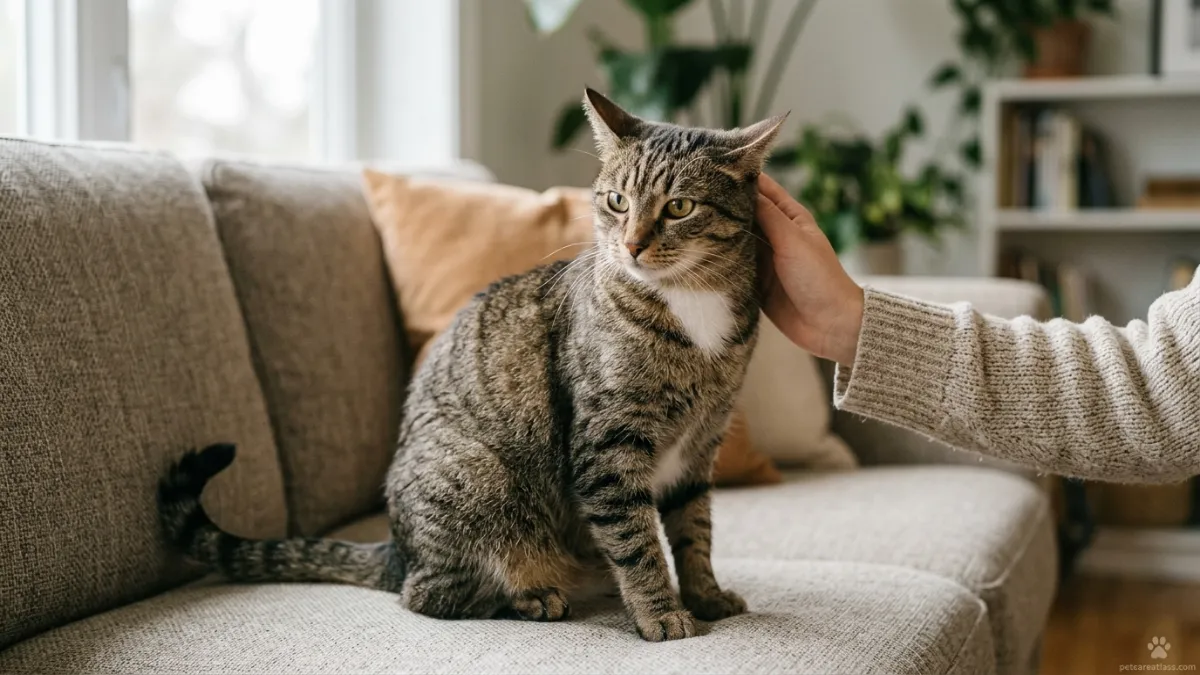
Quick Answer:
Cats bite when you pet them for several reasons, including overstimulation, discomfort, playfulness, fear, or a desire for attention. Some bites are gentle ways of communicating, while others are warnings that your cat wants you to stop. Watch for flattened ears, a twitching tail, tense muscles, or sudden body movements. Stop petting when these signs appear, give your cat space, and avoid punishing the behavior.
Cats can enjoy being petted one moment and suddenly bite the next. This behavior can be confusing, especially when your cat approaches you for attention or seems relaxed during petting.
However, a bite does not always mean your cat is angry or dislikes you. Some cats become overstimulated by repeated touching, while others bite to communicate discomfort, set boundaries, seek attention, or respond to pain.
Understanding what happens before the bite can help you recognize the difference between playful behavior and a warning to stop.
In this guide, you’ll discover seven common reasons cats bite when you pet them, the body language to watch for, and practical ways to respond without frightening or frustrating your cat.
7 Reasons Your Cat May Bite During Petting
A cat that bites during petting is not necessarily being aggressive or trying to hurt its owner. In many situations, biting is a way to communicate discomfort, excitement, fear, or a desire to end physical contact.
The reason can vary depending on your cat’s personality, previous experiences, environment, and physical condition. Here are seven common explanations.
1. Your Cat Is Overstimulated by Too Much Petting
One of the most common explanations for petting-related biting is overstimulation.
Some cats enjoy being stroked for a short time but gradually become uncomfortable when the touching continues. Repeated strokes can become irritating rather than enjoyable, even if your cat initially approached you for attention.
This behavior is sometimes called petting-induced aggression. It happens when a cat reaches its tolerance limit and tries to end the interaction.
For example, your cat might climb onto your lap, purr while you rub its head, and appear completely relaxed. After several minutes, it may suddenly turn around and bite your hand.
The change can seem unexpected, but your cat may have been showing subtle signs of discomfort before biting.
Common warning signs include:
- Tail twitching or repeatedly swishing from side to side.
- Ears rotating backward or flattening slightly.
- Skin rippling or twitching along the back.
- Body becoming stiff or tense.
- Suddenly turning its head toward your hand.
- Stopping purring or moving away from your touch.
What you can do: Keep petting sessions short and stop before your cat becomes uncomfortable. If you notice warning signs, remove your hand calmly and allow your cat to decide whether it wants more attention.
2. You Are Petting a Sensitive Area
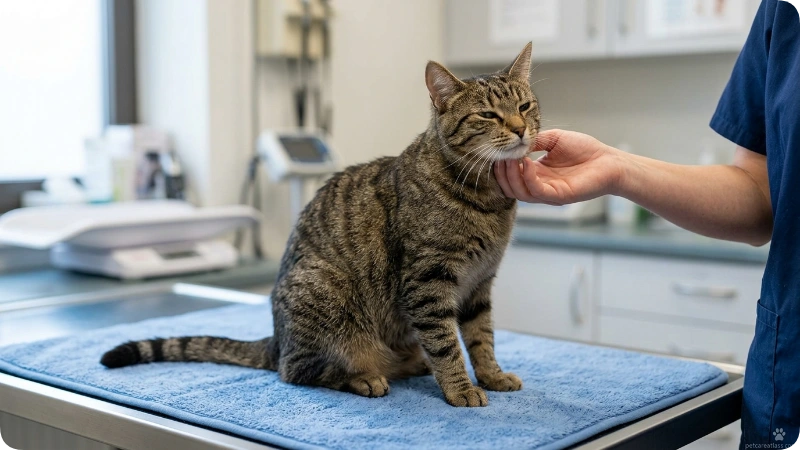
Cats have individual preferences about where they enjoy being touched. Some appreciate gentle scratches around the cheeks and chin, while others prefer limited contact with their head or neck.
Areas such as the belly, paws, legs, and tail can be uncomfortable or sensitive for many cats. Touching these places may cause your cat to react by moving away, swatting, or biting.
For example, your cat might happily accept chin scratches but bite when you reach toward its stomach. This does not necessarily mean it dislikes you. It may simply prefer that you avoid that particular area.
| Body Area | Possible Cat Response | What to Do |
|---|---|---|
| Cheeks | May enjoy gentle rubbing | Try light scratches |
| Chin | May lean into your hand | Use short, gentle strokes |
| Forehead | Often well tolerated | Pet slowly and gently |
| Belly | May become defensive | Touch only if welcomed |
| Paws | May pull away or swat | Respect its preference |
| Tail and base | Reactions vary | Watch for discomfort |
Remember that these are general tendencies, not rules for every cat. Even a cat that enjoys belly rubs one day may not want them another day.
What you can do: Begin with areas your cat willingly presents, such as its cheeks or forehead. Avoid sensitive areas unless your cat clearly accepts the contact. Never assume that showing its belly means it wants a belly rub.
3. Your Cat Wants You to Stop Petting
Sometimes, a cat bites simply because it has had enough attention.
Cats can enjoy sitting beside their owners, sleeping on their laps, or following them around without necessarily wanting to be touched. Physical closeness and a desire for petting are not always the same thing.
For example, your cat may jump onto the sofa and settle beside you. When you start stroking its back, it turns around and gives your hand a quick bite.
In this situation, your cat may be communicating that it wants companionship without additional physical contact.
Some cats also prefer controlling when interactions begin and end. They may approach you for attention but become uncomfortable when you continue after they have lost interest.
Signs your cat may want you to stop include:
- Moving away from your hand.
- Turning its head toward your fingers.
- Leaning away from your touch.
- Becoming tense or unusually still.
- Flicking its tail.
- Trying to leave your lap.
What you can do: Allow your cat to choose when it wants physical attention. If it moves away, let it go rather than following it or continuing to pet it.
You can still strengthen your relationship through quiet companionship, playtime, treats, and other interactions your cat enjoys.
4. Your Cat Feels Frightened or Uncomfortable
Fear can also cause cats to bite when someone tries to pet them.
A cat may feel threatened by unfamiliar people, sudden movements, loud noises, or unexpected physical contact. Even a familiar owner can accidentally frighten a cat by approaching too quickly or reaching over its head.
Cats with negative handling experiences may also become defensive when someone touches them.
For example, a recently adopted cat may still be adjusting to its new home. Although it sits near you, it may not yet feel comfortable with direct physical contact.
Signs of fear or discomfort include:
- Flattened ears.
- Wide or dilated pupils.
- Crouching close to the ground.
- Whiskers pulled backward or held close to the face.
- Hissing or growling.
- Trying to hide or escape.
- A tucked or tightly wrapped tail.
What you can do: Approach your cat calmly and avoid forcing contact. Let it approach your hand first, and give it enough space to move away.
If your cat is frightened, avoid picking it up or holding it against its will. Building trust through predictable, gentle interactions is usually more helpful than trying to force affection.
5. Your Cat Is Playing or Practicing Hunting Behavior
Cats are natural hunters, and biting is part of their normal play and predatory behavior.
Kittens and young cats may be especially likely to grab hands, chase moving fingers, or bite during interactions. They are still learning how to control their play behavior and may not understand that human skin is more delicate than a toy.
Some adult cats also retain playful biting habits, particularly when they do not receive enough appropriate opportunities to chase, stalk, and pounce.
For instance, you might move your fingers across the sofa while petting your cat. Your cat may suddenly grab your hand with its front paws and bite it as if it were prey.
This is different from biting because of fear or discomfort.
| Behavior | What it may indicate | Appropriate response |
| Grabbing moving fingers | Play or hunting behavior | Redirect to a toy |
| Pouncing on your hand | Predatory play | Use a wand toy instead |
| Biting during excitement | High play arousal | Pause and give space |
| Chasing hands repeatedly | Learned play habit | Stop using hands as toys |
| Stalking and attacking feet | Predatory play behavior | Provide interactive play opportunities |
What you can do: Never encourage your cat to chase or bite your fingers. Instead, offer suitable toys such as wand toys, toy mice, or other cat-safe play objects.
Schedule regular interactive play sessions that allow your cat to stalk, chase, and catch a toy. This provides an appropriate outlet for its natural hunting behavior.
6. Your Cat May Be Experiencing Pain or a Health Problem
If your cat suddenly starts biting when you pet it, physical discomfort should be considered.
A cat that previously enjoyed being touched may begin reacting defensively if an area becomes painful or sensitive.
Possible causes include:
- Arthritis or joint discomfort.
- Dental pain or mouth inflammation.
- Ear infections or irritation.
- Skin problems, wounds, or inflammation.
- Muscle or back pain.
- Other underlying medical conditions.
For example, an older cat may bite when you stroke its lower back because movement or pressure around an uncomfortable joint makes the interaction painful.
Similarly, a cat with irritated skin may react when you touch an affected area.
A particularly sensitive back, skin rippling, sudden biting, and repeated scratching may also warrant veterinary investigation. Feline hyperesthesia syndrome is one possible condition associated with unusual skin sensitivity, but these signs alone are not enough to diagnose it.
What you can do: Do not repeatedly touch the area to test your cat’s reaction. Arrange a veterinary examination, especially if the behavior is new, persistent, or getting worse.
Pay attention to additional changes, such as reduced appetite, hiding, difficulty jumping, unusual grooming, or changes in normal activity.
7. Your Cat Is Stressed or Reacting to Something Else
Sometimes, a cat bites during petting because something unrelated has made it frightened, frustrated, or highly alert.
This can happen through a behavior known as redirected aggression.
Redirected aggression occurs when a cat becomes upset or highly aroused by something it cannot directly approach or respond to, then reacts toward a nearby person or animal.
Possible triggers include:
- Seeing an unfamiliar cat outside a window.
- Hearing a sudden loud noise.
- Encountering an unfamiliar animal.
- Having a stressful interaction with another household pet.
- Experiencing a sudden disturbance in its environment.
For example, your cat may be sitting beside you while watching another cat through the window. When you reach over to pet it, it suddenly turns and bites your hand.
The bite may be related to its heightened emotional state rather than the petting itself.
What you can do: Give your cat space and avoid touching or picking it up while it is highly aroused. Identify possible triggers and reduce exposure when practical.
If these reactions happen repeatedly or are difficult to manage, consult your veterinarian for guidance.
How to Tell When Your Cat Is About to Bite
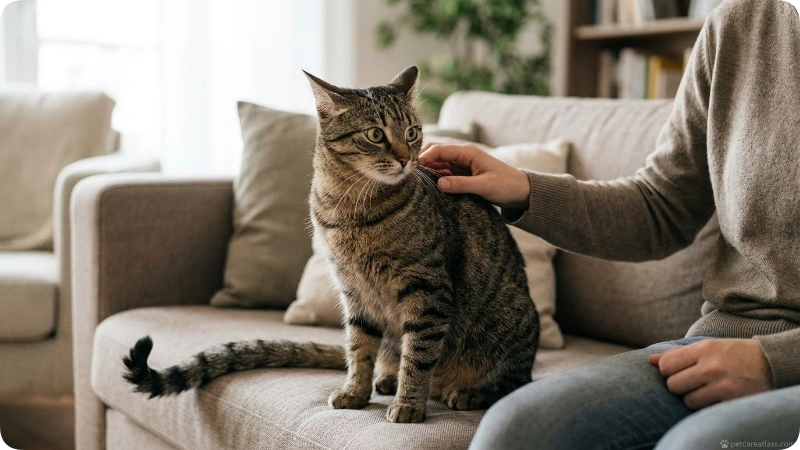
Cats do not always bite without warning. Many show subtle body-language changes before they become uncomfortable.
Learning to recognize these signals can help you stop petting before your cat feels the need to bite.
However, not every cat displays the same warning signs, and some may give very little warning.
Common Body Language Signs Before a Cat Bites
| Body language | What it may mean | Recommended response |
| Tail flicking | Irritation or increasing arousal | Stop petting |
| Ears moving backward | Discomfort or tension | Give your cat space |
| Dilated pupils | Excitement, fear, or arousal | Observe the overall body posture |
| Skin twitching | Possible sensitivity or overstimulation | Stop touching the affected area |
| Sudden body stiffness | Discomfort or alertness | Pause the interaction |
| Head turning toward your hand | Your cat may be monitoring your touch | Withdraw your hand calmly |
| Hissing or growling | Clear warning of discomfort or fear | Stop and move away |
Why Does My Cat Bite Without Warning?
Some owners notice that their cats appear relaxed one moment and bite the next.
This can happen because early warning signals are subtle. A small tail movement, slight ear rotation, or brief change in body tension can be easy to miss.
Other cats may have learned that biting is an effective way to end unwanted contact, particularly if their earlier signals were not noticed.
Pain can also cause a sudden reaction, especially when a sensitive area is touched.
Instead of assuming that your cat bites for no reason, observe what happens immediately before each incident. Look for patterns involving the location, duration, type of touch, and surrounding environment.
How to Pet a Cat Without Getting Bitten
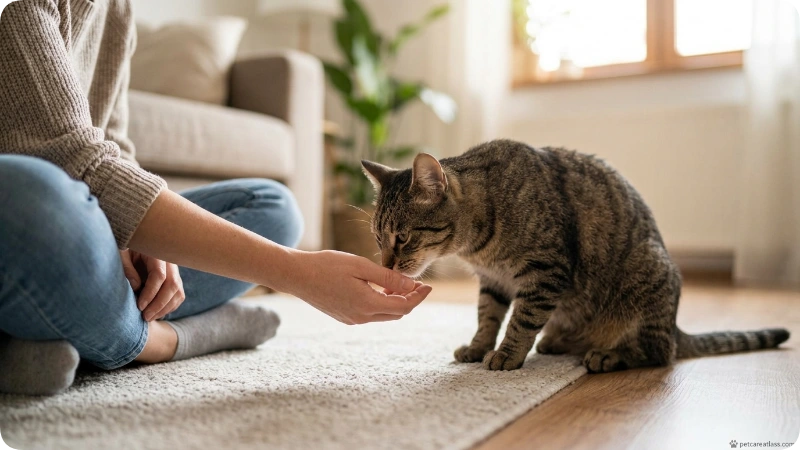
You do not need to stop showing affection to your cat just because it sometimes bites. The goal is to make physical contact more comfortable and allow your cat to control the interaction.
Try these practical steps.
Let Your Cat Approach You First
Avoid reaching toward a cat that is sleeping, hiding, eating, or showing signs of discomfort.
Instead, allow it to approach you. You can offer your hand gently and let your cat sniff or investigate it.
If it rubs its cheeks against your hand or leans toward you, it may be comfortable with some interaction. However, this is not a guarantee that it wants prolonged petting.
Start With Short, Gentle Strokes
Begin with one or two gentle strokes around the cheeks, forehead, or chin if your cat enjoys those areas.
Avoid immediately running your hand along its entire back or repeatedly touching different body parts.
Short interactions make it easier to recognize whether your cat wants more attention.
Watch Your Cat’s Reaction
Pay attention to its ears, tail, posture, and facial expression while petting.
A relaxed cat may have loose body muscles, neutral or forward-facing ears, and a comfortable posture.
If your cat becomes stiff, turns toward your hand, or starts flicking its tail, stop.
Give Your Cat Control
Let your cat move away whenever it wants.
Do not hold it in place, block its escape route, or continue petting simply because it was enjoying attention a few moments earlier.
Allowing your cat to end an interaction helps it feel more comfortable around you.
Use Toys Instead of Your Hands for Play
If your cat frequently bites during playful interactions, use appropriate toys rather than your fingers.
Wand toys and other interactive toys allow your cat to chase and grab something without using your hands as a target.
Reward Calm Interactions
You can help your cat develop more positive associations with gentle handling.
For example:
- Approach your cat calmly.
- Offer one or two gentle strokes in an area it enjoys.
- Stop while your cat remains relaxed.
- Offer a small treat if appropriate.
- Gradually repeat the interaction at a pace your cat accepts.
Do not use treats to pressure a frightened cat into accepting unwanted handling. The aim is to make interactions comfortable, not to force tolerance.
Never Punish Your Cat for Biting
Yelling, hitting, chasing, or spraying water at your cat can increase fear and anxiety.
Punishment does not teach your cat to communicate discomfort appropriately. It may instead make your cat more defensive around people.
If your cat bites, calmly end the interaction and give it time to settle.
What Should You Do If Your Cat Bites You While Petting?
Your response should depend on whether the bite is playful, a warning, or an actual injury.
If Your Cat Gives a Gentle Warning Bite
Some cats give a light bite without breaking the skin to communicate that they want the interaction to stop.
If this happens:
- Stop petting immediately.
- Keep your movements calm.
- Slowly move your hand away when it is safe.
- Give your cat space.
- Avoid trying to pet it again immediately.
Do not interpret a gentle bite as an invitation to continue playing.
If Your Cat Bites Hard Enough to Break the Skin
Cat bites can cause puncture wounds, and bacteria from the mouth can lead to infection.
If a bite breaks the skin:
- Wash the wound promptly with soap and running water.
- Apply gentle pressure with clean gauze or a clean cloth if it is bleeding.
- Cover the wound with a clean dressing.
- Seek medical advice promptly, particularly for puncture wounds or bites on the hands, fingers, face, or near a joint.
- Ask a healthcare professional whether tetanus or rabies assessment is needed based on your circumstances and local guidance.
Seek urgent medical attention for deep wounds, uncontrolled bleeding, increasing redness, swelling, warmth, worsening pain, pus, or fever.
Do not assume a small-looking puncture is harmless.
When Should You Take Your Cat to a Veterinarian?
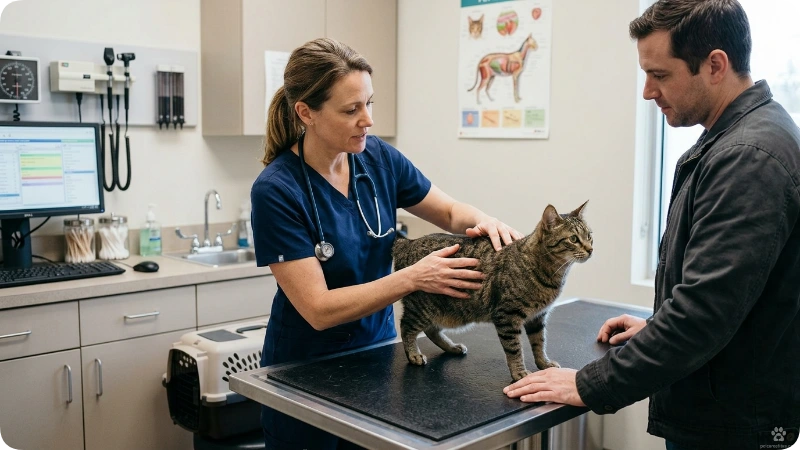
Occasional playful biting or a clear preference for shorter petting sessions does not automatically indicate a health problem.
However, a change in behavior can sometimes be an early sign of pain or illness.
Consider arranging a veterinary appointment if:
- Your previously affectionate cat suddenly starts biting during petting.
- Your cat reacts strongly when you touch a particular body area.
- Biting becomes more frequent or intense.
- Your cat shows signs of pain when walking, jumping, or moving.
- You notice excessive grooming, skin irritation, or unusual sensitivity.
- Your cat also develops appetite changes, hiding, or unusual behavior.
When to seek veterinary help quickly: If your cat has sudden severe pain, significant injury, difficulty moving, or other concerning symptoms, seek prompt veterinary care.
A veterinarian can examine your cat for possible physical causes and help determine whether the behavior is related to discomfort, fear, overstimulation, or another behavioral issue.
If medical causes have been ruled out but biting continues, a qualified feline behavior professional may help develop a suitable behavior-management plan.
Why Does My Cat Bite Me When I Pet Her but Not Other People?
A cat may tolerate petting from one person but bite another. This can happen because cats develop different comfort levels and relationships with individual people.
Several factors may explain this behavior:
- Different handling styles: One person may use lighter strokes or stop sooner than another.
- Familiarity: Your cat may feel more comfortable with someone who approaches slowly and respects its boundaries.
- Previous experiences: Negative experiences with particular handling styles or movements may affect how your cat responds.
- Scent and environment: Unfamiliar smells, other animals, or changes in the surroundings may influence your cat’s behavior.
- Individual preferences: Your cat may simply enjoy certain people more than others.
For example, your cat might comfortably accept gentle chin scratches from one family member but bite when another person repeatedly strokes its back.
This does not necessarily mean your cat dislikes the second person. It may be responding to differences in touch, timing, or comfort.
What you can do: Ask everyone in your household to use gentle handling, avoid sensitive areas, and respect your cat’s warning signals. Children should never be allowed to chase, restrain, or repeatedly pet a cat that is trying to move away.
Do Cats Bite When They Love You?
Yes, cats may sometimes give gentle bites during affectionate interactions, but not every bite is a sign of love.
Some cats use soft mouthing or gentle nibbling during social interactions. This behavior is sometimes called an affectionate bite, although its meaning depends on the situation.
For example, your cat might gently nibble your fingers while sitting beside you, without showing signs of fear or irritation.
However, a bite accompanied by flattened ears, tail lashing, body tension, or attempts to escape is more likely to indicate discomfort or overstimulation.
It is important to understand the difference between gentle mouthing and defensive biting.
Even if a bite appears affectionate, do not encourage your cat to bite your hands. Redirect the behavior toward an appropriate toy to maintain safe interactions.
Common Mistakes Cat Owners Make When Their Cats Bite During Petting
Understanding what causes biting is only part of the solution. Your response also matters.
Some common mistakes can unintentionally increase a cat’s discomfort or make biting more likely.
| Common Mistake | Why It’s a Problem | Better Approach |
|---|---|---|
| Petting too long | May cause overstimulation | Keep sessions short |
| Touching the belly without consent | May cause discomfort or defensiveness | Respect preferred areas |
| Ignoring tail flicking | May miss an early warning | Stop when discomfort appears |
| Forcing contact | Can increase fear and stress | Let your cat approach |
| Using hands as toys | Encourages hand-biting during play | Use interactive toys |
| Punishing biting | May increase fear and defensiveness | Calmly end the interaction |
| Ignoring sudden behavior changes | Pain or illness may go unnoticed | Arrange a vet exam |
A helpful approach is to observe your cat rather than assuming that every bite has the same explanation. Understanding the situation makes it easier to choose the right response.
Frequently Asked Questions
Why does my cat bite me gently when I pet him?
Your cat may be giving you a gentle warning that it has had enough petting. Some cats also use gentle mouthing during play or social interactions. Pay attention to body language and stop if your cat becomes tense or uncomfortable.
Why does my cat bite me and then lick me?
A cat may bite and then lick your hand during play, grooming-like social behavior, or an overstimulated interaction. The meaning depends on the strength of the bite and the surrounding body language. If the bite becomes forceful, stop interacting and give your cat space.
Why does my cat purr and then bite me?
Purring does not always mean that a cat wants continuous petting. Your cat may initially enjoy the attention but become overstimulated after repeated strokes. Watch for tail flicking, ear movements, and body tension rather than relying on purring alone.
Why does my cat bite me when I pet her stomach?
Many cats dislike having their stomachs touched because the belly is a sensitive area. Some may tolerate gentle contact, but others react by grabbing or biting. Avoid touching your cat’s stomach unless it clearly welcomes the interaction.
Why does my cat bite me when I stop petting him?
Your cat may be asking for more attention, trying to initiate play, or reacting to frustration. However, the behavior can have other explanations. Try redirecting playful behavior toward a toy rather than allowing your cat to bite your hands.
Do kittens bite more when you pet them?
Kittens may bite more during play because they are developing hunting, social, and bite-control skills. They often explore their surroundings with their mouths. Provide suitable toys and avoid encouraging them to chase or bite your fingers.
Will my cat stop biting when I pet it?
Many cats can learn to tolerate more comfortable handling when owners respect their preferences and recognize early warning signs. However, some cats naturally prefer limited physical contact. If biting is sudden, persistent, or associated with possible pain, consult a veterinarian.
Conclusion
Cats bite when you pet them for different reasons, and the behavior does not always mean they dislike you. Overstimulation, sensitive body areas, fear, playfulness, stress, and physical discomfort can all contribute to biting.
The most helpful approach is to understand your cat’s individual preferences, watch its body language, and stop petting when it shows signs of discomfort. Keep interactions gentle, allow your cat to choose when it wants attention, and use toys instead of hands for play.
If biting starts suddenly or your cat reacts painfully when touched, arrange a veterinary examination to rule out an underlying health problem.
Building trust takes patience. When you respect your cat’s boundaries, you can create more comfortable interactions and develop a stronger relationship over time.

Daniel Brooks is a pet care and animal behavior writer at petcareatlass.com focused on helping owners better understand their pets’ behavior and everyday needs. He creates practical, easy-to-follow content on pet communication, training, welfare, and responsible care.