Quick Answer:
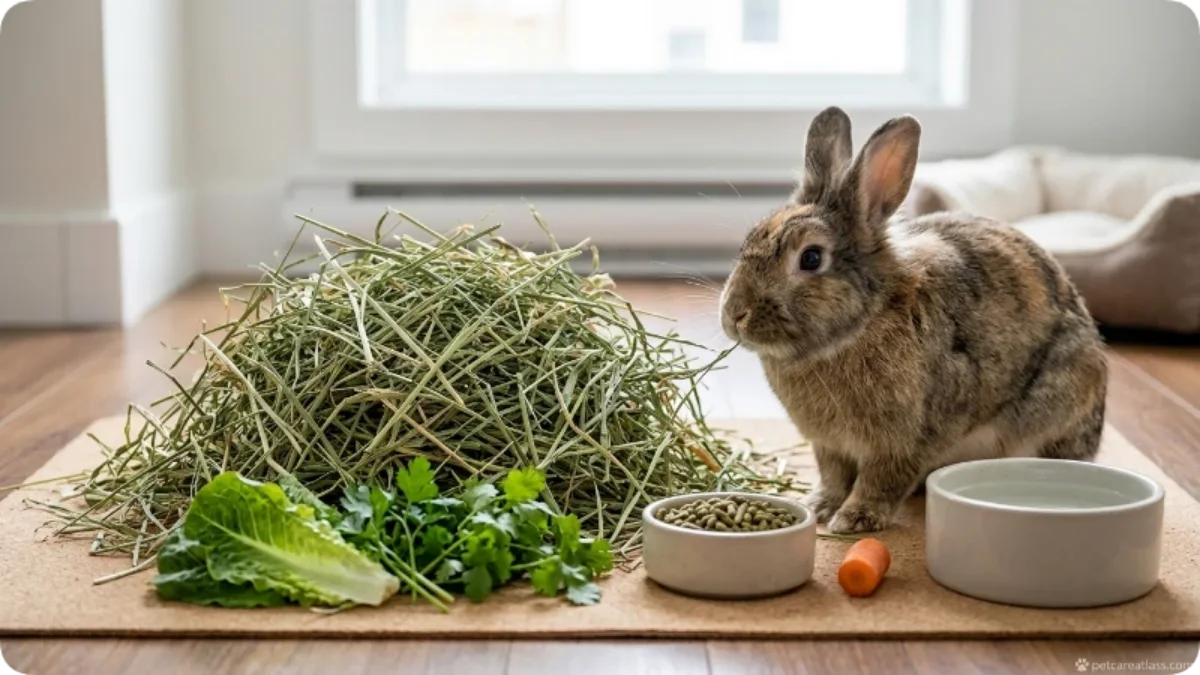
Pet rabbits should eat mostly unlimited grass hay, such as timothy or orchard grass, along with fresh leafy vegetables, a small measured portion of plain rabbit pellets, and unlimited clean water. Young rabbits have different dietary needs, and foods such as sugary fruits, carrots, and treats should only be offered in small amounts.
Pet rabbits need more than carrots and leafy greens to stay healthy. Their diet should consist mainly of fresh grass hay, supplemented with suitable leafy vegetables, a measured amount of rabbit pellets, and clean drinking water.
Understanding what pet rabbits eat is essential because the right balance of fiber and nutrients supports healthy digestion, dental wear, and overall well-being.
Whether you’re bringing home your first rabbit or improving your current feeding routine, knowing which foods are safe, how much to offer, and what to avoid can make a real difference.
This guide explains the best foods for pet rabbits, their daily dietary needs, appropriate portions, and common feeding mistakes so you can provide a balanced diet that supports a healthy, active life.
What Should a Pet Rabbit Eat Every Day?
A healthy rabbit’s diet should be built around high-fibre foods.
Current RSPCA guidance gives a useful general structure of approximately 85% hay and fresh grass, 10% leafy greens, and 5% pellets or nuggets. These figures are best treated as a practical guide rather than an exact prescription for every rabbit because age, body condition, activity, reproductive status, and health can affect individual nutritional needs.
The basic diet includes:
- Unlimited good-quality hay or safe grass
- A variety of suitable leafy greens and herbs
- A small measured amount of high-quality rabbit pellets or nuggets
- Fresh, clean water at all times
- Small amounts of suitable fruit or vegetables as occasional treats
The important distinction is that hay and grass are the foundation, while pellets and treats are supporting parts of the diet.
Rabbit Diet at a Glance
| Food | Role in Diet | Feeding Guidance |
|---|---|---|
| Hay | Main fibre source | Keep available at all times |
| Safe fresh grass | Natural high-fibre food | Offer when safely available |
| Leafy greens and herbs | Variety and nutrients | Offer daily in suitable amounts |
| Rabbit pellets/nuggets | Nutritional supplement | Serve small, measured portions |
| Fruit | Treat | Offer occasionally in small amounts |
| Carrots/root vegetables | Treat | Offer occasionally in small amounts |
| Fresh water | Essential for hydration | Keep available at all times |
A rabbit’s individual diet may need adjustment if it is young, pregnant, nursing, underweight, heavier person, older people, or affected by a health problem. When in doubt, a veterinarian familiar with rabbit care can help determine an appropriate feeding plan.
Why Is Hay So Important for Rabbits?
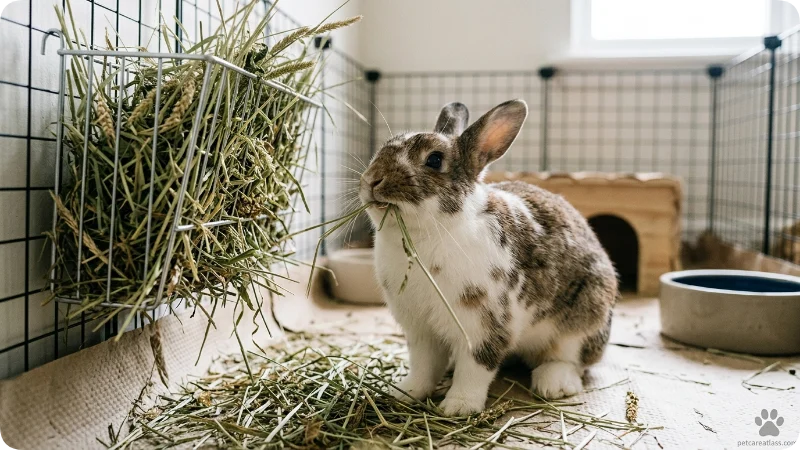
Hay is the most important food in a pet rabbit’s everyday diet.
Rabbits naturally spend a large part of their time grazing and chewing fibrous plant material. Good-quality hay supplies fibre and encourages the prolonged chewing rabbits need. It also helps support normal digestive movement and natural feeding behaviour.
Rabbit teeth grow continuously. Eating fibrous foods that require plenty of chewing helps provide the natural tooth wear rabbits need. An unsuitable diet can contribute to dental problems.
How much hay should a rabbit eat?
Your rabbit should have constant access to good-quality hay, rather than receiving a single portion at a particular meal.
The RSPCA suggests providing a daily bundle of hay roughly as large as the rabbit itself as a practical guide. The hay should be fresh, good quality, and relatively dust-free.
Replace hay that becomes wet, dirty, mouldy, or contaminated.
If your rabbit suddenly refuses hay, do not automatically assume it is simply being fussy. Dental pain or another health problem can make chewing uncomfortable.
Can rabbits eat fresh grass?
Yes. Safe fresh grass can be an excellent source of fibre.
However, rabbits that are not accustomed to fresh grass should be introduced to it gradually. Grass should come from an area that has not been treated with potentially harmful chemicals or contaminated by other hazards.
Never feed lawnmower clippings. They can become unsafe and may make rabbits ill.
What Leafy Greens Can Rabbits Eat?
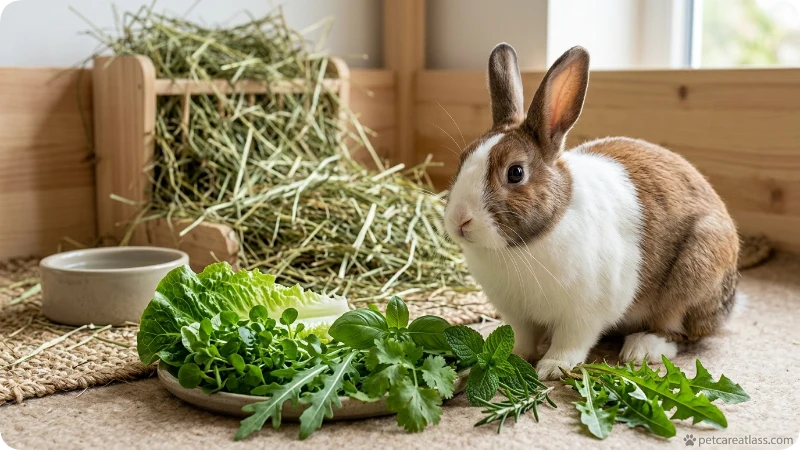
Leafy greens and herbs provide variety alongside the rabbit’s hay or grass.
Suitable examples include:
- Romaine lettuce
- Spring greens
- Watercress
- Rocket
- Basil
- Rosemary
- Coriander
- Mint
- Dandelion leaves
The RSPCA recommends offering a variety of safe leafy greens, herbs, and suitable weeds rather than relying on only one type every day. Some foods, including spinach, cabbage, and celery, may also be suitable but are better offered less frequently.
A good rule for leafy greens
Variety matters more than feeding a huge quantity of one vegetable.
Wash suitable greens before feeding them, remove spoiled leaves, and introduce unfamiliar foods gradually.
If you forage for your rabbit, only collect plants you can confidently identify as safe. Avoid areas exposed to pesticides, herbicides, roadside pollution, or other contamination.
Common Rabbit-Safe Foods
| Food | Suitable? | How to Use It |
|---|---|---|
| Romaine lettuce | Yes | Offer as a leafy green |
| Watercress | Yes | Include in a varied selection |
| Rocket | Yes | Offer as a leafy green |
| Basil | Yes | Add variety with fresh herbs |
| Coriander | Yes | Mix with other greens |
| Mint | Yes | Offer as a herb |
| Rosemary | Yes | Include occasionally for variety |
| Dandelion leaves | Yes, if correctly identified and clean | Offer as safe forage |
| Celery | Yes, in moderation | Rotate with other vegetables |
| Cabbage | Yes, in moderation | Include as part of a varied diet |
| Spinach | Limited | Rotate; do not use as the main green |
This table is a practical starting point, not a complete list of every plant a rabbit can or cannot eat.
If you cannot confidently identify a plant as rabbit-safe, do not feed it.
Some common garden and household plants are toxic to rabbits, including plants such as foxgloves, bluebells, holly, and tulips.
Can Rabbits Eat Carrots?
Yes, rabbits can eat carrots, but carrots should be treated as an occasional food rather than a dietary staple.
The familiar cartoon image of a rabbit eating a large carrot every day can create a misleading impression. Carrots contain considerably more sugar than the hay and leafy greens that should make up most of a rabbit’s diet.
Instead of giving large amounts of carrot, offer a small piece occasionally.
Carrot tops are a different matter: the leafy tops can be included among suitable greens when they are clean and appropriately sourced.
What Other Vegetables Can Rabbits Eat?
Some vegetables can be offered in small quantities as part of a varied diet.
Examples include:
- Cucumber
- Celery
- Green beans
- Swede
- Suitable root vegetables
- Carrot
However, vegetables should not displace hay or grass.
A common mistake is to see a rabbit enthusiastically eating vegetables and assume that more vegetables must be better. A rabbit may happily consume a bowl of vegetables while still failing to get enough fibre from hay.
The goal is balance, not maximum variety or volume.
Can Rabbits Eat Fruit?
Yes, some fruits can be given as occasional treats.
Suitable examples include small portions of:
- Apple
- Strawberry
- Banana
Fruit should remain a small part of the diet because it contains natural sugars.
If offering apple, remove the seeds and core rather than giving the whole fruit to your rabbit. The RSPCA specifically advises against feeding fruit seeds or pits.
Common Fruit and Treat Guide
| Food | Suitable? | Feeding Guidance |
|---|---|---|
| Apple | Yes | Small occasional portion; remove seeds and core |
| Strawberry | Yes | Offer as an occasional treat |
| Banana | Yes | Very small portion due to high sugar |
| Carrot | Yes | Offer as an occasional treat |
| Cucumber | Generally suitable | Small amounts as part of a varied diet |
| Dried fruit | Best avoided routinely | Contains concentrated sugar |
| Chocolate | No | Never feed to rabbits |
| Sugary human snacks | No | Not suitable for rabbits |
A useful way to think about treats is:
If your rabbit could eat it in unlimited quantities, it probably should not be treated as a treat.
Do Rabbits Need Pellets?
Pellets or nuggets can be useful, but they should make up only a small part of the diet.
High-quality rabbit pellets provide additional nutrients, vitamins, and minerals. They should be measured rather than continually topped up because rabbits may eat the more calorie-dense pellets instead of consuming enough hay or grass.
For a healthy adult rabbit, the RSPCA gives 25 g of nuggets per kilogram of body weight per day as a general guide, while stressing that the amount should be adjusted according to the individual rabbit’s lifestyle, activity, age, and health.
For example, a 2 kg healthy adult rabbit would have a general guide of about 50 g of nuggets per day.
That does not mean every 2 kg rabbit automatically needs exactly 50 g. Body condition and individual circumstances still matter.
What should you look for in rabbit pellets?
Choose a rabbit-specific food that:
- Is designed specifically for rabbits
- Has a high-fibre profile
- Is nutritionally appropriate for the rabbit’s life stage
- Can be provided in a measured portion
- Does not encourage selective feeding
If you are unsure which pellet is appropriate, ask your veterinarian rather than choosing solely because the packaging looks attractive.
Are Muesli-Style Rabbit Foods Good?
Muesli-style rabbit mixes are generally not recommended.
These foods can contain a mixture of pellets, grains, seeds, flakes, peas, and other ingredients. Rabbits may selectively eat the parts they prefer and leave other components behind. This can contribute to an unbalanced diet and may increase the risk of excessive weight gain and dental or digestive problems.
If your rabbit currently eats a muesli-style mixture, do not suddenly remove it and replace it with a completely different diet.
A diet change should be made gradually. The RSPCA recommends transitioning over several weeks, with its current guidance describing a 14–28 day transition for moving away from muesli, depending on the individual rabbit.
If your rabbit develops appetite or digestive changes during a diet transition, contact your veterinarian.
What Foods Should Rabbits Not Eat?
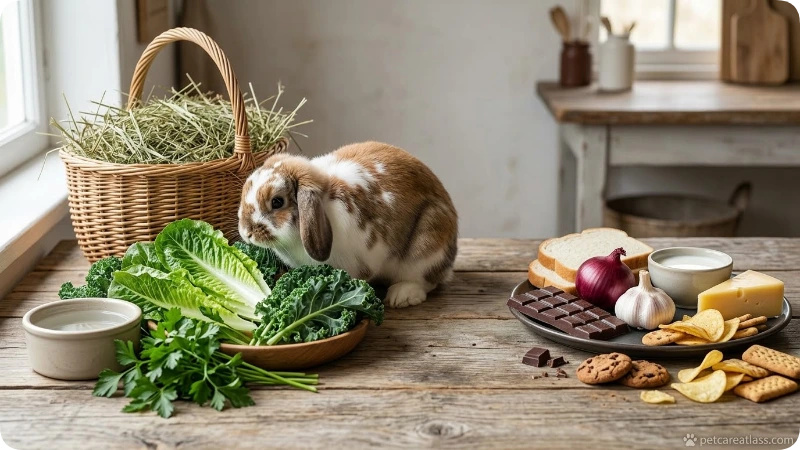
Knowing what rabbits should not eat is an essential part of responsible feeding.
Foods and substances to avoid include:
- Chocolate
- Avocado
- Onion
- Garlic
- Leeks
- Meat
- Eggs
- Dairy products
- Bread
- Pasta
- Potatoes
- Sweet potatoes
- Caffeine
- Foods containing xylitol or other unsuitable artificial sweeteners
- Mushrooms
- Sweetcorn
- Rhubarb
- Fruit seeds and pits
- Muesli-style rabbit mixes
- Lawnmower clippings
- Toxic plants
- Sugary or salty processed human foods
The RSPCA also advises against foods such as cereals and certain beans for rabbits.
Foods to Avoid
| Food or Substance | Why to Avoid It |
|---|---|
| Chocolate and caffeine | Unsafe for rabbits |
| Avocado | Not suitable for rabbits |
| Onion and garlic | Can be harmful |
| Meat and eggs | Not suitable for herbivores |
| Dairy products | Not appropriate for rabbits |
| Bread and pasta | High in starch and unsuitable |
| Xylitol-containing foods | Potentially dangerous |
| Potatoes | Not suitable for rabbits |
| Lawnmower clippings | Can make rabbits ill |
| Toxic plants | May cause serious poisoning |
| Muesli mixes | Can encourage selective feeding |
| Sugary or salty snacks | Poor nutritional choice |
If you believe your rabbit has eaten something poisonous or potentially dangerous, contact a veterinarian promptly rather than waiting to see whether symptoms appear.
How Much Water Does a Rabbit Need?
Your rabbit should have fresh, clean drinking water available at all times.
Some rabbits prefer a heavy ceramic bowl, while others use a drinking bottle. A bowl should be stable and difficult to tip over. If you use a bottle, check that the nozzle is working and not blocked.
Water containers should be cleaned regularly and the water refreshed frequently.
A sudden change in drinking habits can also be a useful health warning. If your rabbit begins drinking significantly more or less than usual, particularly alongside appetite, weight, or droppings changes, speak with your veterinarian.
Why Do Rabbits Eat Their Own Droppings?
This behaviour can look strange to a new rabbit owner, but it is normal and important.
Rabbits produce two types of droppings:
- Hard faecal pellets
- Soft caecotrophs
Caecotrophs contain nutrients that rabbits need to consume again so they can obtain more nutritional value from their food. Rabbits normally eat them directly, so owners may not see this happening.
You should not try to prevent a healthy rabbit from eating its caecotrophs.
However, if you regularly see large amounts of soft, uneaten material around the rabbit’s living area or attached to its fur, it may indicate a diet, weight, mobility, or health problem that needs attention.
How Does Diet Affect Rabbit Teeth?
Rabbit teeth continue to grow throughout their lives.
This is why chewing is not optional enrichment it is an important part of normal rabbit care.
Hay and grass require rabbits to chew extensively. A diet dominated by soft foods, excessive treats, or inappropriate feeding may not provide the same chewing demands and fibre intake.
Dental problems can also create a vicious cycle: a rabbit with painful teeth may eat less hay because hay requires more chewing, which can make it even harder to maintain an appropriate diet.
If your rabbit drools, struggles to chew, drops food, becomes reluctant to eat hay, or suddenly changes its eating habits, veterinary assessment is important.
What Should Baby Rabbits Eat?
Baby rabbits should not automatically be placed on exactly the same feeding plan as a healthy adult rabbit.
Young rabbits are growing and may have different nutritional requirements. The same is true of pregnant, nursing, underweight, or ill rabbits.
If you have a young rabbit, especially one that has recently been weaned or whose previous diet is unknown, ask a rabbit-experienced veterinarian for guidance on:
- Appropriate food for its age
- Pellet quantity
- When and how to introduce greens
- Hay and grass
- Healthy growth
- Weight monitoring
- Transitioning from its previous diet
Avoid making major dietary changes based solely on a general adult-rabbit feeding chart.
How Should You Introduce New Foods?
Rabbits can be sensitive to sudden dietary changes.
If you want to introduce a new vegetable, herb, pellet, or feeding routine, make the change gradually rather than suddenly replacing the entire diet.
A simple approach is:
- Keep unlimited hay and fresh water available.
- Introduce one unfamiliar food at a time.
- Start with a small amount.
- Watch appetite and droppings.
- Increase gradually if your rabbit tolerates it.
- Avoid introducing several new foods at once.
Introducing foods slowly also makes it easier to identify what caused a problem if your rabbit develops digestive changes.
What Does a Healthy Rabbit Feeding Routine Look Like?
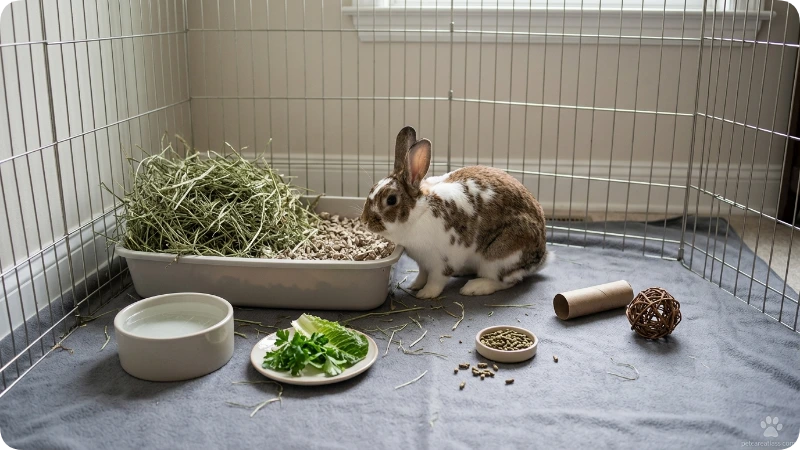
A rabbit’s feeding routine does not need to be complicated.
Morning
Check the water and provide fresh hay. Offer the appropriate daily selection of leafy greens.
During the day
Make sure hay remains available. You can also use part of the rabbit’s normal food ration for enrichment.
Evening
Refresh hay and provide the measured pellet portion according to your rabbit’s individual feeding plan.
Throughout the day
Monitor:
- Appetite
- Water intake
- Droppings
- Weight and body condition
- Energy
- Normal behaviour
- Hay consumption
You can also make feeding more interesting by encouraging natural foraging. For example, appropriate portions of greens or pellets can be scattered around the enclosure instead of always being placed in one bowl. RSPCA enrichment guidance recommends using normal daily food portions not additional food for activities such as scatter feeding and suitable food puzzles.
How Can You Tell If Your Rabbit Is Eating Enough?
There is no single amount that works for every rabbit.
Instead of judging food intake only by how quickly the bowl becomes empty, pay attention to the whole picture.
A healthy feeding routine generally includes:
- Regular hay consumption
- Normal interest in food
- Normal drinking
- Regular, normal-looking droppings
- Stable body condition
- Normal energy and behaviour
If your rabbit suddenly eats less, refuses food, produces fewer droppings, becomes unusually quiet, or shows difficulty eating, take the change seriously.
Rabbits can become seriously ill when they stop eating. Reduced appetite can occur with conditions such as gastrointestinal problems or dental disease.
Common Rabbit Feeding Mistakes
1. Feeding too many carrots
Carrots are treats, not the foundation of a rabbit’s diet.
Better approach: Prioritise hay and safe grass.
2. Giving unlimited pellets
Pellets are more calorie-dense than hay and can become too attractive when always available.
Better approach: Measure the daily amount.
3. Providing too little hay
A small handful that disappears quickly is not necessarily enough for the entire day.
Better approach: Keep fresh hay available continuously.
4. Changing food too quickly
Sudden dietary changes can upset the digestive system.
Better approach: Transition gradually.
5. Feeding too many treats
Fruit and root vegetables can seem harmless because they are natural foods, but that does not mean rabbits should eat unlimited amounts.
Better approach: Keep treats small and occasional.
6. Assuming every plant is safe
Some garden and house plants are poisonous.
Better approach: Feed only plants you can confidently identify as rabbit-safe.
7. Ignoring changes in appetite
A rabbit that stops eating is not simply being fussy.
Better approach: Contact a veterinarian promptly.
When Should You Contact a Veterinarian?
A change in eating behaviour can be an important health warning in rabbits.
Contact your veterinarian promptly if your rabbit:
- Stops eating
- Eats substantially less than usual
- Produces fewer droppings
- Stops producing droppings
- Has persistent diarrhoea or abnormal faeces
- Drools
- Struggles to chew
- Loses weight unexpectedly
- Becomes unusually quiet
- Shows a major change in drinking
- May have eaten a poisonous substance
Rabbits can hide signs of illness, so changes in appetite, drinking, behaviour, or droppings deserve attention. The RSPCA advises contacting a veterinarian promptly when these normal patterns change.
Do not wait for a rabbit to “get hungry enough” if it has stopped eating.
Loss of appetite can be associated with serious problems, including gastrointestinal stasis, and requires veterinary attention.
Frequently Asked Questions
What is the main food for pet rabbits?
Hay or safe grass should make up the majority of a pet rabbit’s diet. It provides important fibre and encourages the chewing rabbits need for normal dental and digestive health.
How much hay should a rabbit eat each day?
Hay should be available at all times rather than being limited to one meal. As a practical guide, the RSPCA recommends providing a daily bundle roughly as large as the rabbit itself.
Can rabbits eat carrots every day?
Carrots are better treated as occasional treats rather than everyday staple food. They contain more sugar than the hay and leafy greens that should form most of a rabbit’s diet.
Can rabbits eat lettuce?
Suitable leafy lettuces such as romaine can be included as part of a varied selection of greens. Avoid assuming every type of lettuce is equally appropriate, and introduce unfamiliar foods gradually.
Can rabbits eat bananas?
Rabbits can have a small amount of banana as an occasional treat. Because banana is relatively sugary, it should not become a regular or large part of the diet.
Can rabbits eat celery?
Celery can be included in a varied rabbit diet, but it should not replace hay and should be offered as part of an overall balanced selection of greens.
What should I do if my rabbit suddenly stops eating?
Contact a veterinarian promptly. A sudden loss of appetite or reduction in droppings can indicate a serious health problem and should not be treated simply by offering more treats.
Conclusion
So, what do pet rabbits eat? The healthiest starting point is surprisingly simple: make good-quality hay and safe grass the foundation, provide suitable leafy greens for variety, offer a small measured amount of appropriate rabbit pellets, and keep fresh water available at all times.
Carrots and fruit can be enjoyable treats, but they should not replace the high-fibre foods rabbits depend on. Avoid muesli-style mixes, unsuitable human foods, toxic plants, and sudden diet changes.
Most importantly, learn your rabbit’s normal eating, drinking, and toileting habits. When those patterns change especially when a rabbit stops eating or produces fewer droppings take it seriously and contact a veterinarian.
A good rabbit diet is not about providing the biggest bowl or the most treats. It is about giving your rabbit the right balance of fibre, variety, hydration, measured nutrition, and natural opportunities to graze and forage.

Daniel Brooks is a pet care and animal behavior writer at petcareatlass.com focused on helping owners better understand their pets’ behavior and everyday needs. He creates practical, easy-to-follow content on pet communication, training, welfare, and responsible care.