Quick Answer:
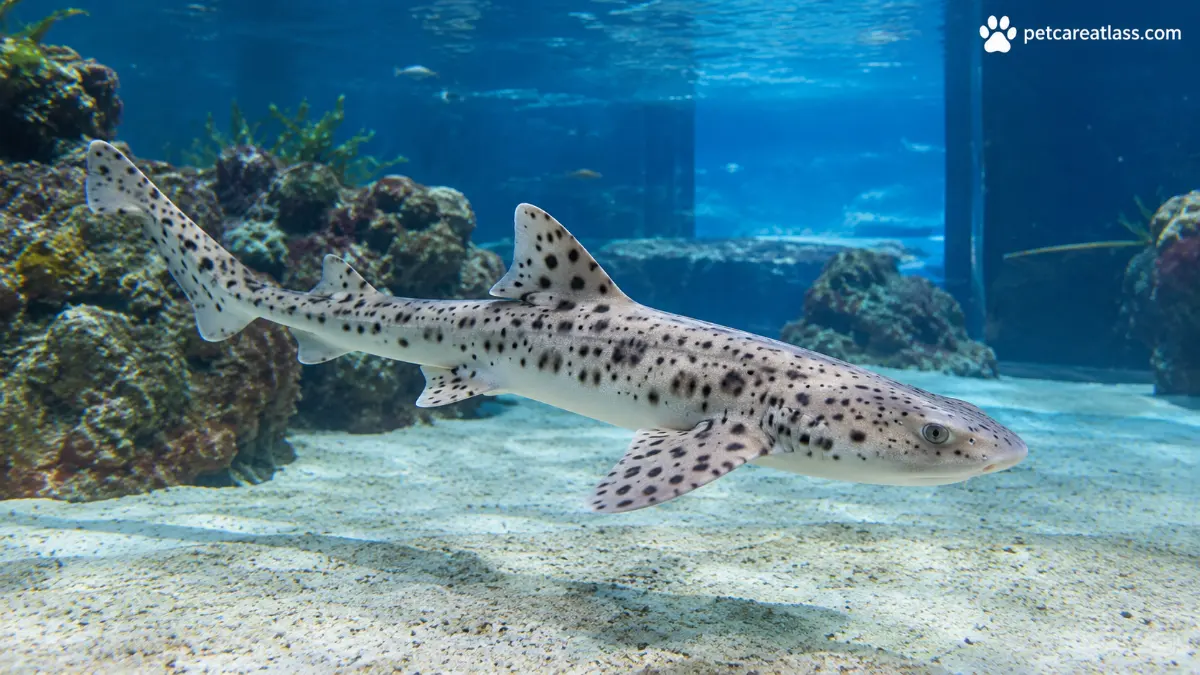
Some shark species can be kept in large home aquariums, but most are unsuitable for ordinary household fish tanks. Smaller bottom-dwelling species, such as certain bamboo sharks, coral catsharks, and epaulette sharks, may be considered by experienced marine aquarists. However, they still require substantial space, specialized filtration, appropriate marine diets, and long-term care.
Introduction
Keeping a shark in a home aquarium can sound exciting, especially for people who enjoy marine life and want something different from traditional aquarium fish. However, owning a shark involves considerably more responsibility than setting up a typical saltwater tank. Even species marketed as small aquarium sharks can grow larger than expected or require specialized environments.
Before choosing one, it is essential to understand which species may be appropriate, how much space they need, what they eat, and whether you can provide suitable long-term care. This guide explains the realities of keeping pet sharks for home aquariums and how to make a responsible decision.
Are Sharks Suitable for Home Aquariums?
Some sharks can live in carefully designed private aquariums, but they are not suitable for most beginner fishkeepers.
Unlike small community fish, sharks have specialized swimming, feeding, and environmental requirements. Their needs vary considerably depending on their species, adult size, natural habitat, and activity level.
For example, some bottom-dwelling sharks spend much of their time resting on the substrate and searching for food. Others are active swimmers that need long, unobstructed swimming areas.
A suitable aquarium must provide:
- Enough swimming and resting space for the shark’s adult size.
- Stable saltwater conditions appropriate for its species.
- Powerful biological filtration and reliable water circulation.
- A secure aquarium design that prevents injuries and escapes.
- Species-appropriate food and consistent feeding routines.
- Access to a veterinarian experienced in aquatic or elasmobranch medicine.
Important: A shark that looks small in a pet store is not necessarily a small adult species. Always research its mature size rather than choosing an aquarium based on its current length.
Pet Shark Species to Consider for Home Aquariums
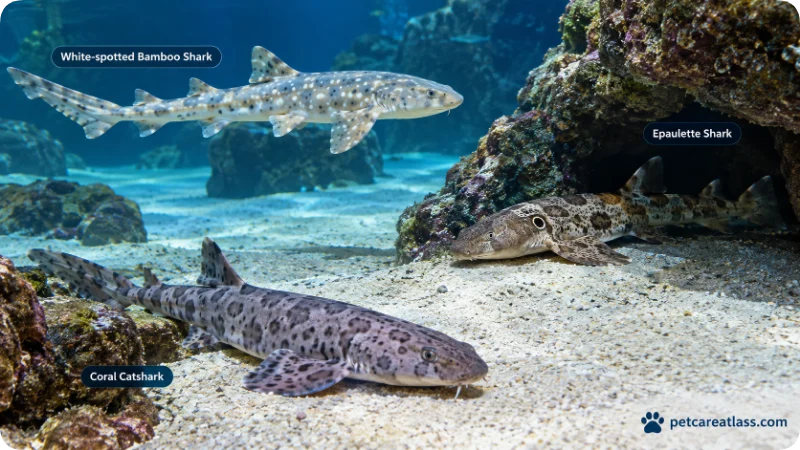
Not all sharks have the same habitat requirements. Some species are relatively small, spend most of their time near the bottom, and are better adapted to aquarium environments than large, continuously swimming sharks.
The following species are worth understanding before considering ownership.
1. Bamboo Sharks
Bamboo sharks are among the species most frequently discussed in the marine aquarium hobby. They belong to the carpet shark group and are generally bottom-dwelling animals.
Two commonly discussed species are:
- Whitespotted bamboo shark: Recognizable by its pale body and dark spots, this species is sometimes called the white-spotted bamboo catshark.
- Brownbanded bamboo shark: Juveniles have distinctive dark and light bands that become less noticeable as they mature.
Both species require substantial floor space, suitable hiding areas, sandy substrate, and carefully maintained saltwater conditions. They are carnivorous and need an appropriate marine diet.
Bamboo sharks should not be purchased simply because they are sold as small aquarium sharks. Their adult size and long-term housing requirements must be considered before purchase.
2. Epaulette Sharks
The epaulette shark (Hemiscyllium ocellatum) is a distinctive bottom-dwelling species found around Australia and New Guinea.
It has a slender body, spotted markings, and a noticeable dark spot behind each pectoral fin. One of its unusual characteristics is its ability to move across shallow reef environments using its paired fins in a walking-like motion.
According to the Aquarium of the Pacific, epaulette sharks typically reach approximately 27–35 inches, although individuals can grow larger. They primarily feed on bottom-dwelling invertebrates. [1]
Aquarium considerations:
- Provide a large aquarium with plenty of unobstructed floor space.
- Maintain stable marine water conditions.
- Include suitable hiding areas without creating sharp obstacles.
- Offer an appropriate carnivorous diet.
- Avoid assuming that this species is suitable for a standard home aquarium.
Although it is relatively small compared with many sharks, an adult epaulette shark still needs a specialized aquarium.
3. Coral Catsharks
The coral catshark (Atelomycterus marmoratus) is another species discussed by experienced marine aquarists.
It has a slender body with attractive dark markings and spends much of its time close to the substrate. Unlike some less active bottom-dwelling sharks, coral catsharks can move around their habitat and explore rocky areas.
They need:
- A spacious aquarium with an appropriate footprint.
- Soft sand and carefully arranged hiding spaces.
- Excellent filtration and stable water quality.
- A suitable diet containing marine animal foods.
- Careful selection of compatible tankmates.
Coral catsharks are not miniature sharks. Their adult size and activity level mean that a much larger aquarium may be necessary than the minimum suggested by basic care listings. The University of Florida’s guidance on shark aquarium selection emphasizes designing the aquarium around the shark’s maximum adult length and swimming requirements. [2]
4. Other Catsharks
Catsharks are a diverse group, and the name covers numerous species with different sizes, habitats, and care requirements.
Some are occasionally discussed in specialized aquarium keeping, but that does not mean every catshark is appropriate for private ownership.
Before considering one, verify its scientific name, adult size, natural temperature range, feeding requirements, conservation status, and availability from a responsible source.
Never purchase an unidentified shark based only on a common trade name.
Comparison of Pet Sharks for Home Aquariums
The following comparison provides a starting point for researching potential species. It is not a recommendation to purchase any of them.
| Shark Species | Adult Size | Aquarium Suitability |
|---|---|---|
| Whitespotted bamboo shark | About 3 feet | Experienced keepers with large tanks |
| Brownbanded bamboo shark | About 3–4 feet | Specialized large aquariums |
| Epaulette shark | Typically 27–35 inches | Experienced keepers with specialized tanks |
| Coral catshark | About 2 feet or more | Large, carefully designed aquariums |
| Australian marbled catshark | Varies by species | Requires individual assessment |
Adult sizes are approximate and vary by species and individual. Do not use these figures alone to determine aquarium dimensions.
How Big Should an Aquarium Be for a Pet Shark?
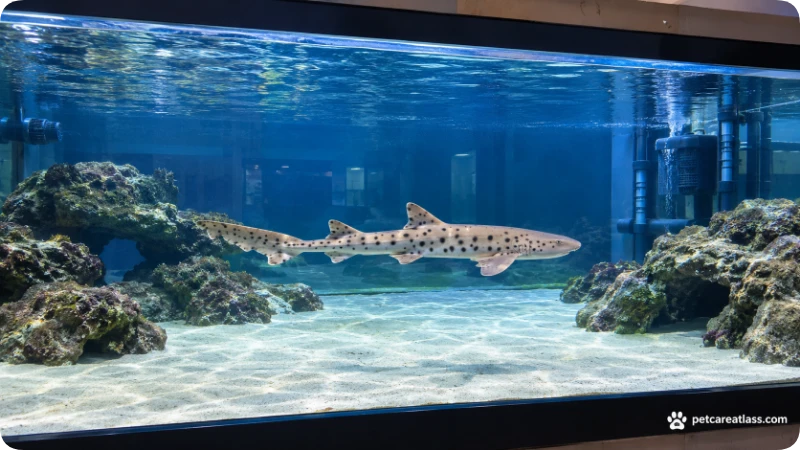
Aquarium size is one of the most important considerations when keeping a shark.
A shark needs enough room to move naturally, turn without difficulty, rest comfortably, and access its preferred areas. Tank volume alone does not tell you whether an aquarium is suitable.
For example, a tall aquarium with substantial water volume may still have an unsuitable footprint for a bottom-dwelling shark.
The University of Florida’s IFAS Extension publication, Sharks for the Aquarium and Considerations for Their Selection, provides a useful starting rule: multiply a shark’s maximum adult length by three to estimate the minimum length and width of its aquarium. This is a general selection guideline, not a universal welfare standard or a substitute for species-specific professional advice. [2]
Aquarium Size Considerations
Before purchasing a shark, evaluate:
- Length: The aquarium must allow the shark to move without repeatedly contacting the walls.
- Width: Bottom-dwelling species need adequate floor space for turning and resting.
- Depth: Water depth should suit the species and allow appropriate movement.
- Water volume: Larger systems generally provide more stability when properly filtered.
- Structural support: Large saltwater aquariums are extremely heavy and may require professional assessment of the floor and supporting structure.
For a shark approaching 3 feet in adult length, the general three-times guideline suggests an aquarium footprint of approximately 9 feet by 9 feet. Actual requirements must be assessed for the individual species and its behavior.
Do not buy a juvenile shark with the intention of upgrading later unless you already have a realistic, funded long-term housing plan.
Essential Aquarium Conditions for Pet Sharks
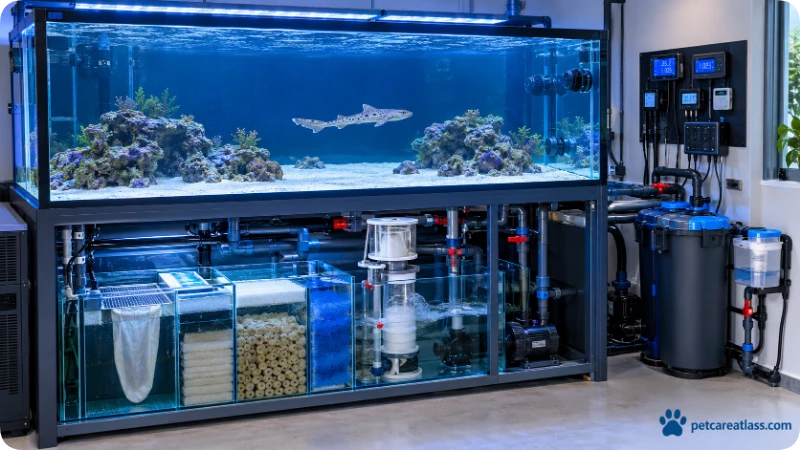
Sharks require carefully managed marine environments. Poor water quality, unsuitable equipment, and inadequate swimming space can create serious welfare problems.
1. Water Quality and Salinity
Marine sharks need saltwater conditions appropriate for their natural habitat.
Important parameters include:
- Salinity and specific gravity.
- Water temperature.
- pH and alkalinity.
- Ammonia and nitrite.
- Nitrate.
- Dissolved oxygen.
These parameters should be monitored consistently with reliable aquarium testing equipment.
Avoid making sudden changes to salinity, temperature, or other water conditions. Sharks can be sensitive to environmental instability.
2. Filtration and Water Circulation
Sharks produce biological waste that can place considerable demands on aquarium filtration.
A properly designed system may include:
- Oversized biological filtration.
- Mechanical filtration to remove suspended waste.
- Protein skimming where appropriate.
- Reliable water circulation.
- Adequate oxygenation.
- Backup equipment for essential life-support systems.
The filtration system must be designed around the shark’s adult size, feeding needs, and total aquarium bioload rather than the size of a juvenile.
3. Substrate and Hiding Areas
Bottom-dwelling sharks need a comfortable environment that allows natural resting and feeding behavior.
Soft, appropriately maintained sand is generally preferable to sharp gravel or rough surfaces. Smooth, stable hiding structures can also provide shelter.
Avoid decorations with sharp edges, narrow openings, or spaces where a shark could become trapped.
4. Aquarium Cover and Electrical Safety
A secure cover helps prevent accidental escapes, while equipment should be installed to reduce the risk of electrical hazards.
Use properly maintained aquarium equipment and appropriate electrical protection. Check pumps, heaters, cables, and other components regularly.
What Do Pet Sharks Eat?
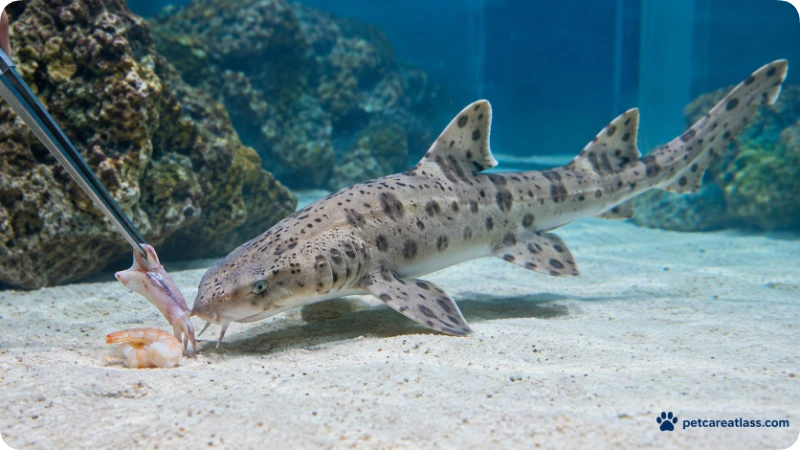
Sharks are carnivores, but their exact nutritional requirements depend on their species and natural feeding behavior.
Bamboo sharks and other bottom-dwelling species commonly feed on marine animals, including crustaceans, mollusks, and small fish.
A captive shark may be offered an appropriately formulated diet containing suitable marine seafood, but feeding should be planned around its nutritional requirements rather than relying on one food item.
Common Food Options
Depending on the species and veterinary feeding plan, suitable food items may include:
- Marine shrimp.
- Squid.
- Appropriate pieces of marine fish.
- Shellfish and other marine invertebrates.
- Commercially prepared shark diets when appropriate.
Why Shark Nutrition Requires Special Attention
Feeding a shark only shrimp or fish does not necessarily provide complete nutrition.
The University of Florida explains that captive sharks can develop nutritional deficiencies when their diets lack essential vitamins and minerals. It also highlights challenges with feeding behavior and vitamin supplementation. [2]
For this reason, a shark’s diet should be developed with guidance from an experienced aquatic veterinarian or qualified shark-care professional.
Do not use vitamin supplements or change feeding quantities without species-specific guidance.
Can Pet Sharks Live With Other Aquarium Fish?
Some sharks can coexist with carefully selected fish, but compatibility depends on the shark’s species, size, feeding behavior, and tankmates.
A shark may ignore certain fish while treating smaller animals or bottom-dwelling invertebrates as food.
For example, the University of Florida identifies bamboo sharks as generally less aggressive toward other fish but notes that they may prey on invertebrates such as clams and other shellfish. [2]
Consider the following before introducing tankmates:
- Avoid fish small enough to become potential prey.
- Do not assume peaceful behavior guarantees compatibility.
- Consider whether other animals compete for food or resting areas.
- Monitor interactions and feeding behavior.
- Have a separate, appropriately equipped housing plan if compatibility becomes a problem.
A single-species aquarium may be a more responsible option for some sharks.
How Much Does It Cost to Keep a Pet Shark?
Keeping a shark can be considerably more expensive than maintaining a conventional saltwater aquarium.
The purchase price is only one part of the financial commitment. The aquarium, supporting equipment, electricity, food, water testing, maintenance, and veterinary care can create substantial ongoing expenses.
Main Ownership Expenses
| Expense | What to Consider |
|---|---|
| Aquarium | Large, species-appropriate tank and support |
| Filtration | Powerful biological and mechanical filters |
| Protein skimmer | Equipment for marine water quality |
| Saltwater supplies | Marine salt, water preparation, and test kits |
| Electricity | Continuous pump and filter operation |
| Food | Suitable marine seafood and balanced nutrition |
| Veterinary care | Access to qualified aquatic vets |
| Maintenance | Equipment replacement, cleaning, and water changes |
The University of Florida identifies aquarium construction, labor, electricity, feeding, and transportation as important expenses associated with shark ownership. [2]
There is no reliable universal price for keeping a pet shark because costs depend on the species, aquarium dimensions, equipment, location, and veterinary availability.
Financial advice: Calculate the complete setup and ongoing maintenance costs before purchasing a shark. You should also have a contingency budget for equipment failure and unexpected veterinary expenses.
Are Pet Sharks Legal to Own in the United States?
Shark ownership laws in the United States depend on the species, its source, and the state or local jurisdiction.
There is no single nationwide rule that makes every shark species legal or illegal to keep in a private aquarium.
Before acquiring a shark, check:
- Your state’s fish and wildlife regulations.
- State marine fisheries and possession restrictions.
- Local ordinances that may affect aquarium ownership.
- Federal protections that apply to the particular species.
- Importation, transportation, and wildlife-trade requirements.
Some shark species are subject to international trade controls under the Convention on International Trade in Endangered Species of Wild Fauna and Flora (CITES). These controls can require appropriate documentation and permits for international trade. [3]
NOAA Fisheries also explains that federal and state shark conservation laws regulate different aspects of shark fishing, possession, and trade. These rules should not be confused with a blanket authorization for private aquarium ownership. [4]
Before purchasing: Contact your state wildlife agency and verify the scientific name and legal origin of the animal. Ask the seller for documentation showing its lawful source and any required permits.
Are Pet Sharks Safe to Keep at Home?
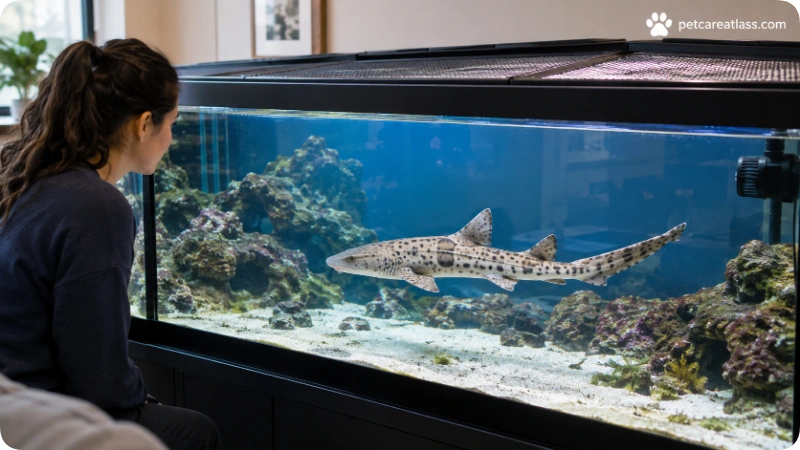
Some aquarium shark species are less likely to pose a threat to people than large predatory sharks, but no shark should be treated as a harmless household pet.
Even smaller species can bite if frightened, restrained, injured, or disturbed. Their skin also has a rough texture that can cause abrasions.
Follow these precautions:
- Never put your hands near a shark’s mouth.
- Avoid unnecessary handling or chasing.
- Do not attempt to lift a shark by its fins or tail.
- Keep children and visitors from reaching into the aquarium.
- Use appropriate tools for aquarium maintenance.
- Consult an experienced professional if the shark needs to be moved.
Sharks have specialized bodies that can be injured through improper restraint or handling. The University of Florida specifically emphasizes the need for expertise when transporting or physically handling these animals. [2]
If a shark appears injured, stops feeding, develops abnormal swimming behavior, or shows other signs of illness, contact an aquatic veterinarian rather than attempting home treatment.
Common Mistakes to Avoid When Keeping Pet Sharks
Many problems begin before the shark enters the aquarium. Choosing an unsuitable species or underestimating its adult requirements can create long-term welfare problems.
Avoid these common mistakes:
1. Buying a shark because it looks small
Juvenile sharks can grow substantially. Research the species’ maximum adult size before making a purchase.
2. Choosing an aquarium based only on gallons
A large water volume does not automatically provide enough swimming or resting space. Aquarium dimensions matter.
3. Using an ordinary fish diet
Sharks have species-specific nutritional requirements. A limited diet can result in serious nutritional deficiencies.
4. Ignoring water quality
Inadequate filtration and unstable marine conditions can compromise a shark’s health.
5. Mixing incompatible species
Some sharks may prey on tankmates or become aggressive in unsuitable environments.
6. Buying from an unverified seller
Without reliable identification and legal-source documentation, you may unknowingly acquire an unsuitable or illegally traded animal.
7. Underestimating long-term responsibility
A shark is not a temporary aquarium decoration. Its housing, feeding, and veterinary requirements must remain manageable throughout its life.
Should Beginners Keep Sharks in Home Aquariums?
Generally, no. Sharks are not recommended for beginners.
Even relatively small aquarium species require advanced knowledge of marine aquarium systems, water chemistry, filtration, nutrition, and animal behavior.
The University of Florida advises novice aquarists against keeping sharks because successful husbandry requires considerable experience and careful species selection. [2]
If you are new to saltwater aquariums, begin with a properly researched marine fish system. Develop your skills in maintaining stable water conditions, managing filtration, and recognizing signs of aquatic illness before considering more demanding animals.
If you are genuinely interested in sharks, visiting a reputable public aquarium or supporting shark conservation programs can also provide meaningful opportunities to learn about them without taking on unsuitable ownership responsibilities.
How to Choose a Responsible Shark Seller
If you have the necessary experience and facilities, finding a responsible source is an essential part of the decision.
A trustworthy seller should be able to provide:
- The shark’s correct scientific and common names.
- Its approximate age and current size.
- Expected adult size and species-specific care requirements.
- Information about captive breeding or wild collection.
- Feeding history and current diet.
- Relevant legal and international trade documentation.
- Guidance about transport and acclimation.
Ask whether the shark is already eating consistently and whether it has been observed behaving normally.
Avoid sellers who cannot identify the animal accurately, minimize its adult size, or promise that a small aquarium will be sufficient for its entire life.
A responsible seller should be willing to discuss the animal’s long-term needs, even if that means advising you not to purchase it.
Frequently Asked Questions About Pet Sharks
What is the smallest shark you can keep in a home aquarium?
Some smaller bottom-dwelling sharks, including certain catsharks and bamboo sharks, are discussed in the marine aquarium trade. The marble catshark (Atelomycterus macleayi) is among the smaller known species, reaching approximately 2 feet. However, a small adult size does not automatically make a shark suitable for an ordinary home aquarium. [2]
Can you keep a bamboo shark in a 100-gallon tank?
A 100-gallon aquarium is generally unsuitable for an adult bamboo shark. These animals need substantial floor space, stable saltwater conditions, and specialized filtration. Their aquarium should be designed around their expected adult size rather than their juvenile size.
Do pet sharks need saltwater?
Yes. The bamboo sharks, epaulette sharks, and coral catsharks discussed in this guide are marine species and require appropriately maintained saltwater environments. They cannot be kept in ordinary freshwater aquariums.
How long do pet sharks live?
Lifespan varies considerably by species, individual health, and environmental conditions. Some sharks can live for many years or even decades. Prospective owners should research the expected lifespan of the exact species before committing to ownership.
Can sharks recognize their owners?
There is limited evidence to establish that aquarium sharks recognize individual owners in the same way commonly discussed for some domesticated animals. They may become familiar with feeding routines and repeated environmental cues, but this should not be interpreted as proof of a human-like bond.
Are sharks difficult to feed in captivity?
Yes, feeding can be challenging. Different species have different nutritional requirements, and some individuals may be selective about their food. A carefully planned diet is essential because nutritional deficiencies can cause serious health problems. [2]
Can you keep a great white shark in a home aquarium?
No. Great white sharks are large, highly active open-ocean predators with specialized biological and environmental requirements. They are not suitable for private home aquariums. Their care requirements are far beyond what a conventional residential aquarium can provide.
Conclusion
Pet sharks for home aquariums require far more than an attractive tank and regular feeding. Although certain smaller bottom-dwelling species may be maintained by experienced marine aquarists, they still need substantial space, specialized filtration, balanced nutrition, and long-term veterinary support.
Research the exact species, verify its legal status, and assess your facilities before considering ownership. If you cannot meet its lifelong requirements, appreciating sharks in a reputable public aquarium is the more responsible choice.

Daniel Brooks is a pet care and animal behavior writer at petcareatlass.com focused on helping owners better understand their pets’ behavior and everyday needs. He creates practical, easy-to-follow content on pet communication, training, welfare, and responsible care.