Quick Answer:
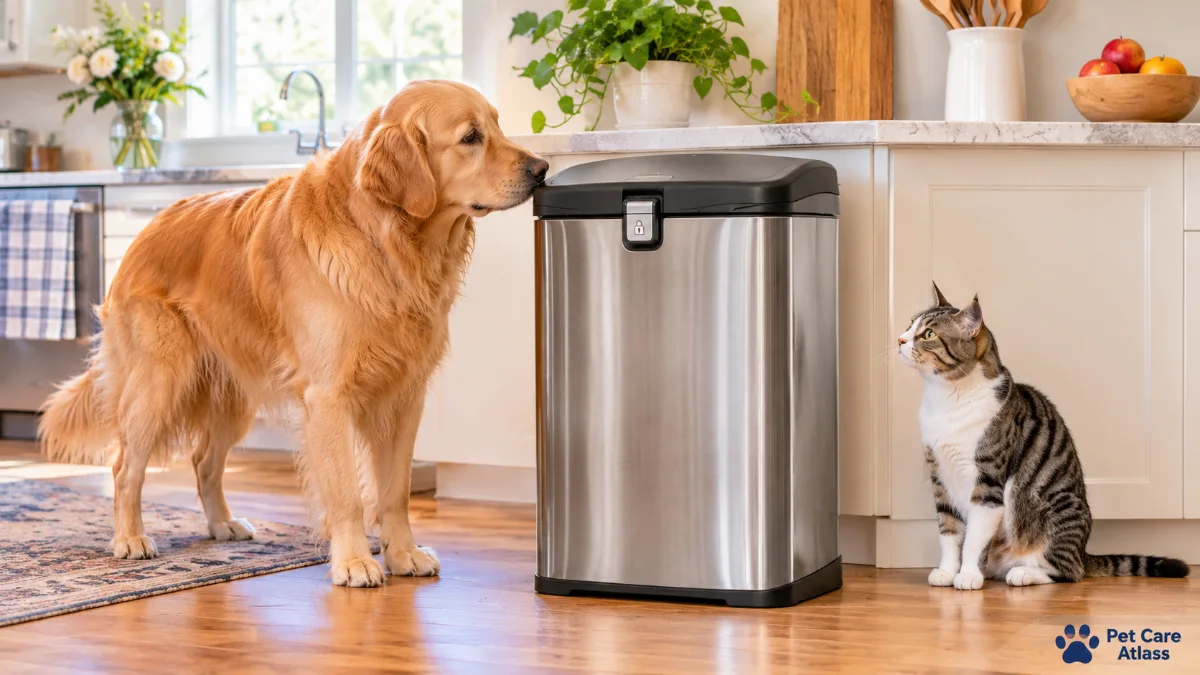
A pet proof trash can helps prevent dogs and cats from opening lids, scattering garbage, or eating potentially harmful waste. Choose a sturdy bin with a locking lid, secure closure, and stable base. The right design, combined with smart trash placement and consistent training, can help keep curious pets away from household garbage.
Pets are naturally curious, and a trash can full of food scraps, wrappers, and interesting smells can quickly become their favorite place to explore. Unfortunately, digging through household garbage can create a mess and expose dogs and cats to spoiled food, choking hazards, and potentially toxic substances.
Even a trash can with a lid may not be enough if your pet can easily knock it over or push it open.A pet proof trash can offers a practical way to make household garbage less accessible to curious pets.
From locking lids and step-operated designs to heavy-duty bins with secure closures, different options can help address different pet behaviors. Understanding which features matter most can help you choose a suitable trash can and create a cleaner, safer home for your pets.
Why Do Dogs and Cats Get Into Trash Cans?
Dogs and cats investigate garbage for different reasons, but food smells, accessible objects, and curiosity can make an unsecured trash can attractive.
Why Dogs Raid Household Garbage
Dogs have a powerful sense of smell and may investigate discarded food even after eating a full meal.
Common reasons include:
- Food odors: Meat scraps, leftover meals, and food packaging can attract dogs.
- Curiosity: Dogs naturally explore unfamiliar household objects.
- Learned behavior: Finding food in the garbage can encourage repeated searching.
- Boredom: Some dogs investigate trash when they lack sufficient enrichment or stimulation.
- Easy access: An open or lightweight container makes garbage particularly tempting.
A dog does not necessarily need to be hungry to search through a trash can. Preventing access is more dependable than expecting the behavior to stop on its own.
Why Cats Knock Over Trash Cans
Cats may investigate garbage containing food packaging, fish scraps, or other interesting smells. Their climbing and jumping abilities also make elevated waste containers less reliable.
Small bathroom wastebaskets can be especially accessible to cats because they are lightweight and often have open tops.
A covered, stable container or secured cabinet is generally a better option than simply placing a wastebasket on a higher surface.
What Makes a Trash Can Pet-Proof?
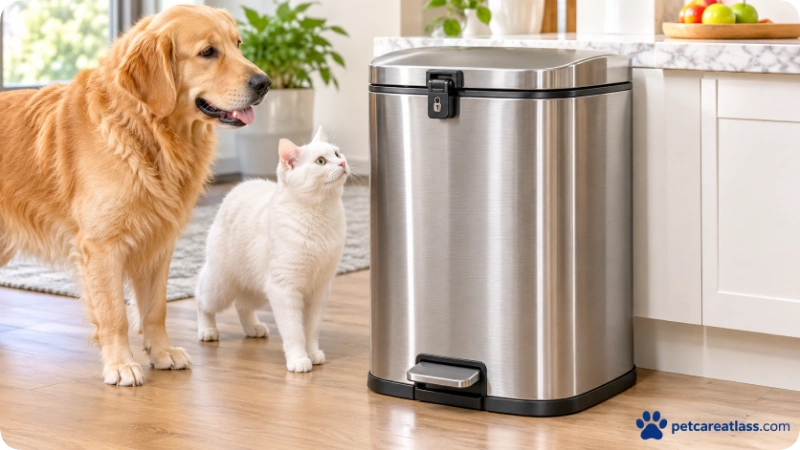
A trash can is not necessarily pet-proof just because it has a lid. Effective designs combine physical security, stability, and convenient everyday use.
| Important Feature | Why It Matters | Best For |
|---|---|---|
| Locking lid | Stops pets lifting the lid | Curious dogs and cats |
| Stable base | Reduces tipping | Large, active dogs |
| Tight-fitting closure | Limits garbage access | Everyday household use |
| Enclosed cabinet | Adds a physical barrier | Persistent pets |
| Durable construction | Handles daily pushing | Homes with active pets |
| Removable inner bucket | Makes cleaning easier | Busy households |
1. Secure Locking Mechanism
A reliable locking mechanism is one of the most important features to consider.
Look for a manual slide lock, twist lock, or another physical closure that prevents the lid from opening when engaged.
A regular step-pedal trash can is not automatically pet-proof. Some dogs can learn to press the pedal with their paws or body weight.
Buying tip: Check whether the lock secures the lid itself or simply disables the opening mechanism. These features are not always equivalent.
2. Heavy and Tip-Resistant Construction
A locking lid will not help much if your dog can knock the entire container onto the floor.
Look for a wide base, sturdy construction, and a design that remains stable during everyday use.
Stainless steel can provide a substantial feel, while plastic models are often lighter and easier to move. However, material alone does not determine stability. Consider the complete container’s weight, base shape, and construction.
3. Tight-Fitting and Secure Lid
A loose lid can leave enough space for a curious pet to reach inside.
Choose a container that closes completely without accessible gaps. Check that the lid does not become difficult to close when the trash bag is installed.
Avoid overfilling the bin because excess garbage can prevent the lid from sealing properly.
4. Enclosed Cabinet-Style Design
For pets that repeatedly defeat ordinary trash cans, an enclosed cabinet-style design may provide better protection.
These containers hide the waste bin behind a cabinet door, drawer, or tilt-out compartment. This creates an additional barrier instead of relying entirely on the trash can’s lid.
Check that the cabinet door closes securely and cannot be pushed open easily.
Types of Pet Proof Trash Cans: Which Design Should You Choose?
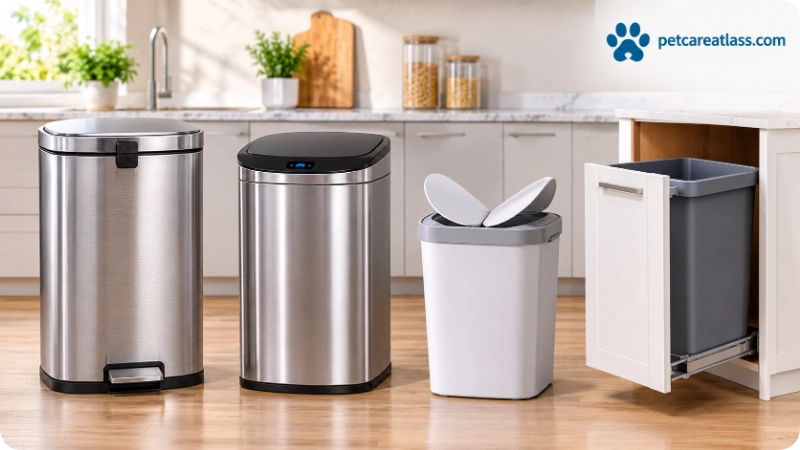
Different trash can designs offer different levels of convenience and protection. Understanding their differences can help you select a container that suits your household.
Locking Step-Pedal Trash Cans
These containers open when someone presses a foot pedal and close when the pedal is released.
They are convenient for kitchen use, especially when your hands are occupied. However, the pedal itself does not provide protection against pets.
Choose a model with a separate locking mechanism that prevents the pedal from opening the lid when engaged.
Motion-Sensor Trash Cans
Motion-sensor models open automatically when movement is detected near the sensor.
Although convenient, they may not be ideal for homes with curious pets. A dog approaching the container could activate the lid and gain access to the garbage.
If you prefer this design, look for a model with a manual locking feature or a way to disable automatic opening.
Butterfly-Lid Trash Cans
Butterfly-lid containers use two panels that open from the center rather than lifting one large lid.
Their compact design can be useful in smaller kitchens. However, a split lid does not automatically prevent pets from accessing the contents.
Check the closure and locking features before choosing this style.
Cabinet-Style and Hidden Trash Cans
Cabinet-style bins keep garbage behind a door, pull-out drawer, or enclosed compartment.
They can be especially useful for large dogs that can reach the top of ordinary trash cans.
Make sure the cabinet is properly secured and that your pet cannot open the door or pull out the container.
How to Choose the Right Pet Proof Trash Can for Your Pet
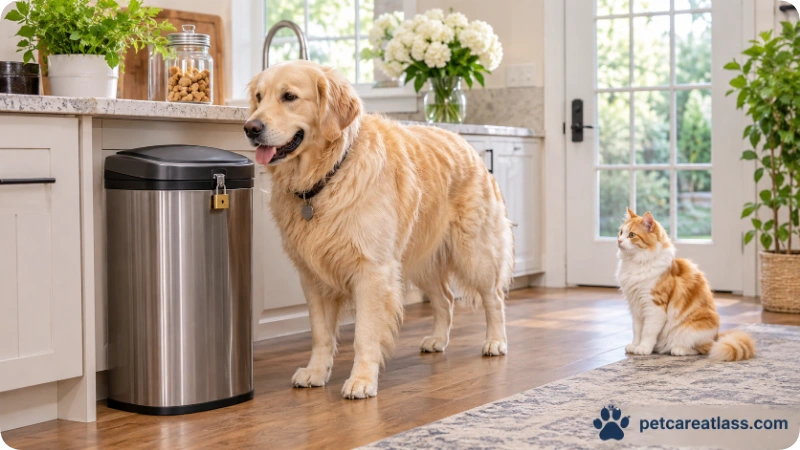
The best trash can depends on your pet’s size, strength, and behavior. A container that works for a small cat may not provide enough protection against a determined large dog.
For Large or Determined Dogs
Large dogs may have enough strength to push over lightweight bins, lift loose lids, or activate ordinary step pedals.
Prioritize:
- A secure manual locking mechanism.
- A sturdy, tip-resistant base.
- A tightly fitting lid.
- Enclosed storage if ordinary bins keep failing.
Position the container against a wall or inside a secured cabinet to reduce opportunities for tipping.
For Puppies and Curious Dogs
Puppies often investigate their surroundings using their mouths. Even a small opening can provide access to food scraps and packaging.
Choose a locking container with a stable base and keep it somewhere your puppy cannot reach when unsupervised.
Training can help establish household boundaries, but physical barriers are still important.
For Cats
Cats can jump onto furniture and investigate containers from above.
Look for a stable bin with a secure lid and no easily accessible opening. A locking cabinet or enclosed storage area may provide additional protection.
Avoid lightweight bathroom wastebaskets that cats can easily knock over.
For Homes With Both Dogs and Cats
When several pets share a home, choose a container that addresses the most persistent animal’s behavior.
A bin that keeps a small cat out may not withstand a large dog’s strength.
Combining a locking lid with secured placement offers a more dependable solution than relying on one feature.
How to Pet-Proof Your Existing Trash Can Without Buying a New One

You may not need to replace your current trash can immediately. Improving its placement and securing its lid can reduce your pet’s access.
Move the Trash Can Somewhere Inaccessible
Changing the location of your trash can is one of the simplest improvements.
Consider placing it:
- Inside a closed kitchen cabinet.
- In a pantry with a secure door.
- In a laundry room that pets cannot enter.
- Behind a properly secured cabinet latch.
Make sure your pet cannot push open the cabinet or move the container out of position.
Secure the Lid
If your existing trash can has a loose lid, check whether the manufacturer offers a compatible locking accessory.
Avoid improvised modifications that create sharp edges, loose pieces, or entanglement hazards.
A secure closure should remain effective when your pet pushes or noses the container.
Reduce Food Odors
Strong food smells can encourage repeated investigation.
Empty food waste regularly, especially after preparing meat or fish. Seal particularly smelly scraps appropriately before disposal and clean food residue around the container.
Reducing odors can make garbage less interesting, but it should never replace a secure lid or inaccessible location.
Keep Bathroom and Bedroom Waste Separate
Kitchen garbage is not the only concern.
Bathroom bins may contain medications, dental floss, razors, hygiene products, and other materials that pets should not swallow.
Use covered containers and keep them inside secured cabinets or rooms your pet cannot access.
Common Mistakes to Avoid When Buying a Pet Proof Trash Can

A trash can may look secure but still fail to address the way your pet gets into garbage.
| Common Mistake | Why It Causes Problems | Better Approach |
|---|---|---|
| Using a standard step-pedal can | Pets may press the pedal | Choose a model with a separate lock |
| Buying a lightweight bin | Dogs may tip it over | Choose a stable, wide-base design |
| Relying only on motion sensors | Pets may trigger the lid | Look for manual locking |
| Ignoring lid gaps | Pets may lift or push the lid | Check the closure |
| Overfilling the bin | Liner may block proper closure | Keep waste below the rim |
| Leaving bathroom bins open | Hazardous items remain accessible | Use covered, secured storage |
| Relying only on training | Curious pets may still investigate | Combine training with barriers |
What to Do If Your Pet Gets Into the Trash

A pet getting into household garbage is not always an emergency, but the contents of the bin matter. Some discarded foods, medications, and packaging can cause serious health problems.
Identify What Your Pet May Have Eaten
Check the garbage to determine what is missing. Look for food packaging, medication containers, bones, cleaning products, and other potentially dangerous materials.
Some household waste can cause poisoning, while other objects may cause choking or digestive tract blockages.
Contact a Veterinarian If Something Dangerous Was Swallowed
Seek veterinary advice promptly if your pet may have eaten:
- Chocolate, grapes, or raisins.
- Sugar-free gum or products containing xylitol.
- Human medications or discarded prescriptions.
- Cooked bones or objects that could cause intestinal blockage.
- Cleaning products or household chemicals.
If you suspect poisoning, contact your veterinarian, an emergency veterinary clinic, or an animal poison-control service immediately. Do not induce vomiting or administer home remedies unless a veterinary professional specifically instructs you to do so.
Prevent Another Incident
After addressing the immediate concern, review how your pet accessed the garbage.
Consider moving the container, securing its lid, or replacing it with an enclosed design. Also discard food packaging securely because pets can become trapped in flexible snack bags.
Frequently Asked Questions
What is the best trash can to keep dogs out?
A trash can with a physical locking mechanism, a stable base, and a tightly fitting lid is a practical starting point. For dogs that repeatedly defeat ordinary bins, an enclosed cabinet-style container may provide better protection. Consider your dog’s size, strength, and previous behavior when choosing one.
Are step-on trash cans dog-proof?
Not necessarily. A standard step-on trash can may open if a dog learns to press its pedal. Choose a model with a separate locking mechanism that prevents the pedal from lifting the lid when engaged.
Do motion-sensor trash cans keep pets out?
Motion-sensor trash cans do not automatically prevent pet access. A curious dog may activate the sensor by approaching the container. If you choose this style, look for a manual lock or a feature that disables automatic opening.
How can I keep my cat out of the trash?
Use a sturdy container with a secure lid and place it inside a closed cabinet or another inaccessible location. Avoid open-top wastebaskets and lightweight bins that your cat can knock over or investigate.
Is stainless steel better than plastic for a pet proof trash can?
Stainless steel can offer greater weight and durability, while plastic models are often lighter and easier to move. Neither material guarantees pet-proof protection. Focus on the locking mechanism, stability, lid design, and overall construction.
What size pet proof trash can should I buy?
Choose a size based on your household’s waste volume and available space. A kitchen bin around 10–13 gallons may suit many households, while smaller bins work for bathrooms and offices. Measure your available space and check that the lid can open fully before purchasing.
Conclusion
Choosing a pet proof trash can is about more than finding a container with a lid. You need a design that prevents your pet from opening it, tipping it over, or reaching dangerous household waste. Prioritize a reliable lock, stable construction, and secure placement.
If your pet repeatedly gets into the garbage, consider an enclosed cabinet-style bin. Combining physical barriers with good household habits provides a more dependable way to keep dogs and cats safe.

Emily Carter is a pet-care writer with a focus on animal health, nutrition, and everyday pet wellness. She creates practical, easy-to-understand guides that help pet owners make informed and responsible care decisions.