Quick Answer:
Dogs may yawn when you pet them because they feel relaxed, sleepy, mildly stressed, or uncomfortable with the interaction. Yawning can also occur during emotionally uncertain situations. To understand what it means, observe your dog’s complete body language and whether they voluntarily continue seeking contact or move away.
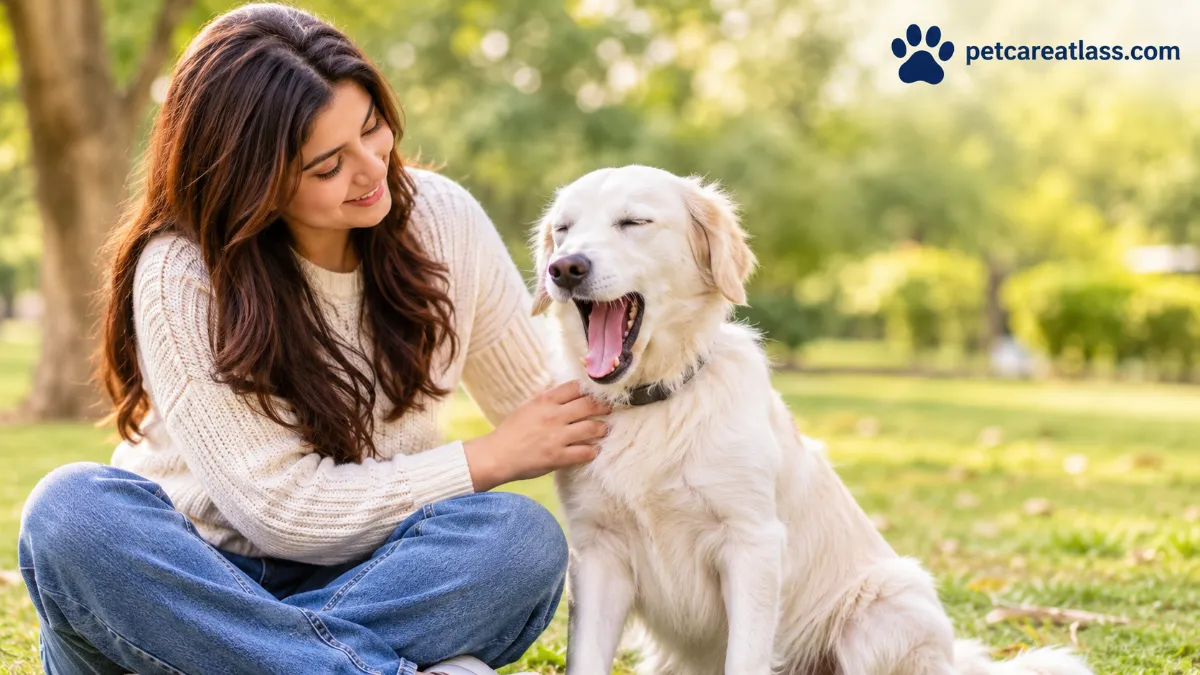
Have you ever been gently petting your dog when they suddenly open their mouth and let out a big yawn? It can seem confusing, especially when your dog appears comfortable and is enjoying your attention.
Although yawning is commonly associated with tiredness, dogs also yawn in response to emotional situations, social interactions, and mild discomfort.
Sometimes it happens while they are relaxing with their owners, while other times it may indicate that they need a little space.
Understanding why dogs yawn when you pet them can help you recognize their body language, respect their preferences, and make physical interactions more comfortable.
Why Dogs Yawn During Petting: 6 Possible Reasons

A yawn during petting does not have one universal meaning. Dogs may yawn because they are tired, relaxed, uncertain, or experiencing emotional arousal.
The surrounding circumstances and other body-language signals help you understand which explanation is more likely.
1. Your Dog Feels Relaxed and Sleepy
Sometimes, dogs yawn simply because they are comfortable and becoming sleepy.
This is particularly common when you pet your dog while they are lying on their bed, resting beside you, or settling down after a walk. Gentle petting may happen at the same time as their normal transition toward sleep.
Signs your dog may be relaxed:
- Their body looks loose rather than stiff.
- Their eyes are soft or partially closed.
- Their ears rest in a natural position.
- They remain comfortably beside you.
- They settle down or fall asleep afterward.
If your dog displays these signs, an occasional yawn is generally nothing to worry about. It does not necessarily mean the petting itself caused the yawn.
2. Your Dog Feels Uncomfortable With the Petting
Dogs sometimes yawn when they feel uncomfortable, uncertain, or mildly stressed during physical contact.
You might enjoy rubbing your dog’s head, hugging them, or stroking their body, but your dog may not appreciate every type of touch. Some dogs tolerate physical contact without actively seeking it.
For example, a dog might yawn when someone repeatedly pats their head, reaches over their face, or continues petting after they have started turning away.
A stress-related yawn can occur alongside other subtle signals, including lip licking, looking away, and muscle tension.
Signs your dog may be uncomfortable:
- Repeated yawning during petting.
- Turning their head or body away.
- Licking their lips or nose.
- Holding their ears back.
- Showing the whites of their eyes.
- Becoming unusually still or stiff.
If you notice several of these behaviors together, pause the interaction and give your dog space.
3. Your Dog May Be Responding to Social Tension
Yawning can sometimes occur during social interactions that make dogs uncertain or uncomfortable.
For example, a dog might yawn when someone approaches too closely, bends over them, reaches toward their face, or attempts to hug them.
Along with looking away, lip licking, and turning their head, yawning may appear as part of a broader pattern of stress-related or appeasement behavior.
However, it is not possible to determine a dog’s intention from yawning alone. Not every yawn is a deliberate message asking someone to stop.
The most useful approach is to consider the complete interaction and whether your dog appears comfortable or tries to create distance.
4. Your Dog Is Experiencing Emotional Conflict
Sometimes, dogs have mixed feelings about an interaction.
Your dog might approach you because they want attention but become uncertain when you start touching them. They may enjoy being close to you while feeling uncomfortable with a particular type of physical contact.
This situation can produce behaviors known as displacement behaviors. These are actions that appear during situations involving conflicting emotions or uncertainty.
Yawning is one possible example.
For instance, your dog might:
- Approach you but repeatedly turn their head away.
- Stay beside you while licking their lips.
- Accept a few strokes before yawning.
- Move closer and then step away.
These mixed signals do not necessarily mean your dog dislikes you. They may simply prefer a different way of interacting.
Respecting these preferences helps prevent unnecessary stress.
5. Your Dog Is Becoming Overstimulated
Some dogs become overstimulated when petting continues for too long or involves repetitive movements.
Even a dog that initially welcomes attention may eventually need a break.
This can happen during:
- Long petting sessions.
- Repeated rubbing of sensitive areas.
- Excited interactions with several family members.
- Petting combined with play or other stimulating activities.
Yawning may appear alongside other signs of discomfort, such as turning away, licking the nose, moving away, or becoming tense.
Try shorter petting sessions with pauses between them. Let your dog decide whether to return for more attention.
6. Your Dog Is Experiencing Excitement or Emotional Arousal
Yawning is not exclusively associated with fear or relaxation. It can also occur during situations involving excitement, anticipation, or emotional arousal.
For example, your dog might yawn when you arrive home, during an exciting interaction, or while waiting for something they expect.
If petting happens during an emotionally stimulating moment, the yawn may be associated with the overall situation rather than the physical touch itself.
However, excitement should not automatically be assumed to be the cause of yawning during petting. Look at your dog’s posture, facial expression, and surrounding circumstances before interpreting the behavior.
How to Tell If Your Dog Enjoys Being Petted

The most reliable way to interpret a dog’s yawn is to consider their complete body language.
A single yawn cannot tell you exactly how your dog feels. Instead, observe their posture, facial expression, movements, and willingness to continue interacting.
| Relaxed or Comfortable Signs | Possible Discomfort Signs |
|---|---|
| Loose body posture | Stiff or tense posture |
| Soft facial expression | Tight facial muscles |
| Approaches voluntarily | Turns away or avoids contact |
| Leans into gentle petting | Leans away from your hand |
| Returns after a pause | Moves away or disengages |
| Settles comfortably | Repeated yawning, lip licking, or avoidance |
These signs are not absolute rules. Some dogs naturally hold their ears back, while others may remain still when uncomfortable. Consider your dog’s normal behavior, the situation, and combinations of signals rather than relying on one physical cue.
A relaxed dog generally has a loose posture and appears comfortable with the interaction. An uncomfortable dog may show several avoidance signals or attempt to move away.
Respecting these differences helps you understand what your dog is communicating through body language.
What Should You Do When Your Dog Yawns While You Pet Them?

If your dog yawns during petting, you do not need to panic or immediately assume something is wrong. However, it is a good opportunity to check whether they are comfortable.
Try the following approach:
- Pause the petting: Briefly remove your hand and give your dog an opportunity to respond.
- Observe their body language: Look for loose muscles, soft eyes, lip licking, flattened ears, or avoidance.
- Let your dog choose: See whether they voluntarily move closer or seek more contact.
- Change your petting technique: If your dog seems uncomfortable with head rubbing, try gentle strokes on an area they normally welcome, such as the chest or shoulder.
- Respect their decision: If they move away, turn their body, or remain tense, stop petting and give them space.
Try a Simple Petting Consent Test
A short pause can help you understand whether your dog wants more attention.
- Approach calmly and allow your dog to choose whether to interact.
- Gently pet an area your dog normally welcomes, such as the chest or shoulder.
- After approximately three seconds, stop and remove your hand.
- Wait for your dog’s response.
- If your dog voluntarily approaches, nudges your hand, or leans into contact, offer another short petting session.
- If your dog turns away, walks off, becomes stiff, or shows other discomfort signals, stop.
This approach is sometimes called a petting consent test. It is a practical way to respect your dog’s preferences, not a scientifically validated diagnostic test.
Where Do Dogs Usually Prefer Being Petted?
Individual preferences vary, but many dogs are comfortable with gentle petting around areas such as:
- Chest: Some dogs enjoy gentle strokes on the chest.
- Shoulders: This area can be a comfortable starting point for physical contact.
- Upper back: Many dogs welcome gentle strokes along their back.
- Sides of the neck: Some dogs enjoy gentle rubbing around the neck.
Some dogs also enjoy gentle rubbing around their ears or under their chin, provided they voluntarily accept the contact.
However, not every dog likes having their head, paws, tail, belly, or face touched. A dog’s past experiences, personality, socialization, and individual preferences can influence how they respond.
Start with gentle contact in an area your dog already welcomes. Avoid reaching over their head or forcing physical contact.
When Should You Be Concerned About Frequent Yawning?

Occasional yawning during petting is usually not a medical emergency. However, repeated or unusual yawning deserves attention when it represents a noticeable change in your dog’s behavior.
Consider contacting your veterinarian if yawning:
- Suddenly becomes much more frequent without an obvious explanation.
- Happens repeatedly alongside signs of pain or discomfort.
- Occurs with difficulty eating, chewing, or opening the mouth.
- Is accompanied by unusual drooling, mouth odor, or pawing at the face.
- Occurs with other unexplained behavioral or physical changes.
If frequent yawning occurs alongside difficulty chewing, mouth sensitivity, unusual drooling, or changes in appetite, arrange a veterinary examination. These additional symptoms may indicate oral discomfort or another health problem that needs assessment.
If your dog has difficulty breathing, collapses, or shows another serious emergency sign, seek urgent veterinary care rather than treating the yawning as an ordinary behavior.
Frequently Asked Questions
Does a dog yawn when you pet them mean they are unhappy?
Not necessarily. A dog may yawn because they are sleepy, relaxed, or experiencing mild stress. Look for additional signals, such as a loose body and soft eyes versus lip licking, turning away, or stiffness. The overall context is more useful than the yawn alone.
Why does my dog yawn when I rub their belly?
Your dog may yawn because they are relaxed, sleepy, or uncertain about the interaction. Some dogs enjoy belly rubs, while others tolerate them without wanting continued contact. Watch whether your dog voluntarily remains in position, moves closer, or tries to turn away.
Why does my dog yawn and lick their lips when I pet them?
Yawning combined with lip licking can indicate stress, uncertainty, or discomfort, particularly when both behaviors occur repeatedly during physical contact. Your dog may need more space. Pause the petting, avoid restraining them, and observe whether their body becomes more relaxed.
Should I stop petting my dog when they yawn?
Not automatically. If your dog has a loose posture and appears comfortable, an occasional yawn may simply indicate tiredness. However, if yawning occurs alongside stiffness, lip licking, or turning away, stop petting and give your dog space.
Can dogs yawn when they are happy?
Yes. Dogs can yawn in comfortable situations, including when they are relaxing with familiar people. However, yawning alone does not establish happiness. Consider other signs, such as relaxed muscles, soft facial expressions, and voluntary interaction, to understand your dog’s emotional state.
Conclusion
Dogs may yawn when you pet them for several reasons, including sleepiness, relaxation, stress, uncertainty, and emotional arousal. The important thing is not to interpret every yawn in the same way.
Pay attention to your dog’s complete body language and give them opportunities to choose when physical contact starts and stops. When you respect these signals, you can make petting more comfortable and build a more positive relationship with your dog.

Daniel Brooks is a pet care and animal behavior writer at petcareatlass.com focused on helping owners better understand their pets’ behavior and everyday needs. He creates practical, easy-to-follow content on pet communication, training, welfare, and responsible care.