
Quick Answer:
Some of the best pets for kids include dogs, cats, guinea pigs, hamsters, rabbits, fish, and birds. The right choice depends on the child’s age, maturity, household environment, and the family’s ability to meet the animal’s daily care needs. Parents should supervise interactions, teach gentle handling, and remain responsible for the pet’s lifelong care.
Choosing the right pet for children is about more than finding a cute or playful animal. The best family pet should fit your household’s lifestyle, available space, budget, and ability to provide consistent care.
Some pets enjoy regular interaction and gentle handling, while others are better suited to observing or limited contact. A child’s age, maturity, and ability to respect an animal’s boundaries also matter when deciding which pet is appropriate.
Whether you’re considering a dog, cat, rabbit, guinea pig, or another companion animal, understanding each species’ temperament, care requirements, lifespan, and social needs can help you make a responsible choice.
In this guide, we’ll explore seven family-friendly pets, compare their characteristics and care needs, and explain what parents should consider before bringing an animal home.
What Makes a Pet Suitable for Kids?
A suitable family pet should have care requirements that adults can consistently meet and an individual temperament compatible with the household. The animal should also have a safe environment where it can rest, eat, explore, and avoid unwanted interactions.
Before choosing a pet, consider these five factors.
- Temperament: Look for an individual animal with a suitable history and behavior around children. Breed or species reputation alone cannot guarantee friendliness.
- Handling requirements: Some animals enjoy gentle interaction, while others prefer observation or limited physical contact.
- Daily care: Consider feeding, cleaning, grooming, exercise, enrichment, and veterinary appointments.
- Living environment: Make sure your home has enough space for appropriate housing, exercise, and safe separation when needed.
- Long-term commitment: Consider the animal’s potential lifespan and whether your family can provide care throughout its life.
A pet should never be selected simply because it is small, inexpensive, or advertised as easy to care for.
7 Best Pets for Kids and Their Care Requirements
Different animals offer different experiences for children. The following seven options can suit particular families, provided their individual care and welfare requirements are met.
1. Dogs: Best for Active Families
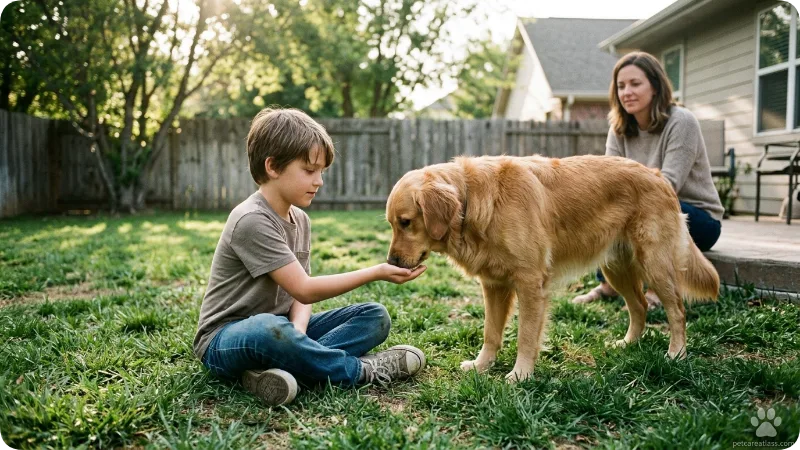
Dogs can become affectionate family companions and enjoy activities such as walking, playing, training, and spending time with familiar people. Their interactive nature can make them appealing to children who enjoy outdoor activities and regular companionship.
However, dogs require considerable daily attention. They need exercise, appropriate training, social interaction, grooming, nutritious food, and routine veterinary care.
Why dogs can be good family pets:
- Provide opportunities for companionship and interactive play.
- Encourage outdoor activities and regular exercise.
- Allow children to participate in supervised, age-appropriate care.
- Can develop strong relationships with familiar family members.
Care considerations:
Puppies can be energetic, mouthy, and unpredictable during play. Their behavior may be challenging for younger children who have difficulty recognizing when an animal needs space.
An adult dog with a known history of appropriate behavior around children may be a better match for some households. However, previous experience around children does not eliminate the need for supervision.
Do not choose a dog based on breed reputation alone. Consider the individual dog’s temperament, size, strength, activity level, training, and socialization.
Best suited for: Active families with enough time for daily exercise, training, companionship, and supervision.
2. Cats: Best for Families Seeking a More Independent Companion

Cats can make wonderful family pets, especially in households where children understand that animals need personal space. Some cats enjoy gentle affection, interactive toys, and spending time near familiar people.
Compared with dogs, cats generally do not require scheduled outdoor walks. However, they still need daily attention, appropriate enrichment, scratching opportunities, litter-box maintenance, grooming when necessary, and veterinary care.
Why cats can be good family pets:
- Offer companionship without requiring scheduled outdoor walks.
- Can enjoy interactive play with children.
- Adapt to many indoor living environments.
- Help children learn to recognize animal boundaries.
Care considerations:
Not every cat enjoys being carried, hugged, or constantly handled. Children should never pull a cat’s tail, disturb it while sleeping, or prevent it from leaving an interaction.
Look for a confident cat with a known history of comfortable interactions around children. A calm adult cat may be a more predictable choice than a playful kitten for some households.
Best suited for: Families who want an interactive but relatively independent companion and can provide a safe, enriched indoor environment.
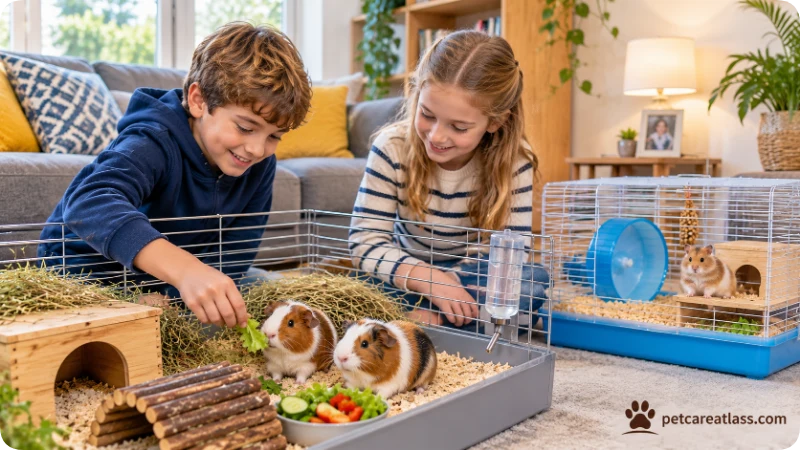
3. Guinea Pigs: Best for Families Interested in Small Animals
Guinea pigs are social, vocal small mammals that can be interesting companions for families. They communicate through squeaks and other sounds, explore their surroundings, and may become comfortable with familiar people.
They require a spacious enclosure, suitable bedding, unlimited access to appropriate grass hay, fresh water, guinea pig food, and vitamin C in their diet.
Why guinea pigs can be appealing family pets:
- Display interesting vocal and social behaviors.
- Can become accustomed to gentle, predictable interactions.
- Provide opportunities to learn about small-animal care.
- Are generally active during the day, making observation easier.
Care considerations:
Guinea pigs have delicate bodies and can become frightened by sudden movements or rough handling. When picked up, their bodies must be properly supported.
They are social animals, so families should plan for compatible guinea pig companionship rather than automatically keeping one alone.
An important safety consideration is that the CDC advises children younger than five to avoid contact with rodents, including guinea pigs, because of infection risks. Adults should also supervise hygiene and habitat cleaning.
Best suited for: Families with older children who can respect handling limits and adults prepared to provide appropriate housing, companionship, and daily care.
4. Hamsters: Best for Children Who Enjoy Observing Small Animals
Hamsters are fascinating small mammals that spend much of their time exploring, digging, collecting food, and using exercise wheels.
They can be interesting pets for children who enjoy observing animal behavior rather than expecting constant physical interaction.
Why hamsters can be appealing family pets:
- Display interesting natural behaviors.
- Can become accustomed to gentle handling when properly socialized.
- Require less physical space than dogs, although they still need appropriately large enclosures.
- Provide opportunities to learn about animal routines and habitat maintenance.
Care considerations:
Most commonly kept hamsters are primarily active during the evening and night. This may not match a child’s expectation of having a pet available for daytime play.
They can also bite when frightened, awakened suddenly, or handled incorrectly. Syrian hamsters should generally be housed individually because they are territorial.
Like guinea pigs, hamsters are rodents. The CDC advises children younger than five to avoid contact with rodents because of the risk of infections.
Best suited for: Older children who enjoy observing animals, respect their sleeping schedules, and understand their handling requirements.
5. Rabbits: Best for Families Who Enjoy Gentle, Patient Interaction
Rabbits are intelligent and curious animals that can develop relationships with familiar people. They may enjoy exploring, investigating toys, and interacting with family members on their own terms.
However, rabbits are often misunderstood as easy, cuddly starter pets. Many dislike being picked up and may become frightened when restrained.
Why rabbits can be good family pets:
- Display interesting natural behaviors.
- Can learn to approach familiar people voluntarily.
- Encourage gentle and patient interactions.
- Provide opportunities to learn about animal body language.
Care considerations:
Rabbits need spacious housing, opportunities for daily exercise, appropriate hay-based nutrition, enrichment, and routine veterinary care.
Their delicate bodies and powerful hind legs make incorrect handling particularly risky. Children should interact with rabbits at floor level rather than carrying them around.
Families should also research their social needs and the benefits of compatible rabbit companionship.
Best suited for: Families with older, gentle children who understand that rabbits often prefer voluntary interaction over being carried or cuddled.
6. Fish: Best for Children Who Enjoy Observing Aquatic Animals
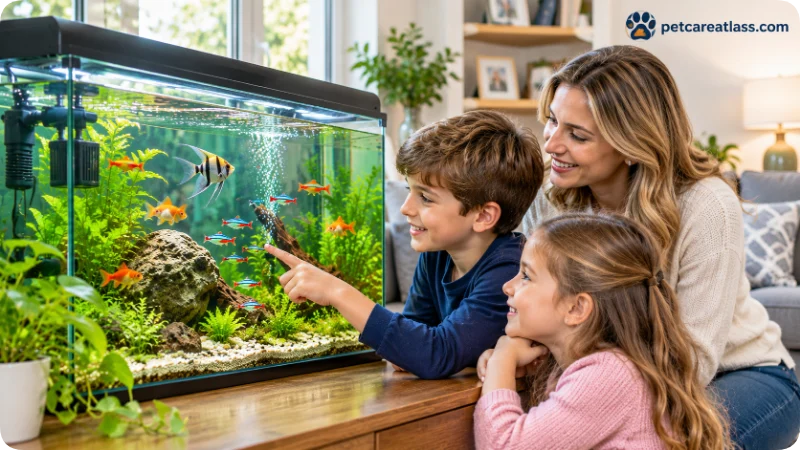
Fish can be fascinating pets for children who enjoy watching animals rather than physically handling them. A properly maintained aquarium can introduce children to aquatic environments, water quality, and animal behavior.
However, fish are not maintenance-free pets. Their health depends on suitable water conditions, filtration, appropriate feeding, and species-compatible aquarium arrangements.
Why fish can be good family pets:
- Provide opportunities to observe aquatic animal behavior.
- Do not require physical handling.
- Can introduce children to basic aquatic biology.
- Suit households that prefer a quieter pet.
Care considerations:
Aquarium size, filtration, temperature, and water conditions must match the needs of the chosen fish species.
A fishbowl is not an appropriate substitute for a properly established aquarium. Fish also need consistent feeding, water-quality monitoring, and regular tank maintenance.
Children can help with supervised feeding and observation, but adults should remain responsible for aquarium care and fish health.
Best suited for: Families who prefer an observational pet and are willing to maintain a properly equipped aquarium.
7. Birds: Best for Families Interested in Social and Interactive Pets
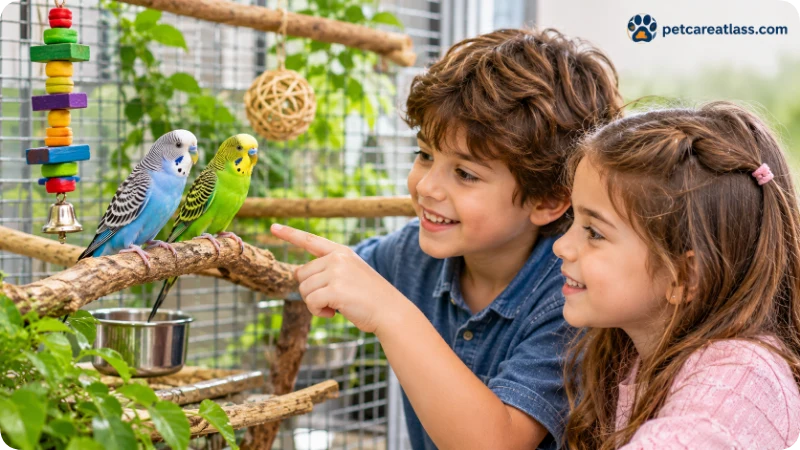
Some companion birds, including budgerigars (budgies), can be engaging family pets. They communicate through vocalizations, explore their surroundings, and may become familiar with their caregivers.
Birds also have specialized care requirements that families should understand before bringing one home.
Why birds can be good family pets:
- Display interesting communication and social behaviors.
- Can learn to recognize familiar caregivers.
- Provide opportunities to observe natural behaviors.
- May enjoy positive interactions when they feel comfortable.
Care considerations:
Birds need an appropriately sized enclosure, a balanced species-specific diet, enrichment, opportunities for safe movement, and regular veterinary care from an avian veterinarian.
They can be sensitive to sudden movements, loud noises, and stressful handling. Their beaks can also cause injuries.
Some companion birds are naturally vocal, and their potential lifespan can represent a substantial long-term commitment.
Best suited for: Families willing to learn about bird behavior, specialized nutrition, enrichment, and long-term care.
Best Pets for Kids Compared: Care, Temperament, and Suitability
The right choice depends on the type of companionship your family wants and the care requirements you can realistically meet.
| Pet | Main Advantage | Main Challenge | Family Suitability |
|---|---|---|---|
| Dog | Interactive companionship | Exercise and training | Active families |
| Cat | More independent companionship | Individual handling preferences | Indoor-pet households |
| Guinea Pig | Social and vocal behavior | Gentle handling and companionship needs | Families with older children |
| Rabbit | Interesting natural behaviors | Space and careful handling | Patient households |
| Hamster | Fascinating to observe | Mostly active at night | Older children |
| Fish | No physical handling needed | Aquarium maintenance | Observational learners |
| Bird | Social communication | Specialized care and noise | Attentive families |
These are general comparisons, not guarantees of temperament or ease of care. Every individual animal has different needs.
How to Choose the Best Pet for Your Child
Choosing a pet should involve the entire family. Before adopting or purchasing an animal, evaluate your child’s maturity, your household routine, and the animal’s long-term needs.
1. Consider Your Child’s Age and Maturity
A child’s ability to understand and respect animals matters more than age alone.
Younger children may enjoy observing fish, watching a cat explore, or helping an adult prepare pet food. Older children may be ready to participate in supervised feeding, grooming, cleaning, and training activities.
The American Academy of Pediatrics suggests considering whether children are mature enough to understand animal needs and handle interactions responsibly, often around ages five or six. This is general developmental guidance, not a universal age requirement.
2. Evaluate the Animal’s Individual Temperament
A friendly-looking animal is not automatically comfortable around children.
Before choosing, consider whether the individual animal:
- Remains comfortable around normal household activity.
- Has a known history of appropriate interactions with children.
- Shows relaxed body language during voluntary interactions.
- Has an activity level that matches your household.
- Has opportunities to retreat when it needs rest or space.
Avoid animals that show persistent fear, defensive behavior, or discomfort during interactions. Never force an animal to accept handling.
3. Understand Daily Care Requirements
Different pets need different levels and types of attention.
Dogs require exercise, training, and companionship. Cats need enrichment and litter-box maintenance. Small mammals require appropriate habitats, specialized diets, and regular cleaning.
Fish and birds also depend on consistent care and suitable environments.
Before making a decision, identify which family member will handle daily feeding, cleaning, veterinary appointments, and other essential responsibilities.
4. Consider Your Budget and Long-Term Commitment
Pet ownership involves more than the initial adoption or purchase cost.
Plan for:
- Food and species-appropriate supplies.
- Housing, bedding, and enrichment.
- Routine veterinary examinations and preventive care.
- Unexpected medical expenses.
- Grooming and maintenance.
- Boarding or pet care during vacations.
Also consider the animal’s expected lifespan. A pet may remain part of the household long after a child has changed schools, developed different interests, or moved away.
5. Check for Allergies and Household Health Concerns
Before bringing an animal home, consider whether anyone in the household has allergies or asthma.
Pet allergens can come from skin flakes, saliva, urine, and other sources. No dog breed is guaranteed to be hypoallergenic.
Families with children younger than five should also carefully consider infection risks associated with rodents, reptiles, amphibians, and poultry. The CDC recommends avoiding contact with these animals for children in this age group.
Pets That May Not Be Suitable for Young Children
Not every popular pet is appropriate for every family. Some animals have handling, hygiene, or environmental requirements that make them challenging choices for households with young children.
Reptiles and Amphibians
Turtles, lizards, snakes, and frogs can be fascinating animals, but they are generally unsuitable for households seeking a hands-on pet for children younger than five.
Reptiles and amphibians can carry Salmonella even when they appear healthy and clean. Exposure can occur through direct contact with the animal or indirectly through its habitat, equipment, and tank water.
The CDC advises children younger than five to avoid touching or handling reptiles, amphibians, and their environments because of the risk of serious infection.
Rodents and Other Small Animals
Hamsters, guinea pigs, rats, and mice can carry germs that may cause illness in people.
Although these animals are small, they still require careful hygiene and responsible handling. The CDC recommends that children younger than five avoid contact with rodents.
Parents should not assume that a small animal is automatically a safer or easier choice for a young child.
High-Maintenance Non-Domesticated Animals
Some non-domesticated animals require specialized habitats, carefully managed diets, access to experienced veterinary professionals, and extensive species-specific husbandry knowledge.
They may not be appropriate for families seeking a straightforward first pet. Research the animal’s legal status, welfare requirements, potential lifespan, and access to qualified veterinary care before considering ownership.
Safety Rules for Children Around Pets
Regardless of which animal you choose, safe interactions should be part of everyday family life.
Parents should establish simple rules before introducing a new pet.
- Always supervise interactions: Never leave babies or young children alone with an animal, even if the pet is familiar.
- Respect sleeping time: Teach children not to disturb pets when they are sleeping, eating, or resting.
- Avoid rough handling: Pulling tails, squeezing bodies, chasing animals, and forcing cuddles can cause fear or injuries.
- Allow animals to approach voluntarily: Children should never force physical contact or prevent a pet from leaving.
- Practice handwashing: Wash hands after handling animals, their food, waste, or equipment.
- Keep pet supplies separate: Avoid cleaning animal habitats or storing pet food in areas where human food is prepared.
- Teach appropriate behavior: Children should never kiss unfamiliar animals or put their hands near an animal’s mouth.
Young children need adult help with handwashing and animal care. Supervision should be active rather than simply having an adult in the same room.
Frequently Asked Questions
What is the easiest pet for a child to take care of?
No pet is completely maintenance-free. Fish may suit children who enjoy observing animals, while cats and other companion animals offer different types of interaction. However, every pet requires an adult who can provide appropriate daily care, suitable housing, and veterinary attention.
What is the best first pet for a five-year-old?
There is no universally best first pet for a five-year-old. A calm, well-matched adult cat or dog may suit some families, provided the child is developmentally ready and interactions are supervised. Fish can also be an observational option. Rodents, reptiles, amphibians, and poultry should be avoided by children under five according to CDC guidance.
Are dogs or cats better for kids?
Both can make wonderful family companions, but neither is universally better. Dogs generally require more structured exercise, training, and outdoor activity, while cats often offer a more independent style of companionship. The individual animal’s temperament and the family’s lifestyle should guide the decision.
Are small pets better than dogs for children?
Not necessarily. Small pets may require less physical space than dogs, but they can have specialized housing, dietary, social, and handling requirements. Some are also delicate or active at night. Families should compare actual care requirements rather than assuming smaller animals are easier.
What pets should children under five avoid?
The CDC advises children younger than five to avoid contact with rodents, reptiles, amphibians, and poultry because these animals can carry germs that cause infections such as Salmonella. Adults should also supervise children around other animals and practice appropriate hygiene.
Should children be responsible for feeding and cleaning a pet?
Children can participate in age-appropriate activities, such as supervised feeding, brushing, or helping organize toys. However, adults must remain responsible for the animal’s nutrition, clean housing, veterinary care, and daily attention. A child’s changing interests or schedule should never affect the animal’s essential care.
Conclusion
The best pet for kids is one whose needs match the family’s lifestyle, experience, and ability to provide long-term care. Dogs and cats can offer interactive companionship, while rabbits, guinea pigs, hamsters, fish, and birds provide different opportunities to observe and learn about animals.
Before choosing, consider your child’s maturity, the individual animal’s temperament, daily care requirements, and long-term commitment. Most importantly, remember that a pet is a family responsibility, not simply a child’s companion.

Daniel Brooks is a pet care and animal behavior writer at petcareatlass.com focused on helping owners better understand their pets’ behavior and everyday needs. He creates practical, easy-to-follow content on pet communication, training, welfare, and responsible care.