Quick Answer:
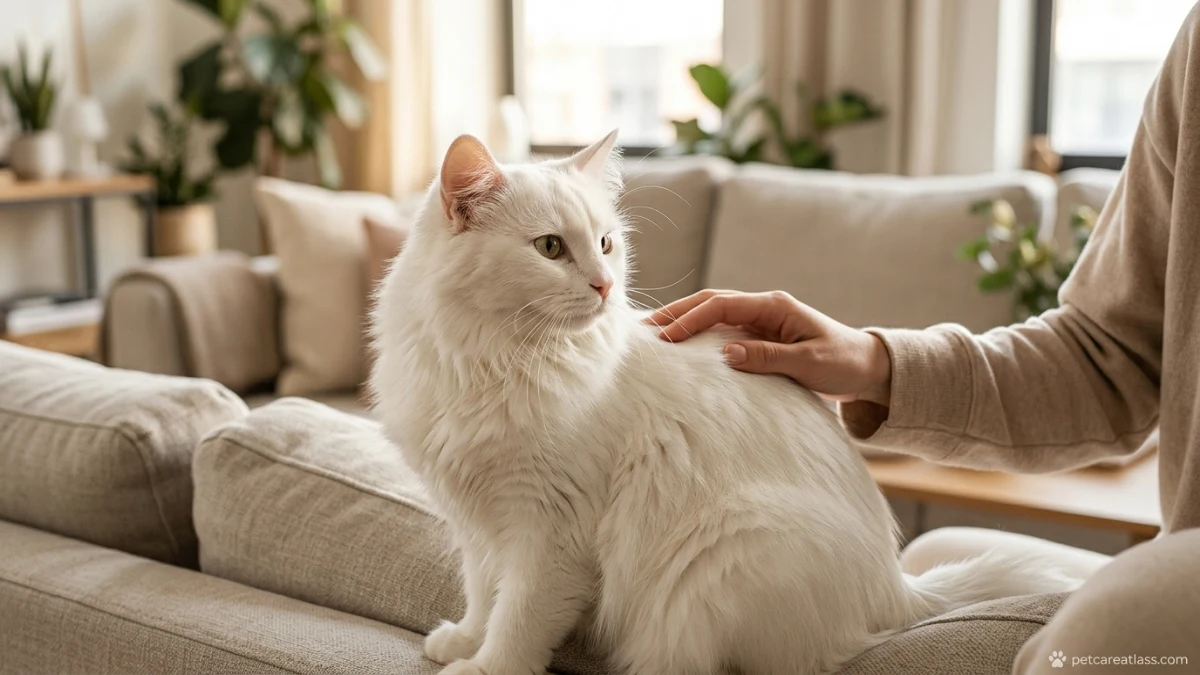
Cats may bite you when you pet them because they become overstimulated, feel uncomfortable, want to play, or are communicating that they have had enough physical contact. Some cats also react to sensitive areas, fear, or pain. Watch for warning signs such as flattened ears, tail flicking, tense muscles, or attempts to move away. Recognizing these signals can help prevent bites and make petting more enjoyable.
Petting your cat may seem like a simple way to show affection, but sometimes a relaxing moment can suddenly turn into a bite. Your cat might gently nibble your hand, grab your fingers, or bite after enjoying several strokes.
So, why do cats bite you when you pet them? This behavior can have several explanations, including overstimulation, sensitivity to touch, playfulness, fear, or a desire to communicate that they have had enough. Some cats also bite to set boundaries or respond to discomfort.
Understanding your cat’s body language, the situation leading up to the bite, and the type of biting behavior can help you identify what is happening.
It can also help you adjust your approach, respect your cat’s boundaries, and make petting more comfortable for both of you.
Key Takeaways
- Overstimulation: Repeated stroking can become uncomfortable, even when your cat initially accepts petting.
- Personal boundaries: Some cats prefer brief petting and dislike being touched in certain areas.
- Body language: Tail flicking, skin twitching, tense muscles, and backward-facing ears can signal discomfort.
- Possible pain: A cat that suddenly starts biting during petting may have an underlying health problem.
- Better interactions: Short, gentle petting sessions and respecting your cat’s signals can help reduce biting.
7 Reasons Cats Bite During Petting
Cats bite during petting for several reasons, and understanding the circumstances surrounding the bite can help you identify the possible trigger. Some cats become uncomfortable after repeated strokes, while others react because of fear, pain, or an instinctive play response.
Here are seven common explanations.
1. Your Cat Becomes Overstimulated
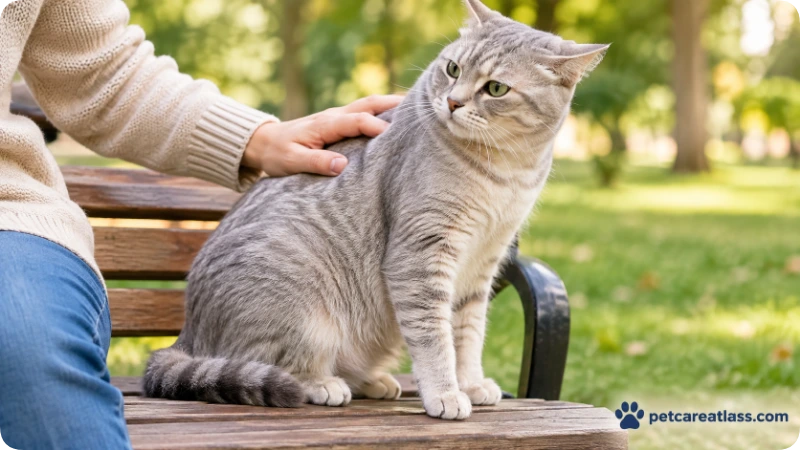
One of the most common explanations for biting during petting is overstimulation, sometimes called petting-induced aggression.
Your cat may initially enjoy being stroked, but repeated physical contact can eventually become irritating or uncomfortable. Instead of walking away, your cat may turn around, grab your hand, or bite to end the interaction.
This explains why a cat can appear relaxed one moment but suddenly bite a few seconds later.
This response is not always immediate. Your cat may accept several strokes before becoming uncomfortable, particularly when you repeatedly touch the same area. The amount of contact a cat tolerates can vary depending on her personality, previous experiences, mood, and environment.
The exact reasons behind petting-induced aggression are not fully understood. Overstimulation is one possible explanation, but individual cats may react for different reasons.
2. You Are Petting a Sensitive Area
Cats have individual preferences about where they like to be touched. An area that feels comfortable to one cat may be unpleasant or overly sensitive to another.
Some cats accept gentle contact around their:
- Cheeks and chin
- Forehead and top of the head
- Base of the ears
- Neck and shoulders
Other areas may be less comfortable, particularly the belly, paws, legs, and base of the tail.
For example, your cat may accept chin scratches but bite when you rub her stomach. This does not necessarily mean she is angry. She may simply be communicating that she does not want that area touched.
Pay attention to which areas your cat voluntarily presents for contact. If touching a particular area repeatedly triggers biting, avoid that area rather than trying to make your cat tolerate it.
3. Your Cat Is Warning You to Stop
Cats often communicate discomfort through body language before using their teeth. However, these signals can be subtle, and owners sometimes mistake a warning for ordinary movement.
Your cat might:
- Flick or swish her tail repeatedly.
- Turn her ears sideways or backward.
- Twitch or ripple the skin along her back.
- Suddenly become stiff or tense.
- Turn her head toward your hand.
- Stop interacting or attempt to move away.
These behaviors can indicate increasing discomfort or arousal. They do not all mean a bite is inevitable, but they are good reasons to pause petting.
No single body-language signal confirms that a bite is coming. For example, tail movement can have different meanings depending on its speed, position, and the rest of your cat’s posture.
Look for several changes occurring together, especially when they appear as you continue petting. If your cat starts showing these signals, stop touching her and give her space.
4. Your Cat Does Not Want to Be Touched at That Moment
A cat approaching you does not automatically mean she wants to be petted.
She may want to sit beside you, rub against your legs, investigate your hand, or simply spend time near you without physical contact.
Cats may also be less receptive to handling when they are:
- Sleeping or resting.
- Eating or drinking.
- Hiding or trying to relax.
- Feeling stressed by visitors or household activity.
- Already excited by something outside.
For example, your cat may jump onto your lap because she wants warmth and companionship, not necessarily because she wants repeated strokes.
Try offering your hand for your cat to investigate. If she voluntarily rubs against it, you can try a few gentle strokes. If she moves away or does not engage, respect her choice.
5. Your Cat Is Reacting to Fear or Stress
A frightened or stressed cat may bite when someone attempts to pet or handle her.
This can happen when a cat is approached too quickly, feels trapped, encounters unfamiliar people, or experiences an environment that makes her uncomfortable.
Fear-related biting may occur alongside other defensive behaviors, including:
- Flattened ears.
- Dilated pupils.
- A crouched or lowered body.
- Whiskers held tightly against the face.
- Hissing or growling.
- Attempts to hide or escape.
Unlike ordinary petting-related irritation, fear-related biting may occur before petting even begins.
Give your cat an opportunity to retreat. Avoid cornering, restraining, or forcing physical contact, particularly when she is showing defensive body language.
If your cat becomes frightened, reduce the source of stress when possible and allow her to settle in a quiet, comfortable place.
6. Your Cat May Be Experiencing Pain or Physical Discomfort
Sometimes, biting during petting is not simply a behavioral preference. It can be a response to pain or an uncomfortable physical condition.
For example, a cat experiencing joint discomfort may react when someone touches or moves an affected leg. Dental disease, skin irritation, injuries, and other medical problems can also make handling unpleasant.
Pay particular attention if your cat:
- Suddenly starts biting when she previously accepted petting.
- Reacts consistently when you touch one particular area.
- Avoids being picked up or handled.
- Hides more frequently than usual.
- Shows changes in grooming, movement, or daily behavior.
A sudden change in touch tolerance deserves attention, especially in older cats or cats with other noticeable symptoms.
If your cat reacts repeatedly when you touch the same area, avoid pressing, rubbing, or manipulating it to test the reaction. Let your veterinarian examine the area safely.
Arrange a veterinary examination to investigate possible medical causes rather than assuming the behavior is purely behavioral. Conditions such as arthritis, dental disease, and skin problems can contribute to discomfort-related aggression.
7. Your Cat Is Using Playful Biting
Not every bite during petting is a sign of irritation or fear. Some cats, especially kittens and young cats, may treat moving hands as play objects.
Your cat might grab your hand with her front paws, gently bite your fingers, or kick with her back legs.
This behavior can resemble hunting and play sequences, particularly when a cat becomes excited by movement.
You may notice other playful behaviors, such as:
- Stalking your moving hand.
- Pouncing toward your fingers.
- Grabbing your hand with both front paws.
- Kicking while holding your hand.
- Chasing moving fingers.
The context matters. Play-related biting often involves stalking, chasing, grabbing, and kicking, whereas petting-related biting may happen after repeated strokes or when you touch an uncomfortable area.
These patterns can overlap, so consider your cat’s entire body language rather than the bite alone.
Avoid using your hands as toys, even when your cat is young and the bites seem harmless. Instead, redirect her attention toward wand toys, stuffed toys, or other appropriate play objects.
How to Tell Why Your Cat Is Biting You

The circumstances surrounding a bite can provide useful clues about its possible cause. Pay attention to what happens immediately before and after the behavior rather than judging the bite alone.
| What You Notice | Possible Explanation |
|---|---|
| Bites after several minutes of petting | Overstimulation |
| Bites when belly or tail is touched | Area sensitivity |
| Flicks tail and becomes tense | Increasing irritation |
| Hisses and tries to escape | Fear or stress |
| Bites when one area is touched | Possible pain or discomfort |
| Grabs your hand and kicks | Playful or predatory behavior |
| Bites when approached during rest | Unwanted handling |
These are behavioral clues, not definitive diagnoses. More than one cause can contribute to the same behavior.
How to Stop Your Cat From Biting You When You Pet Her
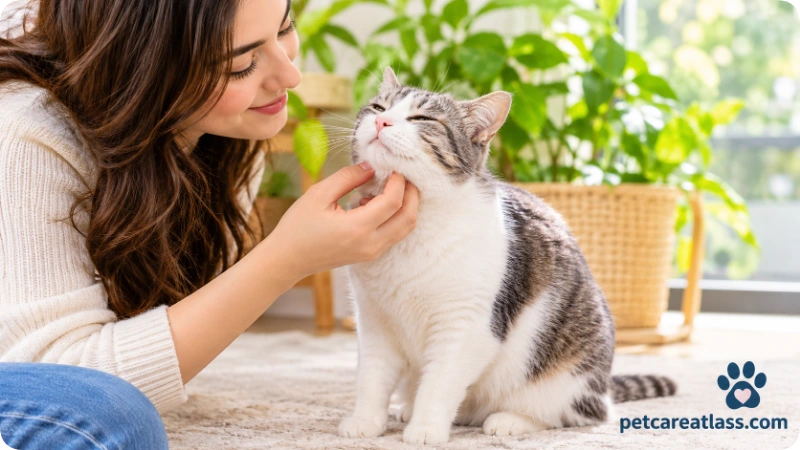
You do not need to force your cat to tolerate longer petting sessions. Instead, focus on making physical contact predictable, comfortable, and voluntary.
1. Keep Petting Sessions Short
Start with just a few gentle strokes rather than continuously petting your cat.
Pause and observe her reaction. If she remains relaxed and voluntarily seeks more contact, you can continue briefly.
The goal is to stop before she becomes uncomfortable, not to see how much petting she will tolerate.
2. Focus on Areas Your Cat Accepts
Begin with areas your cat already seems comfortable having touched, such as her cheeks, chin, or head.
Avoid sensitive areas if you have noticed that touching them triggers biting.
Remember that preferences vary between individual cats. Do not assume every cat enjoys the same type of contact.
3. Watch for Early Warning Signs
Do not wait until your cat bites.
If you notice tail flicking, skin twitching, tense muscles, or ears moving backward, stop petting immediately.
Learning your cat’s individual signals can help you recognize when she has reached her limit.
4. Let Your Cat Choose the Interaction
Allow your cat to approach you rather than repeatedly reaching toward her.
Offer your hand and give her the opportunity to initiate contact. If she moves away, respect that choice.
This helps make interactions more predictable and reduces the pressure of unwanted handling.
5. Use Positive Reinforcement
You can gradually help a cat become more comfortable with brief petting by pairing gentle contact with something positive, such as a small treat.
Start with a very short interaction while your cat is relaxed. Reward calm participation and stop before any discomfort appears.
Increase the duration gradually only if your cat remains comfortable. Never use food to lure her into accepting prolonged handling that she would otherwise avoid.
6. Avoid Punishing Your Cat for Biting
Never hit, yell at, spray, or physically punish a cat for biting.
Punishment can increase fear and anxiety, potentially making the behavior worse.
Instead, stop the interaction, give your cat space, and consider what triggered the response.
7. Provide Appropriate Play Opportunities
If your cat frequently grabs and bites your hands during playful interactions, provide toys that allow her to chase, stalk, and pounce safely.
Wand toys and other interactive toys are useful because they keep your hands away from your cat’s teeth and claws.
Consistent play opportunities can also help redirect inappropriate biting toward suitable objects.
Avoid These Common Petting Mistakes
Small changes in how you interact with your cat can help prevent uncomfortable situations.
Avoid:
- Continuing to pet after your cat starts flicking her tail or tensing her body.
- Rubbing the same sensitive area repeatedly.
- Forcing your cat to stay on your lap.
- Touching her belly when she is uncomfortable.
- Using your fingers to encourage biting during play.
- Punishing her for communicating discomfort.
Respecting your cat’s boundaries is more effective than trying to make her accept physical contact she does not want.
When Should You Be Concerned About Your Cat’s Biting?

Occasional gentle mouthing or a predictable reaction to unwanted petting does not automatically indicate a serious problem.
However, a veterinary examination is appropriate if:
- Your cat suddenly develops biting behavior.
- The biting becomes more frequent or intense.
- She reacts painfully when touched.
- You notice changes in appetite, grooming, movement, or social behavior.
- She becomes unusually withdrawn or defensive.
If the behavior continues despite changes to your handling approach, ask your veterinarian about a referral to a qualified veterinary behaviorist.
What to Do If Your Cat’s Bite Breaks Your Skin
Cat bites can cause serious infections, even when the wound looks small. Their teeth can create narrow puncture wounds that introduce bacteria beneath the skin.
If your cat breaks your skin:
- Immediately wash the wound thoroughly with soap and running water.
- Seek prompt medical advice, particularly for puncture wounds or bites to the hands, fingers, face, or joints.
- Ask a healthcare professional about infection prevention, tetanus protection, and rabies risk when relevant.
- Watch for increasing redness, warmth, swelling, pain, discharge, or fever.
Do not assume a small-looking bite is harmless. People with weakened immune systems may be at greater risk of serious complications.
If an unfamiliar or unvaccinated cat bites you, seek medical assessment promptly to discuss possible rabies exposure.
Frequently Asked Questions
Why does my cat bite me gently when I pet her?
A gentle bite may occur during social interaction, play, or mild overstimulation. However, the term “love bite” does not establish what your cat is feeling. Pay attention to her body language and whether she remains relaxed or begins showing signs of discomfort.
Why does my cat purr and then bite me?
Purring does not always mean a cat wants continued physical contact. Your cat may initially be comfortable but become irritated as petting continues. Watch for tail movements, skin twitching, and changes in ear position, and stop before she reaches her tolerance limit.
Why does my cat bite me when I stop petting her?
Some cats may use gentle mouthing or grabbing to encourage continued interaction. Others may be excited or frustrated when attention ends. Consider the surrounding behavior to understand the possible reason. Offer an appropriate toy if your cat wants to play rather than immediately restarting petting.
Why does my cat bite me when I pet her belly?
Many cats are uncomfortable with belly touching because this is a sensitive and vulnerable area. Even when a cat rolls onto her back, she may simply be stretching or showing that she feels comfortable nearby. It is not necessarily an invitation for belly rubs.
Why does my cat suddenly bite me without warning?
Some cats display very subtle warning signals that owners may overlook, such as slight tail movements, skin twitching, muscle tension, or changes in ear position. However, sudden biting can also be associated with fear, pain, or other triggers. If the behavior is new or unexplained, arrange a veterinary examination.
Will my cat stop biting me when I pet her?
Many cats can become more comfortable with handling when their preferences and boundaries are respected. Keep petting sessions short, avoid sensitive areas, and reward voluntary, calm interactions. However, some cats will always prefer limited physical contact, and that preference should be respected.
Conclusion
Cats bite during petting for different reasons, including overstimulation, sensitivity, fear, playfulness, and physical discomfort. The most helpful approach is to understand what triggers your cat’s response rather than treating every bite as bad behavior.
Pay attention to her body language, keep interactions gentle and brief, and allow her to decide when she wants physical contact. If biting begins suddenly or appears connected to pain, consult your veterinarian to rule out an underlying health problem.

Daniel Brooks is a pet care and animal behavior writer at petcareatlass.com focused on helping owners better understand their pets’ behavior and everyday needs. He creates practical, easy-to-follow content on pet communication, training, welfare, and responsible care.