Quick Answer:
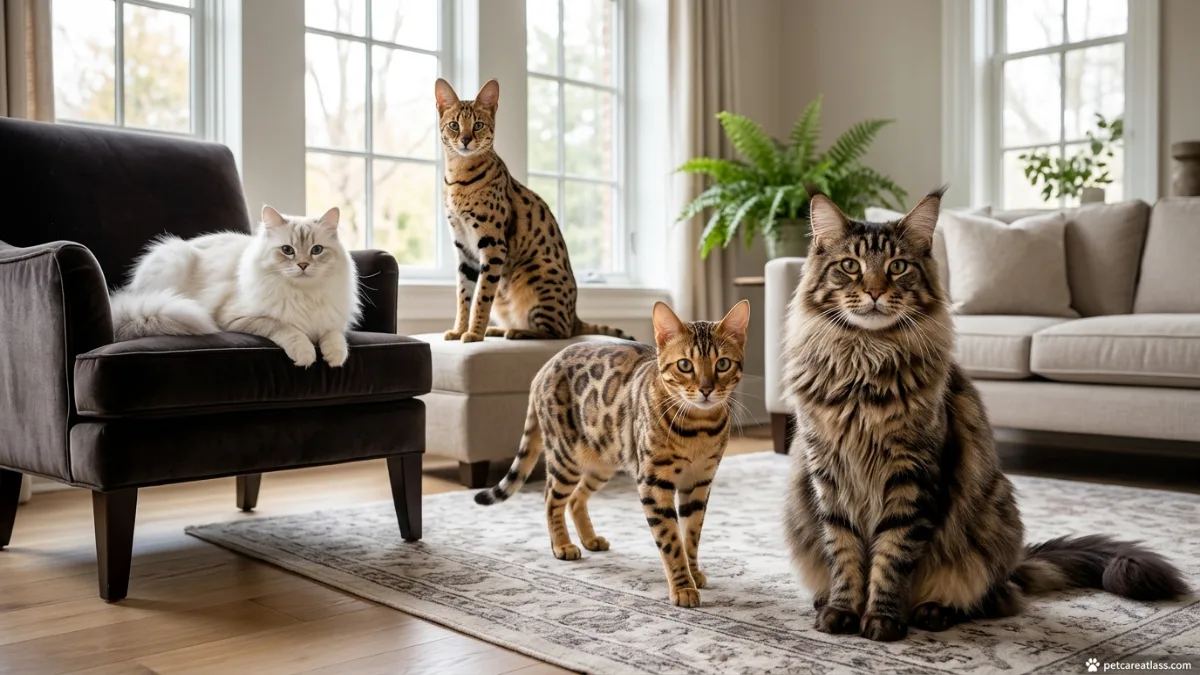
Big cat pet breeds are domestic cats known for their impressive size, muscular bodies, distinctive coats, or wild-looking features. Popular choices include Maine Coons, Bengals, Savannahs, Norwegian Forest Cats, and Siberians. However, their sizes, personalities, activity levels, and care requirements vary considerably.
The appearance of a lion, leopard, or other large feline can be fascinating, but actual wild cats are not suitable household pets. Fortunately, several domestic cat breeds have impressive sizes, muscular bodies, distinctive coats, and wild-looking features.
If you are searching for big cat pet breeds, you may want a large, majestic companion or a domestic cat with leopard-like markings and an athletic appearance. However, size and appearance are only part of the decision.
Temperament, activity levels, grooming requirements, health considerations, and long-term care responsibilities are equally important. Some breeds are naturally large and fluffy, while others stand out because of their spotted coats, prominent ears, or historical wildcat ancestry.
This guide compares seven domestic cat breeds, explores their characteristics, and explains what to consider before choosing one for your household.
7 Big Cat Pet Breeds That Look Like Wild Felines

Some domestic cats are naturally large, while others have spotted coats, long legs, or thick fur that resembles the appearance of wild felines. The following seven breeds offer different combinations of impressive size, distinctive features, and domestic companionship.
1. Maine Coon
The Maine Coon is one of the largest recognized domestic cat breeds. Its substantial body, broad chest, large paws, tufted ears, and long bushy tail give it a majestic appearance.
Despite its impressive size, the Maine Coon is widely appreciated for its friendly and sociable personality. Many enjoy spending time with their families, following people around the home, and participating in interactive play.
Key characteristics:
- Appearance: Large muscular body, long coat, tufted ears, and bushy tail.
- Typical weight: Males commonly weigh around 13–18 pounds, while females often weigh approximately 8–12 pounds. Some individuals are larger.
- Personality: Friendly, gentle, intelligent, and playful.
- Grooming: Regular brushing to prevent tangles and mats.
- Activity level: Moderate to active, with an interest in climbing and interactive games.
Best suited for: Families looking for a large, sociable domestic cat that enjoys companionship and regular play.
Maine Coons mature slowly and can take approximately three to five years to reach full physical development. Their size should not be confused with excess body fat, so maintaining a healthy body condition is more important than reaching a particular weight.
Responsible breeders should also consider screening for hypertrophic cardiomyopathy (HCM), an important inherited heart condition associated with the breed.
2. Bengal
The Bengal cat is famous for its leopard-like markings, athletic build, and distinctive appearance. Its spotted or marbled coat resembles the pattern of a wild leopard, making it one of the most recognizable wild-looking domestic cats.
Bengals originated through breeding domestic cats with the Asian leopard cat. Modern Bengals from established domestic breeding lines are recognized domestic cats, although generation and local regulations can matter when evaluating individual animals.
Key characteristics:
- Appearance: Muscular body, spotted or marbled coat, and athletic build.
- Typical weight: Approximately 8–15 pounds, depending on sex, genetics, and individual build.
- Personality: Curious, intelligent, energetic, and interactive.
- Grooming: Low-maintenance short coat.
- Activity level: High, with substantial enrichment and play needs.
Best suited for: Active owners who can provide climbing opportunities, interactive toys, regular play, and mental stimulation.
Bengals are not necessarily suitable for households seeking a quiet, low-energy companion. Their intelligence and curiosity can lead to unwanted behaviors when they become bored or lack appropriate activities.
Prospective owners should ask about a Bengal’s generation, background, health history, and any applicable ownership restrictions before bringing one home.
3. Savannah
The Savannah cat has an especially striking appearance because of its ancestry involving the African serval. Its long legs, large upright ears, lean body, and spotted coat create a resemblance to a small wild feline.
Savannah cats are classified by generations, commonly using labels such as F1, F2, F3, and later generations. These labels describe their generational distance from the original serval ancestor. An F1 Savannah has a serval parent, while later generations have progressively more domestic ancestry.
Key characteristics:
- Appearance: Long legs, large ears, lean muscular body, and dark spots.
- Typical weight: Highly variable according to generation, sex, and individual genetics. Early generations can be substantially larger than many later-generation Savannahs.
- Personality: Curious, intelligent, active, and adventurous.
- Grooming: Relatively easy-care short coat.
- Activity level: High to very high, particularly in some early generations.
Best suited for: Experienced owners who understand hybrid-cat requirements and can provide appropriate enrichment, secure housing, and specialized care.
Important ownership consideration: Early-generation Savannah cats can retain more wild ancestry and may have more demanding behavioral and housing requirements. Their size and temperament are not identical across generations, so a generation label alone cannot guarantee an individual cat’s behavior.
Ownership restrictions vary across US states and local jurisdictions. Some locations restrict or prohibit particular generations, while others have different requirements. Always verify current state and local laws before considering one.
4. Norwegian Forest Cat
The Norwegian Forest Cat has a powerful build, thick double coat, triangular face, and bushy tail. These features give it the appearance of a majestic forest-dwelling feline.
Despite its rugged appearance, this is a domestic breed known for its generally gentle and independent temperament.
Key characteristics:
- Appearance: Strong body, thick semi-long coat, tufted ears, and full tail.
- Typical weight: Males often weigh approximately 12–16 pounds, while females commonly weigh around 8–12 pounds.
- Personality: Gentle, intelligent, independent, and playful.
- Grooming: Regular combing, especially during seasonal shedding.
- Activity level: Moderate to active, with an interest in climbing and exploration.
Best suited for: Families seeking a substantial, fluffy cat that enjoys companionship without necessarily demanding constant attention.
Norwegian Forest Cats develop slowly and may take several years to reach full maturity. They benefit from sturdy climbing structures, comfortable resting spaces, and opportunities to explore their surroundings.
Their thick coats also require attention during seasonal shedding to help prevent tangles and remove loose fur.
5. Siberian
The Siberian cat is another large-looking domestic breed with a muscular body, broad chest, strong legs, and dense coat.
Its thick seasonal fur and full tail create an impressive appearance. Siberians can have different coat colors and patterns, including tabby markings that make some individuals look particularly wild.
Key characteristics:
- Appearance: Muscular body, rounded features, and thick semi-long coat.
- Typical weight: Males often weigh approximately 12–17 pounds, while females commonly weigh around 8–12 pounds. Individual sizes vary.
- Personality: Affectionate, playful, intelligent, and curious.
- Grooming: Regular brushing, with extra attention during seasonal shedding.
- Activity level: Moderate to high.
Best suited for: Households looking for an affectionate, active companion that enjoys interaction and an enriched indoor environment.
Siberians mature slowly and can take several years to reach their full development. Their thick coats also require routine maintenance, particularly when seasonal shedding increases.
Their muscular appearance should not be a reason to overfeed them. A balanced diet and regular body-condition checks help maintain a healthy weight.
6. Chausie
The Chausie is a tall, athletic domestic cat developed from crosses involving domestic cats and the jungle cat (Felis chaus).
Unlike heavier breeds such as the Maine Coon, the Chausie has a lean, muscular body, long legs, and large upright ears. These features give it a distinctive wild appearance.
Key characteristics:
- Appearance: Athletic body, long legs, large ears, and short coat.
- Typical weight: Often approximately 10–15 pounds, although individual size varies considerably.
- Personality: Intelligent, curious, energetic, and interactive.
- Grooming: Relatively low-maintenance short coat.
- Activity level: High to very high.
Best suited for: Experienced cat owners who can provide regular interaction, physical activity, and mental enrichment.
Chausies can become bored without sufficient stimulation. Their curiosity and climbing ability also mean that a secure, thoughtfully arranged indoor environment is particularly important.
Because the breed has jungle cat ancestry, prospective owners should investigate the cat’s generation, breeding documentation, and applicable local regulations. Not every Chausie has the same proportion of wild ancestry or the same behavioral requirements.
7. Ragdoll
The Ragdoll is a large domestic breed recognized for its blue eyes, silky semi-long coat, and substantial body.
Although it does not have the spotted markings of a leopard or the athletic appearance of a Bengal, its size, broad body, and luxurious coat give it a majestic look.
Key characteristics:
- Appearance: Large body, broad chest, blue eyes, and semi-long pointed coat.
- Typical weight: Males commonly weigh around 12–20 pounds, while females often weigh approximately 8–15 pounds.
- Personality: Affectionate, relaxed, gentle, and sociable.
- Grooming: Regular brushing to prevent tangles.
- Activity level: Moderate, with regular opportunities for play.
Best suited for: Families seeking a large, affectionate domestic companion with a generally relaxed temperament.
Ragdolls mature slowly and may take approximately three to four years to reach their full size. Although they are often described as laid-back, they still need regular activity, a suitable diet, and routine veterinary care.
Ragdolls are included in this list because of their substantial size and majestic appearance rather than because they resemble spotted wild cats. This distinction is useful when comparing breeds based on appearance.
Comparing the 7 Big Cat Pet Breeds
Choosing between these breeds becomes easier when you compare their appearance, general energy levels, and grooming requirements.
| Breed | Wild-Looking Feature | Energy Level | Grooming |
|---|---|---|---|
| Maine Coon | Large body and tufted ears | Moderate–high | Regular |
| Bengal | Leopard-like rosettes | High | Low |
| Savannah | Serval-like appearance | High–very high | Low |
| Norwegian Forest | Thick coat and strong build | Moderate–high | Regular |
| Siberian | Dense coat and muscular body | Moderate–high | Regular |
| Chausie | Long legs and large ears | High–very high | Low |
| Ragdoll | Large body and fluffy coat | Moderate | Regular |
These are general breed tendencies, not guarantees. Individual cats differ in size, temperament, activity requirements, and grooming needs. A cat’s health, age, genetics, and environment also influence its behavior and care requirements.
Are Big Cat Pet Breeds Actually Wild Animals?

No. Most large domestic cat breeds are domestic cats, even when their appearance resembles lions, leopards, or other wild felines.
However, some breeds have hybrid ancestry that deserves additional consideration.
For example, Bengals originated from crosses involving the Asian leopard cat, Savannahs have African serval ancestry, and Chausies have jungle cat ancestry.
The important distinction is between a domestic breed with historical wild ancestry and an actual wild animal. Their legal status, generations, behavioral characteristics, and ownership requirements are not necessarily the same.
Domestic Cats With Wild Ancestry
Some domestic breeds have historical wildcat ancestry, but their ownership considerations vary.
- Bengals: Modern Bengals from established domestic lines are domestic cats. However, certain early-generation hybrids may be subject to additional restrictions.
- Savannahs: Early generations may retain more wild characteristics and can be subject to stricter ownership requirements.
- Chausies: Their jungle cat ancestry makes generation, breeding background, and local ownership rules important considerations.
Before acquiring a hybrid cat, investigate its generation, breeder documentation, behavioral needs, health history, and applicable ownership laws.
A reputable breeder should be transparent about ancestry and provide appropriate documentation rather than relying solely on an unusual appearance or breed label.
Why Lions, Tigers, and Leopards Are Not Household Pets
Actual big cats have specialized physical, nutritional, behavioral, and environmental requirements.
Lions, tigers, leopards, and jaguars are powerful predators that need appropriate habitats, professional care, and opportunities to express natural behaviors. Ordinary household environments cannot adequately meet these requirements.
In the United States, the Big Cat Public Safety Act restricts certain private ownership and activities involving specified big cat species, subject to limited exceptions and applicable provisions.
Choosing a domestic breed with a wild-looking appearance is a more responsible alternative than attempting to keep a wild predator.
What to Consider Before Choosing a Large Domestic Cat
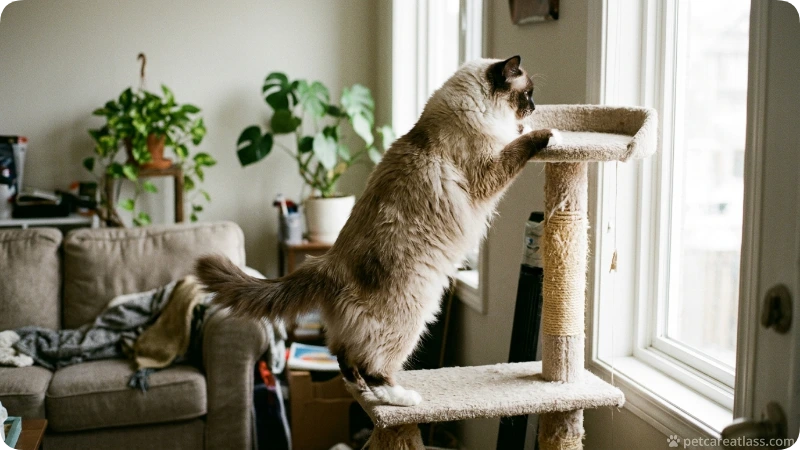
A large cat may look impressive, but its appearance should never be the only reason to bring it home. Consider the following factors before choosing a breed.
1. Space and Indoor Environment
Large cats need comfortable resting areas, appropriately sized litter boxes, scratching surfaces, and sturdy climbing opportunities.
Active breeds such as Bengals, Savannahs, and Chausies may benefit from additional vertical space and more challenging enrichment.
An indoor environment should allow cats to climb, hide, scratch, explore, and rest comfortably. Secure windows, balconies, and outdoor access points to reduce the risk of escape or injury.
2. Exercise and Mental Stimulation
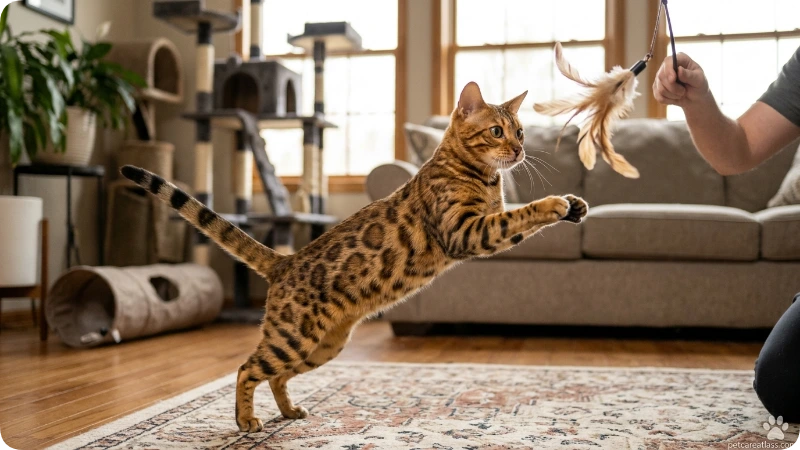
All domestic cats need regular opportunities to play and express natural behaviors.
However, high-energy breeds may need more interactive play, puzzle feeders, climbing structures, and activities that encourage exploration.
Consider whether your daily schedule allows you to provide consistent attention and enrichment. A lack of stimulation can contribute to boredom and unwanted behaviors.
3. Grooming Requirements
Long-haired and thick-coated breeds require more regular coat maintenance than short-haired cats.
Maine Coons, Norwegian Forest Cats, Siberians, and Ragdolls benefit from regular brushing to reduce tangles and remove loose fur.
Bengals and Chausies generally have shorter coats and require less brushing, although routine grooming is still necessary.
Regular grooming also gives owners an opportunity to notice skin changes, parasites, unusual lumps, or other potential health concerns.
4. Food, Veterinary Care, and Long-Term Costs
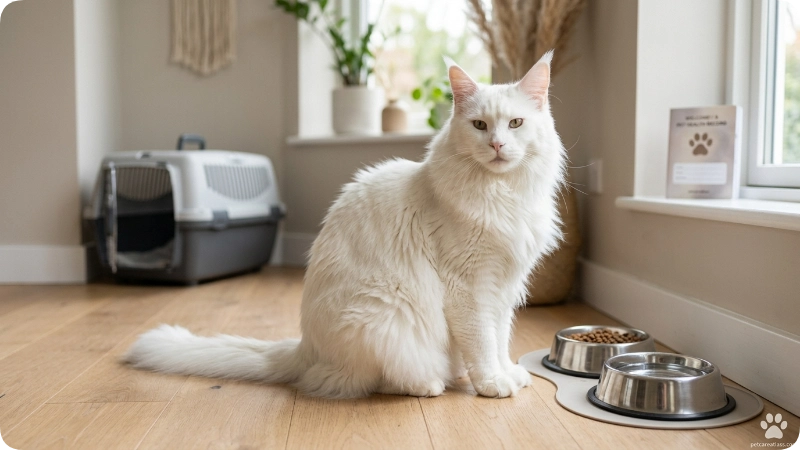
Large cats may need appropriately sized equipment, carriers, and climbing structures. However, food requirements should be based on age, body condition, health, and activity rather than appearance alone.
Before bringing a cat home, budget for:
- Complete and balanced cat food.
- Routine veterinary examinations and vaccinations.
- Appropriate parasite prevention.
- Litter and suitable litter boxes.
- Scratching posts, toys, and enrichment equipment.
- Grooming supplies.
- Spaying or neutering when appropriate.
- Unexpected veterinary expenses.
Ask your veterinarian about breed-associated health conditions and appropriate screening. For example, responsible Maine Coon breeding programs should consider screening for hypertrophic cardiomyopathy (HCM).
A breeder’s health-screening practices, the cat’s family health history, and regular veterinary examinations are all useful parts of responsible ownership.
5. Temperament and Family Compatibility
Breed descriptions provide useful general information, but they cannot guarantee an individual cat’s personality.
Consider your household’s activity level, children, existing pets, and available time for companionship.
Some cats enjoy frequent interaction, while others prefer more independent routines. High-energy breeds may also require more structured play than households initially expect.
Meet the cat when possible, observe its behavior, and ask the breeder or rescue organization about its socialization, health history, and individual needs.
Choose a cat whose personality and care requirements fit your household rather than selecting one based entirely on its size or appearance.
Frequently Asked Questions
What is the biggest domestic cat breed?
The Maine Coon is widely recognized as one of the largest pedigreed domestic cat breeds. Adult males commonly weigh around 13–18 pounds, while females are generally smaller. Some individuals are larger, but healthy body condition is more important than achieving a particular weight.
Which big cat pet breed looks most like a leopard?
The Bengal is one of the most recognizable domestic cats resembling a leopard. Its golden or silver coat can feature distinctive dark rosettes and spots, combined with an athletic, muscular body.
Which domestic cat looks most like a tiger?
Bengals with brown spotted or marbled tabby patterns can have a tiger-like or leopard-like appearance. However, no domestic breed is actually a miniature tiger. Coat patterns vary between individual cats.
Which big domestic cat is best for families?
Maine Coons, Ragdolls, Siberians, and Norwegian Forest Cats can be good family companions. Their generally sociable or adaptable temperaments make them worth considering, but individual personality, socialization, and household compatibility matter more than breed reputation alone.
Are Savannah cats legal in the United States?
Savannah cat ownership laws vary by state and local jurisdiction. Some locations restrict early generations or prohibit ownership, while others permit certain generations. Check current regulations before acquiring one, and obtain reliable documentation of the cat’s generation.
Do large domestic cats need more food than regular cats?
Not necessarily. Food requirements depend on body condition, age, metabolism, activity, and health. A larger cat may need more food than a smaller cat, but feeding should follow appropriate nutritional guidance rather than weight-based assumptions alone.
Can a domestic cat look like a lion?
Some Maine Coons and Norwegian Forest Cats have thick neck fur, broad faces, and impressive bodies that create a lion-like appearance. However, these are domestic cats with their own breed characteristics and care requirements.
Conclusion
Big cat pet breeds offer an appealing combination of impressive size, distinctive appearances, and domestic companionship. From the substantial Maine Coon and fluffy Siberian to the spotted Bengal and athletic Savannah, each breed has different characteristics and care requirements.
However, the best choice is not necessarily the largest or most wild-looking cat. Consider temperament, activity levels, grooming, health considerations, and the time and resources you can consistently provide.
If you are considering a hybrid breed such as a Savannah or Chausie, investigate its generation, ancestry, and local ownership restrictions before making a decision.
Ultimately, choosing a cat whose needs match your household is more important than choosing one based on appearance alone.

Daniel Brooks is a pet care and animal behavior writer at petcareatlass.com focused on helping owners better understand their pets’ behavior and everyday needs. He creates practical, easy-to-follow content on pet communication, training, welfare, and responsible care.