Quick Answer:
No, African wild dogs are not suitable pets. They are endangered, undomesticated wild canines with complex social needs, strong hunting instincts, and demanding habitat requirements. Private ownership may also be restricted or illegal depending on local wildlife laws. They are best protected in their natural habitats and professionally managed conservation facilities.
African wild dogs are fascinating wild canines known for their distinctive patchwork coats, strong social bonds, and cooperative hunting behavior.
Their intelligence and striking appearance may make them seem appealing as unusual pets, but their needs are very different from those of domestic dogs.
So, can you keep an African wild dog as a pet? Although private ownership may be legally restricted or prohibited depending on your location, these endangered wild animals are not domesticated and have complex social, behavioral, and environmental needs that are extremely difficult to meet in a household.
Understanding their natural behavior, conservation status, space requirements, and legal restrictions can help explain why African wild dogs belong in protected natural habitats and professionally managed conservation environments rather than private homes.
What Is an African Wild Dog?

Scientific name: Lycaon pictus
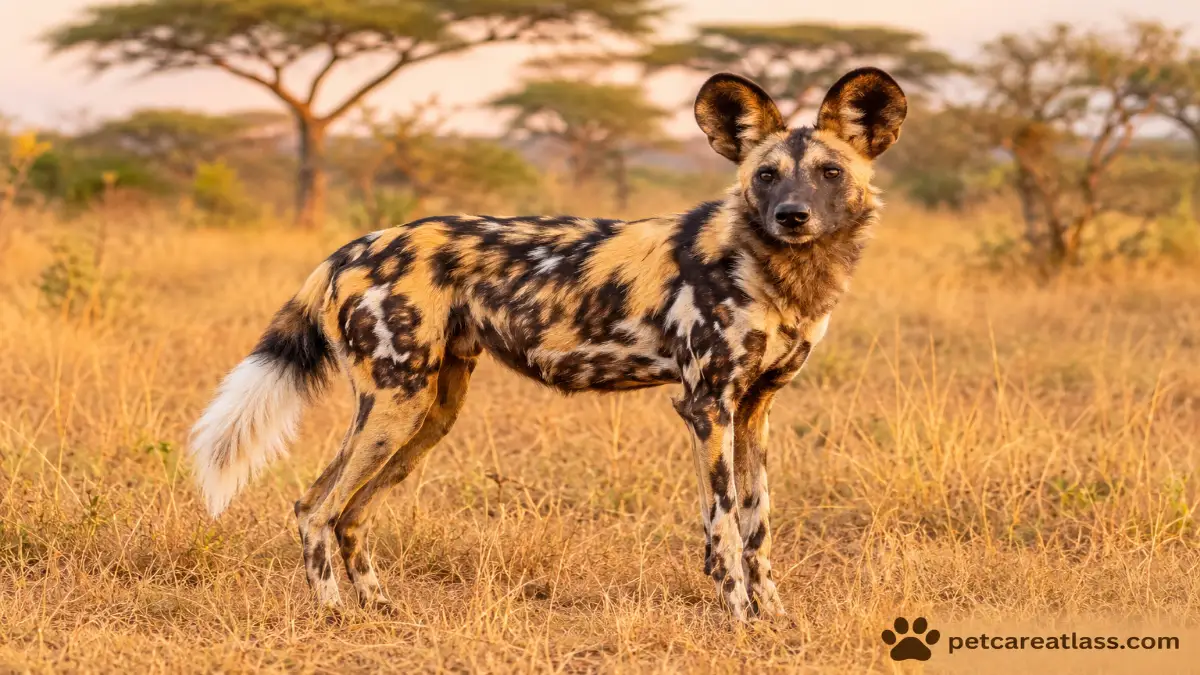
The African wild dog, also called the painted dog, painted wolf, or Cape hunting dog, is a wild carnivore native to sub-Saharan Africa. It belongs to the family Canidae, which includes domestic dogs, wolves, foxes, and other wild canids.
Despite its dog-like appearance, the African wild dog is a distinct species belonging to the genus Lycaon. It is neither a domestic dog breed nor a wolf-dog hybrid.
Its unusual physical characteristics help distinguish it from other members of the dog family.
- Patchwork coat: Its fur contains irregular black, white, yellow, and brown markings. Every individual has a distinctive coat pattern.
- Large rounded ears: These help with hearing and communication within the pack.
- Long legs: Its lean, athletic body is adapted for traveling and pursuing prey over considerable distances.
- Four toes: Unlike most other canids, African wild dogs have four toes on each foot and lack dewclaws.
- White-tipped tail: The distinctive white tail tip is an easily recognizable feature.
Adult African wild dogs generally weigh approximately 40–77 pounds (18–35 kg). Males are usually slightly larger than females.
Why Are African Wild Dogs Not Suitable as Pets?
African wild dogs are unsuitable as household pets because their natural requirements are fundamentally different from those of domesticated dogs.
Their needs involve more than food, shelter, and exercise. They depend on complex social relationships, large natural landscapes, specialized feeding, and professional wildlife management.
Even an experienced domestic dog owner would face significant challenges meeting these requirements.
1. They Have Complex Social Needs
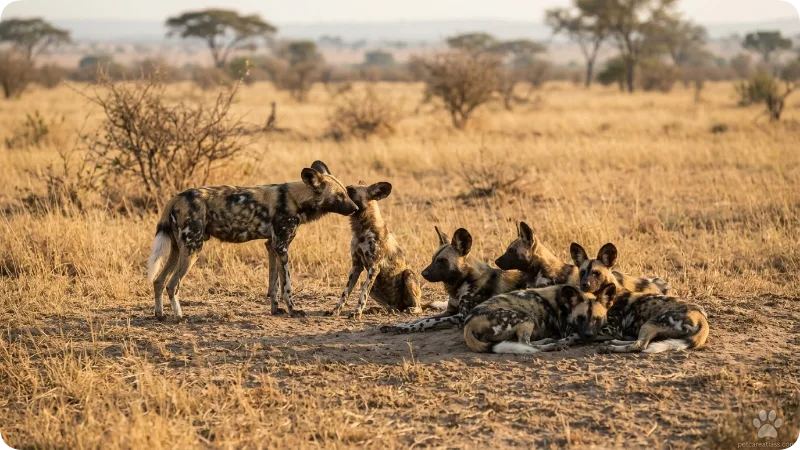
African wild dogs are highly social animals that naturally live in packs. Their social structure is essential to survival, reproduction, hunting, and raising young.
Pack members cooperate in several important activities:
- Hunting and obtaining food.
- Protecting and raising puppies.
- Maintaining relationships through greeting and social interactions.
- Communicating through vocalizations and body language.
- Coordinating movement and responding to potential threats.
A wild dog kept alone would lose access to its natural social environment. However, keeping several together is not a simple solution. Their relationships involve dominance, compatibility, breeding, and group stability.
Even professional zoological facilities must carefully manage pack composition because changes in social relationships can create significant behavioral and welfare challenges.
A human owner cannot replace the natural social structure of an African wild dog pack.
2. They Need Extensive Space and Natural Movement
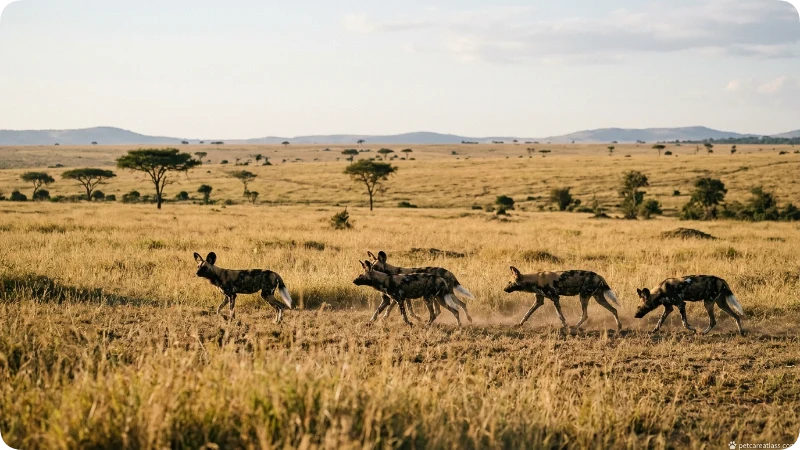
African wild dogs are wide-ranging predators adapted to moving through large landscapes while searching for prey and traveling with their packs.
Depending on habitat, prey availability, and pack size, their home ranges can cover hundreds of square kilometers or more.
Their natural lifestyle involves:
- Traveling across extensive territories.
- Exploring different habitats.
- Searching for prey.
- Moving with other pack members.
- Finding suitable places to rest and raise puppies.
A backyard or ordinary residential property cannot reproduce these conditions.
Even a large private enclosure would require secure wildlife-grade containment, suitable shelter, environmental enrichment, and professional management.
Providing more physical space alone would not solve the animal’s social, nutritional, and behavioral needs.
3. Their Hunting Instincts Are Different From Domestic Dogs
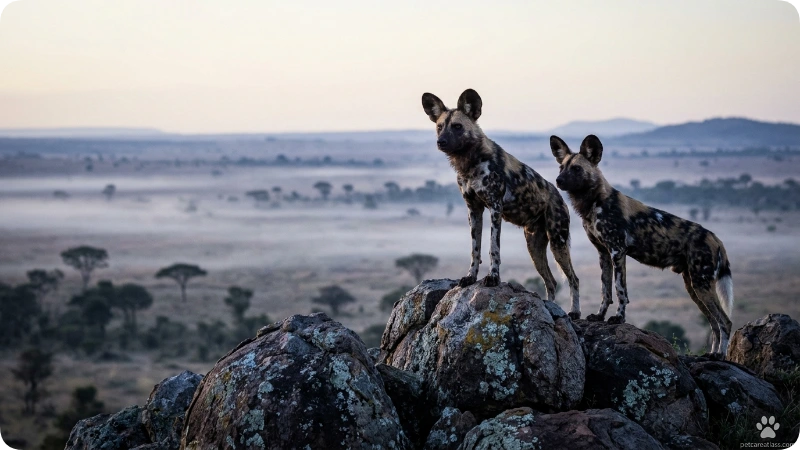
African wild dogs are specialized cooperative predators. They work together to pursue and capture wild prey, including antelope and other medium-sized mammals.
Their hunting behavior is an important part of their natural ecology and survival.
Domestic dogs have undergone generations of domestication and selective breeding for different roles alongside humans. African wild dogs have not undergone that same process.
This difference creates several challenges for private ownership:
- Their natural predatory behavior cannot simply be eliminated through obedience training.
- Small household animals could be at risk.
- Livestock could be vulnerable.
- Their responses to unfamiliar animals and situations may be difficult to predict.
- Their hunting and social behaviors require appropriate environmental opportunities.
Their natural instincts should not be treated as undesirable habits that an owner can train away.
4. Their Diet and Veterinary Care Are Specialized
African wild dogs are carnivores whose natural diet consists primarily of animal prey.
They consume different parts of their prey, including meat and bone. Their nutritional needs should not be assumed to match those of ordinary domestic dogs.
Professional care requires appropriate attention to:
- Nutritional balance and food quality.
- Safe food preparation and storage.
- Hydration and body condition.
- Species-specific disease prevention.
- Preventive veterinary examinations.
- Specialized anesthesia and medical procedures when necessary.
Their veterinary care can be particularly challenging because wildlife veterinarians must understand their anatomy, behavior, social environment, and handling requirements.
A regular household veterinary clinic may not have the experience or facilities needed to manage this species.
Research on African wild dog medicine highlights the importance of specialized veterinary knowledge, appropriate husbandry, and careful social-group management.
Are African Wild Dogs Dangerous to Humans?
African wild dogs are wild predators, not domesticated companions. They generally avoid unnecessary interactions with humans, but this does not mean they are safe to approach, handle, or keep at home.
Their physical abilities, natural instincts, and responses to unfamiliar situations make private handling inappropriate.
Potential risks include:
- Bites and serious injuries if an animal feels threatened.
- Defensive responses during restraint or capture.
- Stress caused by unfamiliar surroundings.
- Risks to children and other household animals.
- Difficulties safely containing or transporting an animal.
It is important to distinguish natural wildlife behavior from the predictable behavior expected of a well-socialized domestic dog.
Safety advice: Never approach, feed, touch, or attempt to capture an African wild dog in the wild. Observe from a safe distance and follow instructions from local wildlife authorities.
Can You Legally Own an African Wild Dog in the United States?
African wild dogs are listed as endangered under the US Endangered Species Act (ESA). This means activities involving the species are subject to federal wildlife protections.
However, it is important to understand that endangered-species regulations do not translate into one simple rule covering every form of possession or activity.
Federal restrictions can apply to activities such as unauthorized importation, exportation, taking, and certain interstate commercial transactions.
The US Fish and Wildlife Service also explains that captive-bred wildlife registrations are not issued simply to allow people to keep or breed endangered animals as pets.
Anyone considering involvement with this species would need to understand several layers of regulation:
- Federal regulations: Endangered Species Act requirements and applicable wildlife permits.
- Local regulations: County and municipal restrictions.
- Acquisition requirements: The legal origin and documentation of the animal.
- Animal welfare requirements: Applicable standards for housing, care, and professional management.
A captive-bred animal is not automatically legal to purchase or keep as a private pet.
For anyone in the United States, the appropriate starting point is the US Fish and Wildlife Service and the relevant state wildlife agency. Never purchase an animal based solely on a seller’s claim that it is legally available.
Are African Wild Dogs Endangered?

African wild dogs are classified as Endangered on the IUCN Red List. Their populations remain vulnerable because of habitat fragmentation, disease, human-wildlife conflict, and other threats.
The 2025 IUCN assessment update continued to classify the species as Endangered and highlighted the importance of protecting connected habitats and reducing human-related mortality.
Several factors contribute to their conservation challenges.
Habitat Loss and Fragmentation
Agricultural expansion, settlements, roads, and other human developments can divide natural habitats into smaller areas.
Because African wild dogs travel across extensive landscapes, fragmented habitats can restrict their movement and access to prey.
Disease Transmission
Infectious diseases, including canine distemper and rabies, can threaten wild dog populations.
Contact with domestic dogs and other carnivores can create opportunities for disease transmission, particularly where wildlife habitats overlap with human settlements.
Human-Wildlife Conflict
African wild dogs sometimes kill livestock, which can lead to conflict with farmers and local communities.
Retaliatory killing and other forms of persecution can reduce already vulnerable populations.
Accidental Snaring and Road Mortality
Snares intended for other wildlife can injure or kill African wild dogs.
Roads also create dangers when animals travel across fragmented landscapes or move between protected areas.
These threats demonstrate why protecting suitable habitats, improving coexistence with local communities, and supporting conservation programs are essential for the species’ survival.
Can African Wild Dogs Be Kept in Zoos or Wildlife Sanctuaries?
Yes. Qualified zoological institutions and professionally managed wildlife facilities can care for African wild dogs when they have the appropriate facilities, expertise, and resources.
However, professional wildlife care is very different from keeping a wild animal as a household pet.
Responsible facilities must provide:
- Secure habitats: Spacious, professionally designed enclosures with suitable shelter and environmental enrichment.
- Social management: Compatible groups with careful attention to pack relationships and breeding.
- Appropriate nutrition: Carefully managed diets that meet the species’ nutritional requirements.
- Veterinary care: Access to veterinarians experienced in wild canids and wildlife medicine.
- Behavioral enrichment: Opportunities for natural exploration, movement, and species-appropriate activities.
- Conservation management: Responsible breeding programs and attention to genetic diversity where appropriate.
Even experienced zoological professionals must carefully manage social relationships because changes in pack membership can affect group stability.
The purpose of professional wildlife care is to protect animal welfare and support conservation, not to turn wild animals into household companions.
What Animals Can You Keep Instead of an African Wild Dog?
If you admire African wild dogs because of their athletic appearance, intelligence, or active personalities, some domestic dog breeds may offer qualities you appreciate without the welfare and conservation concerns associated with owning an endangered wild predator.
These breeds are not direct substitutes for African wild dogs, but they may be worth considering as household companions.
1. Basenji
The Basenji is an independent, athletic domestic dog known for its alert expression and distinctive vocal behavior.
It is an intelligent breed that benefits from regular exercise, mental stimulation, and patient training.
2. Siberian Husky
The Siberian Husky is an energetic working breed recognized for its endurance, social nature, and striking appearance.
It needs substantial daily exercise, secure containment, and consistent training. Its high activity requirements make it better suited to owners who can provide an active lifestyle.
3. German Shepherd
The German Shepherd is an intelligent and versatile working breed known for its trainability and athletic abilities.
It benefits from structured training, regular physical activity, early socialization, and mental enrichment.
4. Australian Cattle Dog
The Australian Cattle Dog is an energetic herding breed developed for demanding working activities.
It is naturally alert and intelligent, making daily exercise and mentally challenging activities important parts of its care.
Choosing responsibly: Select a domestic dog based on your living environment, experience, available time, and ability to meet its individual needs. Appearance alone should never determine whether a breed is suitable for your household.
African Wild Dog vs. Domestic Dog: What Is the Difference?
Although African wild dogs and domestic dogs belong to the same biological family, they have very different evolutionary histories, lifestyles, and relationships with humans.
| Feature | African Wild Dog | Domestic Dog |
|---|---|---|
| Scientific Name | Lycaon pictus | Canis lupus familiaris |
| Biological Family | Canidae | Canidae |
| Natural Lifestyle | Wild pack animal | Domesticated companion |
| Social Behavior | Complex pack structure | Varies by breed and individual |
| Natural Diet | Primarily wild prey | Balanced formulated dog food |
| Exercise | Extensive natural movement | Based on individual needs |
| Training | Not domesticated for obedience | Can learn household training |
| Human Relationship | Wild animal | Domesticated companion |
| Conservation | Endangered species | Domestic animal population |
The most important difference is domestication. Domestic dogs have undergone generations of selection for living alongside humans, while African wild dogs retain the natural behavioral and ecological requirements of wild predators.
Their shared family classification does not make them interchangeable.
Frequently Asked Questions
Can you buy an African wild dog?
African wild dogs are not ordinary companion animals available through responsible pet breeders. Their endangered status, specialized welfare requirements, and legal protections make private purchasing inappropriate. Be cautious of online advertisements claiming to sell African wild dog puppies, particularly when sellers cannot provide reliable documentation.
Are African wild dogs friendly?
African wild dogs form strong social relationships within their packs and cooperate in raising young and obtaining food. However, their social behavior should not be confused with domesticated friendliness. They are wild animals and are not reliably suited to human companionship or handling.
Can an African wild dog be domesticated?
An individual African wild dog may become accustomed to familiar caretakers in a professionally managed environment. However, becoming accustomed to people is not the same as domestication. Domestication involves inherited changes across generations, rather than simply raising a wild animal around humans.
How big do African wild dogs get?
Adult African wild dogs generally weigh approximately 40–77 pounds (18–35 kg). They have lean athletic bodies, long legs, large rounded ears, and distinctive multicolored coats. Males are usually slightly larger than females.
How long do African wild dogs live?
Their lifespan varies depending on environmental conditions, disease, predation, and access to food. Veterinary literature reports an average survival age of approximately 10 years in zoological settings, although some individuals have lived 12–16 years.
Are African wild dogs related to domestic dogs?
Yes. Both belong to the family Canidae, but African wild dogs belong to the genus Lycaon, while domestic dogs belong to the genus Canis. They share an evolutionary family but are distinct animals with different natural lifestyles.
Why are African wild dogs called painted dogs?
They are called painted dogs because their coats contain irregular patches of black, white, yellow, and brown fur. Each animal has a unique pattern, making individual wild dogs visually distinguishable.
Conclusion
An African wild dog may look like an unusual domestic dog, but it is an endangered wild predator with complex social, behavioral, nutritional, and environmental needs.It is not an appropriate household pet, even for someone experienced with domestic dogs or other wild animals.
The responsible way to appreciate this remarkable species is through ethical wildlife observation, conservation education, and support for qualified zoological and wildlife protection programs. Protecting their natural habitats helps ensure that future generations can continue to encounter these extraordinary animals in the wild.

Daniel Brooks is a pet care and animal behavior writer at petcareatlass.com focused on helping owners better understand their pets’ behavior and everyday needs. He creates practical, easy-to-follow content on pet communication, training, welfare, and responsible care.