Quick Answer:
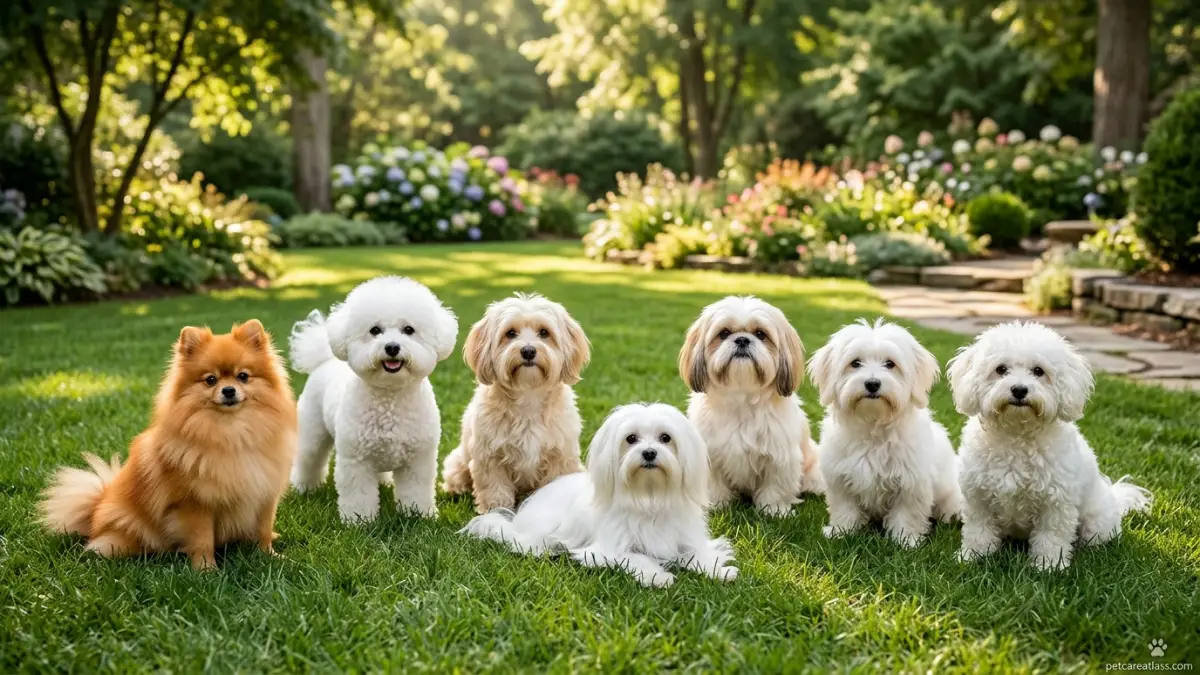
Pet fluffy cute small dogs include Pomeranians, Bichon Frises, Havanese, Maltese, Shih Tzus, Coton de Tulears, and Bolognese. These adorable companion breeds have different coat textures, sizes, personalities, and exercise requirements. Some shed very little, while others need more frequent brushing and grooming. The best choice depends on your lifestyle, available grooming time, household environment, and ability to meet each dog’s individual care needs.
Small fluffy dogs are popular among people who love adorable companions with soft coats, expressive faces, and compact bodies.
From the cloud-like appearance of Pomeranians to the curly coats of Bichon Frises and the silky hair of Maltese, these small breeds offer a wonderful variety of looks and personalities.
However, choosing the right small dog involves more than finding the fluffiest or cutest breed. Some require frequent brushing and professional grooming, while others shed more noticeably or have specific health considerations.
Their energy levels, temperaments, and companionship needs also vary.
In this guide, you’ll discover seven adorable small fluffy dog breeds, compare their sizes, personalities, shedding levels, and grooming requirements, and learn how to choose a healthy companion that fits your home, family, and lifestyle.
7 Pet Fluffy Cute Small Dogs Worth Knowing

The following seven breeds are popular choices for people who appreciate small dogs with beautiful, fluffy coats. Each has a distinctive appearance, personality, and set of care requirements.
1. Pomeranian
The Pomeranian is one of the most recognizable small fluffy dog breeds. It has a thick double coat, fox-like expression, tiny upright ears, and a beautifully plumed tail. Its rounded appearance makes it look like a little walking ball of fur.
Despite its small size, this breed has a confident and lively personality. Pomeranians are intelligent, curious, and alert. They often enjoy learning tricks, playing interactive games, and spending time with their families.
Breed characteristics:
- Weight: Approximately 3–7 pounds.
- Coat: Thick double coat with a dense undercoat.
- Colors: Orange, cream, black, white, sable, and other recognized colors.
- Personality: Confident, energetic, curious, and affectionate.
- Shedding: Moderate to noticeable, with seasonal coat changes.
- Grooming: Regular brushing and occasional professional grooming.
- Exercise: Daily walks, indoor play, and mental stimulation.
What makes them special?
Pomeranians combine a very small body with an expressive personality. They can adapt to apartment living, provided they receive appropriate exercise, training, and companionship.
Things to consider:
Their delicate bodies require gentle handling. They can also be vocal, so early training and appropriate socialization are helpful. Never encourage children to carry or handle them roughly.
2. Bichon Frise
The Bichon Frise is famous for its soft white coat, rounded appearance, and cheerful expression. Its curly, powder-puff-like fur gives it the appearance of a little cotton ball.
This breed is generally friendly, playful, and sociable. Bichons often enjoy meeting people, participating in family activities, and learning through positive reinforcement.
Breed characteristics:
- Weight: Approximately 12–18 pounds.
- Coat: Soft, curly, and dense.
- Colors: Primarily white, sometimes with cream or apricot shading.
- Personality: Cheerful, affectionate, playful, and sociable.
- Shedding: Generally low.
- Grooming: Frequent brushing and regular professional grooming.
- Exercise: Daily walks and interactive play.
What makes them special?
Bichon Frises are often considered by families looking for a cheerful, people-oriented small companion. Their lower-shedding coat can also appeal to some allergy-conscious households.
Things to consider:
Their curly coat can develop painful mats if neglected. Regular brushing is essential, and professional grooming helps maintain a manageable coat.
No dog breed is completely hypoallergenic, and people with allergies may react differently to individual dogs.
3. Havanese
The Havanese is a charming small companion dog with expressive eyes, a silky coat, and a naturally playful personality. Its long, flowing hair can be straight or wavy, creating a soft and fluffy appearance.
Havanese dogs are generally affectionate, intelligent, and sociable. They often enjoy being involved in everyday household activities and developing close relationships with their owners.
Breed characteristics:
- Weight: Approximately 7–13 pounds.
- Coat: Long, soft, silky, and often wavy.
- Colors: White, cream, black, chocolate, gold, and various combinations.
- Personality: Friendly, affectionate, playful, and intelligent.
- Shedding: Generally low.
- Grooming: Regular brushing and coat maintenance.
- Exercise: Daily walks, indoor games, and mental enrichment.
What makes them special?
Havanese dogs are excellent candidates for people who want an affectionate companion with a playful temperament. Their adaptable size can also make them suitable for apartments and smaller homes.
Things to consider:
Their social nature means they may struggle when left alone for extended periods. Their longer coat also needs consistent attention to prevent tangles and mats.
4. Maltese
The Maltese is a tiny companion breed known for its elegant white coat, dark round eyes, and gentle expression. Its long, silky hair can reach the ground when maintained in a traditional full-length coat.
Although their appearance is delicate, Maltese dogs are often lively, playful, and confident. They enjoy companionship, short walks, indoor activities, and interactive play.
Breed characteristics:
- Weight: Generally under 7 pounds under the AKC breed standard.
- Coat: Long, straight, silky, and white.
- Personality: Affectionate, playful, lively, and gentle.
- Shedding: Generally low.
- Grooming: Frequent brushing, regular bathing, and coat trimming.
- Exercise: Short daily walks and indoor play.
What makes them special?
Maltese dogs are particularly appealing to people who prefer very small companion breeds. Their beautiful white coats and expressive faces give them a distinctive appearance.
Things to consider:
Their small size makes them vulnerable to accidental injuries. Regular dental care is also important because small breeds can be prone to dental problems. Tear staining may occur around the eyes and should be managed gently.
5. Shih Tzu
The Shih Tzu is a small companion dog with a rounded face, short muzzle, large expressive eyes, and a luxurious coat. Its long hair can create an especially fluffy teddy-bear appearance when properly maintained.
Shih Tzus are generally affectionate, outgoing, and playful. They were developed primarily as companion dogs and often enjoy spending time with their families.
Breed characteristics:
- Weight: Approximately 9–16 pounds.
- Coat: Long, dense, and flowing.
- Colors: Many colors and combinations.
- Personality: Affectionate, friendly, confident, and playful.
- Shedding: Generally low to moderate.
- Grooming: Frequent brushing and regular professional trimming.
- Exercise: Short walks and indoor activities.
What makes them special?
Shih Tzus are well known for their affectionate nature and relatively compact size. They can adapt to apartment living and often enjoy relaxed household environments.
Things to consider:
Their shortened facial structure can contribute to breathing difficulties, overheating, and reduced exercise tolerance. Choose a responsible breeder who prioritizes healthy facial structure, and seek veterinary advice if you notice noisy breathing, excessive panting, or difficulty exercising.
Avoid strenuous activity during hot weather, and provide a cool, comfortable environment.
6. Coton de Tulear
The Coton de Tulear is named after its distinctive cotton-like coat. This small dog has a soft, fluffy appearance, expressive dark eyes, and a cheerful personality.
Cotons are generally affectionate, playful, and people-oriented. They often enjoy following their owners around the home and participating in family activities.
Breed characteristics:
- Weight: Approximately 8–15 pounds.
- Coat: Soft, cotton-like, and slightly wavy.
- Colors: Primarily white, sometimes with light gray or biscuit markings.
- Personality: Happy, affectionate, playful, and sociable.
- Shedding: Generally low.
- Grooming: Frequent brushing and regular coat maintenance.
- Exercise: Daily walks and interactive play.
What makes them special?
Their soft coat and friendly personality make Cotons appealing to people looking for a small, affectionate household companion.
Things to consider:
Their coat can become tangled close to the skin if brushing is inconsistent. A shorter, comfortable trim may make maintenance easier without neglecting coat care.
7. Bolognese
The Bolognese is a small Italian companion breed with a beautiful white coat that forms soft, loose curls. Its compact body, dark eyes, and gentle expression give it an adorable teddy-bear appearance.
Bolognese dogs are generally devoted to their families and enjoy close human companionship. They tend to be affectionate and attentive, although individual temperaments can vary.
Breed characteristics:
- Weight: Approximately 5–9 pounds.
- Coat: Long, white, fluffy, and loosely curled.
- Personality: Affectionate, calm, attentive, and companion-oriented.
- Shedding: Generally low.
- Grooming: Regular brushing and careful mat prevention.
- Exercise: Short daily walks and indoor play.
What makes them special?
The Bolognese is a lovely choice for people who appreciate small, fluffy companion dogs with a soft, natural coat.
Things to consider:
This breed enjoys companionship and may not be comfortable being left alone for long periods. Its coat also requires regular attention, even though it generally sheds less than many double-coated breeds.
Small Fluffy Dog Breeds Compared
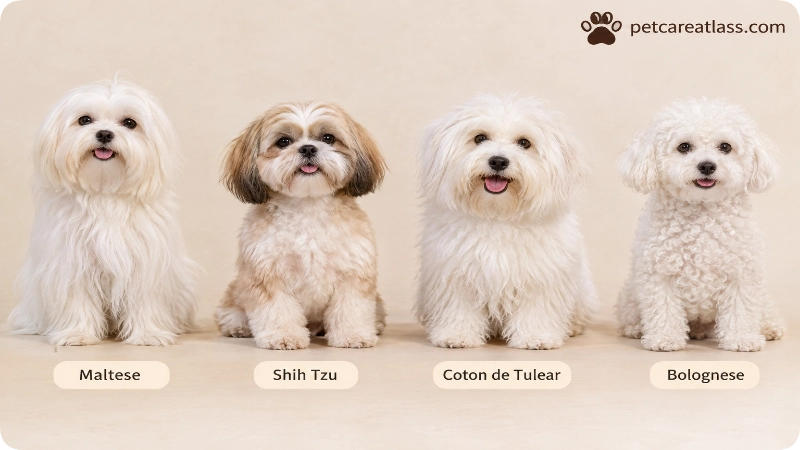
Comparing size, coat type, shedding, and grooming requirements can make it easier to narrow down your choices.
| Breed | Weight | Coat | Shedding | Grooming |
|---|---|---|---|---|
| Pomeranian | 3–7 lb | Thick double coat | Moderate–high | Regular brushing |
| Bichon Frise | 12–18 lb | Curly, dense | Low | Frequent brushing and professional grooming |
| Havanese | 7–13 lb | Silky, wavy | Low | Regular brushing |
| Maltese | Under 7 lb | Long, silky | Low | Frequent brushing and trimming |
| Shih Tzu | 9–16 lb | Long, flowing | Low–moderate | Frequent brushing and trimming |
| Coton de Tulear | 8–15 lb | Cotton-like | Low | Frequent brushing |
| Bolognese | 5–9 lb | Loose, fluffy curls | Low | Regular brushing and mat prevention |
Weight ranges are approximate, and individual dogs may differ. Shedding descriptions are general breed tendencies, not guarantees. Grooming needs depend on coat length, condition, and maintenance routine.
Understanding Shedding vs. Grooming
Low shedding does not automatically mean low maintenance.
Some small fluffy dogs shed relatively little, but their loose hair can remain trapped in the coat. Without regular brushing, this can lead to tangles and uncomfortable mats.
For example, a Maltese may shed less visibly than a Pomeranian, but its long, silky coat still requires consistent attention.
When comparing breeds, consider both how much hair they shed and how much time you can dedicate to coat maintenance.
Which Small Fluffy Dog Is Best for Your Lifestyle?
The best breed depends on what you expect from a companion and how much time you can dedicate to everyday care.
Here are some useful starting points:
| Your Preference | Breeds to Consider |
|---|---|
| Very tiny, fluffy companion | Pomeranian or Maltese |
| Curly, teddy-bear appearance | Bichon Frise or Bolognese |
| Affectionate and social companion | Havanese or Bichon Frise |
| Long, silky white coat | Maltese |
| Companion for a relaxed household | Shih Tzu or Bolognese |
| Thick, cloud-like double coat | Pomeranian |
| Lower-shedding coat | Bichon Frise, Maltese, Havanese, or Coton de Tulear |
These are starting points rather than guarantees. Every dog has an individual temperament, activity level, and set of care needs.
A dog’s age, health, training, socialization, and previous experiences can also influence how well it fits into a particular household.
How to Choose the Right Small Fluffy Dog
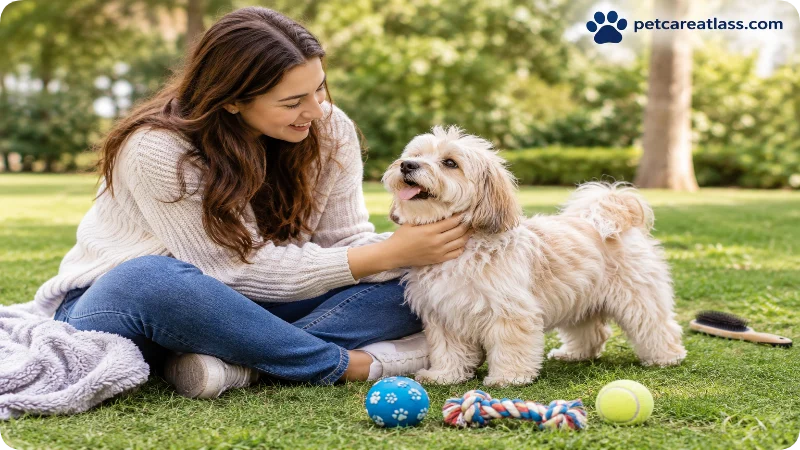
Before choosing a puppy or adopting an adult dog, consider the following factors.
1. Evaluate Grooming Requirements
A fluffy coat may look beautiful, but it can require considerable maintenance.
Some breeds have dense double coats, while others have long hair that can become tangled or matted.
For example:
- Pomeranians need regular brushing to maintain their double coats.
- Bichon Frises need frequent brushing and professional grooming.
- Maltese dogs require consistent coat maintenance, particularly when their hair is long.
- Shih Tzus benefit from regular brushing and suitable trimming.
- Cotons and Bolognese need thorough grooming to prevent mats.
If you prefer easier everyday maintenance, discuss a practical shorter haircut with a professional groomer.
Before bringing a dog home, consider whether you have enough time and budget for its grooming needs.
2. Consider Shedding and Allergies
Not all fluffy dogs shed equally. Pomeranians have dense double coats and can shed noticeably, while Bichon Frises, Maltese, and Havanese generally shed less visibly.
However, low-shedding dogs still need grooming because loose hair can remain trapped in their coats.
If someone in your household has allergies, spend time around the specific dog before adopting or purchasing it. No breed guarantees an allergy-free experience.
Dog allergens can come from more than shed hair, including skin flakes and saliva. Therefore, choosing a low-shedding breed does not guarantee that allergic reactions will be avoided.
3. Match Energy Levels to Your Routine
Small size does not automatically mean low energy.
Pomeranians can be lively and alert, while Havanese and Bichon Frises often enjoy interactive play and companionship. Shih Tzus may be comfortable with shorter walks and indoor activities, provided their health allows it.
Consider how much time you can provide for exercise, training, and mental enrichment every day.
Even small companion dogs need opportunities to explore, learn, play, and interact with their families.
4. Understand Health Considerations
Different breeds can have different inherited health risks.
Before choosing a dog, research breed-specific health concerns and ask responsible breeders about recommended health screening.
Pay particular attention to:
- Dental health: Very small breeds can be vulnerable to dental crowding and periodontal disease.
- Breathing and heat tolerance: Short-faced breeds such as Shih Tzus may experience breathing difficulties and overheating.
- Eye health: Some small breeds need particular attention to eye cleanliness and potential eye conditions.
- Kneecap problems: Patellar luxation can affect several small dog breeds.
- Inherited conditions: Ask about health conditions relevant to the specific breed and recommended screening for breeding dogs.
Regular veterinary examinations, preventive care, appropriate nutrition, and responsible breeding practices help support long-term well-being.
Do not assume that a dog is healthy simply because it looks small, fluffy, or energetic. Ask for appropriate veterinary records and health documentation.
5. Consider Your Home and Family
Most of these breeds can adapt to apartments and smaller homes, but they still need attention, exercise, and enrichment.
If you have young children, consider whether everyone understands how to interact safely with a small dog. Tiny breeds can be particularly vulnerable to accidental falls, rough handling, and being stepped on.
Always supervise interactions between young children and dogs.
Provide a comfortable resting area where the dog can relax without being disturbed. Children should never be encouraged to pull its fur, ears, or tail or carry it without appropriate adult supervision.
How to Care for a Small Fluffy Dog
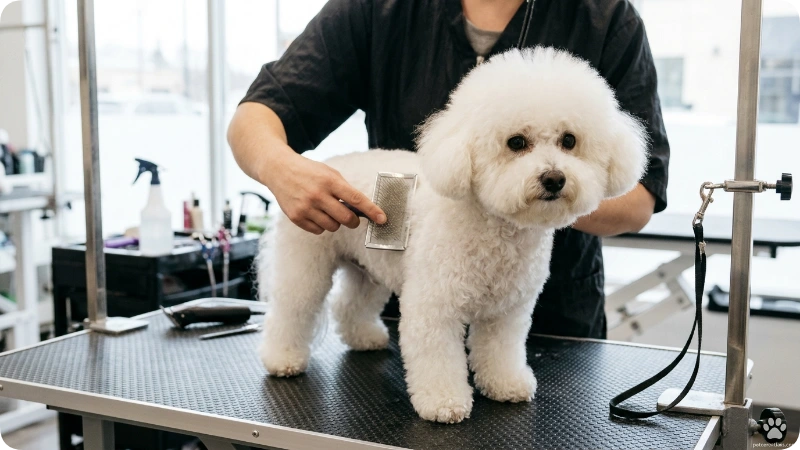
Keeping a fluffy dog comfortable involves more than occasional brushing. A consistent care routine supports coat condition, hygiene, and general well-being.
Brush the Coat Regularly
Use a brush and comb suitable for your dog’s coat type. Gently check areas where mats commonly develop, including:
- Behind the ears.
- Under the front legs.
- Around the collar.
- Between the back legs.
- Around the tail.
Long-haired and curly-coated breeds may need more frequent brushing than dogs with shorter or easier-to-maintain coats.
Never pull forcefully through a mat because this can hurt the dog’s skin. Severe mats should be handled by a professional groomer.
Maintain Regular Bathing
Bathe your dog when its coat and skin condition require it, using a suitable dog shampoo.
Rinse thoroughly and dry the coat properly. Avoid excessive heat and keep bathing frequency appropriate for the individual dog’s skin and grooming needs.
Regular brushing between baths helps prevent tangles and makes coat maintenance easier.
Keep the Eyes and Ears Clean
Some small fluffy breeds develop tear staining around their eyes. Gently clean the surrounding area with a suitable product or method recommended by your veterinarian.
Check the ears for redness, unusual discharge, or unpleasant odors. Avoid inserting cotton swabs or cleaning tools deeply into the ear canal.
If you notice persistent irritation, discharge, or discomfort, consult your veterinarian rather than relying on home cleaning alone.
Maintain Dental and Nail Care
Small dogs can be prone to dental disease, so establish regular toothbrushing with dog-safe toothpaste.
Check nails routinely and trim them when needed. If you are uncomfortable doing this yourself, ask a veterinarian or groomer for assistance.
Dental and nail care should become part of your dog’s regular grooming routine rather than something you do only when problems appear.
Provide Exercise and Mental Enrichment
Even tiny dogs need opportunities to move, explore, and learn.
Provide age-appropriate walks, interactive toys, positive-reinforcement training, and safe indoor activities. Adjust exercise according to your dog’s age, health, and physical limitations.
Mental enrichment is equally important. Simple training games, food puzzles, and supervised play can help prevent boredom and encourage healthy behavior.
Are Small Fluffy Dogs Good for First-Time Owners?
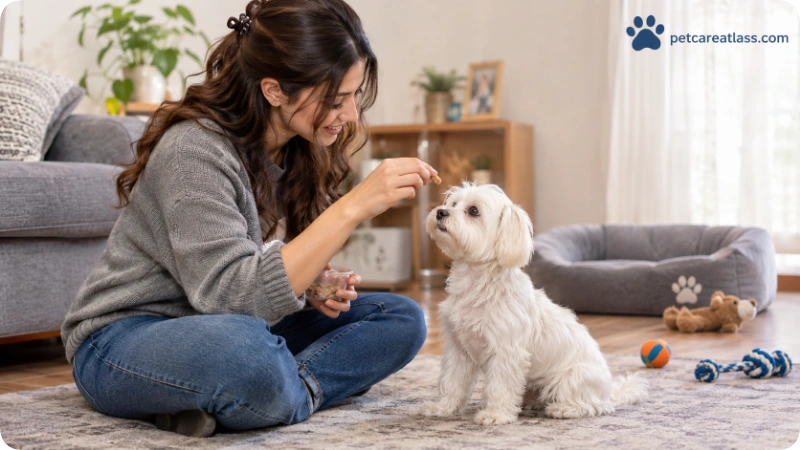
Many small fluffy breeds can be suitable for first-time dog owners, provided their needs are understood and consistently met.
Bichon Frises and Havanese are often considered by people looking for friendly, companion-oriented dogs. Maltese and Shih Tzus may also suit owners who prefer smaller household companions.
However, first-time owners should not underestimate grooming, training, veterinary expenses, and the responsibility of caring for a dog throughout its life.
Before choosing, consider whether you can provide:
- Daily attention and companionship.
- Regular brushing and professional grooming when needed.
- Preventive veterinary care.
- Suitable nutrition and fresh drinking water.
- Positive-reinforcement training and socialization.
- Appropriate exercise and mental enrichment.
- A safe and comfortable living environment.
The right breed is one whose needs match your available time, experience, and household routine.
Where to Find a Healthy Small Fluffy Dog

Once you have selected a breed, finding a responsible source is just as important as choosing the right appearance or temperament.
Consider reputable animal shelters, breed-specific rescue organizations, and responsible breeders.
When evaluating a breeder:
- Ask about breed-recommended health screenings.
- Request appropriate veterinary and vaccination records.
- Learn about the puppy’s parents and family health history.
- Observe how the puppy interacts with people and its surroundings.
- Ask about socialization, early care, and expected adult size.
- Avoid sellers who prioritize unusually tiny size over health.
- Be cautious of pressure to pay immediately or purchase without appropriate documentation.
A responsible breeder should answer questions openly and explain the breed’s potential health concerns, grooming needs, and temperament.
Avoid choosing a puppy solely because it is advertised as exceptionally tiny or unusually fluffy. Health, sound structure, and appropriate care should take priority over appearance.
Adopting an adult dog can also be a wonderful option because its size and personality may already be easier to assess.
Frequently Asked Questions
What is the fluffiest small dog breed?
Pomeranians, Bichon Frises, Coton de Tulears, and Bolognese are among the fluffiest small dog breeds. Pomeranians have dense double coats, while Bichons have rounded curly coats and Cotons have soft, cotton-like hair.
Which small fluffy dogs shed the least?
Bichon Frises, Maltese, Havanese, Cotons, and Bolognese are generally considered lower-shedding breeds. However, their coats still require regular brushing and grooming to prevent tangles and mats.
What is the smallest fluffy dog breed?
The Pomeranian and Maltese are among the smallest fluffy companion breeds. Pomeranians generally weigh 3–7 pounds, while Maltese dogs are typically under 7 pounds according to the AKC breed standard.
Are small fluffy dogs good apartment pets?
Yes. Many small fluffy breeds can adapt to apartment living, including Pomeranians, Maltese, Havanese, Bichon Frises, and Shih Tzus. However, they still need daily exercise, enrichment, training, and companionship.
Are small fluffy dogs suitable for families with children?
Some can be excellent family companions, particularly when children are taught to interact gently. However, very small dogs can be easily injured through rough handling or accidental falls. Adult supervision is essential, especially with younger children.
Do small fluffy dogs need professional grooming?
Many benefit from regular professional grooming, especially breeds with long, curly, or continuously growing hair. The frequency depends on coat length, condition, and individual needs. Home brushing remains important between grooming appointments.
Are fluffy small dogs hypoallergenic?
No dog breed is completely hypoallergenic. Some small fluffy breeds shed less visibly, but allergens can also come from skin flakes, saliva, and other sources. People with allergies should spend time around an individual dog before making a decision.
Conclusion
Small fluffy dogs offer a wonderful variety of appearances, personalities, and companionship styles. Whether you prefer the tiny Pomeranian, cheerful Bichon Frise, affectionate Havanese, elegant Maltese, playful Shih Tzu, or fluffy Coton de Tulear, each breed has its own care requirements.
The best choice is not necessarily the smallest or fluffiest dog. Consider health, temperament, grooming, exercise, and compatibility with your household before making a long-term commitment.Choosing a healthy dog whose needs match your lifestyle is the foundation of a happy relationship.

Daniel Brooks is a pet care and animal behavior writer at petcareatlass.com focused on helping owners better understand their pets’ behavior and everyday needs. He creates practical, easy-to-follow content on pet communication, training, welfare, and responsible care.