Quick Answer:
Your dog may put his paw on you when you pet him to request more attention, maintain physical contact, seek reassurance, or communicate another need. He may also have learned that pawing gets a response from you. Watch his entire body language because a gentle resting paw and a forceful push can communicate very different things.
You’re gently petting your dog when he suddenly places one paw on your hand, arm, or leg. Sometimes he keeps his paw there while looking at you.
Other times, he presses against your hand or repeatedly lifts his paw when you stop petting him.This behavior can be endearing, but it isn’t always easy to interpret.
Dogs use physical contact, facial expressions, posture, and learned behaviors to communicate with people.
Understanding the difference between a request for attention, a comfortable interaction, and a sign of discomfort can help you respond appropriately while respecting your dog’s preferences.
What Does It Mean When Your Dog Puts His Paw on You While You Pet Him?

When your dog puts his paw on you during petting, he may be using physical contact to communicate or maintain an interaction. However, paw placement doesn’t have one universal meaning.
For example, a dog who gently rests his paw on your arm while leaning toward your hand may be comfortable and interested in continued attention. Another dog who presses his paw against your hand while turning his head away may be trying to create distance.
The difference comes from the surrounding circumstances.
Pay attention to three things:
- What happened before: Was your dog already enjoying petting, asking for attention, or reacting to something stressful?
- How he uses his paw: Does he gently rest it, repeatedly lift it, scratch you, or push your hand?
- What happens afterward: Does he move closer, remain relaxed, turn away, or leave?
Pawing is a form of canine communication, but its meaning depends on context and the dog’s other signals.
6 Reasons Your Dog Puts His Paw on You When You Pet Him
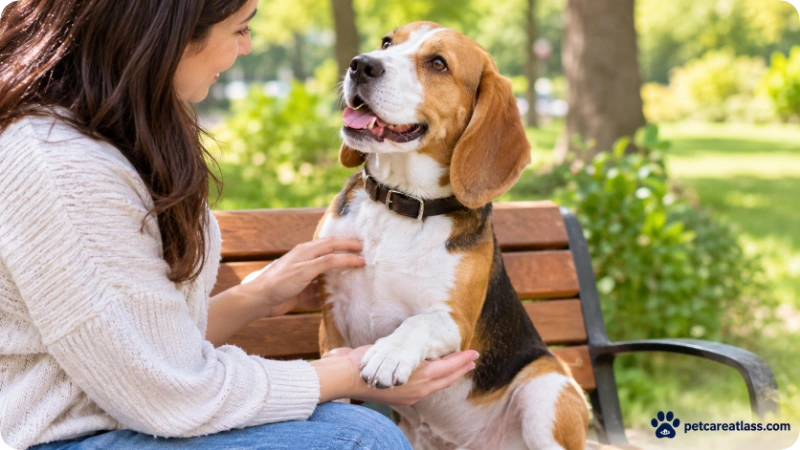
1. He Wants You to Keep Petting Him
One possible explanation is that your dog wants the interaction to continue.
Imagine you’re gently rubbing his chest or shoulders. When you stop, he places his paw on your hand or nudges your arm.
He may have learned that this behavior encourages you to continue petting him.
Look for other signs that he is comfortable with the interaction:
- A loose, relaxed body.
- Soft facial muscles.
- Voluntarily moving closer to your hand.
- Gently nudging your hand.
- Repositioning himself to receive more contact.
If he repeatedly chooses to move closer after you pause, he may be interested in continued petting.
However, don’t assume that every paw placed on your hand means he wants more. Look for his complete body-language response.
2. He Wants to Maintain Physical Contact
Some dogs enjoy staying close to their owners and maintaining physical contact.
Your dog might rest his head on your lap, lean against your leg, or place one paw over your arm while you pet him.
This can be part of a comfortable social interaction. Rather than actively requesting something, he may simply be maintaining contact while you spend time together.
For example, a relaxed Golden Retriever might lie beside his owner and gently rest one paw on the owner’s forearm.
This behavior can accompany social attachment, but a paw placement alone doesn’t prove that your dog is expressing affection. Consider his usual behavior and overall comfort.
3. He Has Learned That Pawing Gets Your Attention
Dogs can learn that particular behaviors produce predictable results.
Think about what happens when your dog puts his paw on you. Do you immediately look at him, talk to him, pet him again, or offer a treat?
If pawing regularly gets your attention, he may repeat it because the behavior has been reinforced.
For example:
- Your dog wants attention.
- He places his paw on your arm.
- You respond by petting him.
- He learns that pawing often produces attention.
Over time, he may begin using this behavior whenever he wants interaction.
This is learned behavior, not necessarily deliberate manipulation. Veterinary behavior guidance from Tufts University explains how owners can unintentionally reinforce attention-seeking behaviors by responding to them.
4. He Wants Reassurance or Comfort
Sometimes, a dog puts his paw on his owner when he feels uncertain or uncomfortable.
This might happen during thunderstorms, unfamiliar situations, loud noises, or changes in the household.
Your dog may stay close, touch your arm, or seek physical contact when something makes him uneasy.
Watch for accompanying signs such as:
- Lowered or tense body posture.
- Ears held back.
- A tucked or lowered tail.
- Repeated lip licking.
- Turning away or trying to retreat.
- Panting when it isn’t hot or after physical activity.
These signs can suggest stress or uncertainty, particularly when several occur together.
If your dog appears worried, give him the opportunity to move somewhere comfortable. Avoid forcing interaction or assuming that he wants to be held or petted.
5. He Is Communicating Another Need
Your dog may put his paw on you because he wants something other than petting.
He might need to go outside, want to play, or be looking for an activity. The surrounding circumstances can help you understand what he is requesting.
| What Your Dog Does | What He May Want |
|---|---|
| Paws at you and looks at the door | To go outside |
| Paws at you and brings a toy | Playtime |
| Puts a paw on your arm near mealtime | Food or attention |
| Follows you while pawing repeatedly | Interaction or help |
| Paws at you during stressful situations | Reassurance or space |
These are possibilities rather than fixed translations. Check his normal routine, surroundings, and other behaviors before deciding what he needs.
6. He Is Uncomfortable With the Petting
Not every paw placement is an invitation for more affection.
Some dogs use their paws to push a person’s hand away or create distance. Your dog might enjoy gentle chest scratches but dislike having his head, ears, belly, or paws handled.
Watch for signs such as:
- Turning his head away from your hand.
- Moving his body away.
- Becoming stiff or suddenly freezing.
- Repeated lip licking or yawning.
- Flattening his ears.
- Pushing your hand away.
- Trying to leave the interaction.
A single signal doesn’t always mean your dog is uncomfortable. However, several signals occurring together deserve attention.
If your dog appears uncomfortable, stop petting and allow him to move away. Respecting these signals helps prevent unwanted handling and supports a more comfortable relationship.
Does It Matter Where You Pet Your Dog?
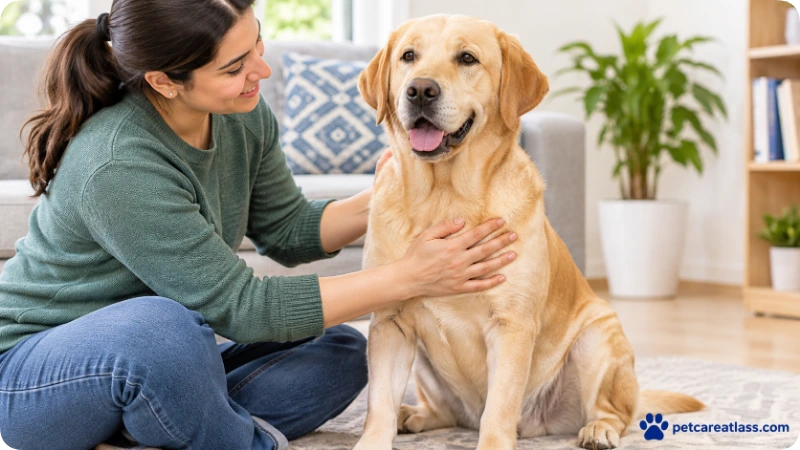
Yes. Dogs have individual preferences about where and how they are touched.
A dog who enjoys gentle chest scratches may not appreciate having his head, paws, or belly handled. The same dog may also respond differently depending on his mood, health, and surroundings.
Here are some common areas and considerations:
| Body Area | What to Consider |
|---|---|
| Chest | Many dogs enjoy gentle chest petting. |
| Shoulders | Gentle strokes may feel comfortable. |
| Side of the Neck | Watch for tension or avoidance. |
| Top of the Head | Some dogs dislike hands approaching from above. |
| Belly | Showing the belly doesn’t always mean wanting rubs. |
| Paws and Legs | Some dogs are sensitive about paw handling. |
Start with gentle contact in an area your dog normally accepts. Avoid reaching over his head or restraining him to continue petting.
Most importantly, let your dog approach and move away freely. A dog who enjoys one type of contact doesn’t necessarily enjoy every type.
What Is the Difference Between Resting a Paw, Pawing, and Pushing Your Hand?
These actions can look similar, but the way your dog uses his paw can provide useful clues about what he wants.
Common paw behaviors and their possible meanings
| Paw Behavior | Possible Interpretation |
|---|---|
| Gently rests a paw on your arm | Seeking contact or attention |
| Repeatedly lifts and places a paw | Requesting interaction |
| Places a paw on your hand when you stop | May want you to continue |
| Pushes your hand away | May want space |
| Repeatedly scratches your arm | Attention-seeking or learned behavior |
| Gently holds your hand with one paw | Seeking contact or interaction |
Remember: These are possible interpretations, not a universal dog-language dictionary. The same action can mean different things depending on your dog’s posture, facial expression, and surroundings.
For example, a relaxed dog who rests his paw on your wrist and leans toward you may be comfortable. A dog who pushes your hand away while turning his head may prefer that you stop.
The best response is to observe the entire interaction rather than interpreting the paw alone.
How to Tell Whether Your Dog Wants More Petting or Wants You to Stop
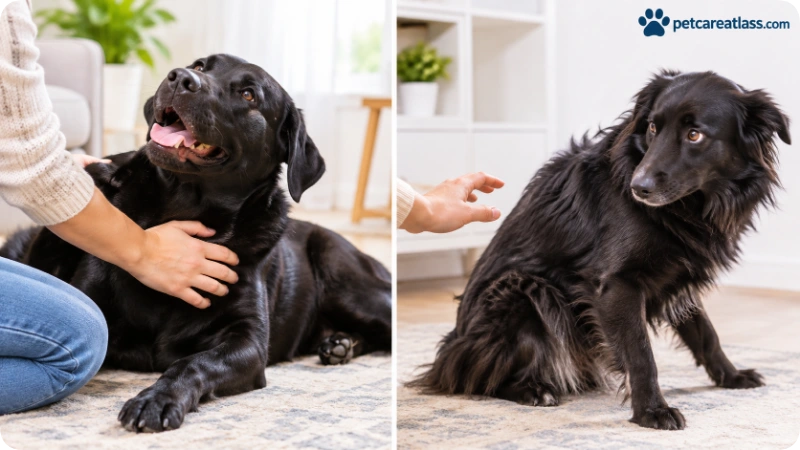
The most reliable approach is to observe your dog’s overall body language and give him opportunities to choose whether he wants more contact.
A paw on your arm by itself isn’t enough to determine whether he is comfortable.
| Body Language | Possible Interpretation |
|---|---|
| Loose, relaxed body | Comfortable with interaction |
| Leans toward your hand | May want continued contact |
| Gently nudges your hand | Seeking attention |
| Soft facial expression | No obvious tension |
| Turns head away | Possible discomfort |
| Moves away from your hand | May want space |
| Stiffens or freezes | Possible stress or discomfort |
| Pushes your hand away | May want petting to stop |
Try the Three-Second Petting Test
A simple way to understand your dog’s preference is to briefly pause petting. This approach is sometimes called consent-based petting.
- Approach your dog calmly and begin with gentle petting on an area he normally accepts, such as his chest or shoulders.
- Pet him for approximately three seconds.
- Stop moving your hand and give him an opportunity to choose.
- If he voluntarily moves closer, nudges your hand, or repositions himself, he may be interested in more contact.
- If he moves away, turns his head, stiffens, or shows discomfort, stop petting.
If your dog simply remains still, don’t automatically assume he wants you to continue. Give him space and allow him to initiate further contact.
The Wisconsin Humane Society recommends this three-second approach to help people recognize whether a dog is comfortable with petting.
Should You Let Your Dog Put His Paw on You?
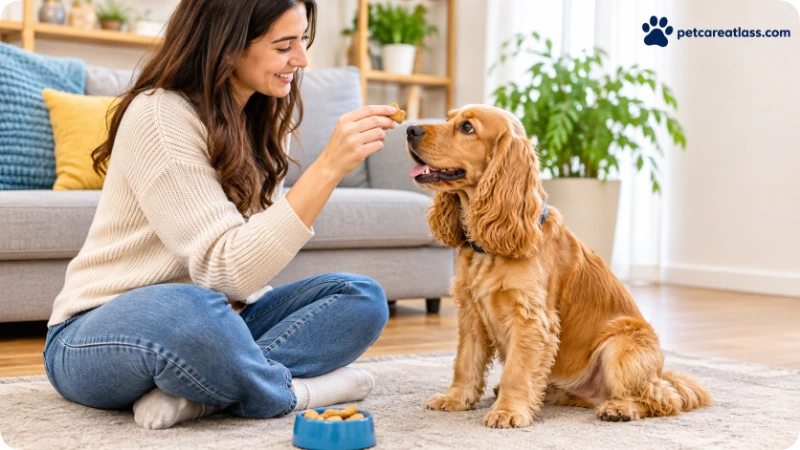
Yes, if the behavior is gentle, your dog appears comfortable, and you don’t mind it.
There is generally no reason to discourage a relaxed paw resting on your arm or leg. It can be a harmless part of your dog’s normal interaction with you.
However, consider teaching an alternative if your dog:
- Scratches your skin with his nails.
- Repeatedly paws at your face.
- Uses his paws forcefully to demand attention.
- Interrupts activities or becomes difficult to redirect.
Avoid shouting, hitting, or physically punishing your dog for pawing. Instead, teach him a more appropriate way to request attention.
How to Encourage Gentle Attention-Seeking
If you want to reduce unwanted pawing, reward a calmer behavior that your dog can use instead.
- Choose an alternative: Teach your dog to sit calmly when he wants attention.
- Wait for the right behavior: When he approaches without pawing, ask him to sit.
- Reward the response: Give him attention, praise, play, or another appropriate reward.
- Be consistent: Make sure everyone in your household responds similarly.
- Meet his needs: Provide regular exercise, playtime, enrichment, and social interaction.
For example, if your dog usually scratches your arm to request petting, reward him for sitting beside you calmly instead.
The goal isn’t to prevent your dog from communicating. It’s to teach him a gentler way to ask for what he needs.
Tufts veterinary behavior guidance explains that attention-seeking behaviors can become stronger when people unintentionally reward them.
When Should You Be Concerned About Your Dog’s Pawing?
Occasional paw placement during petting is generally not concerning when your dog otherwise appears comfortable.
However, a sudden change in behavior deserves attention, especially if your dog previously enjoyed being petted and now reacts differently.
Watch for these changes:
- Sudden increase in pawing: Your dog begins pawing much more frequently than usual.
- Touch sensitivity: He moves away, flinches, or becomes tense when you touch a particular area.
- Changes in movement: He starts limping, walking stiffly, or avoiding certain activities.
- Unusual behavior: He becomes withdrawn, irritable, restless, or unusually clingy.
- Changes in daily habits: His appetite, sleep, or normal activity level changes.
Pain can sometimes affect a dog’s willingness to interact or tolerate handling. Cornell University College of Veterinary Medicine identifies changes in behavior, activity, mobility, and reactions to touch as possible signs of pain.
If you notice sudden or persistent changes, arrange a veterinary examination. Avoid repeatedly touching a sensitive area to test whether it hurts.
A short video of the behavior, together with notes about when it happens, can help your veterinarian understand what has changed.
If your dog develops severe pain, cannot walk normally, or experiences another urgent medical problem, seek prompt veterinary care.
FAQs About Dogs Putting Their Paws on People
Why does my dog put his paw on my hand when I stop petting him?
Your dog may be asking you to continue petting him or trying to regain your attention. If he leans toward your hand and has a relaxed body, he may be interested in more interaction. If he turns away, becomes stiff, or moves away, respect his preference.
Why does my dog put both paws on me when I pet him?
Using both paws may be another way of seeking attention, maintaining contact, or interacting with you. Some dogs also learn that placing their paws on their owners produces a response. Look at their overall posture and behavior rather than assuming the gesture always means affection.
Why does my dog hold my hand with his paw?
Your dog may be maintaining physical contact, seeking reassurance, or requesting attention. If he gently rests his paw on your hand and appears relaxed, it may be part of a comfortable interaction. If he grips or pushes your hand away, he may prefer less contact.
Why does my dog put his paw on me and stare at me?
Your dog may be trying to get your attention or communicate a need. He might want more petting, playtime, food, or an opportunity to go outside. Check his surroundings and daily routine to identify what he might be requesting.
Why does my dog push my hand away when I pet him?
Your dog may be uncomfortable with the location, pressure, or duration of petting. He could also be trying to create distance. Stop petting and give him room to move away. If this reaction is new or happens when a particular area is touched, consider a veterinary examination.
Why does my dog suddenly start pawing at me more than usual?
A sudden increase in pawing can have several explanations, including changes in routine, attention-seeking, stress, or physical discomfort. Consider what has changed in your dog’s environment and whether he shows other unusual signs. If the behavior persists or comes with touch sensitivity or movement changes, contact your veterinarian.
Conclusion
When your dog puts his paw on you while you pet him, he may be seeking attention, maintaining physical contact, requesting continued interaction, or communicating another need. Sometimes, he has simply learned that pawing gets a response from you.
The important thing is to distinguish gentle contact from repeated pawing or pushing your hand away. Observe his entire body language, pause occasionally to let him choose whether to continue, and respect signs of discomfort. Understanding these small signals can help you build a more comfortable and trusting relationship with your dog.

Daniel Brooks is a pet care and animal behavior writer at petcareatlass.com focused on helping owners better understand their pets’ behavior and everyday needs. He creates practical, easy-to-follow content on pet communication, training, welfare, and responsible care.