Quick Answer:
Dogs may lick you when you pet them to show social affection, seek attention, enjoy the salty taste of your skin, respond to your touch, or communicate excitement. The meaning depends on their body language and the surrounding situation. Relaxed behavior usually suggests comfort, while repeated licking with tension may indicate stress or discomfort.
If your dog starts licking your hand, arm, or face while you’re petting him, you might wonder what he’s trying to communicate. Is it a sign of affection, a way to get your attention, or simply a natural canine behavior?
Dogs lick people for several reasons, and the meaning often depends on the situation, your dog’s body language, and what happens before and after the licking. Some dogs lick during petting because they enjoy the interaction, while others respond to your scent, seek attention, or use licking as a social behavior.
Understanding why your dog licks you when you pet him can help you recognize whether he’s comfortable, excited, seeking interaction, or showing signs that he needs a little space. Here are seven common reasons behind this behavior and how to respond appropriately.
Key Takeaways
- Licking during petting can be part of normal social interaction.
- Your dog may lick your hand because of its taste, scent, or proximity.
- Repeated licking can become a learned way to request attention.
- Lip licking and turning away may indicate discomfort, depending on the situation.
- Relaxed body language and voluntary interaction help you understand whether your dog welcomes petting.
Your Dog May Be Showing Social Affection

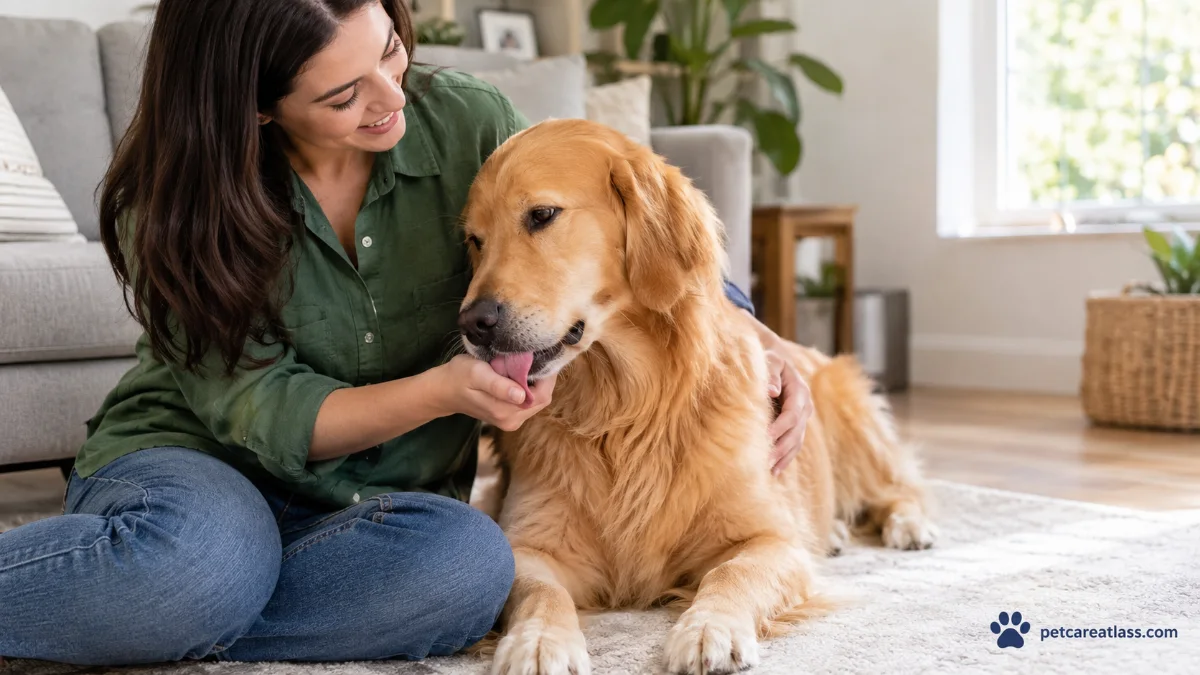
One possible reason your dog licks you while you’re petting him is social bonding. Dogs use licking during social interactions, and some direct this behavior toward familiar people.
When your dog receives gentle attention, he may respond by licking your hand, arm, or face. This can accompany a friendly interaction, particularly when he voluntarily stays close and appears relaxed.
However, licking does not automatically mean your dog is expressing love. Consider other behaviors, such as:
- A loose, comfortable body.
- Relaxed facial muscles.
- Voluntarily approaching you.
- Choosing to remain close.
- Showing interest in continued interaction.
If your dog appears comfortable and willingly seeks contact, licking may simply be part of his normal social behavior.
Your Dog Wants More Attention
Some dogs learn that licking gets an immediate response from their owners.
For example, your dog might lick your hand while you’re rubbing his head. If you respond by talking, laughing, or giving him additional attention, he may repeat the behavior because it gets your attention.
You might notice this when your dog:
- Licks your hand whenever you stop petting him.
- Nudges your hand and then starts licking.
- Follows your hand when you move it away.
- Repeats the behavior when you speak or look at him.
This behavior can be a way of requesting interaction. If your dog wants attention, you can respond with gentle play, a short training session, or another activity he enjoys.
You don’t have to encourage licking if you find it unpleasant. Instead, calmly redirect him toward an appropriate activity.
Your Skin Has an Interesting Taste or Smell
Your dog’s sense of smell plays an important role in how he explores the world. Human skin can carry interesting scents and tastes that attract dogs.
For example, your hands may have traces of:
- Sweat and natural skin salts.
- Food residue.
- Hand lotion or scented products.
- Natural body odors.
When you’re petting your dog, your hand is already close to his mouth, making it easy for him to investigate it with his tongue.
This behavior doesn’t necessarily have an emotional meaning. Your dog may simply be exploring a familiar scent or taste.
Practical tip: Wash your hands if they have food residue, lotions, essential oils, or cleaning products on them. Prevent your dog from licking products that may be harmful if swallowed.
Your Dog Gets Excited During Physical Contact
Some dogs become excited when their owners interact with them. Petting, talking, and physical closeness can create an energetic social interaction.
Your dog may respond by licking your hands, moving around, wagging his tail, or trying to get closer.
Excitement-related licking may occur alongside:
- Wiggling or bouncy movements.
- A loose, moving body.
- Playful behavior.
- An open, relaxed mouth.
- Bringing toys or initiating play.
However, excitement and stress can sometimes look similar. A rapidly wagging tail alone does not prove that a dog is comfortable.
Look at the entire interaction rather than interpreting one movement in isolation.
Your Dog May Be Communicating That He Needs a Break
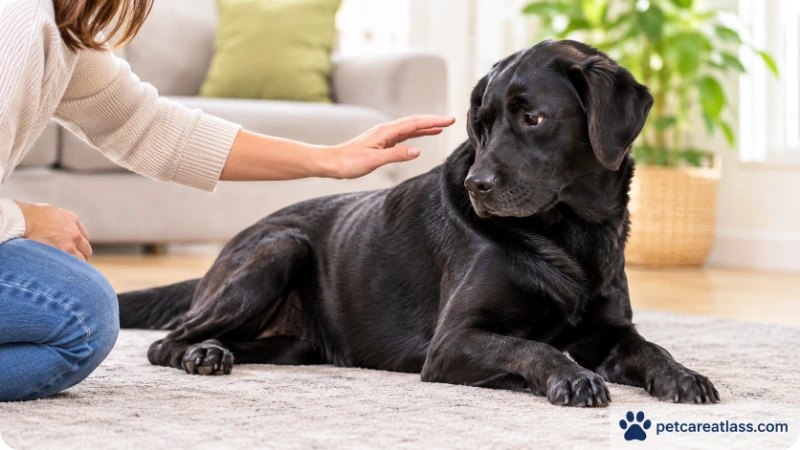
Not all licking during petting is a sign of affection or enjoyment. Sometimes, dogs lick their lips or the air when they feel uncertain, overstimulated, or uncomfortable.
This may happen when you touch a sensitive area, approach your dog’s face, or continue petting after he has tried to move away.
Veterinary behavior resources identify lip licking, yawning, turning away, freezing, and avoiding interaction as possible signs of stress or discomfort. However, these behaviors are context-dependent. A dog may yawn because he is tired, for example, rather than stressed.
Watch for combinations of signals such as:
- Ears held tightly back.
- A tense or stiff body.
- Repeatedly turning the head away.
- Showing the whites of the eyes.
- Moving away or attempting to hide.
- Repeated lip licking or yawning during an uncomfortable interaction.
If you notice several of these signs together, stop petting and give your dog space.
Do not assume that a dog who stays still is necessarily enjoying the interaction. Some uncomfortable dogs freeze rather than move away.
Your Dog Has Learned That Licking Produces a Response
Dogs can develop repeated associations between their behavior and what happens afterward.
For example, imagine that your dog licks your hand whenever you stop rubbing his back. You respond by starting to pet him again. Over time, he may learn that licking is an effective way to restart the interaction.
This is slightly different from simply wanting attention:
- Attention-seeking: Your dog licks because he wants you to interact with him.
- Learned behavior: Your dog has repeated the action because previous licking produced a particular response.
Both can happen together.
If you want to reduce unwanted licking, avoid responding with additional attention every time it happens. Calmly withdraw your hand and redirect your dog toward a toy, gentle training, or another appropriate activity.
Avoid punishment. The goal is to establish comfortable communication and encourage alternative behaviors.
Your Dog May Be Responding to the Way You Pet Him
The location and style of petting can influence how your dog responds.
Some dogs prefer gentle chest scratches, while others enjoy being rubbed along their shoulders or back. A dog may lick your hand because of the particular way you’re touching him, but this does not necessarily mean he wants more.
Pay attention to his individual preferences.
| Where You Pet Your Dog | What to Observe |
|---|---|
| Head and Forehead | Relaxes or moves away? |
| Under the Chin | Leans toward your hand? |
| Chest | Keeps a relaxed body posture? |
| Back and Shoulders | Stays close or moves away? |
| Belly | Welcomes touch or becomes stiff? |
Every dog has individual preferences. Even dogs that enjoy belly rubs may dislike having their paws, ears, or faces handled.
The best approach is to let your dog participate in the interaction rather than assuming every type of petting feels good.
How to Tell Whether Your Dog Enjoys Being Petted
The most reliable way to understand your dog’s response is to observe what he does before, during, and after you touch him.
A dog who enjoys the interaction will generally show relaxed, voluntary behavior. A dog who feels uncomfortable may show avoidance or tension, even if he continues licking.
| Body Language | What It May Indicate |
|---|---|
| Loose, Wiggly Body | Comfort or social engagement |
| Moving Closer | Interest in interaction |
| Relaxed Facial Expression | No obvious tension |
| Turning Head Away | Possible discomfort |
| Repeated Lip Licking | Stress or uncertainty |
| Stiff Body or Freezing | Possible fear or discomfort |
| Moving Away | Wants space or a break |
These signs should be interpreted together, not individually. For example, tail wagging can occur during both positive and uncomfortable situations.
Try a Simple Petting Consent Test
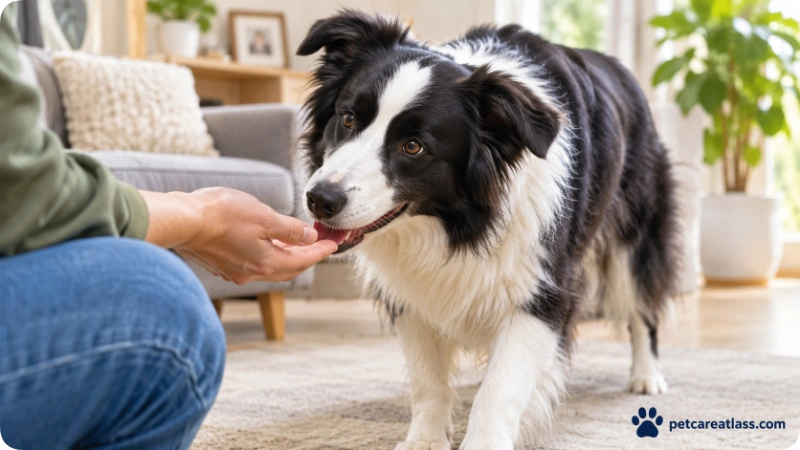
You can use a short pause to understand whether your dog wants more attention.
- Gently pet your dog for a few seconds.
- Stop and remove your hand.
- Observe what he does next.
- If he voluntarily moves closer, nudges your hand, or clearly invites more contact, you can offer another gentle petting session.
- If he moves away, turns his head, freezes, or shows tension, give him space.
Approaching your hand is useful feedback, but it is not definitive proof that your dog enjoys every type of touch. Continue watching his body language as you interact.
This approach helps you respect your dog’s preferences instead of assuming that he enjoys every interaction.
Should You Let Your Dog Lick You While Petting Him?
Generally, occasional licking of your hand or arm is a normal behavior if your dog is healthy and comfortable. You do not need to stop every instance of licking.
However, you can establish boundaries if you dislike the behavior.
- If you don’t mind occasional licking: Allow it when your dog is relaxed and the interaction is comfortable.
- If you want to discourage licking: Calmly withdraw your hand and redirect your dog toward a toy or another activity.
- If licking becomes persistent: Look for possible stress, discomfort, or attention-seeking patterns.
- If your dog seems uncomfortable: Stop petting rather than trying to distract him into accepting more contact.
Avoid shouting, punishing, or physically pushing your dog away. These reactions can create unnecessary stress and make communication more difficult.
For hygiene, avoid allowing dogs to lick open wounds, broken skin, or your mouth and eyes. Dog saliva can carry microorganisms that may cause infections, particularly when it enters damaged skin.
When Is Licking a Reason to Contact a Veterinarian?

Occasional licking during petting is usually not a medical concern by itself. However, a noticeable change in your dog’s licking behavior deserves attention.
Consider contacting your veterinarian if your dog:
- Suddenly starts licking people much more frequently.
- Seems unable to stop licking.
- Licks himself repeatedly, especially in one particular area.
- Shows signs of skin irritation, redness, or discomfort.
- Becomes unusually sensitive when you touch a particular body part.
- Shows additional changes in appetite, activity, or behavior.
Persistent or compulsive licking can sometimes be associated with anxiety, pain, allergies, skin conditions, or gastrointestinal problems. A veterinarian can help determine whether an underlying medical issue is contributing to the behavior.
If your dog growls, snaps, or appears frightened when touched, stop the interaction and avoid forcing contact. Seek veterinary guidance to investigate possible pain or discomfort.
Frequently Asked Questions
Why does my dog lick my hand when I pet him?
Your dog may lick your hand because of social interaction, attention-seeking, familiar scents, or the salty taste of your skin. He may also have learned that licking encourages you to continue petting him. Observe his overall body language to understand whether he is comfortable.
Why does my dog lick me when I stop petting him?
Your dog may have learned that licking gets your attention or encourages you to start petting again. Some dogs also use licking as a familiar social behavior. If he approaches you with a relaxed body and voluntarily seeks contact, he may simply want more interaction.
Why does my dog lick my face when I pet him?
Dogs may lick faces because of interesting scents, food residue, social behavior, or attention-seeking. Face licking can be part of a friendly interaction, but it does not always communicate affection. For hygiene reasons, avoid letting your dog lick your mouth, eyes, or broken skin.
Does my dog lick me because he loves me?
Licking can be part of a friendly social interaction and may accompany a close relationship. However, it is not a reliable measurement of love. Dogs express social attachment in many ways, including choosing to stay near you, seeking interaction, playing, and resting comfortably around you.
Why does my dog lick me and then look away?
Your dog may be communicating uncertainty or discomfort, particularly if the licking happens alongside flattened ears, a tense body, repeated yawning, or attempts to move away. Give him a break and let him decide whether to approach again.
Why does my dog lick me more when I rub his belly?
Your dog may enjoy the interaction, respond to your attention, or simply find the contact stimulating. However, exposing the belly does not automatically mean a dog wants a belly rub. Watch for relaxed muscles and voluntary engagement rather than assuming the position is an invitation.
Should I stop petting my dog if he starts licking me?
Not necessarily. If your dog remains relaxed and voluntarily seeks contact, occasional licking is generally fine. However, if he repeatedly licks his lips, turns away, becomes stiff, or moves away, stop petting and give him space.
Conclusion
If your dog licks you when you pet him, the behavior may be connected to social interaction, attention, interesting scents, excitement, or learned habits. It can also be a sign of uncertainty or discomfort in some situations.
Rather than assuming every lick means affection, pay attention to your dog’s complete body language. Gentle petting, short pauses, and respecting his decision to move away can help create a more comfortable and trusting relationship.

Daniel Brooks is a pet care and animal behavior writer at petcareatlass.com focused on helping owners better understand their pets’ behavior and everyday needs. He creates practical, easy-to-follow content on pet communication, training, welfare, and responsible care.