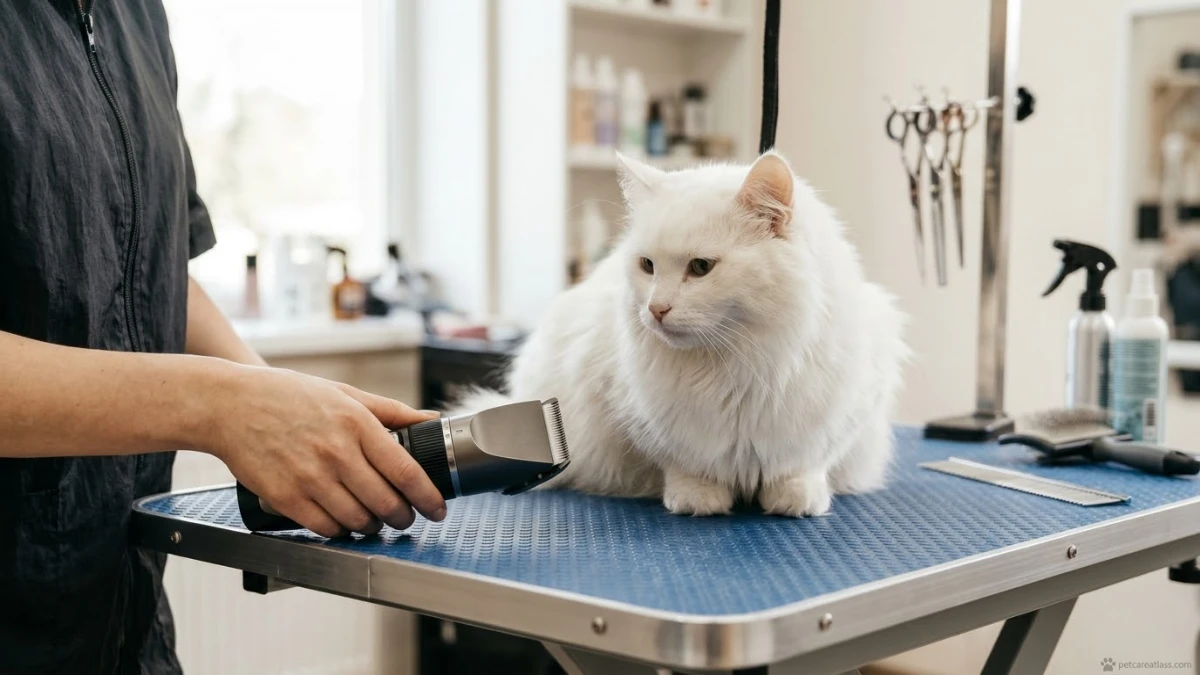
Quick Answer:
The best pet clippers for cats should be quiet, lightweight, easy to control, and designed for safe grooming. Choose a model that suits your cat’s coat length and grooming needs, with sharp blades, low vibration, and features that help prevent overheating. For tight mats or sensitive areas, professional grooming may be safer.
Grooming a cat at home can be challenging, especially when dealing with thick fur, tangles, or coats that require regular trimming.
The right pet clippers for cats can make the process more manageable by helping you maintain your cat’s coat while reducing unnecessary pulling and discomfort.
However, not every pet clipper is suitable for cats. Cats can be sensitive to noise, vibration, and unfamiliar handling, so choosing grooming tools designed with their comfort and safety in mind is important.
Blade temperature, motor noise, weight, and ease of control all deserve attention before making a purchase.
Whether you have a long-haired cat that needs occasional trimming or a cat with recurring coat-maintenance needs, this guide explains what to look for, which features matter, and how to approach home grooming safely.
Key Takeaways
- Choose grooming clippers specifically suitable for cats.
- Consider noise, vibration, weight, and blade design before purchasing.
- Cordless models offer convenient movement during grooming.
- Never use household scissors to cut tight mats.
- Professional assistance is recommended for extensive matting and difficult grooming tasks.
What Are Pet Clippers for Cats Used For?
Pet clippers for cats are electric grooming tools designed to trim feline fur. They can help maintain certain coats, remove some mats, and perform limited grooming touch-ups.
However, not every cat needs its fur clipped. Most healthy short-haired cats benefit from regular brushing rather than haircuts.
Long-haired cats, senior cats, cats with a higher body weight, and those with mobility limitations may need extra grooming assistance because they can have difficulty maintaining their coats independently.
Common Reasons to Use Cat Grooming Clippers
Cat grooming clippers may be useful for several purposes:
- Removing certain mats: Appropriate clippers can help remove some tangled fur that cannot be gently combed out.
- Maintaining long coats: Some cats benefit from occasional professional trimming.
- Hygiene maintenance: Carefully trimming excess fur around certain areas may help with cleanliness.
- Supporting cats with grooming difficulties: Older or less mobile cats may need additional coat maintenance.
- Professional grooming: Experienced groomers may use specialized clippers for lion cuts and other coat styles.
Clipping should not automatically replace regular brushing. Brushing helps remove loose hair, distribute natural skin oils, and identify tangles before they become difficult to manage.
Types of Pet Clippers for Cats
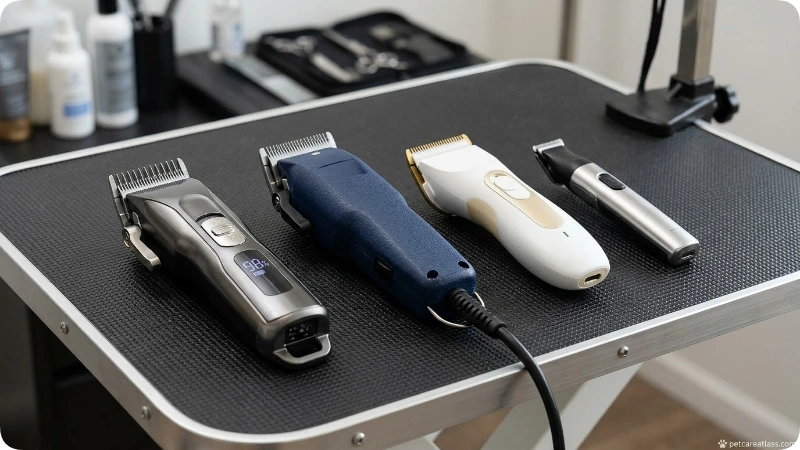
Different grooming clippers serve different purposes. Some are designed for occasional maintenance, while others are intended for more demanding grooming tasks.
Understanding these categories can help you select equipment that suits your cat.
1. Cordless Cat Grooming Clippers
Best for: Convenient home grooming and occasional maintenance.
Cordless cat grooming clippers operate using rechargeable batteries, allowing you to move the equipment without managing a power cord.
They can be convenient when grooming around different areas of a cat’s body or working in a location without an easily accessible electrical outlet.
Features to consider:
- Rechargeable battery.
- Comfortable, lightweight handle.
- Suitable blade options.
- Manageable noise and vibration.
- Easy cleaning and maintenance.
Cordless operation does not automatically make a clipper safe for cats. Always check the manufacturer’s intended use and blade specifications.
2. Professional Cat Grooming Clippers
Best for: Experienced groomers and extensive coat trimming.
Professional grooming clippers are generally designed for repeated use. Depending on the model, they may offer powerful motors, detachable blades, and compatibility with different cutting lengths.
These features can be useful for professional grooming, especially when maintaining thick or long coats.
However, professional clippers are not necessarily the best option for beginners. Their performance depends on appropriate blade selection, handling skills, and knowledge of feline skin sensitivity.
3. Mini Cat Hair Trimmers
Best for: Small grooming tasks requiring a compact cutting head.
Mini trimmers have smaller cutting heads than many full-size grooming machines. Their compact design can make them easier to maneuver during limited precision grooming.
Depending on the equipment, they may be useful for certain small areas, such as around the paws.
However, a small trimmer is not a solution for extensive matting. Its narrow cutting head also requires careful handling around delicate skin.
4. Low-Noise Cat Grooming Clippers
Best for: Owners concerned about grooming noise.
Some cats become uncomfortable when exposed to unfamiliar electric grooming equipment. A quieter machine with manageable vibration may be easier to introduce.
The 2022 AAFP/ISFM Cat Friendly Veterinary Interaction Guidelines recognize the importance of reducing unnecessary noise and stress during veterinary procedures, including when clipping is required.
When comparing low-noise clippers, consider:
- Motor noise.
- Vibration levels.
- Smooth operation.
- Comfortable grip.
- Blade maintenance requirements.
Descriptions such as “silent” or “whisper quiet” should not be treated as guarantees that a cat will tolerate grooming.
Cat Clippers Comparison: Which Type Should You Choose?
The following comparison explains the differences between common cat grooming clipper types.
| Clipper type | Purpose | Advantage | Limitation |
|---|---|---|---|
| Cordless clippers | General grooming | Easy movement | Needs charging |
| Professional clippers | Heavy coat trimming | More blade options | Needs experience |
| Mini trimmers | Small areas | Compact design | Not for large mats |
| Low-noise clippers | Quieter grooming | May reduce sound stress | Cannot prevent grooming anxiety |
Which type is best?
For occasional home maintenance, a lightweight cordless clipper designed for cats may be a practical choice. Professional equipment is more appropriate for extensive coat trimming when handled by someone with suitable experience.
How to Choose the Best Pet Clippers for Cats

Choosing suitable grooming equipment involves more than comparing prices or selecting the machine with the most attachments.
Your cat’s coat, temperament, grooming requirements, and the clipper’s design should all influence your decision.
1. Choose a Cat-Suitable Blade
The blade is one of the most important parts of a grooming clipper.
Look for a blade designed for the intended grooming task, with secure attachment and suitable cutting specifications.
Consider these features:
- Blade material and durability.
- Compatibility with replacement blades.
- Ease of cleaning.
- Manufacturer-recommended cutting lengths.
- Availability of appropriate guard attachments.
Do not assume a blade is safe simply because its packaging describes it as suitable for pets. Check whether the equipment is appropriate for feline grooming.
2. Consider Noise and Vibration
Some cats become uncomfortable when they hear unfamiliar electric grooming equipment.
A quieter clipper with manageable vibration may be easier to introduce than a loud machine.
Before purchasing, check whether the manufacturer provides actual noise specifications. Marketing descriptions alone cannot establish how comfortable a particular cat will find the equipment.
3. Look for a Lightweight Design
A lightweight clipper can be easier to control during short grooming sessions.
This is especially helpful when working around smaller areas that require careful movements.
An ergonomic handle can also improve grip and reduce unnecessary hand pressure.
4. Check Battery Life and Charging Options
If you prefer cordless grooming equipment, compare its operating time and charging requirements.
| Battery feature | Why it matters |
|---|---|
| Operating time | Shows how long the clipper runs |
| Charging time | Determines how quickly it recharges |
| Battery indicator | Shows remaining power |
| Rechargeable design | Reduces disposable battery use |
| Corded option | Offers backup power when supported |
Battery performance varies by model, so compare manufacturer specifications rather than relying on general product descriptions.
5. Consider Blade Heat and Maintenance
Clipper blades can become warm during operation. Excessive heat may irritate or injure a cat’s skin.
Choose equipment with clear maintenance instructions and check blade temperature frequently during grooming.
Also consider whether the clipper is easy to clean, whether replacement blades are available, and whether the manufacturer provides suitable lubrication instructions.
Best Pet Clippers for Cats Based on Grooming Needs
Different cats have different grooming requirements. Matching the equipment to the task is more useful than assuming one clipper will work for every situation.
| Cat’s grooming need | Suitable equipment | Key consideration |
|---|---|---|
| Occasional touch-ups | Lightweight cordless clipper | Easy handling |
| Small areas | Mini precision trimmer | Careful positioning |
| Thick or long coats | Professional clipper | Correct blade choice |
| Noise-sensitive cat | Low-noise clipper | Gradual introduction |
| Severe matting | Professional equipment | Seek professional help |
This is a needs-based comparison, not a laboratory-tested product ranking. No individual clipper has been independently tested for this article.
Can You Use Regular Hair Clippers on Cats?
Regular human hair clippers are not automatically suitable for cats.
Although some human grooming machines may physically cut animal hair, they are not necessarily designed for feline coat characteristics, grooming requirements, or safe handling around delicate skin.
Pet-specific equipment is generally a more appropriate starting point.
Before using any clipper, check the manufacturer’s instructions and confirm that it is suitable for cats.
Pet Hair Clippers vs. Human Hair Clippers
| Feature | Pet grooming clippers | Human hair clippers |
|---|---|---|
| Intended use | Animal coat grooming | Human haircuts |
| Blade options | May include pet-specific blades | Designed for human hair |
| Attachments | Vary by pet model | Fit human hair lengths |
| Handling | May suit animal grooming tasks | Not designed for pet handling |
| Cat suitability | If designed for cats | Not preferred |
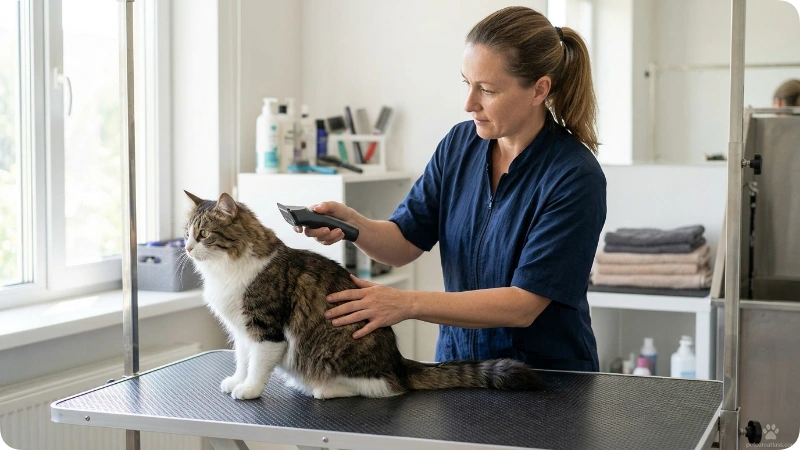
The important distinction is suitability, not simply whether a machine can cut hair.
How to Use Cat Grooming Clippers More Safely

Even suitable equipment can cause problems when used incorrectly. Cats have delicate skin, and dense mats can make it difficult to distinguish where the fur ends and the skin begins.
For this reason, home grooming should be limited to tasks you can perform confidently without causing distress.
Step 1: Prepare the Grooming Area
Choose a quiet, comfortable location with good lighting.
Before starting:
- Place the clipper and grooming supplies within reach.
- Make sure the equipment is clean and properly assembled.
- Check that the blade is in good condition.
- Keep treats nearby.
- Allow your cat to explore the equipment without pressure.
Avoid grooming near loud appliances or unnecessary distractions.
Step 2: Introduce the Clipper Gradually
Let your cat see and smell the clipper while it is switched off.
If your cat remains relaxed, gradually introduce the sound from a comfortable distance. Reward calm behavior with treats.
Do not immediately place a running clipper against your cat’s body.
Step 3: Check the Coat Before Grooming
Inspect the coat for tangles, mats, redness, sores, and sensitive areas.
Small, loose tangles may sometimes be removed gently with an appropriate comb. Tight mats should not be pulled or forcibly brushed because this can cause discomfort.
VCA Animal Hospitals recommends using clippers rather than scissors for mat removal and seeking professional care when matting is severe or extensive.
Step 4: Keep Grooming Sessions Short
If your cat accepts the equipment, begin with a small, uncomplicated grooming task.
Use gentle movements and follow the clipper manufacturer’s instructions.
Do not force your cat to remain in position. Allow breaks and stop if your cat becomes uncomfortable.
Step 5: Check the Blade Temperature
Frequently check the blade according to the manufacturer’s safety instructions.
If it becomes warm, stop and allow it to cool or replace it with an appropriate cool blade.
Never continue grooming with a blade that feels excessively hot.
Step 6: Clean and Store the Equipment
After grooming:
- Switch off the clipper.
- Remove loose hair from the blade.
- Clean it according to the manufacturer’s instructions.
- Apply blade oil if recommended.
- Store the equipment somewhere dry and secure.
Proper maintenance helps keep grooming equipment in good working condition.
Important Safety Mistakes to Avoid When Clipping a Cat
Grooming equipment should make coat care easier, not create unnecessary stress or injury.
Avoid these common mistakes:
| Mistake | Why It Can Be a Problem | Better Approach |
|---|---|---|
| Using household scissors on mats | Cat skin can get caught beneath tangled fur. | Ask a professional to remove tight mats. |
| Using unsuitable blades | May increase the risk of skin injury. | Check feline suitability. |
| Ignoring blade temperature | Hot blades may irritate or injure the skin. | Check frequently and allow blades to cool. |
| Forcing a frightened cat | Can increase distress and sudden movement. | Stop and try a gentler approach. |
| Pulling tight tangles | Can cause discomfort. | Seek professional help. |
| Ignoring clipper maintenance | Dirty or damaged blades can affect grooming. | Follow cleaning instructions. |
Areas That Require Extra Care
Certain areas of a cat’s body are particularly challenging to groom:
- Face and around the eyes: Delicate structures and sensitive skin require careful handling.
- Ears: Avoid accidental contact with the ear itself.
- Armpits: Loose skin and natural movement make clipping difficult.
- Groin and sanitary areas: These areas require careful positioning and experience.
- Belly: Cats may move suddenly or object to handling around their abdomen.
For these areas, professional grooming is often the safer option.
When Should You Take Your Cat to a Professional Groomer?
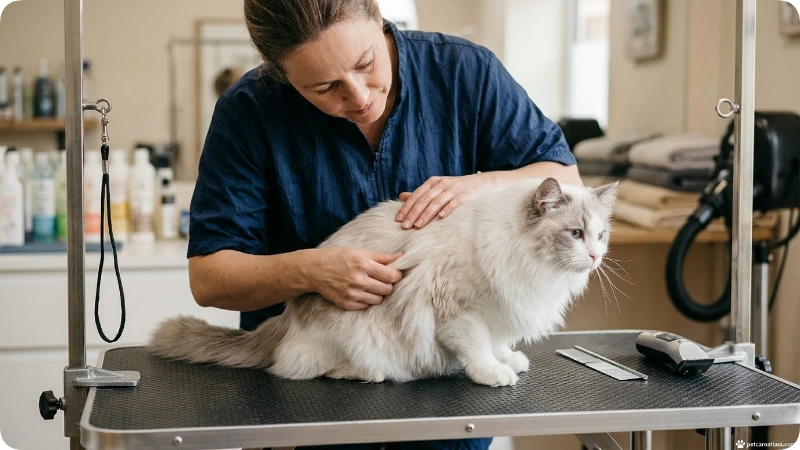
Not every grooming problem should be handled at home.
Professional assistance is particularly important when a cat has extensive matting, becomes highly distressed, or needs a full-body haircut.
Consider professional help when:
- Mats are tight against the skin.
- Large areas of the coat are tangled.
- Your cat struggles or repeatedly tries to escape.
- Grooming requires work around sensitive areas.
- Your cat has existing skin irritation.
- You are unfamiliar with electric grooming equipment.
Some cats may need veterinary assessment or professionally supervised sedation for extensive grooming. Sedation should only be decided and managed by a veterinarian.
Signs You Should Stop Grooming
Stop immediately if your cat shows signs such as:
- Repeated attempts to escape.
- Growling, hissing, or struggling.
- Flattened ears or a tense body.
- Sudden movements that make safe clipping difficult.
- Signs of pain or sensitivity.
- Redness, cuts, or bleeding.
Do not punish or force your cat to continue. If you notice an injury or skin irritation, contact your veterinarian.
Cat Hair Clippers vs. Cat Nail Clippers: What’s the Difference?
The word clippers can refer to two completely different grooming tools.
Cat hair clippers are electric devices that cut fur, whereas cat nail clippers are designed to shorten claws. They are not interchangeable.
| Feature | Cat Hair Clippers | Cat Nail Clippers |
|---|---|---|
| Main Purpose | Trim body fur | Trim claws |
| Design | Electric motor and cutting blade | Manual cutting blades |
| Used On | Cat’s coat | Cat’s nails |
| Common Styles | Cordless, professional, and mini trimmers | Scissor-style and guillotine-style |
| Main Safety Concern | Skin injury and blade heat | Cutting the sensitive quick |
If your goal is to maintain your cat’s fur, choose cat hair grooming clippers. If you want to shorten overgrown claws, use an appropriate cat nail clipper.
Frequently Asked Questions
What are the best pet clippers for cats?
The best choice depends on your cat’s coat, grooming needs, and tolerance for noise. For occasional home maintenance, consider lightweight equipment with a feline-suitable blade and manageable noise. Extensive mat removal and full-body clipping are better handled by an experienced professional.
Are cordless clippers good for cats?
Yes, cordless clippers can be convenient for cat grooming because they provide greater freedom of movement. However, battery life, blade quality, noise, and vibration are important considerations. A cordless model is not automatically safer than a corded one.
Can I shave my long-haired cat at home?
Shaving a long-haired cat is not routinely necessary. Some cats with recurring matting or difficulty grooming themselves may benefit from professional coat trimming. A veterinarian or experienced feline groomer can determine whether shaving is appropriate.
Do cats need special grooming clippers?
Cats benefit from grooming equipment appropriate for their coat and individual needs. If you plan to use electric clippers, select a model specifically suitable for feline grooming. The correct blade, noise level, and handling method are important considerations.
Are quiet cat clippers better for nervous cats?
Quiet clippers may be easier for some noise-sensitive cats to tolerate, but they cannot eliminate grooming anxiety. Gradual introduction, positive reinforcement, and short sessions can help. If your cat remains distressed, professional assistance is preferable.
Can cat clippers remove matted fur?
Appropriate grooming clippers can remove certain mats, but tight or extensive matting should be handled by a professional groomer or veterinarian. Never attempt to cut mats out using household scissors because the skin can be caught beneath tangled fur.
How often should I use grooming clippers on my cat?
There is no universal clipping schedule for cats. Frequency depends on coat condition, grooming requirements, and veterinary recommendations. Many cats need regular brushing rather than haircuts. Clip only when there is a genuine grooming need.
Conclusion
Choosing suitable pet clippers for cats means considering more than cutting performance. Noise, blade design, weight, maintenance, and your cat’s comfort all matter.
A lightweight, quiet grooming clipper may work well for occasional maintenance, while extensive mat removal and difficult grooming tasks are best left to professionals. Prioritize your cat’s comfort and safety rather than trying to complete every grooming task at home.

Emily Carter is a pet-care writer with a focus on animal health, nutrition, and everyday pet wellness. She creates practical, easy-to-understand guides that help pet owners make informed and responsible care decisions.