
If your dog leans into your hand, nudges you for more attention, or happily settles beside you while you pet them, you may wonder, why do dogs like to be pet? For many dogs, gentle petting is enjoyable because it provides pleasant physical contact, social interaction, and attention from someone they trust.
But dogs do not all experience petting in the same way. Some actively seek touch, while others prefer certain areas or only want brief interaction. Your dog’s body language, personality, past experiences, and the way you approach them can all influence how they respond to petting. Understanding these signals can help you recognize when your dog is enjoying the interaction and when they would rather have some space.
Quick Answer
Dogs often enjoy being petted because gentle touch can be pleasant, socially rewarding, and reassuring when it comes from someone they trust. Petting also gives dogs a way to interact with their owners and may reinforce positive social bonds. But dogs have individual preferences, so their body language matters more than assuming every dog likes the same kind of touch.
Why Do Dogs Like Being Petted?
For a dog that enjoys human contact, petting can be much more than simple physical touch. It can be part of social interaction between the dog and their owner.
Several factors may explain why a particular dog seeks petting.
1. Petting Can Feel Pleasant
Gentle stroking or scratching may feel physically enjoyable, especially in areas the dog naturally likes having touched.
A dog may respond by:
- Leaning toward your hand
- Sitting or lying closer to you
- Relaxing their body
- Nudging your hand
- Offering another part of their body to pet
- Remaining beside you when you stop
These behaviors can indicate that the dog wants the interaction to continue, particularly when the rest of the body remains relaxed.
However, one behavior by itself does not prove that a dog is enjoying the interaction. Look at the dog’s overall body language.
2. Dogs Can Enjoy Social Contact With Trusted People
Dogs are highly social animals, and many companion dogs develop strong relationships with their human caregivers.
For some dogs, petting is part of that social relationship. Your dog may associate your touch with attention, companionship, and positive interactions.
This is one reason a dog may walk over and place their head against your leg when you are sitting down. They may simply be asking for interaction.
3. Petting Can Reinforce the Human-Dog Bond
Positive interactions can help build familiarity and trust between a dog and their owner.
Imagine that your dog approaches you after a long walk. You gently stroke their shoulder while they relax beside you. Over time, these calm interactions can become part of your shared routine.
The important point is that petting works best as a two-way interaction. Your dog should have an opportunity to move away rather than being expected to tolerate continuous touching.
4. Your Dog May Learn That Petting Predicts Good Things
Dogs learn through associations.
If petting regularly happens alongside calm attention, praise, companionship, or other positive experiences, a dog may begin to seek that interaction.
For example, a dog may bring their head under your hand because they have learned that doing so often results in pleasant attention.
This does not necessarily mean that every dog wants to be touched every time they approach you. The dog’s current body language still matters.
What Does It Mean When a Dog Asks to Be Petted?
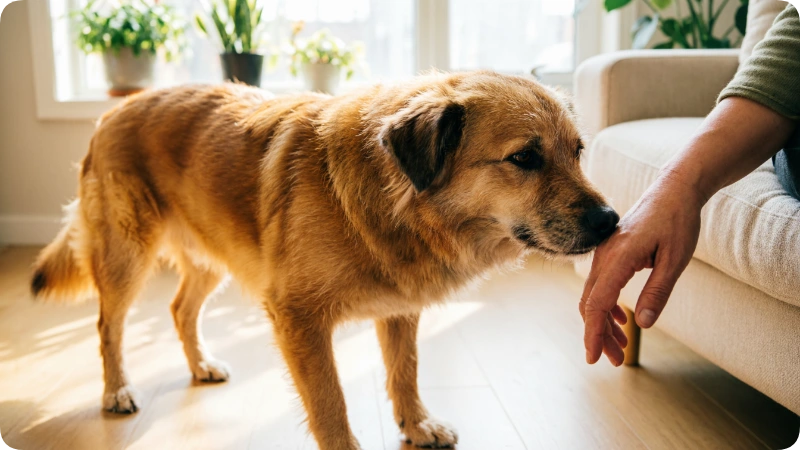
Dogs do not use words to request attention, so they communicate through posture, movement, facial expressions, and learned behaviors.
Common signs that a dog may be inviting interaction include:
| Behavior | What it may indicate |
| Leaning into your hand | Seeking or enjoying contact |
| Nudging your hand | Requesting attention |
| Moving closer | Wanting social interaction |
| Relaxed body | Comfortable with the situation |
| Resting beside you | Comfortable staying near you |
| Returning after moving away | May want more interaction |
| Offering their shoulder or chest | May be inviting touch |
These signs should be interpreted together rather than individually.
For example, a dog standing close to you while keeping their body loose may be comfortable. A dog standing close but appearing tense may have a different experience.
How Can You Tell If Your Dog Actually Enjoys Petting?
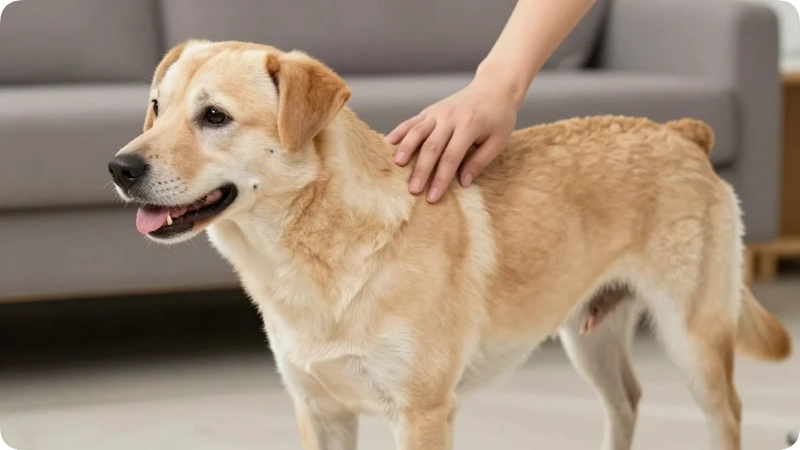
The easiest way to understand your dog’s preference is to watch what happens when you stop.
Try a simple consent-based interaction:
- Pet your dog gently for a few seconds.
- Stop and remove your hand.
- Give your dog space.
- Watch what they choose to do.
If your dog moves closer, nudges you, or clearly seeks more interaction, they may be interested in continuing.
If they walk away, turn their head away, become tense, or show other signs of discomfort, allow them to stop the interaction.
Signs Your Dog May Be Enjoying It
Look for a combination of relaxed signals such as:
- Loose body posture
- Relaxed facial muscles
- Natural, comfortable movement
- Leaning toward the touch
- Choosing to remain nearby
- Seeking your hand again
A relaxed dog does not necessarily have to lie completely still. Individual dogs express comfort differently.
Signs Your Dog May Want You to Stop
Some dogs communicate discomfort more subtly.
Watch for:
- Turning the head away
- Moving away
- Becoming stiff
- Repeated lip licking
- Yawning in an uncomfortable context
- Lowering the body
- Avoiding eye contact
- Pinning the ears back
- Trying to escape the interaction
- Growling or snapping
A growl should not be punished simply because it occurs during handling. It can be an important warning that the dog is uncomfortable.
Give the dog space and consider why the interaction caused discomfort.
Where Do Dogs Usually Like to Be Petted?
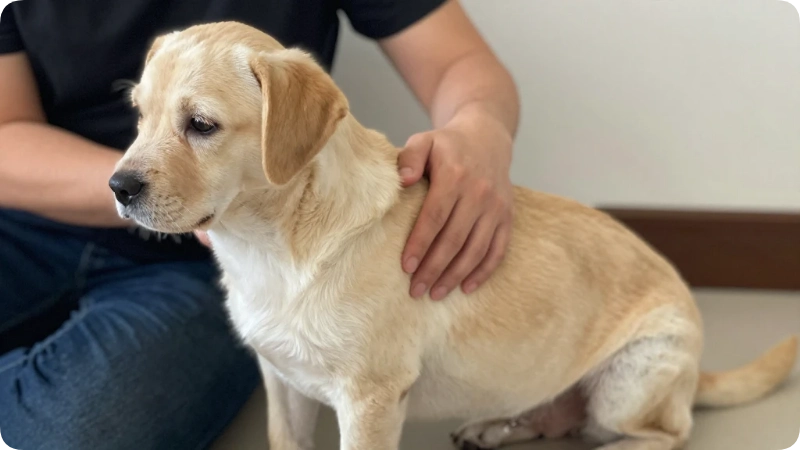
There is no single body area that every dog prefers.
Individual preferences can be influenced by personality, previous experiences, socialization, age, physical comfort, and the dog’s relationship with the person touching them.
Many dogs may enjoy gentle contact around areas such as:
- Chest
- Shoulders
- Side of the neck
- Upper back
- Body sides
Some dogs may also enjoy gentle ear or head contact, but others may find these areas uncomfortable.
What About a Dog’s Belly?
A dog exposing their belly does not automatically mean, “Please rub my stomach.”
Sometimes a dog rolls over because they want a belly rub. In other situations, exposing the belly can be a submissive or appeasing behavior.
Look at the rest of the dog’s body.
A relaxed dog with loose muscles and an inviting posture may be comfortable. A tense dog with tucked posture or other stress signals may not be asking for touch.
Why Do Some Dogs Like Petting More Than Others?
Dogs have individual personalities and histories.
Two dogs living in the same household can respond completely differently to human touch.
Breed and Individual Temperament
Breed tendencies can influence behavior, but breed alone cannot tell you whether a particular dog enjoys petting.
A dog’s individual temperament matters.
Some dogs actively seek human contact. Others prefer sitting nearby without being touched constantly.
Early Experiences
A dog’s previous experiences with handling can influence how comfortable they are with human touch.
Dogs that have had positive, gentle experiences may be more comfortable with handling, while dogs with limited socialization or unpleasant past experiences may need more patience.
Age
Puppies may be especially curious about human interaction, while older dogs may develop different preferences.
An older dog that suddenly stops enjoying touch deserves particular attention because discomfort or illness can sometimes affect handling tolerance.
Health and Pain
A dog that normally loves being petted but suddenly reacts negatively should not simply be labeled “moody.”
Pain, skin irritation, injury, or another health problem can change how a dog responds to touch.
If the change is sudden, persistent, or accompanied by other unusual symptoms, speak with a veterinarian.
Why Does My Dog Put Their Paw on Me While I Pet Them?
A dog placing a paw on you can have several possible meanings.
They may be:
- Seeking more attention
- Maintaining physical contact
- Asking for continued interaction
- Responding to your touch
- Using a learned behavior that gets attention
Context matters.
If your dog places a paw on you while remaining relaxed and repeatedly seeks interaction, they may be asking you to continue. If they become tense or repeatedly try to move away, the same action should not automatically be interpreted as affection.
Why Does My Dog Lean Against Me When I Pet Them?
Leaning can be a way for a dog to maintain contact with a person they trust.
For example, your dog may press their shoulder against your leg while you scratch their chest. If their body remains loose and they stay voluntarily, this can be consistent with enjoying the interaction.
But leaning is not a universal “I love this” signal.
Always consider the complete body language and situation.
Why Does My Dog Bring Their Head Under My Hand?
Some dogs learn that placing their head or body under a person’s hand results in attention.
If your dog repeatedly does this while remaining relaxed, they may be actively requesting petting.
You can test this by briefly stopping.
If the dog moves away, the interaction may be finished. If they gently nudge your hand again, they may be asking for more.
This simple pause can help you understand your dog’s preference without forcing continued contact.
Do Dogs Like Being Petted by Strangers?
Not necessarily.
A dog that enjoys being petted by its owner may not want a stranger touching it.
This is particularly important around unfamiliar dogs.
Before petting someone else’s dog, ask the owner for permission. Even with permission, allow the dog to approach rather than immediately reaching over its head.
Children should also be taught that dogs need personal space.
A Safer Approach
Instead of immediately touching an unfamiliar dog:
- Ask the owner if interaction is appropriate.
- Give the dog space.
- Allow the dog to approach voluntarily.
- Watch their body language.
- Use gentle, appropriate touch if the dog appears comfortable.
- Stop if the dog moves away or shows discomfort.
Never assume that a friendly-looking dog wants physical contact.
Why Do Dogs Sometimes Suddenly Stop Enjoying Petting?
A change in behavior is worth paying attention to.
If your dog previously sought petting but now avoids touch, possible explanations can include:
- Pain or discomfort
- Skin irritation
- Injury
- Fear
- Stress
- A negative experience
- Changes in the environment
- Age-related changes
The correct response depends on the circumstances.
Do not force the dog to accept handling simply because they tolerated it previously.
If the behavior change is sudden or persistent, particularly if your dog seems painful or unwell, contact a veterinarian.
How Should You Pet a Dog?
A gentle, predictable approach is usually easier for a dog to understand than sudden grabbing or rough handling.
Try This Simple Method
Start with a calm approach.
Avoid immediately reaching over the dog’s head.
Use gentle strokes.
Start with an area where the dog already appears comfortable.
Pause regularly.
Give your dog an opportunity to decide whether they want more.
Follow the dog’s response.
If they move closer, you can continue. If they move away, respect that choice.
Avoid forcing contact.
A dog should not have to remain in an interaction they are clearly trying to leave.
Common Mistakes Owners Make When Petting Dogs
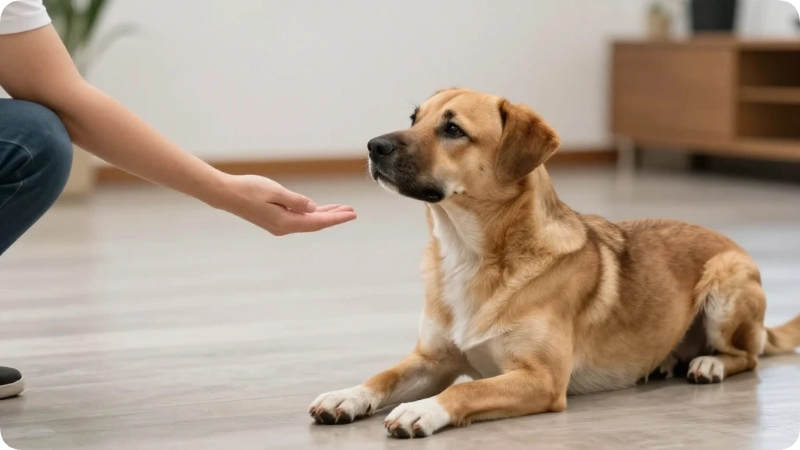
Mistake 1: Assuming Every Dog Likes Touch
Dogs have different preferences.
Better approach: Learn your individual dog’s body language.
Mistake 2: Ignoring Subtle Stress Signals
Not every uncomfortable dog growls or snaps.
Better approach: Pay attention to stiffness, turning away, avoidance, lip licking, yawning, and attempts to leave.
Mistake 3: Petting a Dog While They Are Trapped
A dog may tolerate touching when they cannot move away, but tolerance is not the same as enjoyment.
Better approach: Give the dog an easy way to leave.
Mistake 4: Punishing a Growl
A growl can be an important warning signal.
Better approach: Stop the interaction, create space, and determine why the dog is uncomfortable.
Mistake 5: Ignoring Sudden Changes
If a dog suddenly dislikes being touched, assuming they have simply become difficult can delay attention to an underlying problem.
Better approach: Consider pain, illness, injury, fear, and environmental changes.
Does Petting Make Dogs Happier?
Petting can be a positive experience for dogs that enjoy human touch, particularly when it is gentle, predictable, and voluntary.
However, it would be too broad to say that petting automatically makes every dog happier.
The quality of the interaction matters.
A dog that actively seeks contact and remains relaxed is having a different experience from a dog that freezes, avoids touch, or tries to leave.
The goal should not be “pet the dog as much as possible.”
The better goal is to understand what your dog is communicating and respond appropriately.
How Petting Can Strengthen Your Relationship With Your Dog
Petting is only one way to build a strong relationship with your dog.
Depending on your dog’s preferences, you can also use:
- Play
- Training with rewards
- Walks
- Sniffing opportunities
- Enrichment activities
- Calm companionship
- Grooming when appropriately introduced
- Consistent routines
- Respectful handling
Different dogs find different activities rewarding.
If your dog does not enjoy prolonged petting, that does not mean they are less attached to you. They may simply prefer another form of interaction.
Frequently Asked Questions
Do dogs actually like being petted?
Many dogs enjoy gentle petting, especially from people they trust. However, preferences differ between individual dogs. Watch your dog’s body language and allow them to move away when they want to stop.
Why does my dog ask me to pet him?
Your dog may have learned that approaching, nudging, or placing a paw on you results in attention. If they remain relaxed and seek more contact when you pause, they may be asking you to continue.
Where do dogs like to be petted most?
There is no universally preferred spot. Many dogs enjoy gentle contact around the chest, shoulders, neck, or back, but individual preferences vary. Let your dog show you which areas they are comfortable with.
Why does my dog move away when I pet him?
Your dog may be finished with the interaction, uncomfortable with the type of touch, stressed, or experiencing pain. Stop and give them space rather than forcing contact.
Do dogs like belly rubs?
Some dogs do, but exposing the belly does not always mean a dog wants a belly rub. Check the dog’s overall body language before touching them.
Should I pet a strange dog?
Ask the owner first and allow the dog to approach voluntarily. Even a friendly dog may not want contact from an unfamiliar person.
Why does my dog suddenly hate being touched?
A sudden change can have several causes, including pain, injury, skin problems, fear, stress, or another health issue. If the change is unusual or persistent, consult a veterinarian.
Conclusion
So, why do dogs like to be pet? For many dogs, gentle petting is a pleasant form of social interaction that can provide attention, comfort, and positive contact with a trusted person. But enjoying petting is an individual preference, not a rule that applies equally to every dog.
The best way to understand your dog is to watch their whole body, pause regularly, and respect their choice to continue or leave. When owners treat petting as communication rather than something a dog must tolerate, everyday interactions can become more comfortable and rewarding for both sides.

Daniel Brooks is a pet care and animal behavior writer at petcareatlass.com focused on helping owners better understand their pets’ behavior and everyday needs. He creates practical, easy-to-follow content on pet communication, training, welfare, and responsible care.